Temperature to Stain a Fence: Day and Night Rules
Stain a fence only when the daytime air and fence surface stay at or above the product’s minimum, commonly around 50°F for oil-based stains and 45°F for many water-based stains, and the overnight low stays there for about 24 hours. If temperatures fall lower, the coating can dry slowly, cure unevenly, or wash off early. This guide gives a simple overnight-low rule, plus separate checks for daytime minimums, surface temperature, and how many cold hours fresh stain can handle.
Fence stain go/no-go forecast table
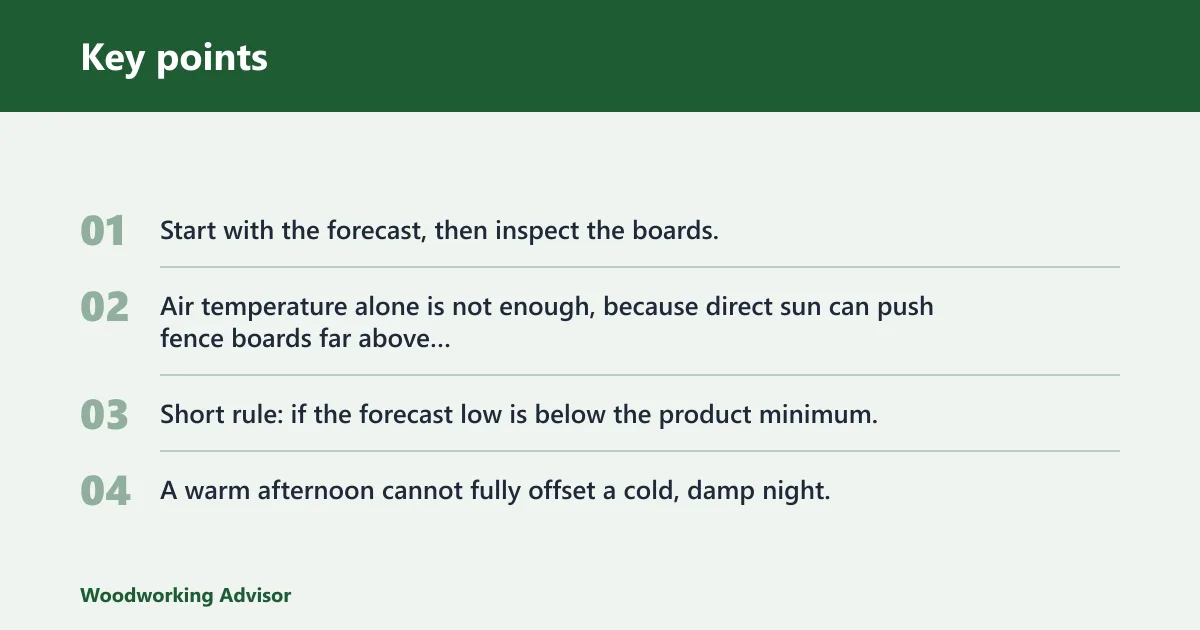

Start with the forecast, then inspect the boards. Air temperature alone is not enough, because direct sun can push fence boards far above the forecast and a cool, damp night can stall cure even after a warm afternoon.
| Daytime high | Overnight low | Humidity / dew risk | Recommended action |
|---|---|---|---|
| 50°F | 40°F | Borderline. High dew risk if air temperature gets within 5°F of the dew point. | No-go for a full fence unless the label allows cool-weather use. Oil-based stain is the safer choice, but only if the wood stays dry and you can protect it from overnight moisture. |
| 60°F | 45°F | Usually workable if relative humidity stays below 70% and the surface is dry. | Go, with caution. Oil-based stain is more forgiving. Water-based stain can work if you start early enough to get several rain-free, above-minimum hours. |
| 70°F | 55°F | Good drying window if humidity is in the 40% to 60% range. | Go. Either stain type is usually acceptable if the wood moisture content is below 15% and no rain or heavy dew is expected. |
| 85°F | 65°F | Heat and sun can still cause fast surface drying, especially below 70% humidity. | Go only with shade-aware timing. Watch for lap marks and uneven absorption. Water-based stain dries faster; oil-based stain gives a longer open time. |
Short rule: if the forecast low is below the product minimum, or if the air will sit within 5°F of the dew point overnight, skip the job. A warm afternoon cannot fully offset a cold, damp night.
What overnight low is too cold?
Overnight lows below about 50°F are often too cold for many oil-based stains, and lows below about 45°F are often too cold for many water-based products. Below 40°F, cure time can stretch sharply, and the coating may stay tacky or wash out before it sets.
Minimum night temperature rule
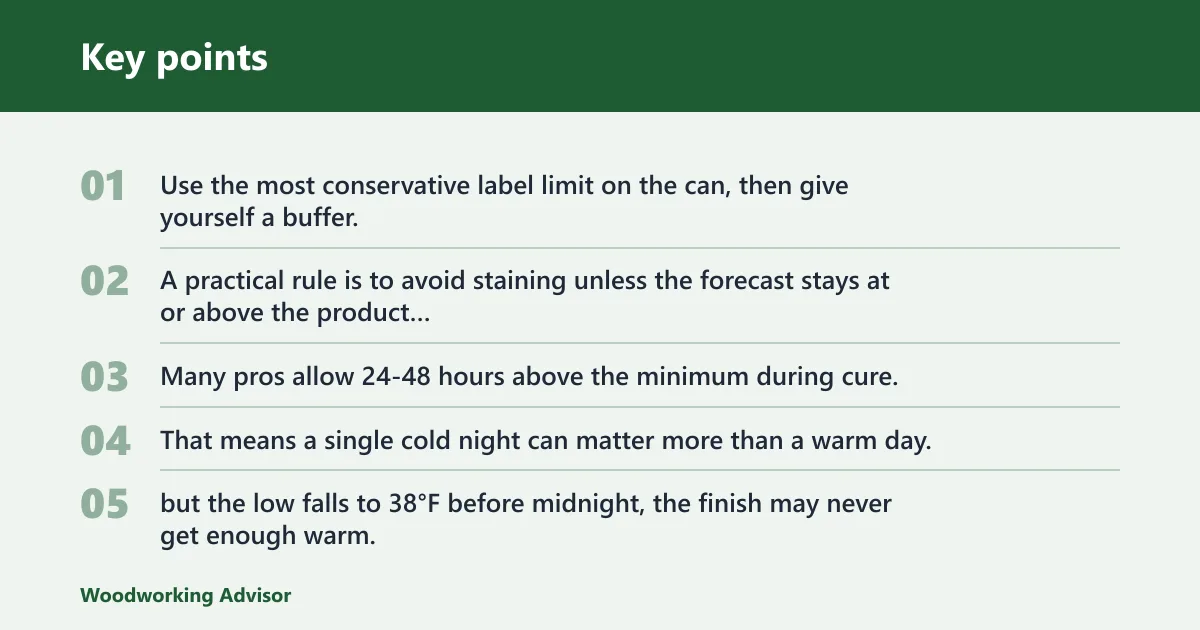
Use the most conservative label limit on the can, then give yourself a buffer. A practical rule is to avoid staining unless the forecast stays at or above the product minimum for about 24 hours after application. Many pros allow 24-48 hours above the minimum during cure.
That means a single cold night can matter more than a warm day. If the fence starts at 68°F at 2 p.m. but the low falls to 38°F before midnight, the finish may never get enough warm, dry time to set evenly.
How many cold hours matter
Cold hours matter because stain needs time above its minimum cure temperature. A few minutes near the limit is not the same as six or eight hours below it. The longer the fence stays cold, the more likely you are to see slow drying, blotchy color, or surface tack.
Picture a fence coated at 3 p.m. on a calm day. If the temperature slips under the minimum by dusk and stays there until midmorning, the stain has lost most of its cure window. That is much riskier than a brief dip after the film has already set.
What changes at 35 to 45°F
Between 35°F and 45°F, stain application becomes much less forgiving. Below 40°F, cure time increases significantly. At those temperatures, water-based products are especially sensitive, and even oil-based formulas can stay wet longer than expected.
A common first-timer mistake is trusting a sunny afternoon forecast and ignoring the cold pre-dawn hours. If the fence will spend most of the night near freezing, the project is too exposed for a reliable finish.
How warm should the fence be?
Check the fence surface, not just the air, since the surface can run about 10-25°F above air temperature. Surface temperature can run 10-25°F above air temperature, especially on boards in direct sun, so a cool forecast can still hide a hot, fast-drying surface that causes lap marks or uneven absorption.
Air temperature versus surface temperature
Most exterior stains specify an application window between 50°F and 90°F, and the sweet spot is typically 60°F to 80°F. The air may sit in that range while the wood itself is much hotter or cooler, depending on sun, wind, and board color.
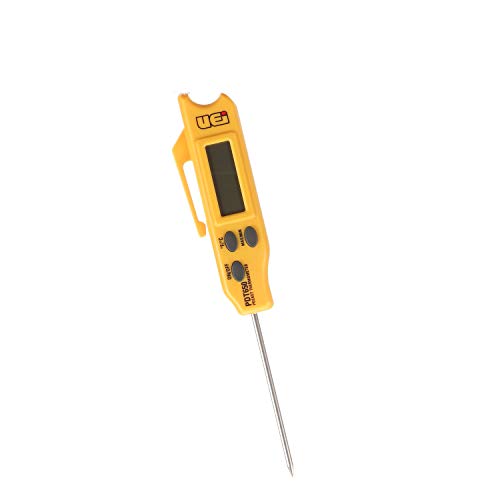
A thermometer gun is recommended because surface temperature can differ from air by 10-15°F, and sometimes more on dark, sunlit boards. If the fence is hotter than the label range, stain can flash-dry before you spread it evenly.
Why sun-exposed boards run hotter
Direct sun can heat the face of a fence board well above the forecast air temperature. That matters on south-facing runs, gates, and top rails, where one side may dry much faster than the shaded side and leave a visible color change.
Shade and wind both affect this. Light wind can help move moisture away, but hot wind can speed flashing. Shade often gives a more predictable working window, especially on warm afternoons.
Using an infrared thermometer
Check several spots: a sunlit section, a shaded section, and the lower boards near the ground. If the surface sits above the product’s upper limit or well below its minimum, wait for better conditions even if the forecast sounds acceptable.
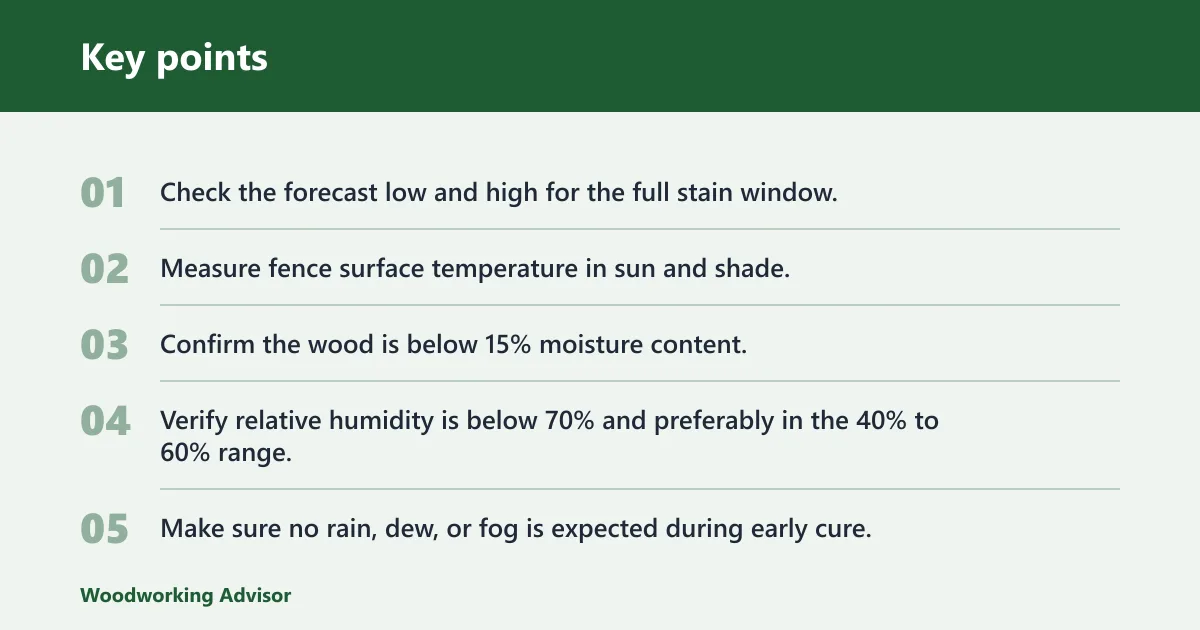
- Check the forecast low and high for the full stain window.
- Measure fence surface temperature in sun and shade.
- Confirm the wood is below 15% moisture content.
- Verify relative humidity is below 70% and preferably in the 40% to 60% range.
- Make sure no rain, dew, or fog is expected during early cure.
Humidity and dew point limits
Relative humidity should stay below 70% for best adhesion and cure, and the ideal range is 40% to 60%. Higher humidity slows drying, makes tackiness more likely, and can reduce penetration on dense or damp wood.
Safe relative humidity range
At or below 60% humidity, most fence stains have a more forgiving drying window. Once humidity climbs toward 70%, drying slows enough that cold nights and shady areas become a bigger problem.
Humidity does not act alone. Warm air can still be a poor staining day if the dew point is close to the overnight low. That is when condensation becomes a real risk.
Dew point buffer for overnight curing
A practical rule is to avoid staining when the air temperature is within 5°F of the dew point. That buffer helps reduce overnight condensation, fogging, and morning dew on fresh stain.
If the forecast low is 52°F and the dew point is 49°F, the fence may look dry at dusk but still collect moisture before sunrise. That thin film of moisture can soften the surface, dull the color, or leave a blotchy finish.
Condensation, fog, and tackiness
Dew can form before the stain has set enough to resist it. Fog has the same effect. Both add moisture when the finish needs dry air, not more water.
If the fence feels slightly sticky the next morning, that is often a sign the film was not warm and dry long enough. Wait for another dry window rather than trying to fix it with a second coat too soon.
Wood moisture before staining
The wood moisture content should be below 15% before application. Pressure-washed surfaces often need 48–72 hours to reach that target, and longer if the boards are shaded, dense, or cool.
Target moisture content
A moisture meter gives you a real reading, which is better than guessing by touch. Pin meters measure the board directly and are useful for fence work because they show whether the wood has dried below the target.
If the reading is above 15%, wait. Stain applied to wet wood tends to sit on the surface, cure unevenly, and wear out faster.
Meter type and quick checks
Use a pin-style moisture meter on several boards, especially near posts, knots, and bottom rails where drying is slower. Take more than one reading on each section, because wet spots can hide in shaded areas.
Quick visual checks help, but they are not enough. A board can look dry and still hold too much internal moisture after washing or rain.
Drying time after pressure washing
Pressure washing resets the clock. Even after the surface looks dry, the interior may still hold moisture for 48–72 hours or longer, depending on weather and airflow. Staining too soon traps that moisture and can cloud the finish.
Oil-based or water-based stain?
Oil-based stain is usually more forgiving in cool, slightly damp weather because it often has a longer open time. Water-based stain dries faster, but it is more sensitive to cool temperatures and higher humidity.
Cold tolerance comparison
For borderline nights, oil-based stain has the edge. It tends to tolerate slower cure conditions better, which matters when the overnight low is close to the minimum. Water-based products can still work, but they need a cleaner weather window.
Cleanup differs too. Oil-based stain usually requires mineral spirits for cleanup, while water-based stain cleans up with water before it dries. That matters because a slow-drying day can leave more time for drips, lap marks, and brush cleanup.
Dry time and cure time differences
Water-based stain is often ready for recoating or light use sooner in warm, dry weather, but it can become fussy when humidity rises or temperatures slip. Oil-based stain usually gives more working time, which helps on a fence with long runs and uneven shade.
Neither type should be treated as weatherproof right away. Even when the surface feels dry, the cure may still be in progress for 24-48 hours or more, depending on the product and the forecast.
Best application window
Morning or late afternoon is usually better than midafternoon on a hot fence, because you can avoid peak surface heat and keep the stain from flashing too quickly. Choose a rain-free stretch with enough warm hours left for the coating to set.
Morning versus afternoon timing
Start after the dew has lifted and the boards have warmed a little. Early morning can work if the surface is dry and the day will stay warm. Late afternoon can also work if the overnight low stays above the minimum and the fence has enough cure time before sunset.
Direct sun can cause uneven drying, so shift your work around the fence if needed. Do the sunniest panels first only if the surface is still within the safe temperature range.
Rain-free hours needed
Plan for several dry hours after application, then a full night with temperatures above the minimum if possible. If rain, fog, or heavy dew is expected soon after the job, skip it. Fresh stain needs time to settle before moisture arrives.
That is why spring and fall are usually the best seasons. They often give the moderate temperatures and lower stress on the finish that summer heat and winter cold do not.
Frequently asked questions
What overnight low is too cold to stain a fence?
As a practical rule, an overnight low below 50°F is too cold for many oil-based stains and below 45°F is too cold for many water-based stains. Below 40°F, cure time slows enough that tackiness and uneven drying become much more likely.
Can I stain a fence if the temperature drops below 50°F at night?
Only if the product label allows that range and the stain will still have about 24 hours above its minimum cure temperature. If the night will fall below the minimum for several hours, skip the job. The cold period can leave the finish weak or sticky.
How warm does it need to be to stain a fence during the day?
Most exterior stains call for 50°F to 90°F, with a sweet spot around 60°F to 80°F. The fence surface matters as much as the air. If the boards are in direct sun, they may run 10-25°F hotter than the forecast.
What happens if it rains or dew forms after staining a fence?
Rain or dew can slow cure, dull the finish, or wash away uncured stain before it bonds. The risk is highest if moisture arrives within the first day. Avoid staining unless you have several rain-free hours and an overnight forecast that stays safely above the minimum.
Is oil-based stain better than water-based stain in cold weather?
Usually yes. Oil-based stain is generally more forgiving in cool weather because it dries more slowly and gives you a longer working window. Water-based stain dries faster, but it can become more sensitive to cool temperatures and high humidity.
How do I know if my wood is dry enough to stain?
Use a moisture meter and look for a reading below 15%. Pressure-washed wood often needs 48–72 hours or longer to reach that level. If the reading is above target, wait, even if the board looks dry on the surface.
Sponsored / affiliate links. As an Amazon Associate I earn from qualifying purchases. I may earn additional commission from eligible campaigns.