Bedroom Ideas with Hardwood Floors: Wood Tones, Colors & Layout Tips
A bedroom with real hardwood floors has a head start on feeling finished – the wood itself is the biggest visual element in the room, so getting the species, finish, color palette, and layout right matters more here than almost anywhere else in the house. Below is a practical, room-by-room breakdown of what actually makes hardwood-floored bedrooms work, including the wood-hardness numbers and layout patterns most bedroom-decor articles skip entirely.
Why Hardwood Floors Work So Well in Bedrooms
Hardwood solves two bedroom problems at once: comfort and long-term value. Underfoot, a sealed wood floor stays several degrees warmer than tile and does not trap dust, dander, or allergens the way carpet fiber does – a real consideration in a room where you spend a third of your life breathing. It also cleans up in minutes rather than requiring a vacuum with a HEPA filter, and a properly finished floor shrugs off daily foot traffic, furniture legs, and the occasional dropped book far better than most people expect.
Easy Care for Bedroom Hardwood
 |
Bona Hardwood Floor Cleaner Spray, 32 oz – $8.97 A bedroom with hardwood floors only looks as good as its finish stays scratch-free and dull-film-free, and this is the cleaner most flooring manufacturers actually recommend for polyurethane-finished wood.
|
Resale value is the other half of the equation. Appraisers and real estate agents consistently rank hardwood above carpet in primary and secondary bedrooms, since the floor cannot wear out or stain in the way carpet does over a 10-15 year ownership span. None of that matters, though, if the room does not feel warm and personal day to day – which is why the choices below (species, finish, color, layout, and textiles) matter more than the fact that “it’s hardwood” alone.
Choosing the Right Wood Species and Finish for a Bedroom
Species selection comes down to three things: how the grain and color read in a low-traffic room, how hard the wood actually is (bedrooms see far less wear than hallways or kitchens, so this matters less than most guides suggest), and budget. Our full wood flooring guide covers installation and cost in depth; here is what matters specifically for a bedroom.
Red and white oak remain the default choice because the grain hides minor scuffs and the wood takes stain evenly, from pale Scandinavian-style finishes to near-black ebony. Hard maple has a tighter, more uniform grain that reads cleaner and more modern but shows scratches more visibly since it is harder for stain to penetrate evenly – worth knowing before you commit to a very dark maple stain. Oak and maple differ more than most people realize once you get past color. Walnut and cherry bring warmer, richer undertones that many people find more restful for a bedroom, though both are softer than oak and show dents from dropped objects more easily. Hickory is the hardest common option and reads rustic with heavy graining – great for a farmhouse-style room, less so for a minimalist one.
Hardness is measured on the Janka scale (the force in pounds needed to embed a steel ball halfway into the wood). For reference: black walnut sits around 1,010 lbf, red oak around 1,290 lbf, white oak around 1,360 lbf, hard maple around 1,450 lbf, and hickory around 1,820 lbf. In a bedroom, where foot traffic is light and furniture rarely moves, even the softest of these will easily outlast a couple of decades of normal use – so let color and grain drive the decision, not durability alone.
Quick reference:
| Wood Type | Janka Hardness | Look | Best For |
|---|---|---|---|
| Walnut | ~1,010 lbf | Dark, rich, straight grain | Warm, luxurious bedrooms |
| Cherry | ~950 lbf | Warm, reddish, smooth | Cozy, elegant bedrooms |
| Red Oak | ~1,290 lbf | Classic, visible grain | Traditional or transitional |
| White Oak | ~1,360 lbf | Cooler tone, tighter grain | Modern, Scandinavian |
| Hard Maple | ~1,450 lbf | Smooth, pale, uniform | Minimalist, bright rooms |
| Hickory | ~1,820 lbf | Bold, rustic, heavy grain | Farmhouse, rustic |
On finish, matte and satin sheens are the better call for a bedroom – they hide the fine scratches that build up over years far better than a high-gloss finish, which shows every mark under lamp light. If budget is tight, engineered hardwood (a thin layer of real wood, roughly 2-6mm, bonded over a plywood core) costs less than solid wood and performs identically in a bedroom’s low-wear environment, though it can typically only be sanded and refinished once or twice over its life versus several times for 3/4-inch solid wood.
Wood Flooring Patterns That Change the Whole Room
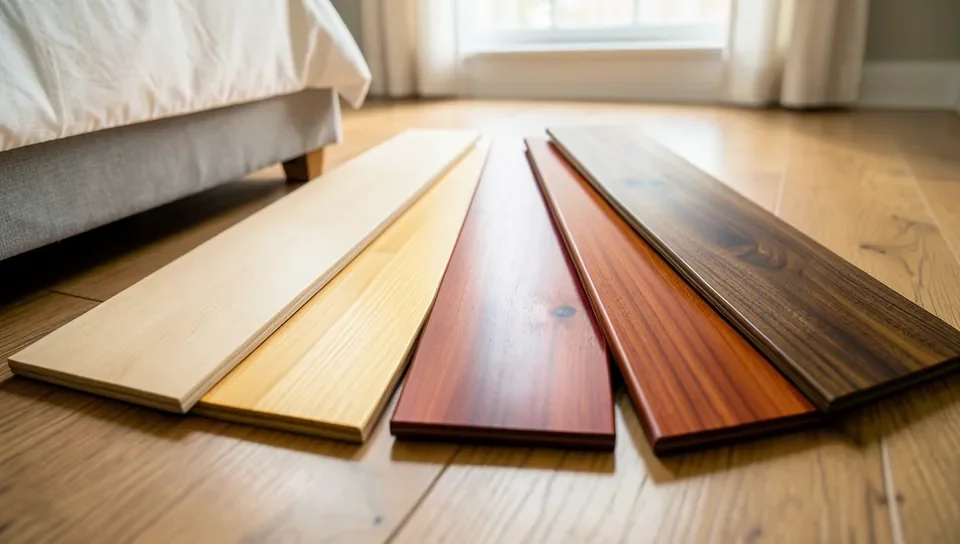
Most bedroom-flooring articles stop at species and color and never mention layout pattern, which is a mistake – the way planks are laid changes how large and custom a room feels as much as the wood tone does. Standard straight-plank installation (boards running parallel to the longest wall) is the cheapest and most common choice, and it works well in smaller bedrooms because it visually elongates the room.
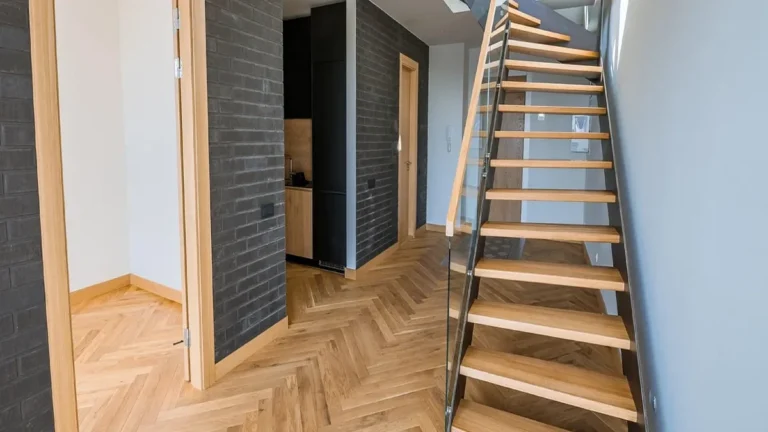
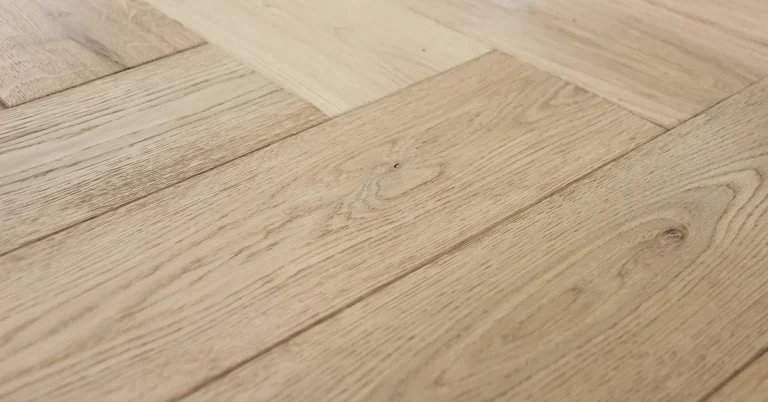
Herringbone and chevron patterns – both built from short, narrow strips (commonly 2-5 inches wide) laid at 90- or 45-degree angles to form a zigzag – read as noticeably more custom and are increasingly common in primary bedrooms with the square footage to show the pattern off. They cost more to install because of the extra cutting and labor, and they work best with wide-open floor space rather than a room broken up by a lot of furniture. Diagonal plank installation (running boards at a 45-degree angle to the walls) is a middle-ground option: it makes a small or oddly-shaped bedroom feel larger without the labor cost of herringbone, though it does waste more material at the wall edges. Wide planks (5 inches or wider) generally make a bedroom feel more open regardless of pattern, while narrow, traditional strip flooring (2.25 inches) reads more formal and traditional.
Color Schemes That Pair Well with Hardwood Floors
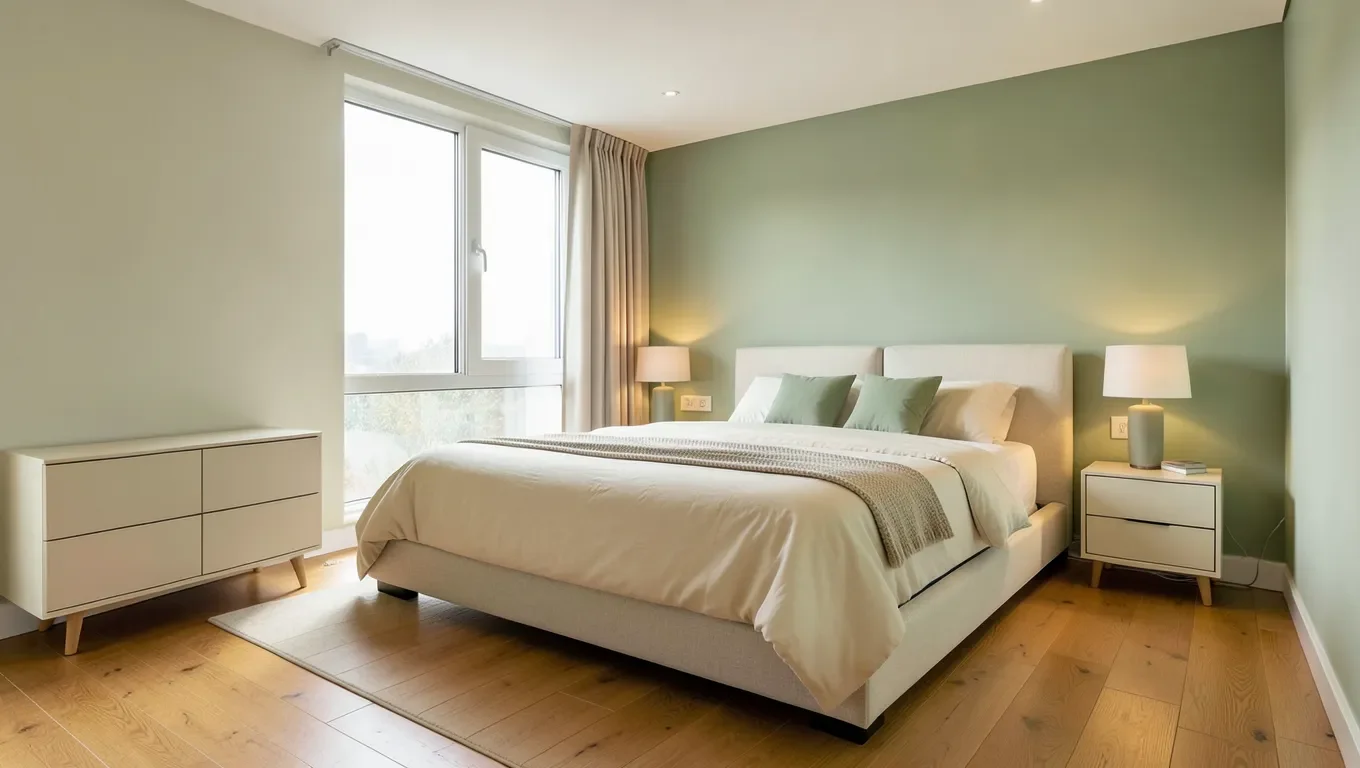
The wood tone underfoot should set the palette, not fight it. With light hardwood – blonde oak, ash, or pale maple – soft neutrals (white, cream, pale gray) keep a room feeling airy, and they leave room to add color through bedding or curtains without the walls competing with the floor. Blush pink, sage green, and navy all read well against a light floor.
Dark hardwood – walnut, espresso, or ebony-stained oak – can carry bolder wall colors: charcoal, deep navy, forest green, or burgundy all create the moody, intimate look that has become one of the more popular bedroom trends going into 2026, since a warm dark floor grounds a saturated wall color instead of making the room feel small. If bold walls feel like too much commitment, cream or warm beige walls with brass or gold accent hardware still read as elevated against dark floors without the risk.
Medium tones – cherry, hickory, natural red oak – are the most forgiving and work with both warm palettes (terracotta, olive, mustard) and cool ones (gray, sage, dusty blue). One genuinely useful habit here: always test a paint sample directly on the wall for a full day before committing, since the color temperature of your room’s light shifts noticeably from morning to evening and can turn a “neutral” gray visibly warmer or cooler than it looked in the store. For a deeper look at pairing bolder colors with wood tones, see our black and wood bedroom style guide.
Furniture Styles That Work With Hardwood Floors
Hardwood is neutral enough to support almost any furniture style, but a few pairings consistently work better than others. For a modern look, low-profile platform beds and simple, leggy nightstands let wide-plank floors read as the visual anchor of the room; black or white furniture creates contrast against light floors, while wood-toned furniture blends into darker ones rather than fighting them.
Reclaimed or distressed wood furniture – a chunky bed frame, a weathered dresser – pairs naturally with medium and rustic-grain floors like hickory or red oak for a cabin-adjacent feel. For a more traditional room, darker furniture in mahogany or cherry tones looks intentional against dark hardwood, especially paired with an upholstered headboard for softness. Mid-century pieces (tapered legs, teak or walnut finishes, low dressers) tend to look especially sharp against medium-toned floors, since the era’s furniture was originally designed around exactly that kind of flooring.
The one rule that holds across every style: mix at least one heavier furniture piece with lighter ones so the room does not feel like a matched showroom set, and let a rug (covered next) tie the furniture and floor together visually.
Rugs and Textiles: Softening a Hardwood Bedroom
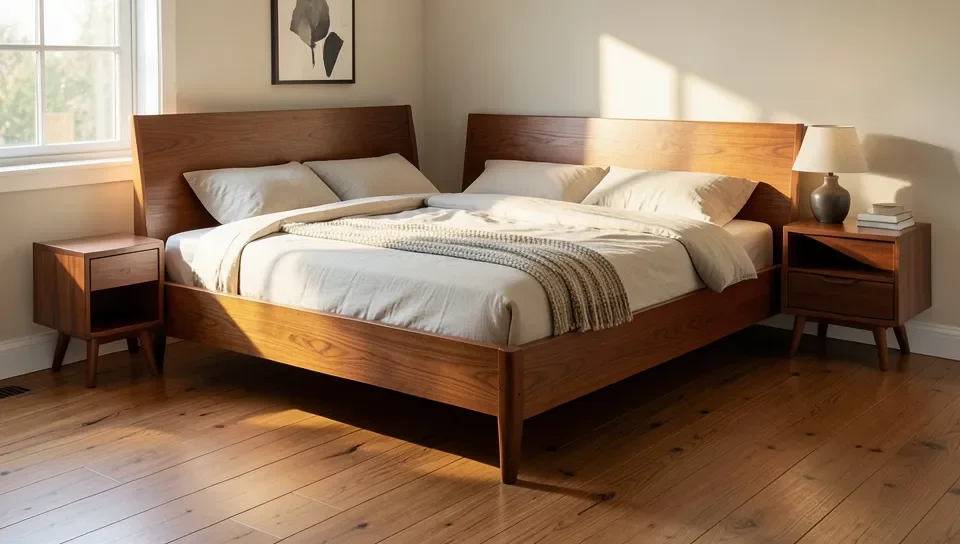
A rug is what keeps a hardwood bedroom from feeling cold, literally and visually. The standard placement rule: the rug should extend at least 18-24 inches beyond the sides and foot of the bed, with roughly two-thirds of the bed’s footprint sitting on top of it – anything smaller looks like an afterthought rather than a deliberate layout choice. Underneath, use a felt or felt-rubber rug pad (typically 1/8 to 1/4 inch thick); beyond adding cushioning, a pad keeps the rug from sliding on a finished wood surface and prevents the rug’s backing from trapping moisture against the floor’s finish.
On pattern: a busy rug competes with visible wood grain, so solid or subtly geometric designs generally read better than large florals or heavy patterns. As a rule of thumb, contrast the rug against the floor rather than matching it – a navy or charcoal rug on light floors, or a cream or oatmeal rug on dark floors, gives the eye a clear anchor point instead of everything blending into one tone. Layering a smaller patterned rug over a larger neutral one is a popular way to add texture without overwhelming the room, and it is an easy way to swap the room’s look seasonally without new flooring or paint.
Lighting Ideas That Highlight Hardwood Floors
Natural light does more for a wood floor’s grain and color than any single decor choice – sheer curtains that let daylight reach the floor make the grain and undertones visible in a way overhead lighting alone cannot replicate. For evening light, mix sources rather than one overhead fixture: a pendant or small chandelier for ambient light, bedside lamps with warm-toned (2700K-3000K) bulbs for reading, and a floor lamp in an underused corner to fill in shadows.
Warm-white bulbs consistently flatter wood tones better than cool or daylight-temperature bulbs, which can wash out a floor’s natural warmth and make it look slightly gray. A dimmer switch on the main fixture is a low-cost upgrade that lets the room shift from bright and functional during the day to soft and restful at night, which matters more in a bedroom than almost any other room in the house.
Decor and Accessories for a Personal Touch
Once the floor, palette, and furniture are settled, decor is what makes the room feel finished rather than staged. An oversized piece of wall art or a small gallery wall above the bed gives the eye a focal point that balances the horizontal lines of the floor – abstract pieces read modern, landscapes or botanical prints read calmer and more traditional.
A well-placed mirror (full-length or a round mirror above a dresser) bounces natural light back across the floor and makes a smaller bedroom feel noticeably larger. Live plants add a contrast in texture and color that a wood floor and neutral palette otherwise lack, and mixed-texture throw pillows and blankets round out the layered look. Keep clutter to a minimum – bare wood shows visual clutter more readily than a patterned carpet would, so a woven storage basket for extra blankets earns its keep here.
Maintaining Hardwood Floors in a Bedroom
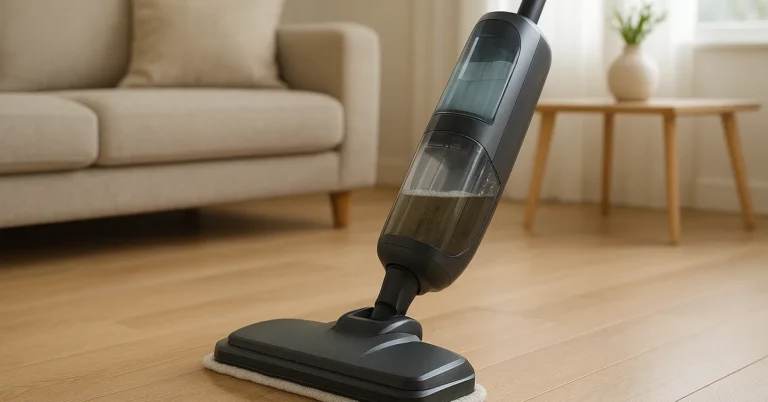
Bedroom hardwood is genuinely low-maintenance compared to other rooms, since foot traffic is light and shoes are rarely worn on it. A weekly sweep or vacuum on a hard-floor setting (never a beater-bar carpet setting, which can scuff the finish) handles most dust and grit. For deeper cleaning, a damp mop with a pH-neutral, wood-safe cleaner is enough – avoid steam mops and ammonia- or vinegar-based cleaners, both of which can dull or strip a polyurethane finish over time.
Felt pads under furniture legs and a rug pad in high-traffic spots (beside the bed, in front of a dresser) prevent most scratching; if pets share the room, trimmed nails matter more than any floor treatment. Indoor humidity is worth watching too – most manufacturers recommend keeping a room between 30 and 50 percent relative humidity, since wood that dries out in winter can develop small gaps between boards, and wood that absorbs too much moisture in summer can cup or swell at the edges. A basic hygrometer costs very little and takes the guesswork out of it.
When the finish eventually looks dull or shows heavy wear (typically somewhere in the 8-15 year range depending on traffic), a professional sand-and-refinish generally runs $3-$8 per square foot and makes solid hardwood look new again – something engineered wood with a thin wear layer usually cannot do more than once or twice before the veneer is gone.
Noise, Impact Sound, and Radiant Heat: What Most Bedroom-Flooring Guides Skip
Two practical factors get left out of almost every “hardwood bedroom ideas” article, and both matter more day to day than the paint color.
Noise and impact sound. Hardwood is a hard, reflective surface, so footsteps, dropped items, and a rolling desk chair all read louder and sharper than they would on carpet – carpet fiber and padding absorb impact noise at the source, while wood transmits it through the floor assembly instead. This matters most in a bedroom that sits directly above another living space (a downstairs living room, a neighbor’s unit in a condo or apartment, or a home office below), where footfall and furniture-dragging noise can carry through the subfloor and ceiling below. Two things genuinely help: a rug with a felt or felt-rubber pad under the highest-traffic areas, which cuts some impact noise at the surface, and an acoustic or cork underlayment installed beneath the flooring during installation, which addresses noise transmission through the subfloor rather than just at the surface. If the bedroom sits above an occupied room and noise is a real concern, ask an installer about the underlayment’s IIC (Impact Insulation Class) rating before choosing a product – it is a real, measurable spec, not a marketing term.
Radiant floor heat. If the bedroom has, or will have, radiant floor heating (hydronic tubing or an electric mat under the floor), engineered hardwood is generally the safer choice over solid hardwood. Engineered flooring’s plywood or cross-ply core is more dimensionally stable through repeated heating and cooling cycles, so it is far less prone to the cupping, gapping, or cracking that solid wood can develop as it repeatedly expands and contracts against a heat source. Solid hardwood can sometimes be used over radiant heat, but only with species and thicknesses the manufacturer specifically rates for it, and only if the system keeps surface temperatures within the manufacturer’s stated limit (commonly around 80-85 degrees F) – check the flooring manufacturer’s radiant-heat specifications before installing, not just the heating system’s own limits.
Conclusion
Hardwood gives a bedroom a foundation that works with nearly any style, but the details are what make it feel intentional: the right species and finish for how the room will actually be used, a layout pattern that suits the room’s size, a color palette that works with the wood tone instead of against it, and a rug placed with the 18-24 inch overhang rule instead of guessed at. Get those right, and the floor stops being background and becomes the thing that makes the whole room feel put together.
Frequently Asked Questions
What types of hardwood are best for bedroom floors?
Oak (red or white) and maple are the most common choices because they take stain evenly and their grain hides minor wear. Walnut and cherry bring warmer, richer tones for a cozier look, and hickory is the hardest common option if you want a heavier, rustic grain. Since bedrooms see light foot traffic, hardness matters less here than in a hallway or kitchen – color and grain should drive the decision.
How do I clean hardwood floors in my bedroom?
Sweep or vacuum weekly on a hard-floor setting, and use a damp mop with a pH-neutral, wood-safe cleaner for deeper cleaning. Avoid steam mops, ammonia, and vinegar-based cleaners, which can dull or strip a polyurethane finish over repeated use, and wipe up spills right away to prevent staining.
Can I use a rug on hardwood floors?
Yes, and it is recommended – a rug under the bed adds warmth and visual grounding. Use a rug that extends 18-24 inches beyond the bed on each side, with a felt or felt-rubber pad underneath to prevent sliding and to keep moisture from being trapped against the floor’s finish.
What colors go well with dark hardwood floors?
Charcoal, deep navy, forest green, and burgundy all pair well with dark hardwood for a moody, elevated look, since a warm dark floor grounds a saturated wall color instead of making the room feel smaller. If bold walls feel like too much, cream or warm beige with brass or gold accents still reads as elevated against dark floors.
Are hardwood floors cold in winter?
They can feel cool to bare feet, mainly because wood does not retain heat the way carpet padding does. A plush rug beside the bed and slippers solve most of the discomfort. Keeping indoor humidity between 30 and 50 percent also helps, since overly dry winter air can make wood floors feel colder and can cause boards to gap slightly.
How do I prevent scratches on hardwood floors?
Use felt pads under all furniture legs, keep rugs in high-traffic spots like beside the bed, and trim pet nails regularly. Regular sweeping also helps, since loose grit is what actually causes most fine scratches as it gets ground underfoot.
Is hardwood flooring noisy in a bedroom?
It can be louder underfoot than carpet since wood reflects rather than absorbs impact sound, which matters most if the bedroom sits above another living space. A rug with a felt pad in high-traffic areas and an acoustic underlayment installed beneath the flooring both meaningfully reduce the noise that carries through to the room below.
Can you install hardwood floors over radiant heat in a bedroom?
Yes, but engineered hardwood is generally the better choice, since its plywood core handles repeated heating and cooling cycles more reliably than solid wood, which can cup or gap over time. If you use solid hardwood, confirm the specific species and thickness are rated by the manufacturer for radiant heat and that surface temperatures stay within their stated limit.
Sponsored / affiliate links. As an Amazon Associate I earn from qualifying purchases. I may earn additional commission from eligible campaigns.