How Much Does a Herringbone Wood Floor Cost Per Square Foot?
Installed herringbone wood flooring usually costs roughly $12 to $25 per square foot, with simpler jobs near the low end and more complex layouts or premium materials tending higher. Ignore the pattern and waste factor, and you can underbudget by hundreds or even thousands of dollars. This guide breaks the installed-cost formula, then shows how wood species, subfloor work, room shape, and layout waste move the price per square foot.
Herringbone floor cost breakdown
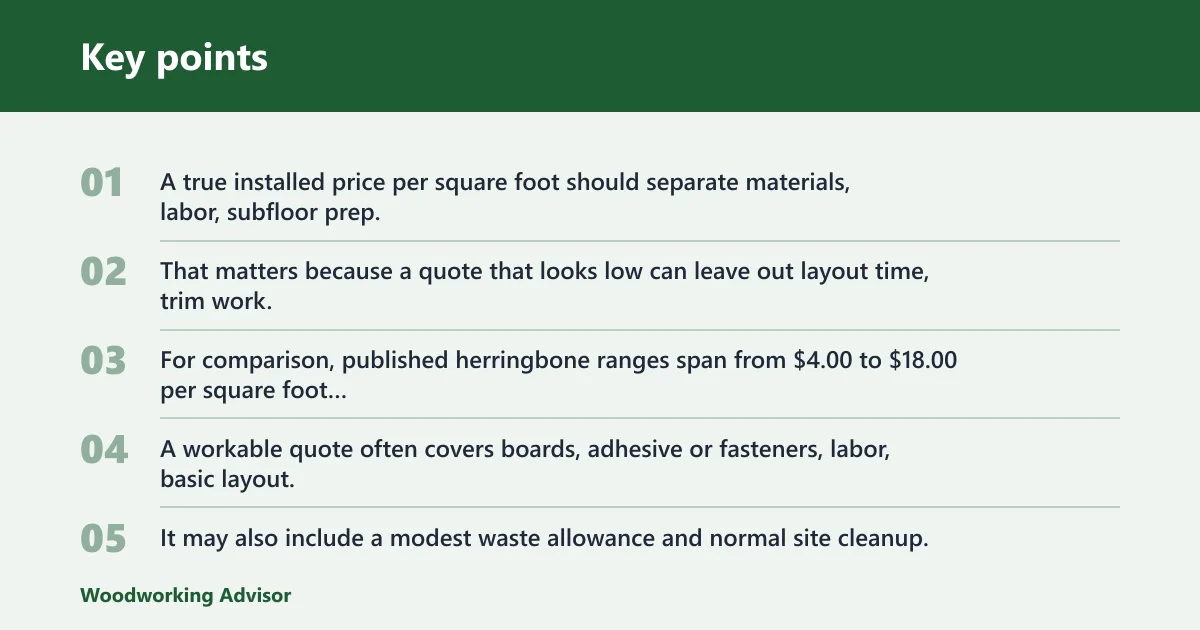


A true installed price per square foot should separate materials, labor, subfloor prep, finish, waste, and add-ons. That matters because a quote that looks low can leave out layout time, trim work, or disposal. For comparison, published herringbone ranges span from $4.00 to $18.00 per square foot and from about $8 to $28 per square foot, depending on scope and assumptions.
What a quote usually includes
A workable quote often covers boards, adhesive or fasteners, labor, basic layout, and a standard finish plan. It may also include a modest waste allowance and normal site cleanup. Some installers fold in transitions or minor trim work, but many do not.
What a quote often leaves out
Common omissions include furniture moving, door trimming, moldings, moisture mitigation, subfloor repair, haul-away, and delivery surcharges. Those items can shift a bid from a fair starting point to a much higher final total. If the installer does not list them, ask for a line item.
Why herringbone costs more than straight plank flooring
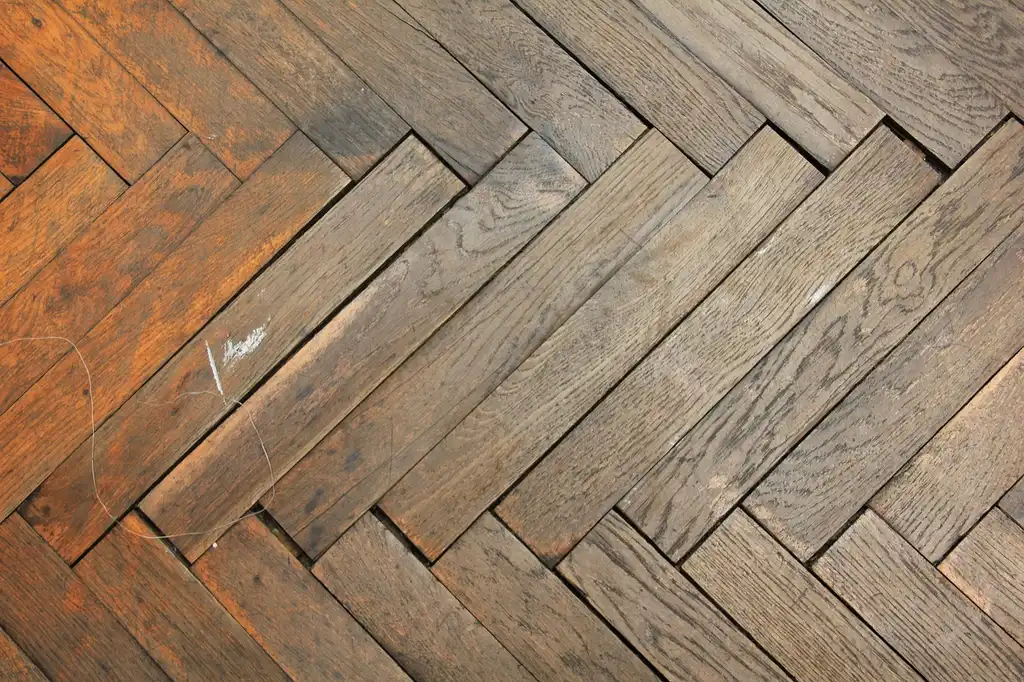
Herringbone usually costs more than straight plank flooring because the pattern needs more layout time, more cuts, and tighter alignment. A straight run is faster to set and easier to keep moving. Herringbone also increases waste, especially at walls, corners, and transitions.
Pattern layout takes more labor
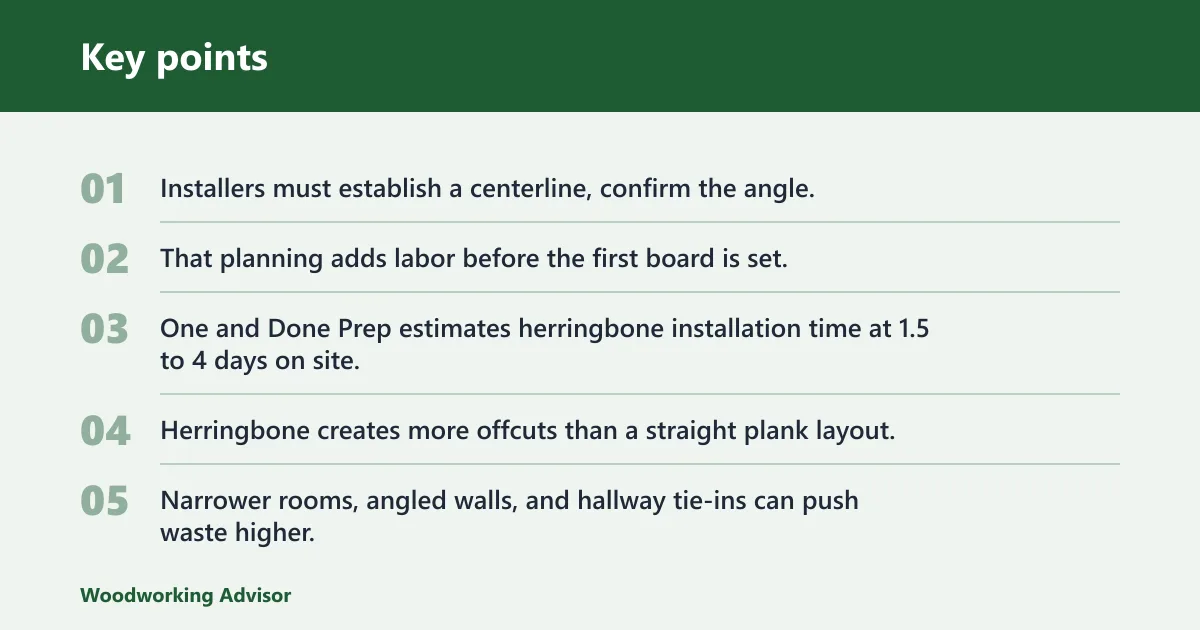
Installers must establish a centerline, confirm the angle, and keep the pattern locked in as the room changes direction. That planning adds labor before the first board is set. One and Done Prep estimates herringbone installation time at 1.5 to 4 days on site, which fits the added setup and pattern work.
Cuts and waste raise the material bill
Herringbone creates more offcuts than a straight plank layout. Narrower rooms, angled walls, and hallway tie-ins can push waste higher. Standard waste allowances are often lower for simple rooms and higher for complex ones, so the material line should be based on the room, not a generic average.
Wood species and board width
Wood species changes the material price more than many homeowners expect. Oak is usually the lower-cost domestic choice, maple often lands a bit higher, walnut costs more, and exotic species sit at the top because of supply, grading, and handling. Board width matters too, because width affects layout speed, waste, and visual balance.
Species cost impact
Domestic oak is usually the most budget-friendly reference point for herringbone. Maple often costs more, walnut more again, and exotic species can push the material budget sharply upward. If the species is premium, the labor premium can grow too, because installers may need to handle more expensive stock with greater care.
Standard width versus custom width
Standard-width boards are usually easier to source and install, which helps control both material and labor cost. Narrower boards can increase labor because there are more pieces to place and more alignment points to manage. Custom widths can also create more waste if the supplier’s cuts do not match the pattern plan.
Domestic wood typically lowers the entry price, while premium wood pushes the installed cost upward through both material and handling. The jump is most visible in small rooms, where a premium species and a complex pattern both hit the same square footage. In those cases, the per-square-foot total can rise fast.
Installation labor and prep
Labor is a major part of the total installed cost. For herringbone, that labor includes more than fastening boards. It includes pattern layout, frequent measuring, edge trimming, and finish-sensitive execution. Published labor figures vary widely, with Current Cost listing labor at $8.50, $15.00, and $25.00 per square foot, and LatestCost listing labor at $8.00, $14.00, and $22.00 per square foot.
Subfloor prep items that change the bill
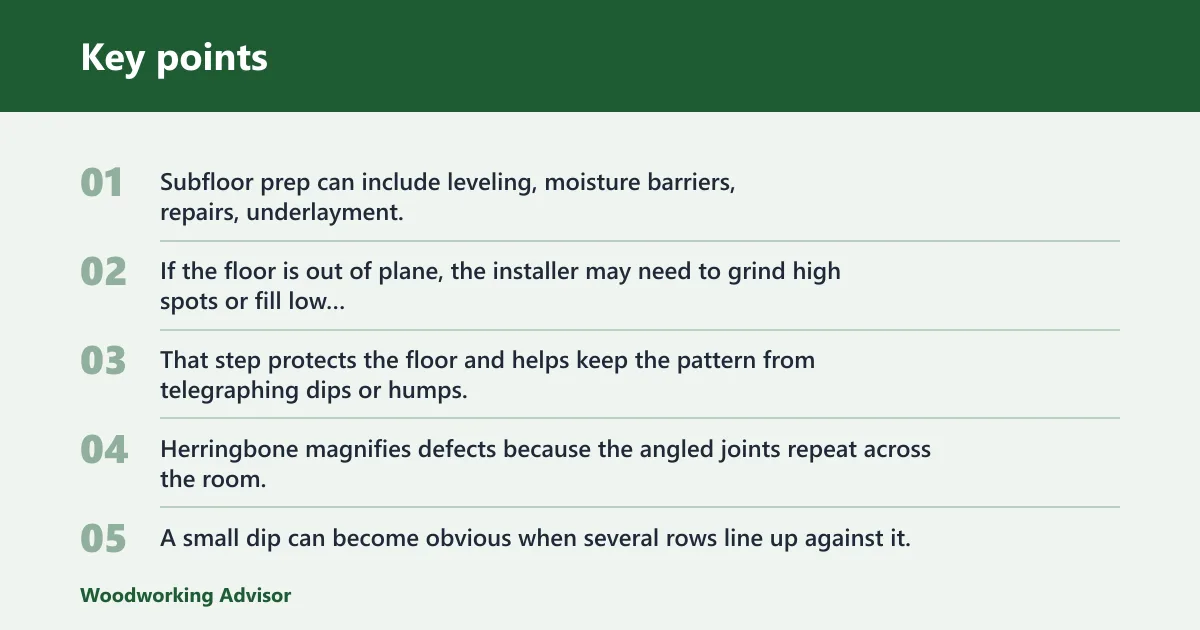
Subfloor prep can include leveling, moisture barriers, repairs, underlayment, and flatness correction. If the floor is out of plane, the installer may need to grind high spots or fill low spots before work begins. That step protects the floor and helps keep the pattern from telegraphing dips or humps.
Why flatness matters
Herringbone magnifies defects because the angled joints repeat across the room. A small dip can become obvious when several rows line up against it. On a floor with poor flatness, labor time rises and the risk of callbacks goes up, so the prep line is often money well spent.
Labor rate differences by market
Labor rates change by city because crew supply, insurance, and overhead change by city. Coastal and urban markets usually run higher. The Midwest often prices lower, while the South often falls in the middle and still varies by metro area and installer availability. Local demand can matter as much as geography.
Does engineered wood cost less than solid wood for herringbone?
Engineered wood can cost less than solid wood for herringbone, but not always by a large margin once labor and prep are included. The biggest savings usually come from the board price and easier moisture performance in some settings. If the engineered product is prefinished and standard width, it can reduce some labor.
Prefinished boards versus site-finished boards
Prefinished boards can cut sanding and coating work, which helps reduce labor and mess. That said, herringbone still needs careful layout and fitting, so prefinished material does not erase the pattern premium. Site-finished floors add sanding and coating steps, and those finishing steps can push the total upward.
Finish type and coat count
Polyurethane, oil-based finish, and water-based finish all affect cost through product price, dry time, and coat count. A topcoat system with multiple coats will cost more than a simpler finish plan. Professionally refinishing hardwood floors typically costs $3 to $8 per square foot, which helps frame the finishing portion of the budget if site work is needed. (Thisoldhouse)
Hidden costs to budget
Hidden costs often decide whether a quote feels accurate or misleading. Glue, molding, transitions, door trimming, furniture moving, haul-away, disposal, and logistics fees can add meaningful cost even on a small room. Delivery distance can also trigger surcharges, especially when material must travel far or arrive in multiple drops.
- Ask whether adhesive, underlayment, and trim are included.
- Confirm who moves furniture and who pays for it.
- Check whether doors need trimming after the floor height changes.
- Ask about haul-away, disposal, and jobsite cleanup.
- Ask for a second and third bid, and compare the included line items.
Suppose a 140-square-foot dining room needs one transition strip, new baseboard returns, and door trimming. The floor itself may look budget-friendly on paper, but those add-ons can move the true installed cost far above the board price alone.
How much does a herringbone wood floor cost per square foot installed?
A realistic installed range is about $12 to $25 per square foot for many projects, with simpler jobs near the low end and premium layouts above that. Published guides support a wide spread: Brickstone Home puts herringbone wood floors between $11 and $23 per square foot, LatestCost lists $4.00 to $18.00 per square foot, and Current Cost shows typical projects from about $8 to $28 per square foot.
Project size changes the math
Small rooms usually cost more per square foot because layout time, setup, and minimum charges are spread over fewer square feet. Whole-home scale can lower the per-foot rate if the same crew stays on site longer and setup gets amortized. That does not make the job cheap, but it can improve the unit price.
Room geometry matters
A square room with few corners is easier to plan and cut. Irregular layouts, many transitions, and hallway tie-ins take longer and create more waste. The more the pattern has to adapt to the room, the closer the job moves to the high end of the price range.
Herringbone cost scenarios
The table below shows a simple installed-cost calculator with three bands. It separates material, labor, prep, finish, waste allowance, and hidden add-ons so you can see how the total is built. The numbers are scenario estimates, not universal quotes.
| Scenario | Material cost | Labor cost | Subfloor prep | Finish | Waste allowance | Hidden add-ons | Estimated total per sq ft | Assumptions |
|---|---|---|---|---|---|---|---|---|
| Basic | $5.50 | $7.50 | $1.00 | $0.75 | $1.25 | $1.00 | $17.00 | Square room, few corners, domestic oak, standard-width boards, prefinished surface, light prep |
| Mid-range | $8.00 | $11.50 | $1.75 | $1.25 | $1.75 | $1.75 | $26.00 | Moderately irregular room, maple or better oak, standard-to-narrow boards, site finish, moderate prep |
| Premium | $13.50 | $18.50 | $3.00 | $2.25 | $2.50 | $3.25 | $43.00 | Corner-heavy layout, walnut or exotic species, custom-width boards, multi-coat finish, major prep and add-ons |
These scenario bands show why a quote can look low until the full job is counted. A simple oak floor in a square room may stay close to the bottom of the range, while a walnut herringbone in an irregular room can move quickly into premium territory.
How do herringbone costs vary by region in the U.S.?
Regional labor markets matter because installer availability, wage pressure, and overhead vary by place. Coastal and urban markets often sit higher than the Midwest, and many Southern markets fall somewhere in between. Material pricing can also shift with freight distance and supplier competition, so the same floor may not price the same way in two cities.
Regional pricing differences
In high-cost metros, labor can dominate the bill. In lower-cost regions, material and prep may make up a larger share. A project with the same square footage, species, and finish can still come in differently depending on whether the crew is booked tight or has room in the schedule.
Two quotes can use the same oak boards and still differ by several dollars per square foot because one includes more layout time, more delivery cost, and a higher skilled-installer rate.
Frequently asked questions
Why is herringbone flooring more expensive than straight plank flooring?
Herringbone costs more because the pattern takes longer to lay out, cut, and align. The installer spends more time on geometry and waste control than with straight planks. That added labor, plus higher waste in many rooms, is the main reason the installed price rises.
What factors change the cost of a herringbone wood floor the most?
The biggest drivers are wood species, board width, room geometry, subfloor condition, and labor market. Oak is usually cheaper than walnut or exotic species, standard-width boards are easier to install than custom widths, and irregular rooms raise both labor and waste.
How much do materials and labor each add to herringbone floor cost?
Material and labor are often close enough that either one can dominate the final number depending on the project. Current Cost lists materials at $6.50, $9.50, and $14.00 per square foot and labor at $8.50, $15.00, and $25.00 per square foot, which shows how quickly labor can overtake materials.
What is a realistic total budget for a small herringbone room?
For a small room, a realistic budget is often higher per square foot than a larger project because setup and layout are spread over less area. A small herringbone room can easily land in the middle or upper part of the installed range, especially if it needs prep, trim, or door work.
Sponsored / affiliate links. As an Amazon Associate I earn from qualifying purchases. I may earn additional commission from eligible campaigns.