How Much Does a Wood Stove Cost to Install?
Installing a wood stove is often estimated at about $2,500 to $7,500, and can run higher if a chimney liner, hearth, wall protection, or a new flue is needed. Miss those line items and the quote can look cheap until the final bill adds hundreds or thousands more. This guide breaks down each quote component line by line so you can spot hidden costs before you book.
How much does installation cost?
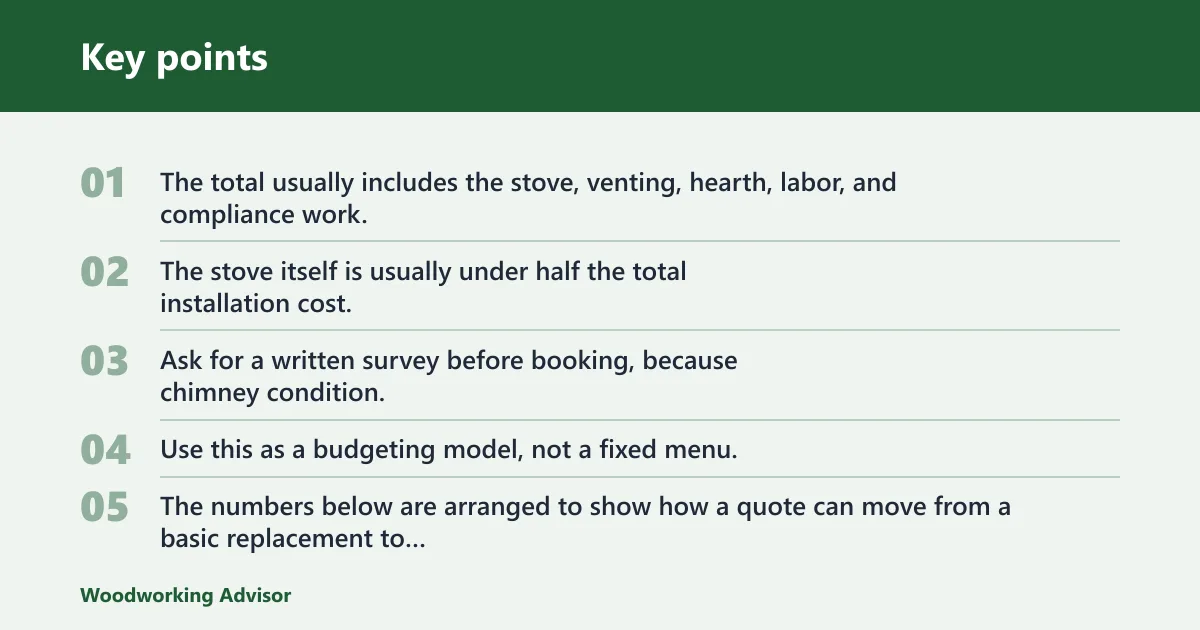


The total usually includes the stove, venting, hearth, labor, and compliance work. The stove itself is usually under half the total installation cost, so a low appliance price does not mean a low installed price. Ask for a written survey before booking, because chimney condition, clearance corrections, and permit requirements can change the quote fast.
How much wood stove table
Use this as a budgeting model, not a fixed menu. The numbers below are arranged to show how a quote can move from a basic replacement to a more involved install.
| Line item | Low | Typical | High | Why this changes |
|---|---|---|---|---|
| Stove | $500 | $1,200 | $2,500 | Freestanding stoves and inserts price differently. Heat output, finish, and efficiency features push the appliance line item up or down. |
| Flue liner or twin-wall system | $400 | $900 | $2,200 | A flue liner is normally all you need if an existing chimney is in good condition. If there is no chimney, a twin-wall insulated flue system is required, which raises material and labor cost. |
| Hearth | $150 | $400 | $700 | Most installations need a non-combustible hearth to meet building regulations. Granite, slate, and limestone each change material cost and fabrication time. |
| Labor and building work | $900 | $1,200 | $1,800 | Opening enlargement, wall protection, plaster repair, roof penetration, flashing, and cap work all add labor time. Insert installs often need more trim and finish work than freestanding units. |
| Permit and certification | $150 | $200 | $300 | Local permit or building office approval may be required before installation. In the UK, HETAS certification is included in every install the company does, and that paperwork matters for insurance and building-regs sign-off. |
| Contingency | $400 | $600 | $1,000 | Hidden repairs are common: chimney damage, structural work, clearance corrections, and venting changes can all push the final bill higher than the first quote. |
A common first-timer mistake is budgeting only for the stove itself and forgetting chimney work, hearth protection, and installation labor. Suppose one quote shows a $1,000 stove and another shows a $1,700 stove. The cheaper one can still cost more overall if it needs a new flue system, extra hearth work, and clearance corrections.
What the total usually includes
A proper quote should spell out the appliance, venting method, hearth, labor, and compliance steps. If the installer is vague about chimney prep, roof work, or inspection paperwork, expect the final number to move.
Ask for a written survey before booking. That is where the installer checks chimney condition, clearances to combustibles, ventilation, and whether the existing opening fits a freestanding stove or an insert.
What drives the price?
Existing chimney condition, stove type, and installation path drive most of the cost difference. Replacing an appliance in a serviceable chimney is a simpler job than adding a stove where no chimney exists. Clearance corrections and venting changes are common reasons a quote jumps after the first visit.
Existing chimney versus no chimney
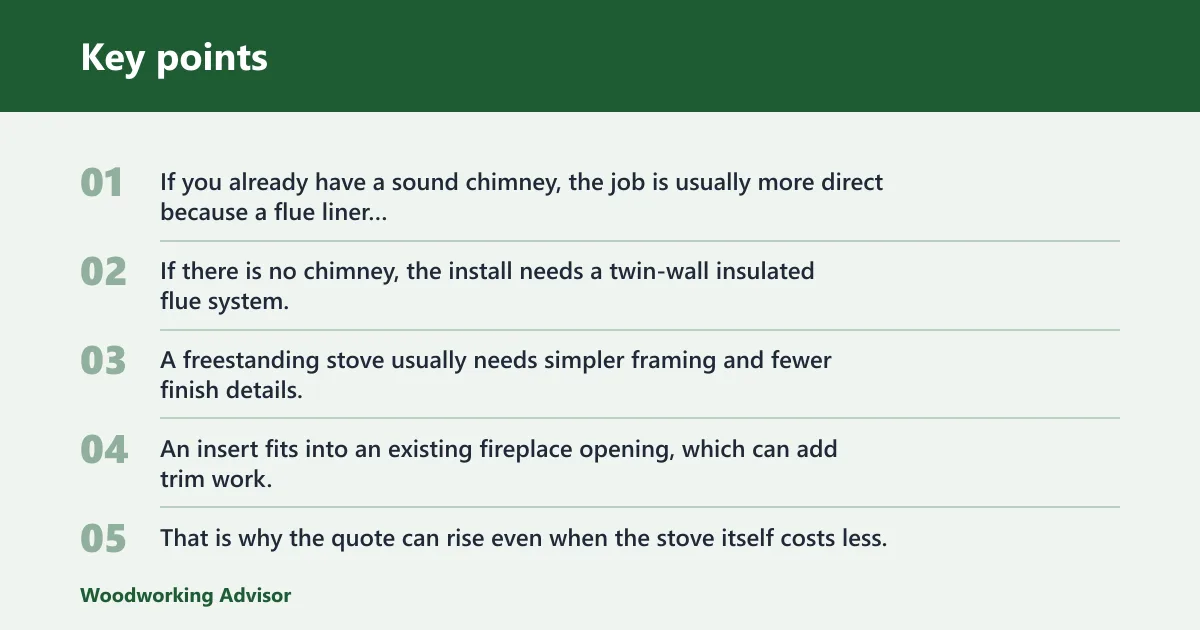
If you already have a sound chimney, the job is usually more direct because a flue liner may be enough. If there is no chimney, the install needs a twin-wall insulated flue system, plus more labor for support, routing, and weatherproofing.
Freestanding stove versus insert
A freestanding stove usually needs simpler framing and fewer finish details. An insert fits into an existing fireplace opening, which can add trim work, surround fitting, and possible opening enlargement. That is why the quote can rise even when the stove itself costs less.
Clearance and ventilation corrections
Clearance distances are not optional. The installer has to follow the manufacturer’s side and front clearances around combustibles, and the fireproof zone often needs adjustment after a site visit. Poor spacing, blocked airflow, or nearby trim can trigger extra labor.
Picture a living room with a brick fireplace opening that is too narrow for the insert surround. The stove may be fine, but the quote rises because the opening needs modification, the finish needs patching, and the clearances around the trim must be corrected.
What changes when you add a flue?
A flue changes the quote based on whether it uses an existing chimney or a new vent route. A liner is the more common add-on when the chimney is usable. A twin-wall insulated flue system is the bigger-ticket option because it is needed when there is no chimney and the vent must run through the roof or along an exterior wall.
Flue liner in an existing chimney
A flue liner is normally all you need if the chimney is in good condition. Material cost is lower than a full new system, and labor is often limited to liner installation, connection, and inspection. If the chimney is damaged, the quote can rise quickly because repair work comes first.
Twin-wall insulated flue system
If there is no chimney, a twin-wall insulated flue system is required. That means more materials, more labor, and usually more weatherproofing because the vent must pass through the roof or an exterior run. Roof penetration, flashing, and a cap are part of the system cost, not extras.
Roof penetration, flashing, and cap work
These items matter because the chimney system has to stay sealed and draft properly. Poor flashing can lead to leaks, and a badly planned cap or termination point can create draft or inspection problems later. The quote should list them explicitly.
What does the hearth add?
Most installations need a non-combustible hearth to meet building regulations. The hearth protects the floor from heat, embers, and falling ash, and it can be one of the easiest places for a quote to grow once the installer measures the site. Granite, slate, and limestone all change the finished price.
Material choices and cost impact
Granite tends to cost more when the installer needs a cut-to-size piece or a custom finish. Slate can be a simpler visual match for traditional interiors. Limestone may be chosen for appearance, but any stone hearth can require edging, cutting, and installation labor.
Sizing around the stove footprint
The hearth has to fit the stove and meet the required non-combustible area around it. If the footprint is larger than expected, the installer may need a bigger slab, extra cutting, or floor work to make the base level and safe.
Do you need a permit?
Local permit or building office approval may be required before installation. Compliance is not a paperwork afterthought; it is part of the install itself because the venting, hearth, clearances, and chimney condition all have to meet local rules before the stove is put into service.
HETAS certification and UK sign-off
In the UK, HETAS certification is included in every install the company does. That paperwork helps with building-regs sign-off and can matter for insurance and resale. It is a UK-specific item, so US homeowners should check their local approval path instead of assuming the same process applies.
Why paperwork matters for insurance and resale
Missing approval can create problems later if a claim, sale, or inspection requires proof of compliant installation. A low quote that skips certification can cost more once a correction visit or reinspection is needed.
How much does a wood burner cost to buy and install?
Buying and installing a wood burner usually costs more than the appliance alone because the install adds venting, hearth, labor, and compliance. Modern Ecodesign-ready stoves exceed 80% efficiency and can reduce particulate emissions by as much as 75% compared with older stoves, but the appliance price is still only one part of the budget.
Bob Vila reports stove prices from about $400 at the low end to $4,000 at the high end. That wide span helps explain why the installed total varies so much by size, style, and features.
Freestanding stove sizing and output
Heat output sizing should match the room and the house, not just the price tag. A stove that is too large can make the space uncomfortable and may complicate clearance planning. Check the manufacturer’s listing for your model when comparing output, size, and installation needs.
Mobile home-certified models
Mobile home-certified models are a special case. The certification affects where and how the stove can be installed, so the quote should reflect the exact listing for the model and the dwelling type. Do not assume a standard freestanding stove will meet that requirement.
Maintenance and inspection costs
After installation, budget for sweeping and inspection. Chimney systems need regular checks because creosote can build up in the flue and create a fire risk. The more often you use the stove, the more important routine inspection becomes.
Sweeping frequency and chimney condition
How often you sweep depends on usage, fuel quality, and local guidance. A stove that is used heavily will need more attention than one used only a few times each season. The key point is simple: the chimney system is part of ownership, not a one-time purchase.
What to budget after installation
Plan for sweeping, periodic inspection, and any repair found during service. If the system uses a roof penetration, flashing, or external flue, those parts should be checked during routine maintenance because weather exposure can shorten the time between service calls.
- Get a written survey before you accept a quote.
- Ask whether the chimney is usable as-is or needs a liner.
- Confirm whether a twin-wall insulated flue system is required.
- Check hearth size, material, and floor protection requirements.
- Verify clearances to combustibles and any ventilation changes.
- Confirm permit, inspection, and certification paperwork in writing.
Frequently asked questions
How much does a wood stove cost to install?
A typical installed wood stove project is often quoted around $2,500 to $7,500, with the total varying based on flue needs, hearth work, labor, and local compliance requirements. The stove itself is usually under half the total installation cost, so a cheap appliance can still lead to a high final bill.
What drives the price of a wood stove installation quote?
The main price drivers are whether there is an existing chimney, whether a liner or twin-wall system is needed, and how much labor the site requires. Freestanding units, inserts, clearance corrections, and building work can all change the quote before the stove is even connected.
Do I need a permit to install a wood stove?
Local permit or building office approval may be required before installation. That step matters because the stove, hearth, clearances, and chimney system all have to meet local rules. In the UK, HETAS certification is included in every install the company does and supports sign-off.
What costs are included in stove installation?
A complete quote should include the stove, flue liner or twin-wall system, hearth, labor, permit or certification, and a contingency for repairs. If the installer leaves out chimney repairs, structural changes, or roof work, the final invoice can rise after the site visit.
What makes a wood stove installation more expensive?
It gets more expensive when the chimney is damaged, when there is no chimney and a new flue route is needed, or when the stove needs clearance corrections and finish work. Insert installs, roof penetration, flashing, and cap work also add labor and material cost.
Sponsored / affiliate links. As an Amazon Associate I earn from qualifying purchases. I may earn additional commission from eligible campaigns.