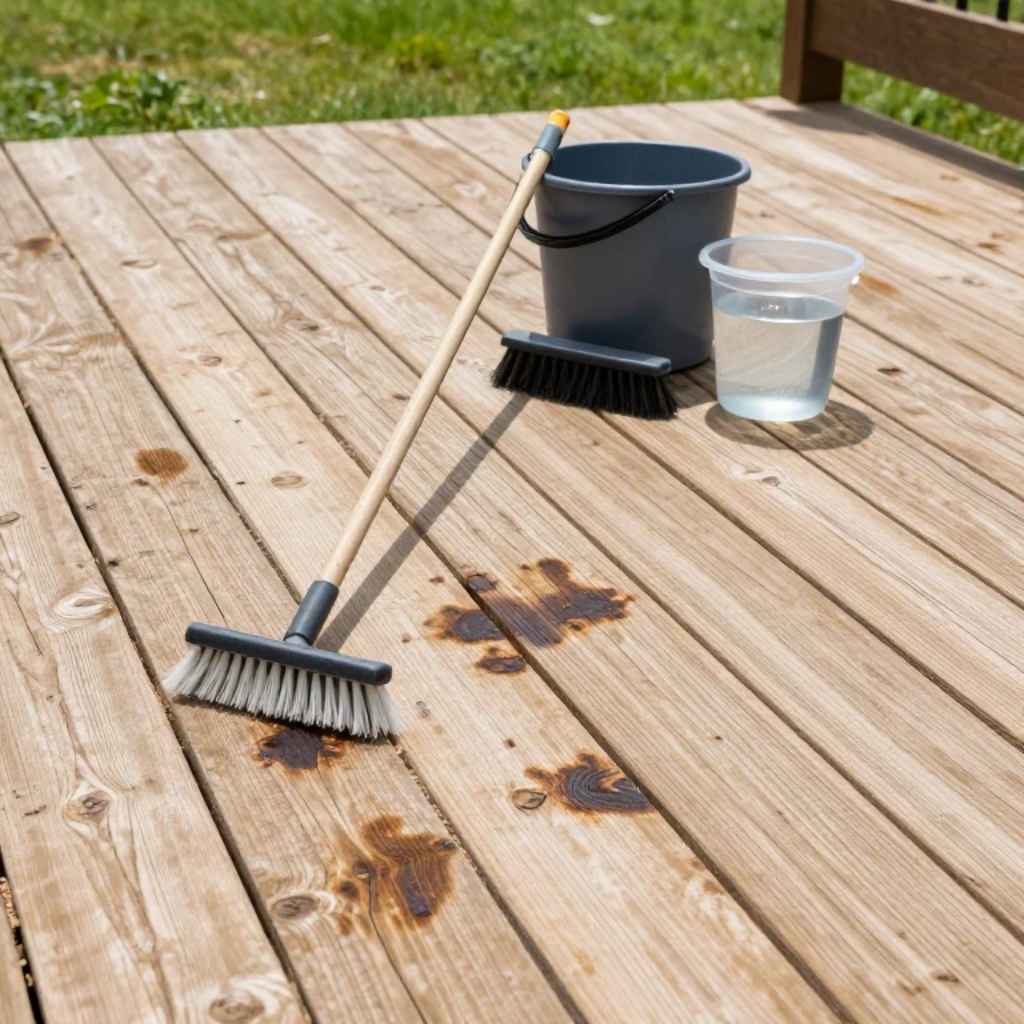
How to Clean a Stained Deck Without Ruining the Wood
Cleaning a stained deck can feel tricky. You want to get rid of those ugly marks, but you don’t want to damage the wood. Many people worry about using the wrong cleaner or scrubbing too hard, which can leave permanent scars.
It’s a common puzzle for homeowners. But don’t fret! We’re going to break down exactly How to Clean a Stained Deck Without Ruining the Wood with simple steps.
Note: this guide assumes your deck already has stain or sealer on it. If you’re starting from bare or heavily weathered wood with no finish to protect, see our general wooden deck cleaning guide instead, which covers oxygen-bleach mold/mildew treatment and safe pressure-washing technique.
You’ll be enjoying your beautiful deck again in no time. Let’s get started.
Choosing The Right Deck Cleaner For Stains
Picking the correct cleaning product is the first big step when you want to clean your deck without making things worse. Different stains and wood types need different treatments. Using a cleaner that’s too harsh can strip the wood’s natural color or even cause it to splinter.
We’ll look at common cleaners and when to use them, making sure your deck stays looking great.
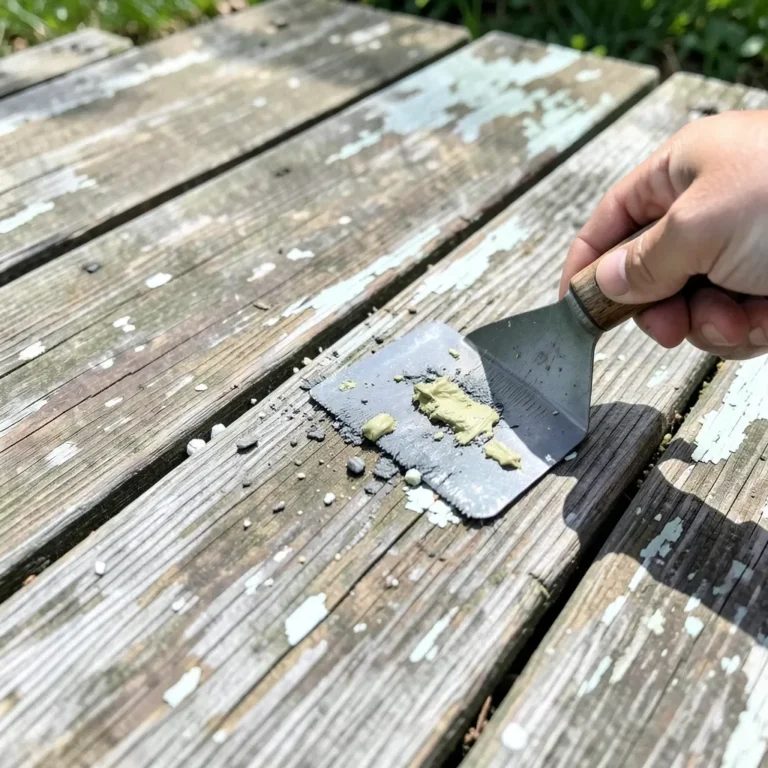
If cleaning reveals the old stain itself is peeling or failing, cleaning alone won’t save it — that deck needs the coating taken off first, and our wood stain remover comparison includes the deck-specific stripper options.
Types Of Deck Stains And Their Challenges
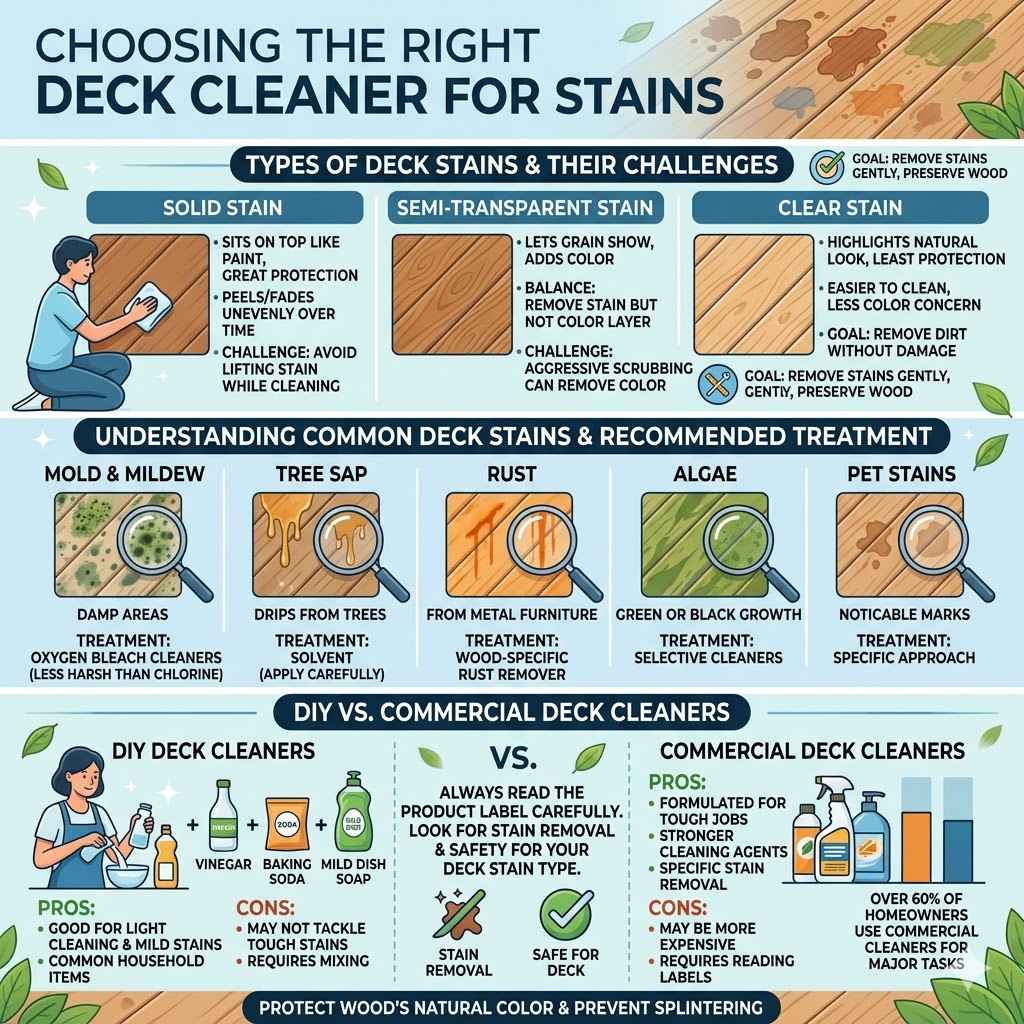
Deck stains aren’t all the same. They come in different forms, like solid, semi-transparent, and clear. Each type protects the wood but also presents unique cleaning challenges when stains occur.
- Solid stains look a lot like paint. They sit on top of the wood, offering great protection. However, they can be harder to clean without lifting the stain itself.
- Over time, solid stains can peel or fade, leading to uneven appearance. When trying to remove stains, you must be gentle.
- Semi-transparent stains let some of the wood grain show through. They add color while letting the natural beauty of the wood peek out. Cleaning these requires a balance.
- You want to remove the stain but not the color embedded in the wood. Aggressive scrubbing can remove the semi-transparent stain layer.
- Clear stains offer the least protection and color. They highlight the wood’s natural look. Cleaning clear-stained decks is usually easier because there’s less color to worry about.
The main goal is removing dirt and grime without damaging the wood itself.
Understanding Common Deck Stains
Stains on your deck can come from many sources. Mold and mildew are common, especially in damp areas. Algae can also grow, leaving green or black spots.
Tree sap can drip and harden. Pet stains can leave noticeable marks. Even rust from metal furniture can leave orange streaks.
Each of these needs a specific approach to removal.
For instance, mold and mildew are best tackled with oxygen bleach cleaners. These are less harsh than chlorine bleach. Tree sap might need a solvent, but applied carefully.
Rust stains often require a rust remover specifically designed for wood. Understanding the source of the stain helps you pick the safest and most effective cleaner.
DIY Versus Commercial Deck Cleaners
You have a choice between making your own cleaner or buying one. Both can work well if used correctly. DIY options often use common household items like vinegar, baking soda, or mild dish soap.
These can be good for light cleaning or specific, mild stains.
Commercial cleaners are formulated for tough jobs. They often have stronger cleaning agents. Some are specifically made for stain removal without damaging the deck’s finish.
Always read the product label carefully. Look for cleaners that mention stain removal and are safe for your type of deck stain. A common statistic is that over 60% of homeowners use commercial deck cleaners for major cleaning tasks.
Safe Cleaning Methods For Various Deck Stains
Once you know what type of stain you’re dealing with and have a cleaner in mind, it’s time to talk about how to use it. Gentle methods are key to preserving your deck’s wood and finish. We will cover different stain types and how to clean them safely.
Removing Mold Mildew And Algae
Mold, mildew, and algae are the most common culprits for deck staining. They thrive in damp, shady environments. Left untreated, they can make your deck look unsightly and even become slippery.
Oxygen Bleach Solution. Mix one cup of oxygen bleach (like OxiClean) with a gallon of warm water. Apply this solution to the stained areas using a garden sprayer or a sponge mop.
Let it sit for 10-15 minutes, allowing the oxygen bleach to break down the organic matter. Then, gently scrub the area with a soft-bristle brush. Rinse thoroughly with clean water.
This method is effective and generally safe for most wood types and stains.
Vinegar Wash. For milder cases, a solution of equal parts white vinegar and water can be effective. Spray it on, let it sit for about 30 minutes, then scrub and rinse.
Vinegar is a natural disinfectant and can kill mold and mildew spores.
Commercial Deck Wash. Many brands offer deck washes specifically designed to combat mold and mildew. Ensure the product is safe for stained decks.
Follow the manufacturer’s instructions carefully, as they often involve specific application and rinsing procedures.
A common mistake is using chlorine bleach. While it kills mold, it can also lighten the wood and damage the stain. It can also be harmful to surrounding plants.
Oxygen bleach is a much safer alternative that still gets the job done effectively.
Tackling Tree Sap And Pet Stains
Tree sap can be sticky and hard to remove, especially after it dries. Pet stains, while often organic, can also leave color marks.
Tree Sap Removal. For fresh sap, try a mild soap and water solution with a soft cloth. For dried sap, you might need a wood-safe degreaser or a bit of mineral spirits.
Apply a small amount to a rag and gently rub the sap. Work in small sections. After removing the sap, clean the area with a mild soap and water solution and rinse well.
Pet Stain Treatment. For organic pet stains, an enzyme cleaner designed for pet messes can be very effective. These cleaners break down the stain and odor.
For tougher, set-in stains, you might use a deck cleaner that contains a mild bleach alternative. Always test in an inconspicuous spot first. Blotting the stain gently is better than harsh scrubbing.
Consider this scenario: You have sticky pine sap on your beautiful cedar deck. You grab a scrub brush and harsh cleaner, and suddenly you’ve removed not just the sap but also the semi-transparent stain in that spot. The wood is now lighter and looks patchy.
This is what we want to avoid by using targeted, gentle methods.
Dealing With Grease Oil And Rust Stains
Grease, oil, and rust stains are often the most challenging to remove from decks. They can penetrate the wood and set in quickly.
Grease and Oil Stains. For fresh grease or oil stains, act fast. Cover the stain immediately with an absorbent material like kitty litter, baking soda, or cornstarch.
Let it sit for several hours or overnight to soak up as much oil as possible. Then, sweep it up. For remaining marks, use a deck cleaner formulated for grease and oil.
Some people have success with a paste of baking soda and water, left to sit on the stain before gently scrubbing and rinsing.
Rust Stains. Rust stains often require a specific rust remover. Look for products made for outdoor use and wood.
These typically contain oxalic acid, which helps to dissolve rust. Apply the product according to the directions, usually letting it dwell for a short period before scrubbing and rinsing. Always test in a hidden area first.
Sometimes, a light sanding can help if the stain is very deep and the remover doesn’t fully work.
A study by a home improvement association found that over 75% of deck maintenance issues reported by homeowners involved stain removal, with grease and rust being the most difficult types. This highlights the importance of using the right products and techniques.
The Cleaning Process Step-By-Step
Now that you know your options for cleaners and stain types, let’s walk through the actual cleaning process. Following these steps carefully ensures you achieve the best results without harming your deck.
Preparation Is Key
Before you start scrubbing, some preparation is needed. This makes the cleaning smoother and safer.
- Clear the Deck. Remove all furniture, planters, grills, and any other items from the deck. This gives you full access to the surface.
- Sweep Thoroughly. Use a stiff broom to sweep away all loose dirt, leaves, and debris. Pay attention to corners and the gaps between deck boards.
- Protect Surroundings. Cover any nearby plants, shrubs, or sensitive landscaping with plastic sheeting or tarps. Some cleaners can harm plants.
- Test Your Cleaner. Always test your chosen cleaner on a small, inconspicuous area of the deck first. This helps you see how it reacts with the wood and the stain and ensures it doesn’t damage the finish or color.
Applying The Cleaner
How you apply the cleaner depends on the product and the severity of the stains. Gentleness is crucial.
Dilute If Necessary. Many cleaners need to be diluted with water. Follow the manufacturer’s instructions precisely.
Too much concentrate can be too harsh, while too little might not be effective.
Even Application. Use a garden sprayer, a sponge mop, or a wide, soft-bristled brush to apply the cleaner. Work in manageable sections, typically 5-10 feet at a time.
This prevents the cleaner from drying out before you can rinse it.
Allow Dwell Time. Let the cleaner sit on the stained areas for the recommended time. This dwell time allows the cleaner to break down the stain.
Do not let it dry completely on the surface.
A common scenario involves someone spraying cleaner everywhere at once. By the time they get to the first section to scrub, the cleaner has dried, leaving streaks or making the stain harder to remove. Working in smaller, controlled sections is a simple but vital technique.
Gentle Scrubbing Techniques
Scrubbing is often necessary, but it must be done with care.
Use A Soft-Bristle Brush. Never use a wire brush or a brush with stiff bristles. These can easily scratch and damage the wood grain and the stain.
A deck brush with synthetic, medium-soft bristles is ideal.
Scrub With the Grain. Always move your brush in the direction of the wood grain. Scrubbing against the grain can cause visible scratches and wear patterns.
Focus on Stains. Apply gentle pressure directly to the stained areas. You don’t need to scrub the entire deck vigorously unless it’s generally dirty.
Imagine a deck with painted-on lines from where furniture used to sit. A homeowner might think they need to scrub hard to get those lines off. But with the right cleaner and gentle circular motions or light back-and-forth scrubbing along the grain, the stain lifts without damaging the underlying paint or wood.
Rinsing and Drying
Proper rinsing is as important as cleaning.
Rinse Thoroughly. Use a garden hose with a spray nozzle to rinse away all traces of the cleaner and loosened dirt. Ensure you rinse from the top of your deck downwards.
Avoid High Pressure. A pressure washer can be tempting, but use it with extreme caution. High pressure can easily damage wood fibers, especially on older or softer woods.
If you use one, keep it on a low setting and a safe distance from the deck.
Allow to Dry Completely. Let the deck air dry completely before putting furniture back or applying any sealers or stains. This can take 24-48 hours, depending on the weather.
Many people rush the drying process. They put their patio furniture back too soon, and the damp wood can trap moisture, leading to more mold or mildew. Patience here ensures your hard work lasts.
When To Reapply Stain Or Sealant
Cleaning is often just the first part of deck maintenance. After cleaning, you might need to refresh the deck’s protection.
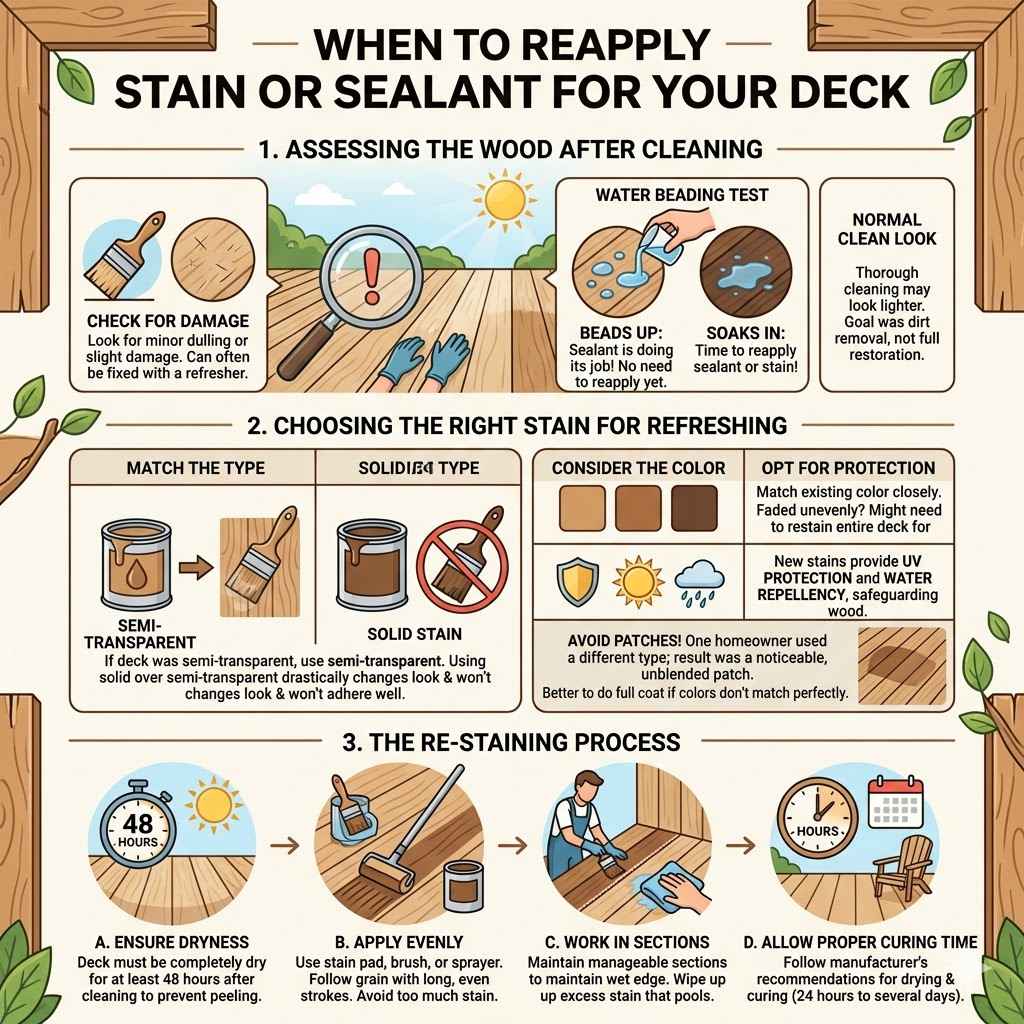
Assessing The Wood After Cleaning
Once your deck is clean and dry, take a good look at it. This assessment helps decide the next steps.
Check for Damage. Look for any areas where the cleaning process might have dulled the stain or slightly damaged the wood surface. Minor dulling can often be fixed with a refresher stain.
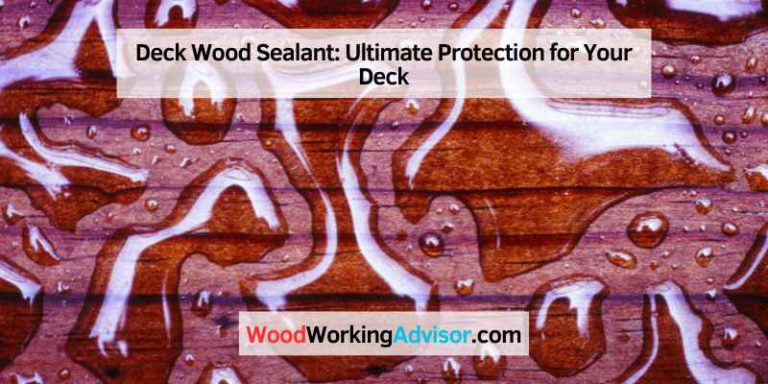
Water Beading Test. Pour a small amount of water onto the deck surface. If the water beads up, the sealant is still doing its job.
If the water soaks into the wood, it’s time to reapply a sealant or stain.
A deck that was thoroughly cleaned might look lighter than before. This is normal. The goal of cleaning is to remove dirt and grime, not necessarily to restore the original stain color unless that is part of the treatment.
Choosing The Right Stain For Refreshing
If your deck needs a refresh, selecting the correct stain is important. You want to match the existing look as closely as possible.
Match the Type. If your deck was stained with a semi-transparent stain, use another semi-transparent stain. Using a solid stain over a semi-transparent one will drastically change the look and might not adhere well.
Consider the Color. Try to find a color that closely matches your existing stain. If you can’t find an exact match, or if the deck has faded unevenly, you might need to restain the entire deck for a uniform appearance.
Opt for Protection. New stains provide UV protection and water repellency, safeguarding the wood from future damage and stains.
One homeowner wanted to touch up a faded spot. They bought a stain that looked close but was a different type. The result was a noticeable patch that didn’t blend in, making the deck look worse than before.
It’s often better to do a full coat if the colors don’t match perfectly.
The Re-Staining Process
Re-staining is similar to the initial staining process.
- Ensure Dryness. The deck must be completely dry, ideally for at least 48 hours after cleaning. Moisture trapped under new stain can cause it to peel.
- Apply Evenly. Use a stain pad, brush, or sprayer to apply the stain in long, even strokes following the wood grain. Avoid applying too much stain at once.
- Work in Sections. Just like cleaning, work in manageable sections to maintain a wet edge and prevent lap marks. Wipe up any excess stain that pools.
- Allow Proper Curing Time. Follow the manufacturer’s recommendations for drying and curing times before placing furniture back on the deck. This can range from 24 hours to several days.
Frequently Asked Questions
Question: What is the best way to remove green algae from a wooden deck
Answer: For green algae, a solution of oxygen bleach and water is very effective and safe. Apply the mixture, let it sit for about 15 minutes, gently scrub with a soft brush, and rinse thoroughly with water.
Question: Can I use a pressure washer to clean my deck
Answer: You can use a pressure washer, but with extreme caution. Use a low-pressure setting and keep the nozzle at a safe distance to avoid damaging the wood fibers and the stain.
Question: How often should I clean my deck
Answer: It’s generally recommended to clean your deck at least once a year, typically in the spring. If you notice mold, mildew, or significant staining, you may need to clean it more often.
Question: What if my deck stain fades after cleaning
Answer: If the cleaning process dulls or fades the stain, it’s a sign that you might need to reapply a refresher stain or a new coat of stain to protect the wood and restore its appearance.
Question: Is dish soap safe for cleaning stained decks
Answer: Mild dish soap diluted in water can be safe for light cleaning. However, avoid harsh detergents or soaps with degreasers that might strip the stain. Always test in an inconspicuous area first.
Summary
Learning how to clean a stained deck without ruining the wood involves understanding your deck’s type and the stain’s source. By choosing the right gentle cleaners, preparing properly, and using careful scrubbing and rinsing techniques, you can effectively remove stains. Regularly assessing your deck and reapplying protective stains or sealants will keep it looking great for years to come.
Sponsored / affiliate links. As an Amazon Associate I earn from qualifying purchases. I may earn additional commission from eligible campaigns.