How to Measure for Blum Undermount Drawer Slides (Size Chart)
For Blum TANDEM undermount slides, opening width minus 42 mm (1-21/32″) is the inside width between your drawer sides, not the outside width. The outside width depends on side thickness: with 5/8″ sides, subtract only 13/32″ from the opening. Mixing the two builds a box about 1-1/4″ too narrow. This guide covers the width formula, a length chart by cabinet depth, height limits, rear notch specs, and inset setbacks, all from Blum.
Blum Undermount Drawer Slide Size Chart: Length vs Cabinet Depth
Best 21-Inch Blum Slide Pick
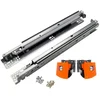 |
BLUM 21 Inch Undermount Drawer Slide, 563H5330B, Pair with Locking Devices: $37.99 This is the 21-inch size from the chart below, the one a standard 24-inch deep base cabinet takes. It is the 563H5330B part number Blum’s own sheet uses for its 21-inch examples.
|
As an Amazon Associate we earn from qualifying purchases.
Blum TANDEM plus BLUMOTION 563H runners come in five lengths, and the length you choose is set by the inside depth of the cabinet, not by a rule of thumb. Blum’s installation sheet lists a minimum inside cabinet depth for each length. The chart below shows the frameless values plus the face frame range when a rear bracket is used (Blum 563H/563 installation instructions).
| Slide model | Drawer box depth | Runner length | Min. inside cabinet depth (frameless) | Inside depth range (face frame, rear bracket) |
|---|---|---|---|---|
| 563H5330B | 21″ (533 mm) | 21-9/16″ (548 mm) | 21-15/16″ (557 mm) | 21-15/16″ to 23-19/32″ (557-599 mm) |
| 563H4570B | 18″ (457 mm) | 18-17/32″ (471 mm) | 18-29/32″ (480 mm) | 18-29/32″ to 20-9/16″ (480-522 mm) |
| 563H3810B | 15″ (381 mm) | 15-9/16″ (395 mm) | 15-29/32″ (404 mm) | 15-29/32″ to 17-9/16″ (404-446 mm) |
| 563H3050B | 12″ (305 mm) | 12-9/16″ (319 mm) | 12-29/32″ (328 mm) | 12-29/32″ to 14-9/16″ (328-370 mm) |
| 563H2290B10 | 9″ (229 mm) | 10-3/16″ (259 mm) | 10-15/32″ (266 mm) | 10-15/32″ to 11-25/32″ (266-299 mm) |
Two things stand out. First, the drawer box depth equals the slide’s nominal length, so a 21″ slide takes a 21″ deep box. Second, for the 12″ to 21″ slides the frameless minimum is the box depth plus 23 to 24 mm (about 15/16″). That is why a “next size down from depth minus 1 inch” shortcut can leave you a size short or a size long on shallow cabinets: check the minimum in the chart, not a rounded subtraction. A standard 24″ deep base cabinet, for example, falls in the 21″ range.
The Width Formula Most Guides Get Wrong
Blum’s sheet states that the inside drawer width must equal the opening width minus 42 mm (1-21/32″) for TANDEM to align and work properly. That number is the space between the two inner faces of the drawer sides. To get the outside width you cut, you give back the thickness of both sides, which is why the deduction changes with the material. Blum’s table for the outside width reads:
| Drawer side thickness | Deduct from opening width | Outside drawer width on a 21″ opening |
|---|---|---|
| 16 mm (5/8″) | 10 mm (13/32″) | 20-19/32″ |
| 15 mm (19/32″) | 12 mm (15/32″) | 20-17/32″ |
| 14 mm (9/16″) | 14 mm (9/16″) | 20-7/16″ |
| 13 mm (1/2″) | 16 mm (5/8″) | 20-3/8″ |
| 12 mm (15/32″) | 18 mm (23/32″) | 20-9/32″ |
The 5/8″ row matches Blum’s own worked example: a 21″ opening with 5/8″ sides gives a 20-19/32″ outside width. Check it yourself: 20-19/32″ minus two 5/8″ sides leaves 19-11/32″, which is exactly 21″ minus 1-21/32″.
The arithmetic behind the table is simple: deduction = 42 mm minus twice the side thickness. If you cut the outside width at “opening minus 42 mm” with 5/8″ sides, the box ends up 32 mm (about 1-1/4″) narrower than it should be. The locking devices only offer about 1/16″ of side-to-side adjustment, so no amount of tuning rescues that.
Side thickness limits. Blum’s installation sheet draws the drawer side at a maximum of 16 mm (5/8″), while the TANDEM product page describes the system as designed for wood sides from 1/2″ to 3/4″. The deduction table stops at 5/8″, so if you plan 3/4″ sides, apply the same inside-width rule and confirm against Blum’s documents for your specific runner before cutting. Our guide to choosing wood for drawer boxes covers which stock gives you a true 5/8″ side.
How to Measure the Cabinet Opening, Step by Step
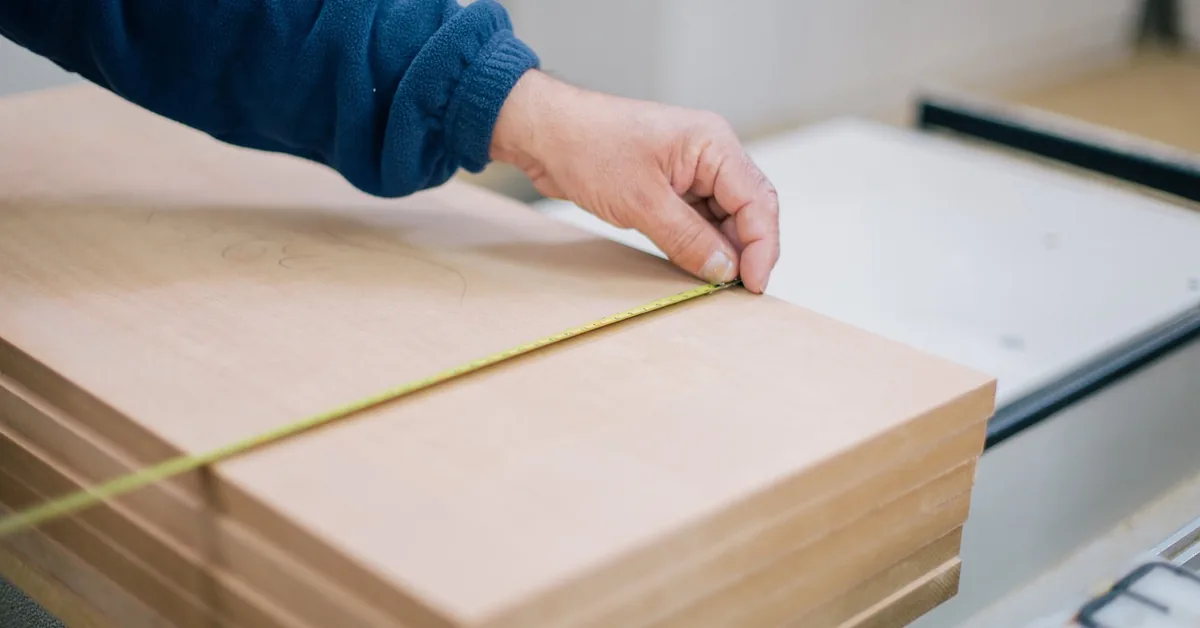
- Measure the opening width. For face frame cabinets, measure between the frame stiles at the narrowest point. For frameless cabinets, measure between the inside faces of the cabinet sides. Take it at the front, middle and back and use the smallest number.
- Measure the inside depth. Measure from the back panel to the cabinet front (frameless) or to the back of the face frame opening, then compare it with the chart above to pick the slide length.
- Measure the opening height. Measure from the cabinet bottom (or the drawer rail below) to the underside of the rail or drawer above. This sets the maximum box height, covered next.
- Measure your actual side stock. Use calipers on the real plywood, since “5/8 inch” and “3/4 inch” plywood are often a hair under nominal. The table above runs in 1 mm steps for exactly that reason.
- Calculate the outside width from the table, cut the box, and dry-fit the slides before gluing if you can.
If you are measuring a cabinet for doors at the same time, the same habit of recording the narrowest reading applies to hinge layouts; see how to measure hinges for that side of the job.
Drawer Box Height, Bottom and Rear Notch Specs
Height is the dimension people guess at, and Blum gives hard limits for it. These come from the drawer specification page of the same sheet:
- Maximum drawer side height: opening height minus 20 mm (25/32″).
- Minimum top clearance: 6 mm (1/4″) above the drawer sides.
- Bottom recess: 13 mm (1/2″), the distance from the bottom edge of the sides to the underside of the drawer bottom.
- Bottom clearance: 14 mm (9/16″) is shown beneath the drawer in Blum’s front-view drawing.
- Rear notch: Blum specifies a minimum rear notch of 35 mm (1-3/8″) as shown in its drawer-back preparation drawing.
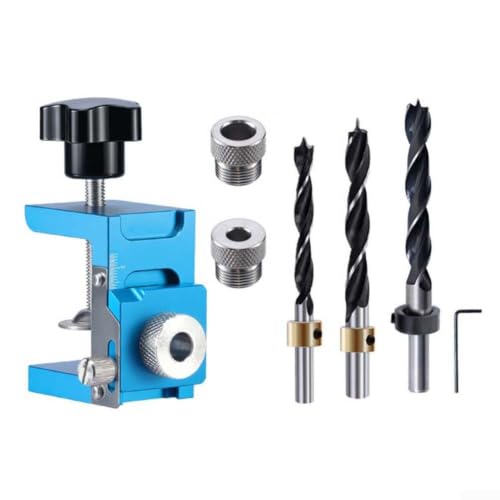
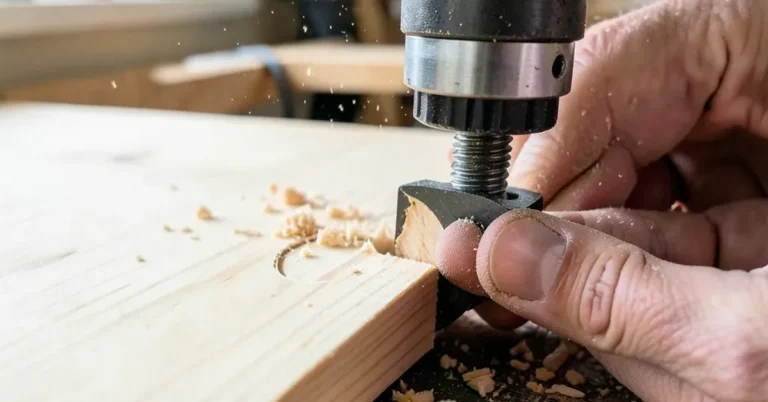
For the hardware holes, Blum calls for a 2.5 mm bit for the locking device pilot holes and a 6 mm bit with a stop collar for the rear hook holes, drilled 10 mm deep, and states that its T65.1600.01 template is essential for locating and angling those holes accurately. Skip the template and the box will rarely seat square. Runners mount with #6 x 5/8″ screws (606N or 606P).
Face Frame vs Frameless vs Inset: What Changes
The drawer box math does not change between cabinet types, but where the runner sits does. Per Blum’s diagrams, the runner’s mounting position is 10 mm (13/32″) back from the cabinet face in face frame applications and 37 mm (1-15/32″) in frameless ones, with a 3 mm (1/8″) setback and a 1.5 mm (1/16″) front gap on the drawer front. Face frame cabinets also need blocking so the runner has a flat surface flush with the inside of the frame.
Inset drawer fronts
Inset fronts sit inside the opening, so the runner must be set back by the front’s thickness. Blum gives this calculation: runner setback = sub-front thickness + drawer front thickness minus 11.5 mm (7/16″) to land the front flush with the cabinet face. Using minus 9 mm (11/32″) instead recesses the front 1 mm inside the cabinet and requires the depth-adjustable locking device. The minimum inside cabinet depth for inset is runner length + setback + 6 mm (1/4″).
Worked example: a 16 mm sub-front and a 19 mm front give a setback of 16 + 19 minus 11.5 = 23.5 mm (15/16″). With the 21″ runner (548 mm), the inside cabinet depth must be at least 548 + 23.5 + 6 = 577.5 mm, about 22-3/4″. Blum recommends a trial fit for inset work. Our guide to mounting drawer fronts with even gaps covers the front-alignment side.
Adjustment Range After Install
Blum builds adjustment into the locking devices and runners, but the ranges are small, which is why accurate box dimensions matter more than tuning. Figures from the sheet:
| Adjustment | Range | How |
|---|---|---|
| Side-to-side | 1.5 mm (1/16″) left or right, front and rear | Rotate the locking device adjustment; separate rear adjustment re-aligns the back |
| Height | 3 mm (1/8″) at the front, 5 mm (3/16″) at the back | Press the tab up and push toward the back; tool-free |
| Tilt | Lifts the back and tips the front forward | Rotate the lever on the rear of each runner |
| Depth (on runner) | 4.5 mm (3/16″) | Elongated holes in the 563 runner; loosen screws, shift, retighten |
| Depth (T51.1901.PS device) | Up to 2.5 mm (3/32″) out | Adjustment screw on the locking device |
Step-by-step tuning is in our guide to adjusting Blum drawer slides. If you are replacing old wooden runners and need to know what else changes in the cabinet, see replacing wooden drawer slides with undermount.
Load rating: Blum lists a static load rating of 100 lb for TANDEM runners across lengths 9″ to 21″ on its product page. Static load is the weight the closed drawer can carry, not a promise about repeated hard use, and the rating assumes the screw locations marked on Blum’s diagrams are all filled.
Common Measuring Mistakes That Make Drawers Bind
- Treating 42 mm as the outside width. This is the single biggest error and produces a loose box the hardware cannot fix.
- Picking the length from a rounded subtraction. Use the minimum inside depth chart; it differs by length and cabinet type.
- Using nominal plywood thickness. Each 1 mm of side thickness changes the deduction by 2 mm overall, so measure the stock you actually have.
- Forgetting the rear notch. Blum’s drawer-back drawing calls for a 35 mm (1-3/8″) minimum notch.
- Skipping the drilling template. Blum calls the T65.1600.01 template essential for accurate hook and locking device holes.
Frequently Asked Questions
What size Blum undermount slide do I need?
Choose the slide from the inside depth of the cabinet using Blum’s minimums: 21″ slide for 21-15/16″ or more, 18″ for 18-29/32″ or more, 15″ for 15-29/32″ or more, 12″ for 12-29/32″ or more, and 9″ for 10-15/32″ or more (frameless values). A standard 24″ deep base cabinet takes the 21″ slide.
Is opening minus 42 mm the inside or outside drawer width?
It is the inside width between the drawer sides. For the outside width, subtract 42 mm minus twice the side thickness. With 5/8″ (16 mm) sides that means deducting 10 mm (13/32″) from the opening width.
How tall can a drawer box be with Blum undermount slides?
Blum’s maximum drawer side height is the opening height minus 20 mm (25/32″), with at least 6 mm (1/4″) of clearance above the sides. The drawer bottom should be recessed 13 mm (1/2″) up from the bottom edge of the sides.
Can I use 1/2 inch plywood for drawer sides with Blum Tandem slides?
Yes. Blum’s table lists 13 mm (1/2″) sides: deduct 16 mm (5/8″) from the opening width for the outside width, and measure the real plywood first since it often runs under nominal. Our guide to making drawers with 1/2 plywood shows the full cut list.
How much weight do Blum Tandem slides hold?
Blum lists a static load rating of 100 lb for TANDEM runners in 9″ to 21″ lengths. That rating assumes all screw positions marked in Blum’s mounting diagrams are used.
Measure the opening, pick the length from the cabinet depth chart, convert the inside width to an outside width using your real side thickness, and cut the notch and hook holes with the Blum template. Those four steps remove nearly every fitting problem before the box is glued.
Sponsored / affiliate links. As an Amazon Associate I earn from qualifying purchases. I may earn additional commission from eligible campaigns.