Pfeil Swiss Carving Tools Review
Pfeil Swiss carving tools are worth looking at if you want a premium carving option and are willing to choose profiles carefully rather than buy a box at random. The brand is presented here through one reviewed gouge and a set example, so the main question is whether your work needs that level of specificity. This review compares Pfeil with beginner and pro alternatives and shows which exact gouges fit relief carving, printmaking, and fine detail.
Verdict

For relief carving and printmaking, the premium can be easier to justify when you need a small number of profiles that suit your cuts. It is less compelling if you mainly want broad whittling knives or a low-cost mixed set, because the price rises fast and some profiles will sit unused.
Pros and cons
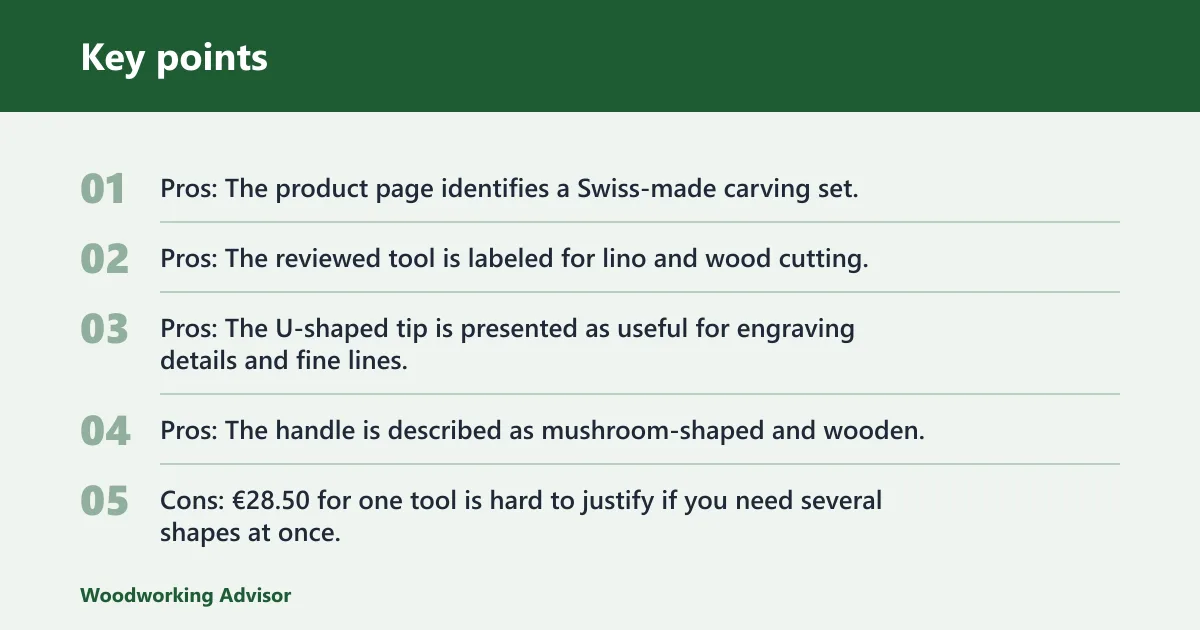
- Pros: The product page identifies a Swiss-made carving set.
- Pros: The reviewed tool is labeled for lino and wood cutting.
- Pros: The U-shaped tip is presented as useful for engraving details and fine lines.
- Pros: The handle is described as mushroom-shaped and wooden.
- Cons: €28.50 for one tool is hard to justify if you need several shapes at once.
- Cons: A set can include profiles that do little for relief carving or printmaking.
- Cons: Wrong sweep or width can make a cut feel less controlled in some projects.
Who it’s for
Pfeil fits you best if you carve reliefs, cut fine lines, or work in woodcut and linocut where edge control matters more than bargain pricing. It is a weaker match if you want an all-purpose whittling starter kit, because many Pfeil profiles are specialized and the bill rises quickly.
A common first-timer mistake is buying a broad set for a single small project. If you only need a clean background cut in a small relief block, one sharp small U-gouge and one V-tool may cover more of the job than a dozen profiles you will not touch.
Specs at a glance
| Spec | Pfeil detail |
|---|---|
| Brand positioning | Swiss brand for relief engraving tools |
| Reviewed profile | 11/1 |
| Current price on product page | €28.50 |
| Availability | In stock |
| Use label | Lino and wood cutting |
| Tip shape | U-shaped tip for engraving details and fine lines |
| Handle | Mushroom-shaped wooden handle |
| Build notes | Very sturdy construction; short, solid blade |
| Steel treatment | Electronically hardened to exacting tolerances; hardened to the edge of the bevel |
The naming is worth watching. Pfeil profiles can be listed by shape, sweep, and size in ways that differ from other brands, so the same carving goal may be described with different shorthand across retailers. That matters when you compare a single gouge against a set, especially if you are learning how the sweep and size numbers map to the cut you want.
Who is Pfeil for?
Pfeil is for relief carvers, printmakers, and detail workers who want a small number of dependable gouges and are willing to pay more for them. It is also a solid fit if you prefer buying singles and building a kit around your actual cuts rather than accepting a fixed starter bundle.
Best fit for relief carvers
Relief carving is where Pfeil makes the most sense. Sweep 7–9 U-gouges, a narrow V-tool, and one bent profile are often enough for outlines, texture cuts, and background cleanout without pushing you into oversized tools that do not match the block.
Best fit for woodcut and linocut users
The tool page specifically labels the reviewed gouge for lino and wood cutting, which makes it relevant for printmaking as well as sculpture work. In linocut, the U-shaped tip and short blade support clean line work; in woodcut, the same profile can be used for controlled incisions and shallow background removal.
When beginners should buy one Pfeil gouge first instead of a set
If you are learning, start with one gouge that matches the cut you need rather than assuming a set will solve the problem. Profile choice usually matters more than quantity, and a single tool can teach you far more about how a sweep behaves than a box full of unused shapes.
If your first project is a nameplate with narrow letters, a single V-tool and one small U-gouge may be enough to test the layout before you add more profiles.
What does the steel and handle change?
The steel treatment and handle shape change how the tool cuts, how long it stays sharp, and how much control you get during a pass. Pfeil’s hardened steel and short blade point toward edge retention and control, while the mushroom handle spreads pressure across the palm and can reduce fatigue in longer sessions.
Edge retention and hardening to the bevel
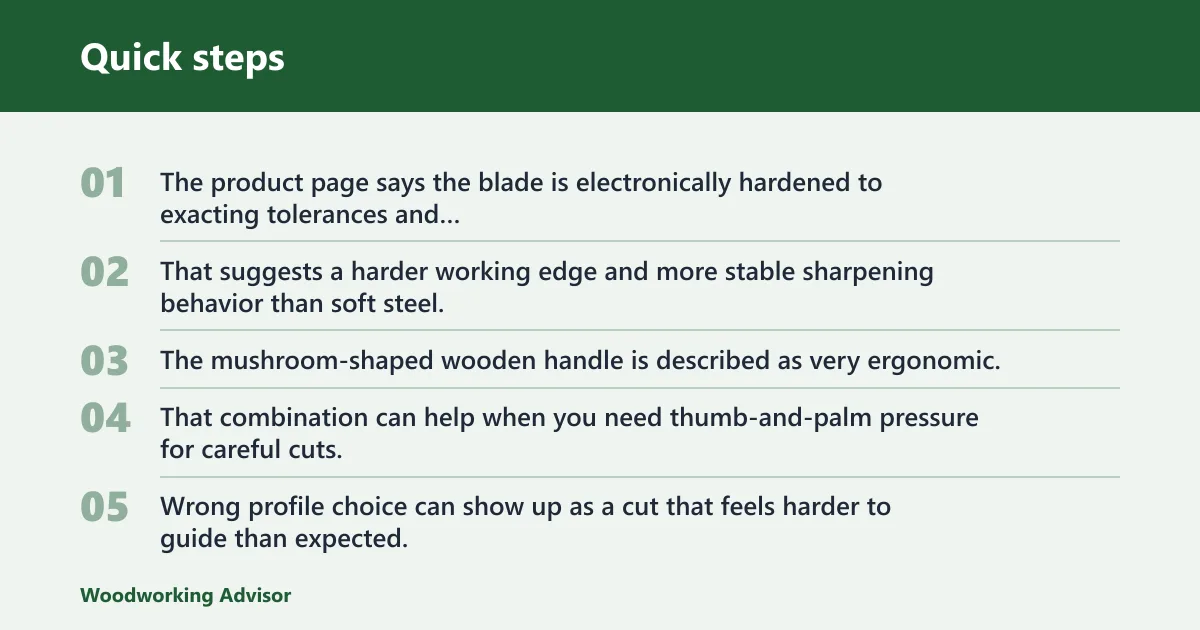
The product page says the blade is electronically hardened to exacting tolerances and hardened to the edge of the bevel. That suggests a harder working edge and more stable sharpening behavior than soft steel, though the article does not test the edge directly.
Control, palm comfort, and long-session fatigue
The mushroom-shaped wooden handle is described as very ergonomic, and the blade is short and solid. That combination can help when you need thumb-and-palm pressure for careful cuts, especially in relief work where a tool must track a line rather than wander across it.
What wrong profile choice feels like in use
Wrong profile choice can show up as a cut that feels harder to guide than expected. A sweep that is too open may feel less stable on tighter curves; a gouge that is too narrow can require repeated passes; a bent tool that is unnecessary can add awkward wrist angles without improving the cut.
Pfeil buying map
| Carving goal | Exact profile to start with | Sweep / size choice | First-purchase priority | Skip if |
|---|---|---|---|---|
| Relief outlines | V-tool | Narrow V, medium depth | High | You only carve soft flowing curves |
| Background cleanout | U-gouge | Sweep 7–9, small to medium width | High | Your blocks are tiny and only need hairline cuts |
| Fine lines and lettering | 11/1 U-profile | Small-tip detail carving | High | You work mainly on bold, wide cuts |
| Shallow texture in woodcut | U-gouge | Sweep 7, narrow width | Medium | You prefer one-pass deep excavation |
| Curved recesses | Bent tool | Small bent U or bent detail profile | Medium | Your layouts are flat and open |
| Linocut detail | Small U-gouge or V-tool | Fine line work | High | You only cut broad poster-style shapes |
For a first budget, it helps to think in terms of the few cuts you already know you need. If your work keeps returning to one narrow line shape and one clean background cut, build around those profiles first and add more only when a specific project demands them.
What works
Pfeil works when the profile matches the job. The small-tip U-shaped gouge described on the product page is presented as suitable for fine lines and engraving details, which makes it relevant to relief carving and printmaking where edges are easy to see and hard to fix later.
Profile precision for fine lines and clean relief cuts
Fine detail is where narrow profiles can justify part of the premium. A well-chosen V-tool or small U-gouge can follow letter edges, border lines, and shallow texture without crushing nearby surfaces, which keeps a relief panel cleaner before you ever touch the background.
Durability and edge holding in normal hand-tool use
The brand is positioned as Swiss-made and the blade treatment points toward strong edge retention. For a hand tool, that matters because less frequent sharpening can mean steadier work and fewer interruptions, especially when you are cutting repeated lines across a larger panel.
Where the handle shape supports control
The mushroom-shaped handle helps when you need the palm to guide the cut rather than just the fingers. That shape can be useful on longer sessions because it gives a fuller contact point, which may feel steadier than a thin handle when you are pushing through denser wood or a stubborn linoleum sheet.
What does not?
Pfeil is not the right answer for every buyer. The premium is less convincing if you only need a few casual cuts, if you are learning broad sharpening basics, or if your projects do not call for the specific sweep and width that makes a gouge earn its keep.
If your work is occasional whittling or simple hobby cuts, the cost per tool can be hard to defend. In that case, a lower-priced beginner set may cover the learning stage better, even if the steel and handle feel less refined.
Which sets include tools most buyers will not use?
Large sets are the easiest way to overspend. Many buyers need only a narrow V-tool, one or two U-gouges, and perhaps a bent tool; the rest of a set can duplicate functions or include shapes meant for tasks you may never do.
Common failures from the wrong sweep, width, or bevel choice
Wrong sweep choice can make a cut feel less controlled on tighter curves. A width that is too broad can tear detail out of a small print block, while a bevel that is not maintained can increase edge rolling and force more frequent stropping.
Should you buy it?
Buy Pfeil if you know your profile needs and want a small, durable lineup for relief carving, woodcut, or linocut. Skip the big set if you are still exploring your style, because the better purchase is usually one or two exact gouges that match your cuts, not a box full of uncertain fits.
Single gouge or set
Singles make more sense for most readers. A set only earns its keep when you already know you will use several adjacent sweeps and sizes, or when a specific project demands a matched group of profiles from the start.
Sharpening and maintenance
Pfeil still depends on maintenance. Stropping should be part of normal ownership, and edge upkeep matters more as soon as you cut harder woods or push a detail tool through repeated relief passes. The practical cost is not only the price tag; it is the time you spend keeping the edge ready.
Picture a printmaker cutting a small linocut edition. If the edge starts to drag after a few passes, stropping returns the bite faster than forcing the tool through dull steel, and that keeps the line cleaner with less risk of slipping.
Alternatives

FLEXCUT Carving Tools, Mini Palm Gouges for Detailed Carving, Set of 4 is the better first buy if you want a lower entry price and a compact detail-focused kit. Based on the published specs and buyer feedback, Flexcut is positioned toward fine carving with ash hardwood handles and carbon steel blades, while Pfeil is presented here as the more specialized and premium-leaning choice.
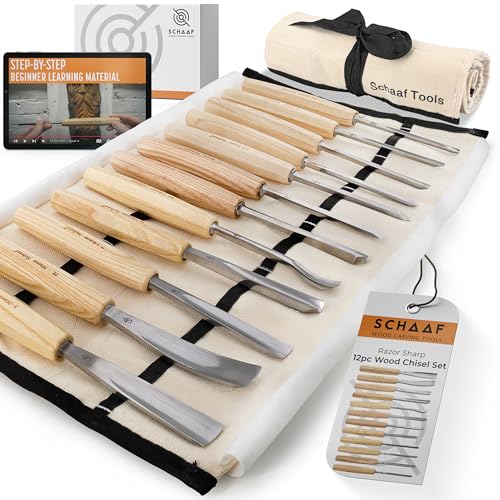
Schaaf Wood Carving Tools 12-pc Set makes more sense if you want a broader starter box at a much lower price point. The published set includes hardened Cr-V 60 steel blades and beginner tutorials, which may help for entry-level learning, but it is a less targeted buy if your goal is to pick only the exact relief and printmaking profiles that justify a premium.
Frequently asked questions
Are Pfeil Swiss carving tools worth the price?
Yes, but mainly by the gouge you choose. Pfeil is worth the price when a specific profile will see repeated use in relief carving, printmaking, or fine detail work. It is a weaker buy if you are paying for a set full of shapes that do not match your projects.
What are Pfeil carving tools best for: relief, whittling, or printmaking?
Pfeil is best for relief carving and printmaking. The reviewed profile is labeled for lino and wood cutting, and the U-shaped tip is meant for engraving details and fine lines. Whittling usually needs a different buying strategy, because broad knife work does not reward the same profile choices.
Which Pfeil gouge profile should I buy first?
Start with a narrow V-tool and a small U-gouge in the 7–9 sweep range. If your work leans toward lettering or detailed linocut, the 11/1 profile is a strong first candidate. Those shapes cover the most common control cuts before you move into specialty bends.
How do Pfeil tools compare with Flexcut or BeaverCraft?
Pfeil is the more specialized, premium-leaning choice for exact gouge selection. Flexcut is a stronger value for detail-focused mini palm gouges, and BeaverCraft Deluxe Wood Carving Kit S18X is another widely discussed starter option. For buyers who want a low-cost starter set, Schaaf undercuts both.
Are Pfeil tools good for beginners or only professionals?
Beginners can use Pfeil, but only if they buy a very specific profile and are ready to maintain the edge. Professionals and experienced hobbyists are more likely to justify the price because they can match the tool to the cut and avoid paying for unused shapes.
Are Pfeil palm carving tools comfortable for long carving sessions?
They can be, especially because the handle is described as mushroom-shaped wooden and very ergonomic. That shape supports palm control and may reduce hand strain in longer sessions, but comfort still depends on profile choice, sharpening, and whether the blade width suits the cut you are making.
Sponsored / affiliate links. As an Amazon Associate I earn from qualifying purchases. I may earn additional commission from eligible campaigns.