What Is Pine Wood Texture? Grain, Knots, and Feel Explained
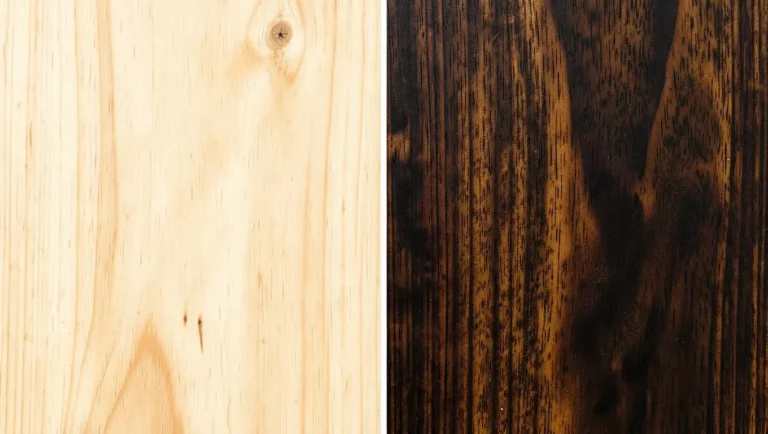
Pine wood texture is soft, straight-to-slightly-wavy grain with visible contrast between light earlywood and darker latewood, plus a moderate number of knots — running from fine and even in the soft pines to bold and uneven in the hard pines. The surface feels smooth when planed or sanded with the grain and mildly fibrous across it, softer underfoot and under a fingernail than oak, maple, or any hardwood at the same grit. Which pine you’re holding, soft or hard, clear or knotty, changes that texture more than almost anything else about the board.
Quick answer: Pine wood texture is soft and straight-grained, with a visible contrast between light early-season growth (earlywood) and darker late-season growth (latewood) that forms its grain lines, plus scattered knots from branch growth. Soft pines like Eastern White Pine feel fine and even; hard pines like Southern Yellow Pine feel coarser and more uneven.
What Is Pine Wood Texture, Exactly?
Pine wood texture is the combination of three separate, independently variable properties: grain pattern (the visual lines created by earlywood-latewood contrast), surface openness (how coarse the wood feels, set by resin canal and pore size), and knot frequency (set by species and lumber grade). Most descriptions collapse all three into one vague word — “grainy” or “knotty” — but treating them separately is what actually predicts how a specific board will look and feel — the same three axes apply across species, as covered in our types of wood guide.
A board can carry a bold, high-contrast grain pattern with almost no knots, like clear heart pine salvaged from an old growth log. Another board can carry heavy knots over a mild, even grain pattern, like construction-grade Ponderosa Pine. The three axes move independently of each other, which is why “pine texture” as a single idea is too vague to be useful when you’re choosing a board.
- Grain pattern: the light-to-dark banding from earlywood-to-latewood contrast, visible as lines running along the board.
- Surface openness: how coarse or fine the wood feels to a hand, set by the size of its resin canals and cell structure.
- Knot frequency: how many knots appear per board foot, set by the tree’s branching habit, trunk diameter, and the lumber’s grade.
Why Does Pine Have a Visible Grain Pattern?
Pine’s grain pattern comes from the contrast between earlywood, formed quickly each spring with thin, light-colored cell walls, and latewood, formed slowly in late summer with denser, darker cell walls. That light-to-dark banding, repeated with every growth ring the tree adds, is what shows up as “grain” once the log is sawn into a board.
Each ring is one year of growth. A tree that grew quickly in a wet spring lays down a wide band of earlywood before slowing into a narrower latewood band; a tree that grew slowly lays down narrow bands of both. According to The Wood Database’s pine wood guide, the soft pines — Eastern White, Sugar, and Western White Pine — have a gradual transition from earlywood to latewood, while the hard pines, including the Southern and Western yellow pines, have a more abrupt transition that reads as a bolder, higher-contrast grain line.
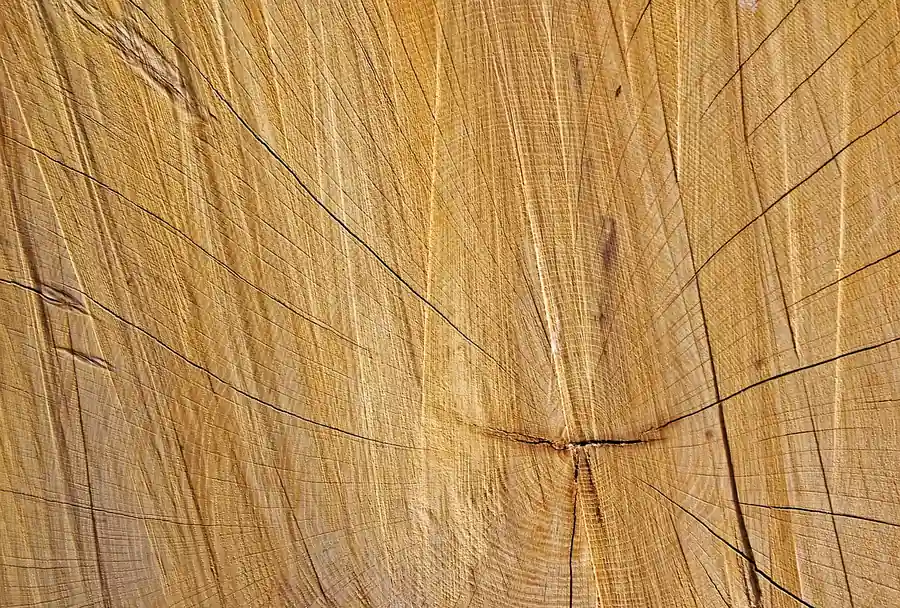
Sawing direction determines how that concentric ring pattern reads on the finished board. Cut across the rings at a shallow angle and you get the wide, flame-like “cathedral” figure most people picture when they think of pine grain — covered in more detail below.
Why Does Pine Wood Have So Many Knots?
Pine knots are the base of a branch that became enclosed inside the trunk’s growth rings as the tree added girth around it. Pine branches its main stem more frequently and at wider spacing than many hardwoods, so pine lumber carries more knots per board foot than a species like maple, birch, or ash.
Not every knot behaves the same way in the wood’s texture. A live knot forms from a branch that was still alive and growing when the tree grew around it — its fibers are continuous with the surrounding wood, so it sands and finishes as one solid surface. A dead knot forms from a branch that had already died before being enclosed — it’s often surrounded by a dark ring of bark and can loosen or fall out entirely, leaving a hole rather than a texture change.
- Live knot: fibers connected to the surrounding wood, sands flush, stays put.
- Dead (encased) knot: ringed by bark, often darker, can loosen or drop out under sanding or seasonal movement.
- Pitch pocket: a resin-filled gap near a knot that can bleed through paint or light finishes if it isn’t sealed first.
Is Pine Wood Rough or Smooth to the Touch?
Freshly planed pine feels smooth when you run a hand with the grain and mildly rough when you run it across the grain, because the softer earlywood compresses under a hand plane or sanding block faster than the denser latewood band right next to it. That density gap leaves a barely perceptible ridge you can catch with a fingernail even after the board looks perfectly flat.
On a 1×10 Eastern White Pine shelf board sanded stopping at 120 grit, the earlywood bands felt almost polished while the latewood bands next to them still caught a fingernail when dragged across the surface. The ridge didn’t disappear until 220 grit knocked the high points level with the softer wood around them — a direct result of the earlywood-latewood density difference described above, not a sanding mistake.
This same density gap is why pine “fuzzes” after sanding rather than staying glass-smooth: sanding raises loose fiber ends in the soft earlywood before it fully levels with the hard latewood, especially at coarser grits or with a dull abrasive.
Does Every Pine Species Have the Same Texture?
No. Soft pines — Eastern White Pine, Sugar Pine, and Western White Pine — have a gradual earlywood-to-latewood transition and a fine, even texture. Hard pines — Southern Yellow Pine, Ponderosa Pine, and the other yellow pines — have an abrupt transition and a bolder, coarser, more uneven grain.
| Pine Group | Example Species | Grain Transition | Texture | Dried Density |
|---|---|---|---|---|
| Soft Pine | Eastern White Pine (Pinus strobus) | Gradual | Finest texture of any pine — smallest tracheids and resin canals | 25–28 lbs/ft³ (~380 lbf Janka) |
| Soft Pine | Sugar Pine (Pinus lambertiana) | Gradual | Coarsest of the soft pines — largest resin canals | 25–28 lbs/ft³ |
| Hard Pine (Western Yellow) | Ponderosa Pine (Pinus ponderosa) | Abrupt, but even grain appearance | Moderate — wider clear runs on large-diameter trees | 28–29 lbs/ft³ |
| Hard Pine (Southern Yellow) | Loblolly / Longleaf Pine (Pinus taeda / palustris) | Abrupt, very uneven | Coarsest and boldest grain contrast of any common pine | 36–42 lbs/ft³ (690–870 lbf Janka) |
Trunk diameter changes texture within a species, too. Ponderosa Pine trees typically grow 2 to 4 feet across, wider than Lodgepole Pine’s 1 to 2 feet, and that extra girth produces broader growth-ring arcs and more knot-free clear stock per log, according to the same Wood Database data. A narrow-diameter tree of the same species packs its rings tighter and shows more knots per board foot. For how this texture stacks up against a different softwood entirely, see our cedar vs pine comparison.
How Does Cut Direction Change Pine’s Texture?
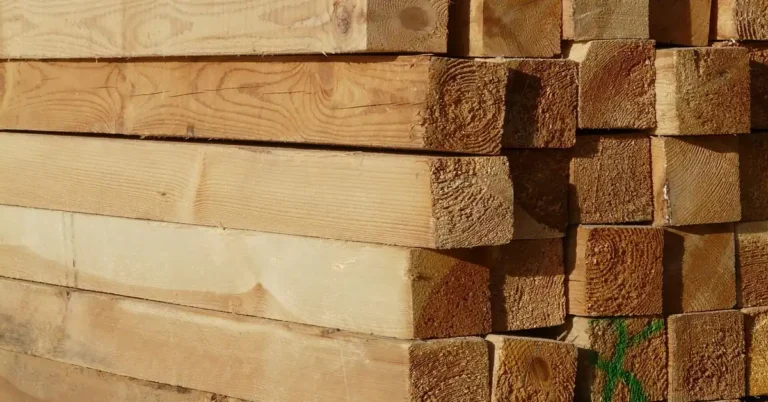
Flatsawn pine shows a wide, flame-like “cathedral” grain figure because the saw cuts across the growth rings at a shallow angle. Quartersawn pine shows tighter, straighter grain lines because the cut runs nearly parallel to the rings instead of across them. Same tree, same growth rings — a different-looking texture depending only on the angle of the cut.
Ripping a flatsawn Ponderosa Pine 2×8 down the middle makes this visible on one board: the wide face still shows the classic cathedral arches, while the freshly exposed edge-grain strip shows almost dead-straight parallel lines — the same growth rings, read from a 90-degree-different angle. Quartersawn boards also resist cupping better and feel more texturally uniform underhand, because the growth rings run edge-to-edge instead of arcing across the face.
The Duffield Timber grain-terminology guide notes that softwoods like pine build their entire visible pattern from this earlywood-latewood color contrast rather than from the pore structure hardwoods rely on — which is exactly why sawing angle has such an outsized effect on how “textured” a pine board looks.
How Do Grade and Growth Rate Affect Pine’s Texture?
Lumber grade sets knot frequency directly: clear or “select” grade pine is milled from the outer, branch-free sections of a log and shows almost no knots, while common-grade pine is milled from sections with more branch scars and shows knots throughout. The grain pattern underneath doesn’t change with grade — only how much of it is interrupted by knots.
Growth rate changes the grain pattern itself. A fast-grown tree, typical of plantation-grown Radiata or young Southern Yellow Pine, lays down wide growth rings and a bolder, more widely spaced texture. A slow-grown tree, typical of old-growth Eastern White Pine, packs narrow rings close together and produces a finer, tighter texture. Two boards of the same species can look meaningfully different in texture purely because one tree grew faster than the other.
Does a Finish Change Pine’s Inherent Texture?
A finish changes how pine’s texture looks and how protected it is, but not the underlying wood structure. Grain lines, knots, and growth-ring contrast stay physically the same under a coat of oil, polyurethane, or paint — only how sharply they show through, and how the surface feels under a hand, changes with the product and film thickness.
This is a different question from finish sheen or surface feel after finishing, which our wood finish texture guide covers in full — that guide explains how a topcoat’s own film and gloss level reshape what you feel, independent of the species underneath. If you’re specifically deciding which product to put on pine, see our guide to the best finish for pine wood for product-by-product recommendations.
How Do You Smooth Pine’s Rough Texture Before Finishing?
Pine’s rough texture — the fingernail-catching ridge between earlywood and latewood — comes out with a standard progressive sanding sequence, moving from a coarse grit that levels the ridge to a fine grit that removes the scratch pattern the coarse grit left behind.
- Start at 100 or 120 grit to knock down the earlywood-latewood ridge and remove mill marks or old finish.
- Move to 150 grit to remove the scratch pattern the coarser grit left in the soft earlywood.
- Finish at 180 or 220 grit, sanding with the grain, for a surface that feels uniformly smooth across both earlywood and latewood bands.
- Vacuum and tack-cloth the surface before finishing — raised fibers and dust both telegraph through a clear topcoat if left behind.
- Re-check by feel, not just by eye, since the ridge is easier to catch with a fingernail dragged across the grain than to see under shop lighting.
Sanding past 220 grit on pine has diminishing returns for texture and can actually burnish the surface enough to make stain absorb unevenly — for the staining-specific side of that trade-off, see our guide on whether pine stains well.
Frequently Asked Questions About Pine Wood Texture
Is pine wood rough or smooth?
Pine feels smooth when planed or sanded with the grain and mildly rough across it, because its softer earlywood wears faster than its denser latewood, leaving a slight ridge between the two that a fingernail can catch even on a flat-looking board.
Why does pine feel fuzzy after sanding?
Pine fuzzes because sanding raises loose fiber ends in the soft earlywood before the abrasive fully levels it with the harder latewood next to it. Finer grits, a fresh abrasive, and sanding fully with the grain reduce fuzzing more than pressing harder with a worn one.
What does knotty pine look like?
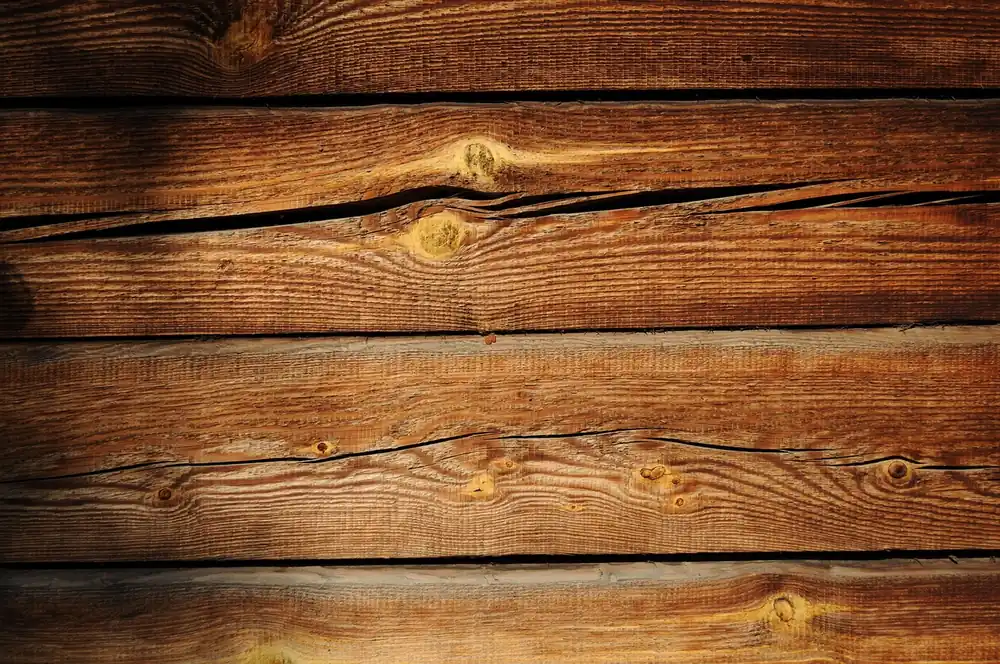
Knotty pine shows frequent round or oval knots across the board face, ranging from small tight live knots that sand flush to larger dark-ringed dead knots that can loosen over time, set against pine’s straight, light-to-amber grain background.
Is all pine wood the same texture?
No. Soft pines like Eastern White Pine have a fine, even texture from a gradual earlywood-to-latewood transition, while hard pines like Southern Yellow Pine have a coarser, more uneven texture from an abrupt transition and denser latewood bands.
Does pine’s texture change with the cut direction?
Yes. Flatsawn pine shows a wide, cathedral-arch grain figure, while quartersawn pine shows tighter, straighter lines from the same growth rings viewed at a different angle. Quartersawn boards also feel more texturally uniform and resist cupping better.
What is the difference between pine grain and oak grain?
Pine’s grain pattern comes from earlywood-latewood color contrast alone, since it’s a softwood with no vessel pores. Oak’s grain comes from both that contrast and large, visible pores, which is why oak feels rougher and more open than pine at the same sanding grit.
Once you know why a specific piece of pine looks and feels the way it does, the next decision is usually which finish suits that texture. Our best finish for pine wood guide walks through the clear, stained, and outdoor options so the product you choose matches the board in front of you.
Sponsored / affiliate links. As an Amazon Associate I earn from qualifying purchases. I may earn additional commission from eligible campaigns.