Radiant Heat Under Wood Floors: Safe Installation Guide (85F Max)
Radiant heat works safely under wood floors, but only with engineered wood (not solid hardwood) and surface temperatures capped at 80-85F. Push the floor hotter than that and planks cup, gap, or crack as the wood’s moisture content swings outside its 6-9% target range. This guide covers system types, safe installation steps, the wood species that actually hold up, and real 2026 cost ranges ($7-25 per sq ft).
Quick Answer
Yes, radiant heat works under wood floors when you use engineered (not solid) hardwood, keep surface temperature at or below 85F, hold indoor humidity between 30-50%, and let new flooring acclimate 5-7 days before installation. Electric cable or mat kits run $7-15 per sq ft installed; hydronic systems run $10-25 per sq ft.
What Is Radiant Heat Under a Wood Floor?
Radiant floor heating warms a room from the ground up instead of blowing hot air through vents. A grid of electric cable, electric mat, or hydronic (hot water) tubing sits under the finished flooring and heats the wood directly, which then radiates warmth into the room. For a full walkthrough of standard flooring installation methods (not heat-specific), see our wood flooring installation guide; for picking a flooring type in general, start with our wood flooring guide.
Because heat is the variable that makes this different from a normal flooring job, the two questions that matter most are: which system should you install, and which wood can actually take the heat cycling without failing. The rest of this guide answers both, with the specific numbers manufacturers use.

Electric vs. Hydronic: Choosing Your System
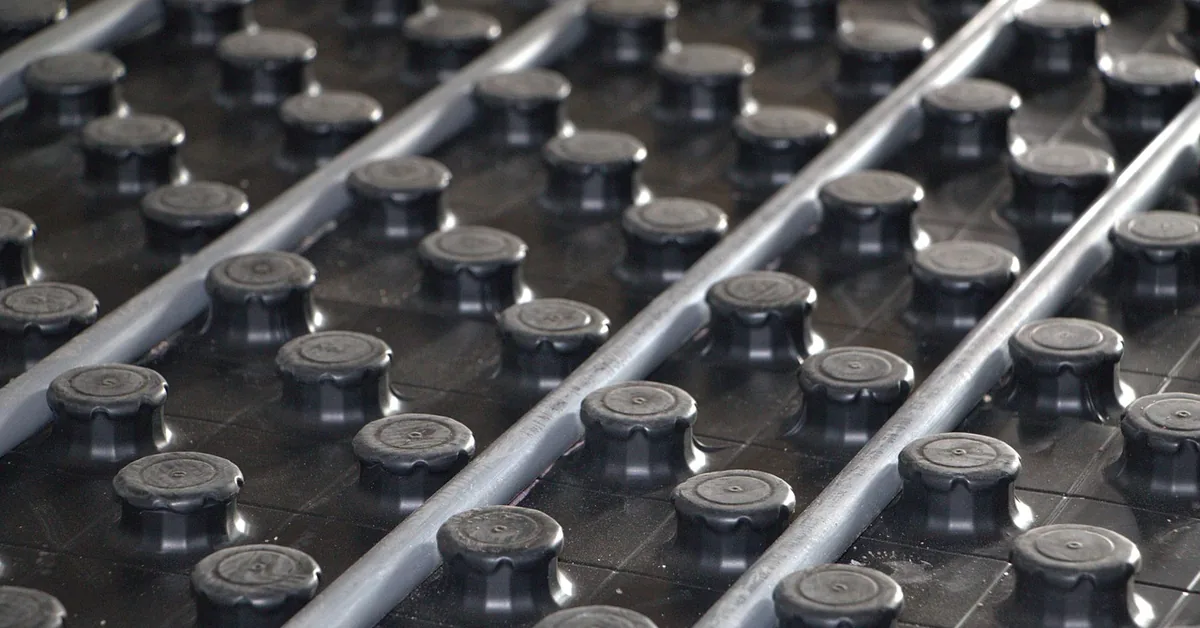
Electric systems use resistance cable or pre-spaced mats and are the more common choice for a single room or a retrofit, since they add very little height to the floor and many are DIY-installable. Hydronic systems circulate hot water through PEX tubing and are more efficient for heating an entire house, but they need a boiler or water heater tie-in and professional installation.
| Factor | Electric Cable/Mat | Hydronic (Water) |
|---|---|---|
| Typical use case | Single rooms, bathrooms, kitchens, retrofits | Whole-house, new construction |
| Installed cost | $7-15 per sq ft | $10-25 per sq ft |
| Height added to floor | Low – often under 1/4 in | Higher – tubing plus underlayment |
| DIY-friendly | Often yes, with a licensed electrician for the thermostat hookup | Rarely – needs a plumber/HVAC pro |
| Wattage/output | 9-15 watts per sq ft | Varies with boiler and loop design |
Best Radiant Floor Heating Kit Pick
HEATTECH 20 sq ft Electric Radiant Floor Heating Cable Kit with Programmable Thermostat
A complete kit (cable plus a 7-day programmable floor-sensing thermostat) sized for a typical bathroom or small room retrofit.
- Best for: Bathrooms, kitchens, and single-room retrofits under engineered wood, tile, or stone
- Why we picked it: Loose-lay cable fits irregular room shapes, and the thermostat plus 25-year cable warranty are both included in one box
- Main drawback: 20 sq ft coverage means larger rooms need a second kit or a bigger system
Compare more radiant floor heating options
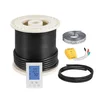 Option 1 VEVOR 50 sqft Underfloor Heating Cable Kit
|
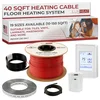 Option 2 LuxHeat 40 sqft Kit with GFCI Thermostat
|
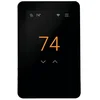 Option 3 SunTouch SunStat CommandPlus Thermostat
|
As an Amazon Associate we earn from qualifying purchases.
Engineered vs. Solid Hardwood: Which Wood Works With Radiant Heat
Engineered wood flooring is a multi-layer wood product built with cross-grain construction that resists expansion and contraction. It is the flooring industry’s standard recommendation over radiant heat because it does not move the way solid wood does when the subfloor cycles between heating and cooling.
| Feature | Engineered Hardwood | Solid Hardwood |
|---|---|---|
| Stability under heat cycling | High – cross-grain layers resist movement | Moderate to low – prone to cupping and gapping |
| Radiant heat suitability | Generally excellent, industry-preferred | Possible, but only with specific stable species |
| Species to avoid | Hickory, beech wear layers, wide planks | Hickory, beech, wide-plank exotics |
| Best species if you use it | Quartersawn oak, cherry, or walnut veneer | Quartersawn oak, if solid is required |
Solid hardwood is not automatically ruled out, but manufacturers who do approve it require a dimensionally stable species, a thinner-than-usual board, and stricter temperature and humidity limits than engineered wood needs. If your heart is set on solid wood, confirm compatibility with both the flooring manufacturer and the heating system manufacturer before you buy either product – approvals are specific to that exact pairing, not general.
Safety Limits: Temperature, Humidity, and Moisture
Every wood-over-radiant-heat failure traces back to one of these limits being ignored. Most flooring manufacturers publish the same core numbers, and they’re what an installer or inspector will check first.
| Spec | Safe Range | Why It Matters |
|---|---|---|
| Max floor surface temperature | 80-85F (27-29C) | Above this, wood swells and shifts and can void the flooring warranty |
| Indoor relative humidity | 30-50% year-round | Keeps the wood’s moisture content stable through the heating season |
| Wood moisture content at install | 6-9% | Matches the level wood settles at once the heat is running |
| Acclimation period before install | 5-7 days minimum | Lets planks adjust to home humidity before nailing or gluing down |
| Heating element to floor surface | 1-1.5 in (electric systems) | A thinner buildup transfers heat faster and more evenly |
| Cable/mat output | 9-15 watts per sq ft | Matches heat output to the room’s heat loss without overheating the floor |
Flooring manufacturers are consistent on this point in their installation manuals: the 80-85F ceiling isn’t a conservative suggestion, it’s the line most solid-wood and engineered-wood warranties stop covering damage past. Staying under it is what keeps seams tight over years of heating seasons, not the wood species alone.
Preparing the Subfloor
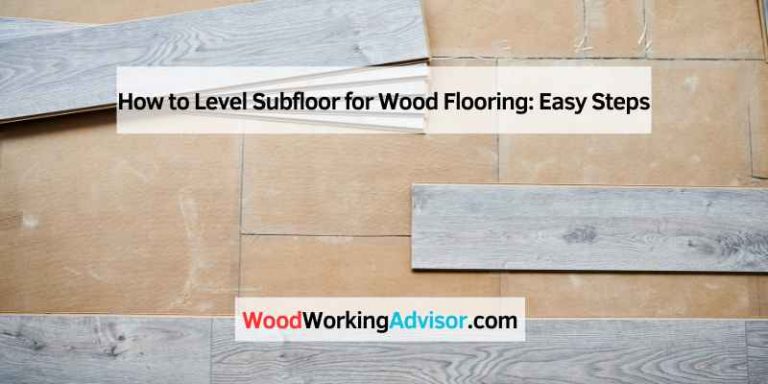
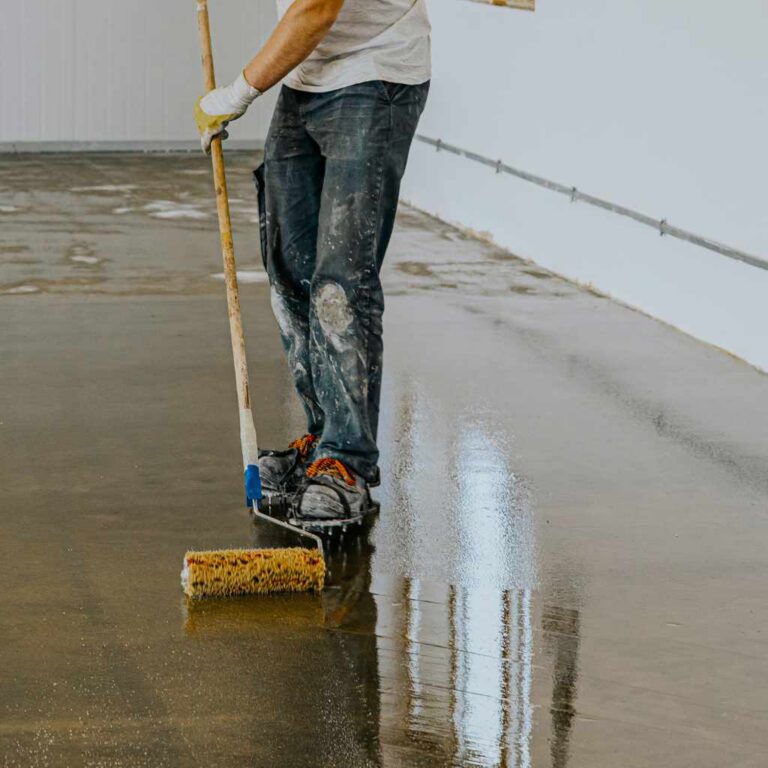
Before installing heated wood floors, evaluate the condition of your current flooring and subfloor. Check for damage, uneven spots, or moisture issues that could telegraph through the new flooring or interfere with the heating element. A moisture meter reading and a flatness check (most manufacturers want the subfloor flat within 3/16 in over 10 ft) both belong in this step, not after the cable is already down.
Materials and Tools Needed
| Materials | Tools |
|---|---|
| Engineered wood flooring | Tape measure |
| Heated floor mats or cables | Level |
| Moisture barrier | Spacers |
| Underlayment | Moisture meter |
| Thermostat with floor sensor | Hammer |
| Flooring adhesive (if glue-down) | Screwdriver and safety glasses |
For glue-down installations, use an adhesive rated for radiant heat specifically – not every flooring adhesive tolerates sustained warmth. Our flooring adhesive guide covers which types hold up.
Step-by-Step Installation Process
The sequence below applies to both electric and hydronic systems; hydronic tubing swaps in for the electric cable at steps 2-3, and typically needs a licensed installer for the manifold and boiler connection.
- Prepare the subfloor: Clean, level, and dry, with moisture content confirmed by meter before anything else goes down.
- Install the insulation/underlayment layer: This directs heat upward into the room instead of down into the subfloor.
- Position the heating elements: Space electric cable or lay mats per the manufacturer’s layout diagram; keep elements a set distance from walls and fixed cabinetry.
- Secure and test the elements: Check cable resistance with a multimeter before covering anything – a break found now is a five-minute fix; a break found after flooring is down is not.
- Install the wood flooring: Leave expansion gaps as specified by the flooring manufacturer, wider than you’d leave on a non-heated install.
- Connect and program the thermostat: Set the floor sensor limit at or below 85F and let the system run at a low, steady setting for the first cycle.
- Test before you trust it: Run the system for 24-48 hours at a moderate setting and recheck for gaps or movement before ramping up to normal use.
Professional installation is worth the added cost for hydronic systems, or for any job where the heating system’s warranty requires a certified installer. Electric cable/mat kits are the more realistic DIY option if you’re comfortable with basic electrical work and follow the manufacturer’s instructions and local code exactly.
Best Wood Species for Radiant Heat
Not all wood flooring types are suitable for radiant heat, and species selection matters as much as engineered-vs-solid construction. Dimensionally stable species that move the least with humidity and heat changes perform best.
- Quartersawn oak – the cut orientation itself resists cupping, making it one of the most heat-tolerant options in either solid or engineered form.
- American cherry – stable and good thermal conductivity, with a warm color that suits heated-floor rooms.
- Walnut – dimensionally stable as an engineered veneer, though its darker color shows dust more than lighter species.
- Maple – stable and hard-wearing, though its tight grain can make it slightly less forgiving of humidity swings than oak.
Avoid hickory and beech, and avoid wide-plank flooring (typically anything over 5 in) regardless of species – both move more than radiant systems tolerate well, even in engineered construction.
How Much Does It Cost in 2026?
Total cost depends on system type, room size, and whether the flooring itself is included. Here’s what the 2026 market actually charges, system by system.
| System Type | Installed Cost per Sq Ft | Best For |
|---|---|---|
| Electric cable/mat only | $6-15 | Single rooms, bathrooms, kitchens, retrofits |
| Electric kit + smart thermostat | $10-20 | Zones needing app or schedule control |
| Hydronic (water-based) | $10-25 | Whole-house systems, new construction |
These figures cover the heating system installation only, not the finished wood flooring on top. For a full room-by-room cost breakdown and financing options, see our dedicated heated flooring cost guide.
Maintenance and Care
Sweep or vacuum regularly to prevent grit from scratching the finish, and run a humidifier during dry months to keep indoor humidity in the 30-50% range – this protects the wood whether the heat is running or not. Avoid steam mops on any heated wood floor; the combination of heat and standing moisture is exactly the failure mode the temperature and humidity limits above are meant to prevent.
For minor scratches or scuffs, a wood floor cleaner and touch-up kit usually solves it. Deeper damage, like warped planks from a period of excess heat, typically means replacing the affected boards rather than trying to flatten them back into place.
Common Problems and How to Fix Them
Most heated-wood-floor complaints trace back to one of the safety limits above being exceeded, not a defect in the flooring or the heating system itself.
- Gaps between boards: Usually low winter humidity combined with the heat running. Add a humidifier and keep the thermostat within its rated range.
- Cupping or crowning: A sign the wood’s moisture content was too high (or too low) at installation, or the subfloor moisture wasn’t checked first.
- Uneven warmth: Often a thermostat sensor placed in the wrong spot, or heating elements spaced incorrectly during installation.
- Slow to warm up: Normal for thicker solid wood; engineered wood with a thinner profile responds faster to a thermostat change.

If you’re not sure your existing hardwood floor can handle heat being added later (rather than planning a heated install from scratch), our radiant heat compatibility guide walks through that specific question in more depth.
Frequently Asked Questions
Can you put radiant heat under wood floors?
Yes. Engineered wood is the recommended choice because its cross-grain construction resists the expansion and contraction that solid hardwood suffers over a heated subfloor. Keep surface temperatures at or below 85F and confirm compatibility with both the flooring and heating system manufacturers before installing.
Is radiant heat safe under hardwood floors?
Yes, when you stay within the manufacturer’s temperature (80-85F), humidity (30-50%), and moisture content (6-9%) limits. Most reported problems, like gapping or cupping, come from ignoring one of these limits rather than the wood-over-radiant-heat concept itself being unsafe.
Can you install heated floors yourself?
Electric cable and mat systems are DIY-feasible for a handy homeowner, though most codes require a licensed electrician for the thermostat’s electrical connection. Hydronic systems need a plumber or HVAC professional for the boiler tie-in and manifold work.
What temperature should radiant heat be under wood floors?
Keep the floor surface at or below 80-85F (27-29C). Most floor-sensing thermostats let you set this as a hard limit, which is safer than relying on the room’s air-temperature setting alone.
How much does it cost to install radiant heat under a wood floor?
Electric cable or mat systems run $6-20 per sq ft installed; hydronic systems run $10-25 per sq ft. That’s for the heating system alone, not the finished wood flooring on top.
What is the best wood flooring for radiant heat?
Engineered quartersawn oak, cherry, or walnut are the most commonly approved choices. Avoid hickory, beech, and wide-plank flooring over 5 in wide, since these move more than radiant systems tolerate well.
Conclusion
Heated wood floors are a realistic, comfortable upgrade as long as you respect the limits that actually cause failures: engineered (not solid) wood in a stable species, surface temperature capped at 85F, humidity held between 30-50%, and flooring acclimated before it goes down. Get those right and the installation itself, electric or hydronic, is a well-documented, widely available project.