Satin vs Semi-Gloss Polyurethane for Kitchen Cabinets
Choose Satin for most kitchen cabinets with flaws, side light, or busy grain; use Semi-Gloss Polyurethane for Kitchen Cabinets only on well-prepped, high-touch doors and drawer fronts that need easier wipe-downs and sharper reflected light. Pick poorly, and every brush mark, dent, and uneven repair reads louder.
| Decision factor | Satin | Semi-Gloss Polyurethane for Kitchen Cabinets | Winner |
|---|---|---|---|
| Flaw hiding on older or repaired cabinets | Hides dust, fingerprints, scratches, and minor flaws better | Shows prep issues, grain, and repairs more clearly | Satin |
| Light reflection in bright or side-lit rooms | Reflects less light and reads softer | Reflects more light and looks shinier | Satin |
| Cleaning and wipe-down speed | Wipes clean well, but not quite as easily | Wipes clean a little more easily | Semi-Gloss Polyurethane for Kitchen Cabinets |
| Visual tolerance for imperfect prep | More forgiving of sanding marks, dents, and patch lines | More likely to expose sanding scratches and telegraphed grain | Satin |
| Best fit for smooth, polished cabinet fronts | Works, but can look flatter than the surface deserves | Fits smooth, well-prepped fronts and a brighter look | Semi-Gloss Polyurethane for Kitchen Cabinets |
Sheen comparison: Appearance, forgiveness, and cleaning
Satin and semi-gloss are sheen levels, not separate finish families. Satin reflects less light and has a duller, low-sheen appearance; semi-gloss reflects more light and looks shinier. On cabinets, that shift changes how much the surface reveals, how easy it is to read from across the room, and how light bounces off the doors.
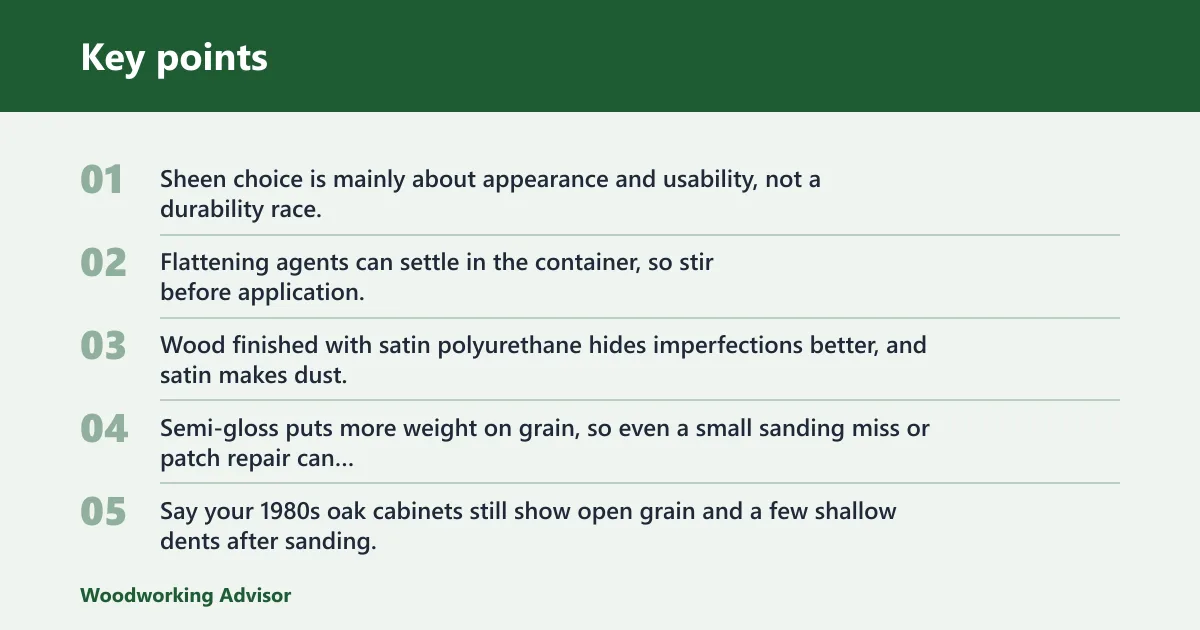
Sheen choice is mainly about appearance and usability, not a durability race. Flattening agents can settle in the container, so stir before application.
| Factor | Satin | Semi-Gloss Polyurethane for Kitchen Cabinets | Winner |
|---|---|---|---|
| Light reflection | Lower reflection, softer read | Higher reflection, brighter read | Satin |
| Surface forgiveness | Better at hiding minor flaws | More revealing of prep marks | Satin |
| Wipe-down ease | Easy to clean | Slightly easier to wipe clean | Semi-Gloss Polyurethane for Kitchen Cabinets |
| Overall durability | Equal when the polyurethane is applied well | Tie | |
Why the table leans satin on appearance
Wood finished with satin polyurethane hides imperfections better, and satin makes dust, fingerprints, and scratches less obvious. Semi-gloss puts more weight on grain, so even a small sanding miss or patch repair can stand out after the final coat cures.
Say your 1980s oak cabinets still show open grain and a few shallow dents after sanding. Satin is the safer pick because it softens those details instead of drawing a bright line around them.
Why semi-gloss still has a place
Semi-gloss does have a practical edge when you want a more polished look and a slightly easier wipe-down. That matters most on smooth fronts that already have careful prep, because semi-gloss exposes flaws more clearly and rewards a flatter substrate.
A common first-timer mistake is choosing semi-gloss on a cabinet run that still shows sanding scratches. Under kitchen light, those marks can look sharper than they did on the workbench.
Which polyurethane sheen hides flaws better on cabinets?
Satin hides flaws better on cabinets. It reflects less light, so dents, grain telegraphing, dust, fingerprints, and minor repair edges stay less visible. Semi-gloss can still look clean and sharp, but it puts more weight on every uneven spot in the substrate and prep.
That matters most on older oak, partial refinishing jobs, and cabinet boxes with patch work. If the surface is not uniformly smooth, higher sheen usually makes the problem easier to see, even when the film itself is applied correctly.
Where the difference shows up
Flaws do not disappear under satin. They just read less loudly. Grain, sanding marks, and tiny dents still exist, but the lower sheen breaks up reflected light enough that the eye is less likely to lock onto them.
Semi-gloss does the opposite. It gives cabinet color more pop, but it also throws a brighter reflection across the door, which makes a repaired corner or uneven filler spot more visible.
Does semi-gloss clean easier than satin on kitchen cabinets?
Semi-gloss wipes clean a little more easily than satin on kitchen cabinets, but the difference is modest. Sheen alone does not control durability or stain resistance. A well-cured polyurethane film and proper prep matter more than sheen for long-term cleaning performance.
Sheen alone does not control stain resistance or scrubbing performance. Grease still needs the right cleaner and a non-abrasive cloth. On real cabinets, the bigger advantage of semi-gloss is often the smoother-looking wipe, not a major change in toughness.
High-touch zones deserve a separate decision
Lower cabinets, sink bases, and trash pull-outs get more hands, more splashes, and more scuffs. Semi-gloss can be a good fit there if the prep is smooth and you want faster wipe-downs. Satin is often the safer choice when touch marks, fingerprints, or minor rubs would otherwise stand out.
Picture a sink base with a narrow toe-kick area and a drawer front directly below the faucet. If the door surface is well sanded and the room is bright, semi-gloss can make cleanup easier to read. If the same cabinet has patch repairs around the hinge edge, satin is more forgiving.
How does lighting change the choice?
Lighting changes how both sheens look, sometimes more than the product label does. Side light and directional light make flaws more visible, and bright or low-angle light increases glare on higher sheen finishes. In a darker kitchen, semi-gloss can look harsher than expected because the reflected light stands out against the room.
North-facing light is often reported as cooler and flatter, and it can still reveal sanding marks on semi-gloss cabinet faces. Satin usually reads steadier in that setting because it cuts glare and softens the contrast between the finish and the cabinet substrate.
When room light should push you toward satin
If a bank of upper cabinets sits beside a window or under strong task lighting, satin often looks more even across the run. That is especially true when the cabinet fronts have grain, patch repairs, or small alignment differences between doors.
Light does not just change brightness. It changes what the eye notices first. Semi-gloss can look excellent in a smooth, polished kitchen, but it can also make every repaired edge feel louder in a side-lit room.
Sheen scale, gloss meters, and label drift
Sheen labels vary between manufacturers, so satin on one product line may not match satin from another. A gloss meter measures sheen more precisely and is more reliable than assuming a can label means the same thing across brands. That matters when you are trying to match an older finish or compare test panels.
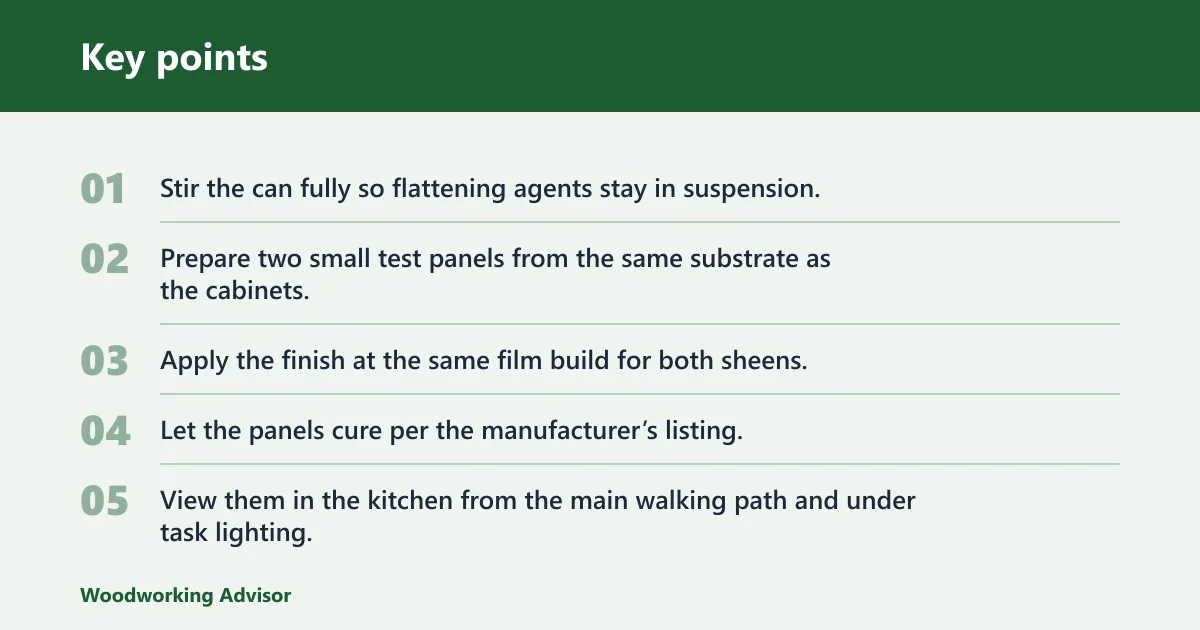
A sample board or test panel is still the best check in the actual kitchen lighting. View it beside the cabinets, not under garage or daylight-only conditions. If you are matching adjacent trim or partial refinishing, this step is hard to skip.
- Stir the can fully so flattening agents stay in suspension.
- Prepare two small test panels from the same substrate as the cabinets.
- Apply the finish at the same film build for both sheens.
- Let the panels cure per the manufacturer’s listing.
- View them in the kitchen from the main walking path and under task lighting.
- Pick the panel that hides flaws and matches the room light best.
Why film build and substrate still matter
Sheen is not the same as thickness. A smooth cabinet can still look wrong if the film build is uneven, and a rough substrate can telegraph through either sheen. Dents, grain, sanding marks, and patch repairs all affect how the final coat reads in the room.
That is why a gloss meter and a test panel solve different problems. The meter helps compare labels; the panel helps you see the finish on your actual cabinet surface.
Oil-based vs water-based polyurethane
Sheen choice is separate from resin type, but the chemistry changes the final look. Oil-based and water-based polyurethane can differ in ambering, odor, dry time, and appearance. If you are matching existing cabinets, that difference can matter as much as satin versus semi-gloss.
For a partial refinishing job, compare the finish on test panels instead of assuming one resin type will match another. A water-based satin can read clearer and less amber, while an oil-based version can warm the wood tone more. The same sheen name does not erase those differences.
When resin type changes the cabinet decision
If the cabinet color is already warm, ambering may matter more than sheen. If the room needs faster return to service, dry time may matter more than the gloss label. In either case, keep sheen and resin chemistry as separate choices.
Do not treat satin and semi-gloss as if they automatically control color shift. The resin system can change the cabinet look even when the sheen stays the same.
Cabinet sheen selector
| Cabinet condition | Light exposure | Cleaning priority | Recommended sheen |
|---|---|---|---|
| Old oak with grain | Side-lit or mixed light | Hide grain and patch lines | Satin |
| Flat shaker doors | Moderate light | Balanced look and easy upkeep | Satin if prep is average; Semi-Gloss Polyurethane for Kitchen Cabinets if the surface is smooth and uniform |
| Dark kitchen | Low or directional light | Control glare on deep color | Satin |
| North-facing light | Cool side light | Reduce reflected flaws | Satin |
| Sink base | Bright task light | Frequent wipe-downs | Semi-Gloss Polyurethane for Kitchen Cabinets if prep is smooth |
| Trash pull-out | High-touch zone | Hide scuffs and fingerprints | Satin |
| Partial repaint | Mixed with existing cabinets | Hide blend lines and repairs | Satin |
| Smooth factory cabinets | Bright, even light | Polished look and easier wiping | Semi-Gloss Polyurethane for Kitchen Cabinets |
How to read the selector
Satin is the default for older, repaired, or side-lit cabinets because it hides flaws better and keeps glare down. Semi-gloss only moves ahead when the cabinet surface is already smooth and you want a brighter, more polished read with slightly easier wiping.
Say you are refinishing one wall of uppers and leaving the adjacent pantry alone. If the old run has visible grain and the pantry fronts are factory-smooth, satin is the safer bridge between the two surfaces.
Choose satin or semi-gloss if…
Choose Satin if the cabinets are older, repaired, side-lit, or visibly grained. Choose it when you want less glare, fewer visible fingerprints, and better cover for sanding marks, dents, and patch work. Satin is also the safer pick for partial refinishing and mixed lighting.
Choose Semi-Gloss Polyurethane for Kitchen Cabinets if the cabinets are smooth, well prepped, and set in a brighter kitchen where wipe-down ease matters more. Choose it for polished factory-style fronts, sink bases with clean prep, and lower cabinets that already look flat and even under light.
Can you mix satin and semi-gloss in the same kitchen?
Yes, if the layout calls for it. Mixing can make sense when upper cabinets are side-lit and lower cabinets sit in a brighter work zone, or when a partial refinish needs to blend with existing doors. Keep the change intentional and limited to specific runs, not random adjacent doors.
The key is consistency within each visual zone. If one bank of cabinets is satin and the next bank is semi-gloss, the difference should follow room conditions or cabinet condition, not accidental availability.

Frequently asked questions
Satin finish vs semi gloss for cabinets
Satin is usually the better cabinet finish when the surface has flaws, grain, or side light. Semi-gloss is the better pick when the fronts are smooth, well prepped, and you want a brighter look with a slightly easier wipe-down. The room condition should drive the choice first.
Is satin or semi gloss better for cabinets?
Neither wins everywhere. Satin is better for older, repaired, or imperfect cabinets because it hides flaws more effectively. Semi-gloss is better for smooth cabinets in brighter kitchens where you want more reflected light and easier cleaning, provided the prep is good.
Will satin cabinets show fingerprints less than semi gloss?
Yes. Satin makes fingerprints less conspicuous than semi-gloss because it reflects less light and softens the contrast of smudges. That makes it a better choice for busy kitchens, trash pull-outs, and lower cabinet doors that get handled often.
Sponsored / affiliate links. As an Amazon Associate I earn from qualifying purchases. I may earn additional commission from eligible campaigns.