Can You Put a Fire Pit on a Wood Deck? (NFPA, Makers, Codes)
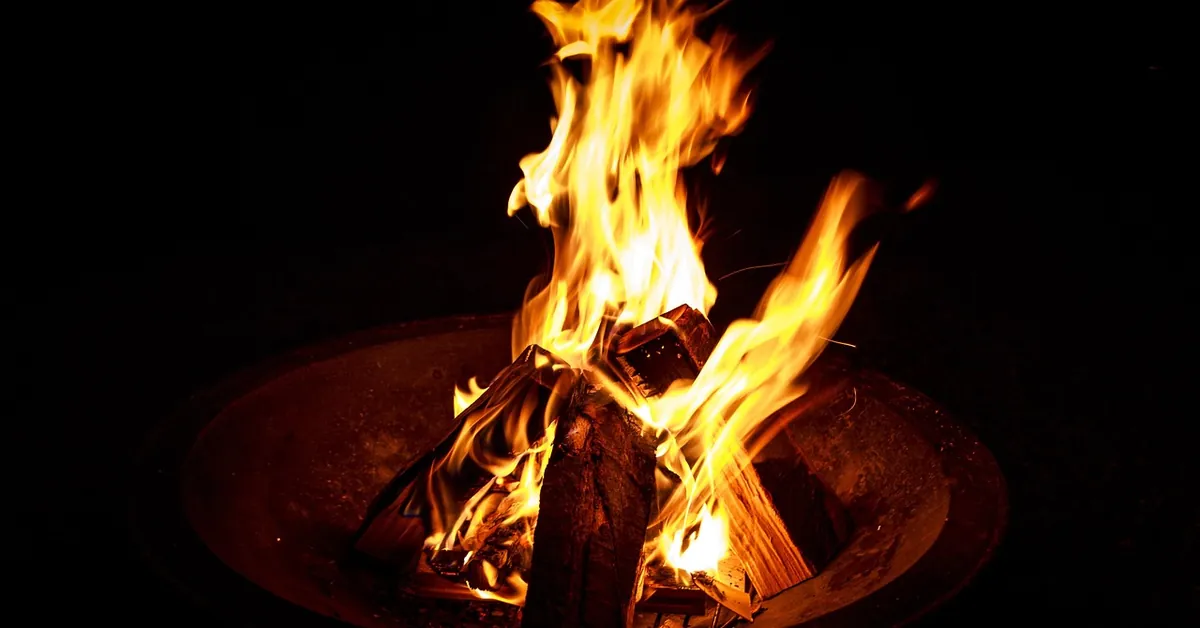
Usually not for a wood-burning fire pit, and only sometimes for a gas one. NFPA and the U.S. Fire Administration both say to use a fire pit at least 10 feet from anything that can burn, NFPA adds to keep it away from decks and deck railings, and the maker’s manual overrides every rule of thumb. This guide compares what NFPA, one city bulletin, Solo Stove, Trex, TimberTech and a gas-table manual say, and what a fire pit mat can and cannot do.
Can You Put a Fire Pit on a Wood Deck? The Short Answer
Best Fire Pit Deck Mat Pick | |
 |
Fireproof Pros 36-Inch Fire Pit Mat Protector, $39.99 The seller’s listing says this triple-layer mat is 6.0 mm thick, “Blocks 95% of Heat”, and can withstand an 1800 degree F piece of coal or wood landing on it. Those are the seller’s own claims, not a fire-code rating, so use the mat as ember and scorch cover on top of the clearance and manual rules below, never in place of them.
|
As an Amazon Associate we earn from qualifying purchases. | |
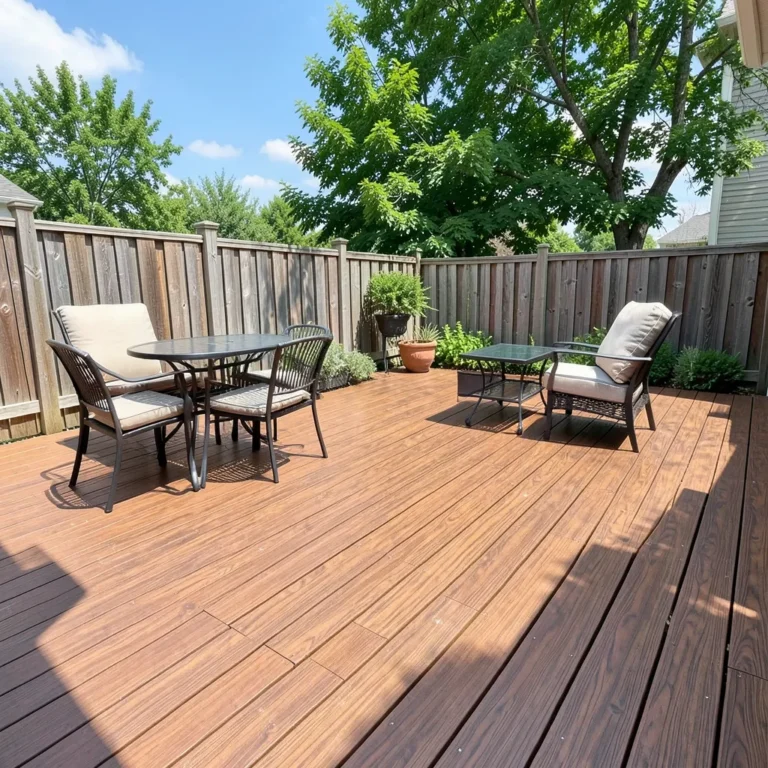
Wood-burning: treat the answer as no for nearly every deck. The 10-foot figure from NFPA is measured from anything that can burn, and most decks cannot offer that; Trex, a decking maker, says wood-burning pits should not sit directly on its boards without a heat barrier. Gas or propane: maybe, but only if the manual for your exact model permits combustible surfaces and you can meet its clearances. Any fire pit: never set it directly on deck boards.
Fire safety is not something to settle from a blog post. We are summarizing published guidance from NFPA, USFA, a city bulletin and manufacturers, and the pit maker’s written instructions and your local fire department outrank everything on this page. Never use any fire pit, gas or wood, in a garage, porch enclosure or any other enclosed space: it burns oxygen and produces carbon monoxide, which you cannot see or smell.
What NFPA, Fire Codes and Makers Actually Say
Most articles quote one number and move on. These sources do not agree with each other, and the differences are the useful part:
| Source | Applies to | What it says |
|---|---|---|
| NFPA (2026 desk reference, 16.3) | Fire pits generally | Use outdoors, at least 10 feet (3 m) from anything that can burn; keep away from decks and deck railings; place on a level surface that will not catch fire, such as patio blocks, bricks or concrete |
| U.S. Fire Administration | Fire pits and outdoor fireplaces | Use outdoors at least 10 feet from your home or anything that can burn; use a metal screen over wood-burning fires; put the fire out before you leave |
| Philadelphia Code Bulletin F-0602 R1 | Portable outdoor fireplaces, wood or propane | At least 15 feet from a structure, including decks and balconies, and not to be used on a deck (issued 2006, revised 2010, so confirm the current rule; the bulletin also says the maker’s instructions apply when stricter) |
| Solo Stove stand guide | Its wood-burning steel pits | A stand is required on a wood deck because untreated wood ignites at 356 degrees F; pavers under the stand for burns over an hour or two |
| Solo Stove help center | Its wood-burning steel pits | Use on wood or composite decking is “at your own risk” and can lead to charring or ignition |
| Trex FAQ | Trex composite decking | Wood-burning fire pits should not be placed directly on Trex decking unless a heat barrier is used; Trex can soften at temperatures as low as 176 degrees F |
| TimberTech installation guide | TimberTech decking | Warns that excessive heat from fire, hot ashes or embers, fire pits and grills can melt, sag, warp or discolor boards |
| Gas fire pit table manual (item 61168) | One gas table | Minimum clearance from combustibles: 2 feet at sides, 2 feet at rear, 6 feet from the ceiling; outdoor use only, never in enclosed areas (carbon monoxide); silent on decks |
Sources: the U.S. Fire Administration outdoor fire safety page, the Trex FAQ, the TimberTech installation guide, the NFPA Educational Messages Desk Reference, 2026 edition (section 16.3), the Philadelphia Code Bulletin F-0602 R1, Solo Stove’s stand guide, the Solo Stove help center and the owner’s manual for a gas fire pit table (item 61168). We read the lines above in each source, except the Solo Stove pages, which blocked our direct download, so those lines come from the text Solo Stove shows in search results. Philadelphia is a single example of a local rule, not a national one. The model International Fire Code (section 307.4.3) puts portable outdoor fireplaces 15 feet from a structure or combustible material and requires the maker’s instructions, but exempts one- and two-family homes, which is why your own city or HOA rule and the manual matter more.
The 10-foot rule, in square feet
Ten feet in every direction means a clear circle 20 feet across, or about 314 square feet of open space with nothing flammable inside it. A 12 by 16 foot deck is 192 square feet in total. NFPA’s wording also names decks and deck railings specifically, so a pit in the middle of a typical deck breaks the guidance twice: the boards are the thing that can burn, and the railing is inside the circle. That is why the realistic reading for a wood-burning pit is a patio or ground-level spot, not the deck.
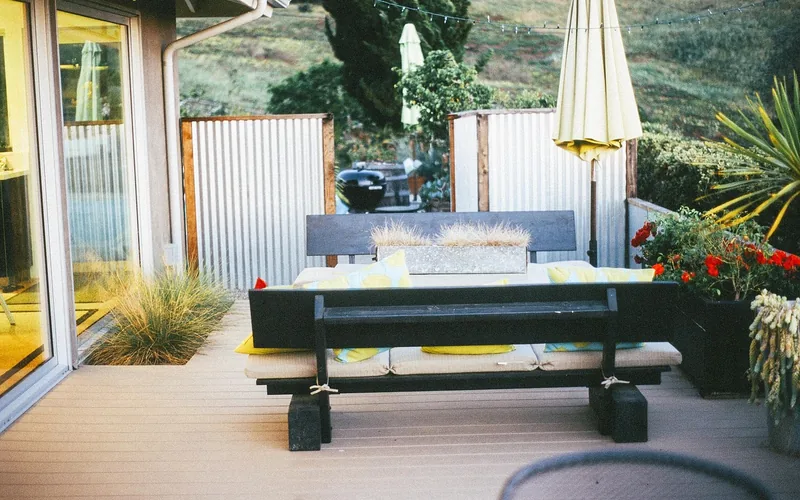
NFPA: use a fire pit at least 10 feet (3 meters) from anything that can burn, and keep it away from decks and deck railings. Source: NFPA Educational Messages Desk Reference, 2026 edition
Wood-Burning Fire Pit on a Wood Deck: Why the Answer Is Usually No
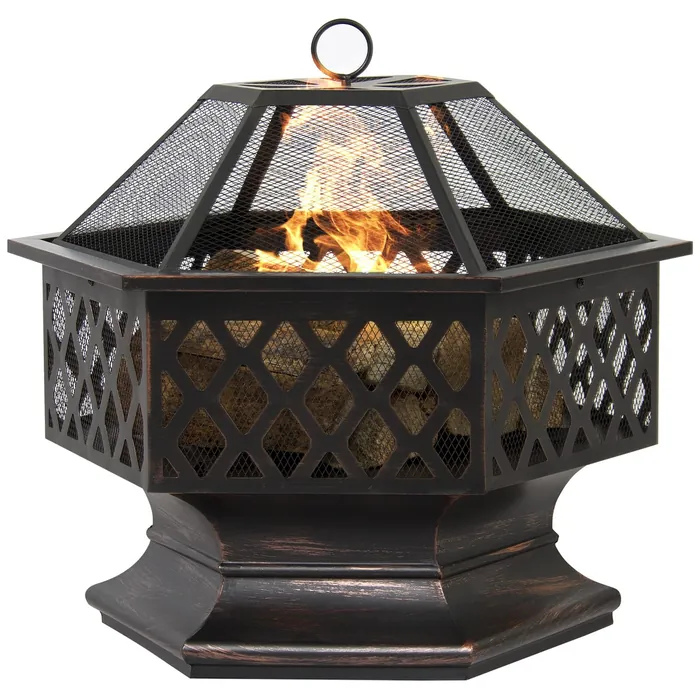
A wood fire throws embers, and embers can land on dry boards, in the gaps between them and in cushions. USFA says to use a metal screen over wood-burning fires to keep sparks from floating out, and NFPA notes that a screen helps contain sparks, embers and ash while telling owners to check local rules on screens. Trex adds that composite boards can soften at temperatures as low as 176 degrees F. Solo Stove, a maker that does sell pits for decks, still says that untreated wood ignites at 356 degrees F, requires its stand on a wood deck, and says use on wood or composite decking is at the owner’s own risk. Its help center puts it plainly:
“Use on wood or composite decking is at your own risk.”
A stand, a spark screen and pavers each deal with one problem: conducted heat, flying embers and long burns. None of them changes the clearance guidance. If your deck cannot give a wood-burning pit the distance NFPA describes, the fix is location, not accessories. Our guide to outdoor wood burning fire pit placement covers ground-level spots, and how to burn wood safely covers fuel and fire handling.
Fuel matters too, because some woods pop and throw more sparks than others. See whether cedar works as firewood and why burning treated wood is dangerous before you load the pit.
Gas and Propane Fire Pits on a Wood Deck: The Manual Decides
Gas units have no embers, so they are the usual suggestion for decks, but they still burn at the surface and give off carbon monoxide, so they are outdoor-only. Trex notes that gas fire features are typically built into its decking with fire-resistant material underneath rather than set on top. The suggestion is only as good as the manual. The owner’s manual for a gas fire pit table (item 61168) states that it conforms to ANSI Z21.97-2014 and CSA 2.41-2014 for outdoor decorative gas appliances. It lists minimum clearances from combustibles of 2 feet at the sides, 2 feet at the rear and 6 feet from the ceiling, and says the pit is designed and approved for outdoor use only. It also says to keep propane away from high heat and from places where temperatures exceed 120 degrees F (49 degrees C).
What that manual does not do is mention decks. So the clearance numbers tell you how far the flame must sit from railings, walls and roofs, but they do not tell you whether the base can sit on deck boards. Compare this with NFPA’s 10 feet: the gas table’s published clearances are far smaller, which is the point where the manual, not the general guidance, governs. Check these items in yours:
- A listing statement on the unit or in the manual, such as the ANSI and CSA standards named above.
- The stated clearance below the unit and whether combustible floors are permitted.
- Side, rear and overhead clearances, and any limit under a roof or pergola.
- Whether an included heat shield or base is required for use on a combustible floor.
- Propane cylinder storage and leak-check instructions: the manual we read says never to store propane where temperatures exceed 120 degrees F or in an enclosed area.
If the manual is silent on decks, email the maker and keep the reply. Do not assume silence means permission.
Do Fire Pit Mats and Deck Protectors Actually Work?
They catch embers and reduce scorch marks, and their listings make real claims, but those claims are written by the seller. We compared two Amazon listings, read through the Amazon Creators API at the prices shown on the day of writing:
| Mat | Size and price | What the listing claims | What it leaves out |
|---|---|---|---|
| Fireproof Pros 36-inch round | 36 in, $39.99 | 6.0 mm, three layers, “Blocks 95% of Heat”, withstands an 1800 degree F coal or wood landing on it | No independent test result shown; sized for pits with 5 to 6 inch legs |
| DocSafe 48-inch round | 48 in, $24.99 | Four layers, rated to 2000 degrees F, passed a UL94 V-0/5VA flame retardant test, protects decks | UL94 tests the fabric’s flame retardancy, not a pit’s heat on a deck; the listing also says not to place the heat source directly on the mat and to keep large pits 12 inches off it |
The two listings even disagree on how a mat should be used. One is sized around the legs of a pit, the other tells buyers to keep large pits 12 inches back from the mat. That is why the maker’s instructions come first. Solo Stove’s guidance centers on lifting the pit off the surface with a stand, and suggests pavers for long burns, while NFPA’s wording about a surface that will not catch fire points toward masonry.
A sensible stack for a permitted setup is the maker’s required stand or base, then a mat for embers, then clearances from railings, furniture and overhead structures. For the same heat-on-deck question with a different appliance, see our guide on putting a smoker on a wood deck.
Wood Deck vs. Composite Deck: What Changes
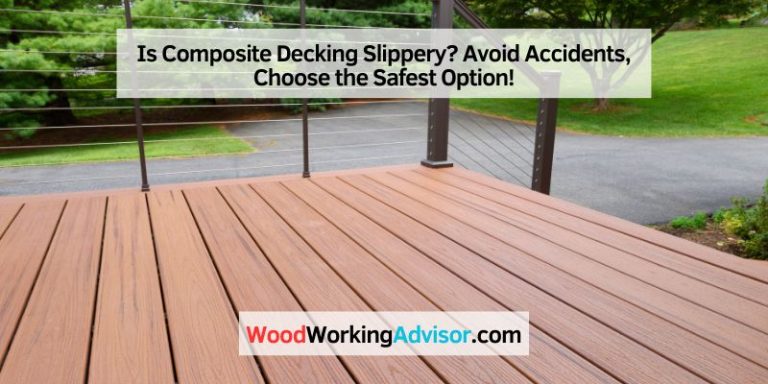
Solo Stove says untreated wood ignites at 356 degrees F, which is why it requires a stand on a wood deck, and that wood and composite decking vary widely in heat resistance, so you should check with your decking maker. The decking makers themselves are cautious. Trex says wood-burning pits should not go directly on its boards without a heat barrier and that Trex can soften at 176 degrees F. TimberTech warns that heat from fire pits, hot ashes or embers can melt, sag, warp or discolor its boards. Composite is not a safe surface just because it is not wood. We are relaying that maker guidance, not testing it. For surface heat in sunlight rather than flame, see whether composite decking gets hotter than wood.
Before You Light It: Codes, Permits, HOA and Insurance
NFPA tells owners to check with the local fire department or municipality for fire pit restrictions and to obtain permits if required. The Philadelphia bulletin shows how strict a local rule can get: it requires 15 feet from structures including decks and says portable outdoor fireplaces are not to be used on a deck, and it applies the maker’s instructions where those are more restrictive. Your city may be looser or tighter.
We did not find published figures on how HOAs or insurers treat deck fire pits, so we are not going to guess. Ask your HOA for its written rules, and ask your insurer in writing whether a fire pit on a deck changes your coverage before you buy one.
- Read the manual for combustible-surface and clearance language.
- Call the local fire department about permits and deck rules.
- Check HOA rules and your insurance policy in writing.
- Measure the clear space around the spot against the manual and NFPA numbers.
- Set up the required stand or base first, then any mat, then keep a hose or fire extinguisher within reach and never leave the fire unattended.
For extinguisher choices, see which fire extinguisher is used for wood, paper and fabric.
Safer Setups If Your Deck Fails the Clearance Test
- Move the pit to a patio or ground-level hardscape. NFPA names patio blocks, bricks and concrete as acceptable surfaces.
- Choose a gas model whose manual allows combustible floors and fits within its clearances.
- Add a hardscape pad beside the deck and keep the fire off the boards entirely.
If you are planning a layout, see decking with fire pit ideas for design options that keep the fire off the boards. NFPA also advises a 3-foot (1 meter) safety zone around the pit for children and pets, and never leaving a fire unattended, even for a short time.
Frequently Asked Questions
Can I put a fire pit directly on a wood deck?
No. NFPA says to place a fire pit on a surface that is level and will not catch fire, such as patio blocks, bricks or concrete, and Solo Stove says a stand is required when burning on a wood deck. A bare base sets hot metal directly against the boards.
Can you put a gas fire pit on a wood deck?
Only if that model’s manual allows it. A gas fire pit table manual we read lists minimum clearances from combustibles of 2 feet at the sides, 2 feet at the rear and 6 feet from the ceiling, but does not mention decks at all, so the manual alone did not settle the question. If yours is silent too, ask the maker in writing.
How far should a fire pit be from a deck railing?
NFPA says to keep a fire pit at least 10 feet from anything that can burn and away from decks and deck railings. Gas appliances carry their own clearances in the manual, which can be smaller, and a local fire code can be stricter than both.
Does a fire pit mat make a wood deck safe?
A mat helps with falling embers and scorching, but no mat listing we read states a code-approved clearance. The two mats we compared made different claims, and one told buyers not to place the heat source directly on it. A mat supplements the manual, the stand and the clearances. It does not replace them.
Can you put a fire pit on a composite deck?
Not safely by default. Trex says wood-burning pits should not go directly on its decking without a heat barrier and that Trex can soften at 176 degrees F, and TimberTech warns that fire pit heat and embers can melt or warp its boards. Check your decking maker’s written guidance, and use a gas unit only if its manual allows it.
Do I need a permit for a fire pit on my deck?
NFPA tells owners to check with the local fire department or municipality for restrictions and to obtain permits if required. Rules differ by city. One published city bulletin we found bars portable outdoor fireplaces from use on a deck entirely, so call before you buy.
The honest answer for most owners is to keep the wood-burning pit off the deck and let the manual decide for gas. Follow NFPA’s clearance and surface guidance, treat a mat as a supplement rather than a rating, and confirm local rules before you light anything.
Sponsored / affiliate links. As an Amazon Associate I earn from qualifying purchases. I may earn additional commission from eligible campaigns.