Water Well Drilling Cost Per Foot (Us Guide)
Many folks start thinking about drilling a water well when they want more control over their water. Maybe city water costs are climbing. Or perhaps you’re building a new home far from a main line. Whatever the reason, you’re probably asking yourself, “How much does it cost to drill a water well per foot?” It’s a big question, and the answer isn’t a simple number. It depends on so much more than just digging a hole. We’ll break down all the pieces so you can get a clear picture.
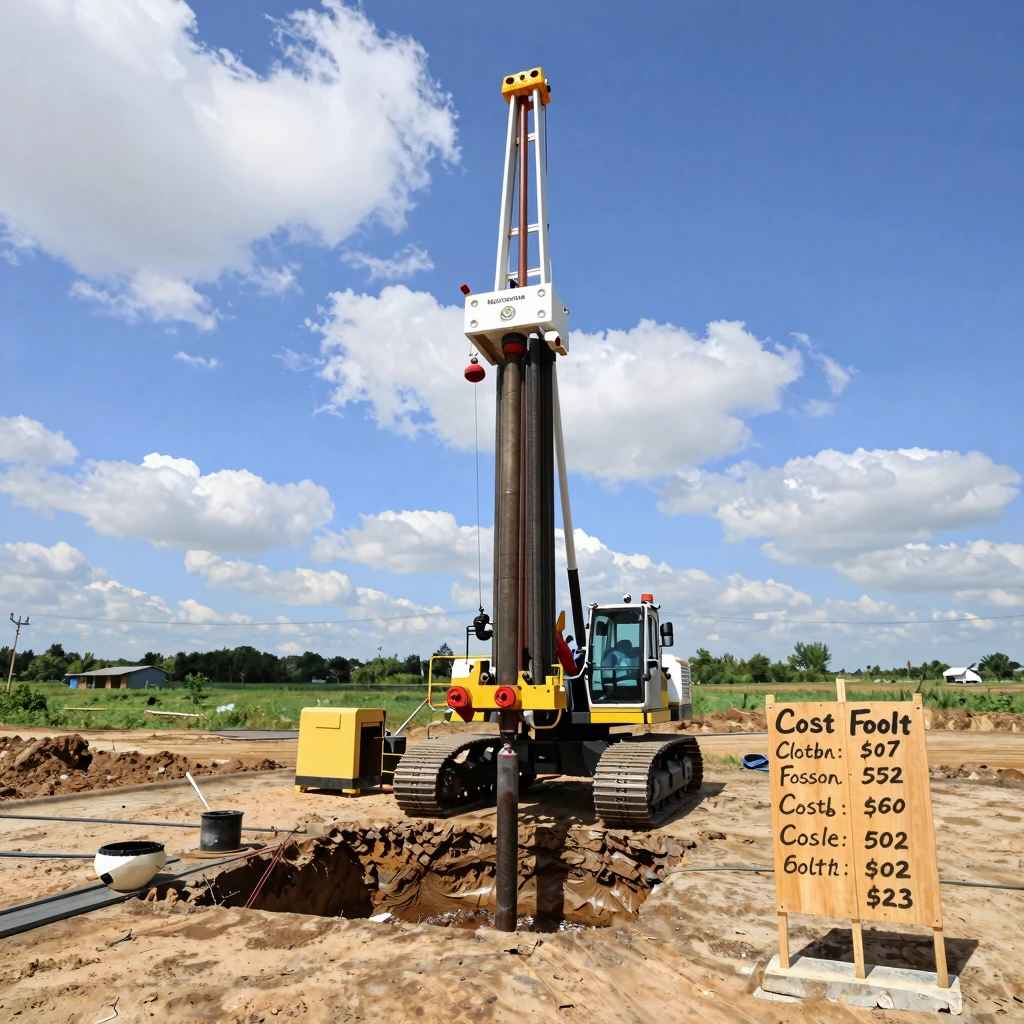
The average cost to drill a water well per foot in the US can range from $25 to $150 or more. This price fluctuates greatly based on depth, geology, location, and the type of well needed. It’s crucial to get detailed quotes from local drillers.
Understanding Water Well Drilling Costs
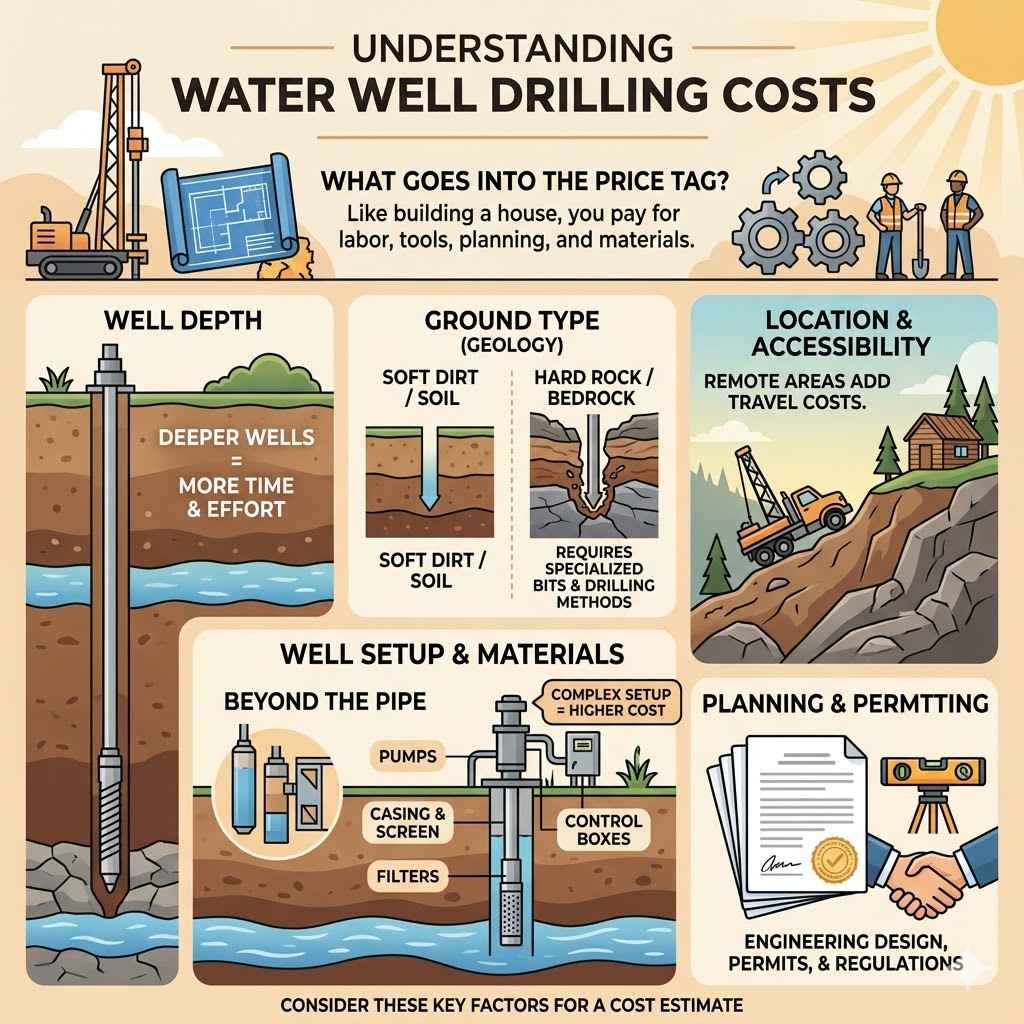
So, what really goes into the price tag of getting water from underground? Think of it like building a house. You don’t just pay for the bricks.
You pay for the labor, the special tools, the planning, and the materials. Well Drilling: A Beginner’s Guide” href=”https://woodworkingadvisor.com/diy-water-well-drilling/” target=”_blank” rel=”noopener” data-wpil-monitor-id=”19551″>Water well drilling is similar.
The most obvious part is the depth. Deeper wells mean more time and effort. But that’s just one piece of the puzzle.
We also need to think about the ground itself. Is it soft dirt? Is it hard rock?
This makes a huge difference. The location also matters. If you live in a remote area, getting equipment there might cost extra.
And then there’s the well itself. Is it just a simple pipe, or does it need a more complex setup? All these things add up.
We’ll look at each one so you know what to expect.
The Big Factors That Shape Well Drilling Prices
Let’s dive deeper into what makes the cost go up or down. This is where the numbers start to make more sense.
Depth of the Well
This is the number one driver of cost. The deeper they have to drill, the more time it takes. More time means more money for the drilling company.
It also means more pipe and casing used. You’re paying for every foot they go down.
For example, a shallow well might be only 100 feet deep. A deeper well could be 300, 500, or even 1000 feet or more. The cost per foot can stay somewhat steady, but the total cost multiplies quickly with depth.
So, a well at $50 per foot for 100 feet is $5,000. But 500 feet at $50 per foot is $25,000. See how depth matters?
Geology and Soil Type
What’s underground can be tough. Drilling through soft dirt is pretty easy. It’s like digging with a shovel.
But drilling through solid rock, like granite or sandstone, is much harder. It needs special drill bits and machines.
Hard rock can slow down the drilling process a lot. This means more time spent on site. It also means more wear and tear on their equipment.
So, areas with a lot of rock will generally cost more per foot to drill. Sometimes, unstable soil or tricky rock layers might need extra support. This also adds to the price.
Location and Accessibility
Where you live plays a big role. If your property is easy for a big drilling rig to get to, that’s great. If it’s far down a bumpy road or has lots of trees to go around, it costs more.
They might need special, smaller equipment to get to the spot. Or they might have to clear land first.
Getting materials like pipes and pumps to your site also costs money. If you’re in a rural area, these deliveries can add up. Think about how far away the nearest town or supply store is.
That distance often translates into higher costs for the drilling service.
Well Type and Casing Material
Not all wells are the same. A simple dug well might be wide and shallow. But most modern wells are drilled boreholes.
These are narrow holes. They need strong pipes called casing to hold the walls up. This casing prevents dirt and debris from falling in.
The type of casing matters too. Steel casing is very strong but can be more expensive. PVC plastic is common and cheaper.
Sometimes, they might need to use a larger diameter casing for better water flow or to fit a bigger pump. The more casing needed, and the better the quality, the higher the cost.
Water Quality and Aquifer Depth
Sometimes, the water isn’t as clean as you hope. If the water has a lot of minerals or is contaminated, it might need special treatment. This could mean using different drilling methods or adding filters later.
These extra steps cost money.
Also, the depth of the water source, called the aquifer, is key. If the water table is very deep, the well needs to be drilled deeper to reach it. This goes back to the depth factor.
Finding a good, reliable water source often dictates how deep you need to go.
A Look at the Numbers: Average Costs
It’s tough to give one exact number for the whole country. Costs can vary a lot from state to state. But we can look at some general ranges to give you an idea.
In many parts of the U.S., the cost to drill a water well per foot falls between $25 and $150. This is just for the drilling itself. It doesn’t always include the pump, pressure tank, or other hookups.
For a typical home well, let’s say it needs to be 150 feet deep. If the cost is $50 per foot, that’s $7,500 just for the hole. Add another $2,000 to $5,000 for a pump system, and you’re looking at $9,500 to $12,500 total.
This is a very rough estimate, of course.
Some areas might be cheaper, maybe $25-$40 per foot. Other places, especially those with hard rock or difficult access, could be $100-$150 per foot or even more. It’s really about the local conditions.
Typical Well Drilling Cost Breakdown (Estimate)
- Drilling Labor & Machine Use: 60-70% of total cost
- Casing & Well Screen: 15-20% of total cost
- Water Testing & Analysis: 5-10% of total cost
- Site Preparation & Cleanup: 5-10% of total cost
Remember, this is a general guide. Your quote will be specific.
My Own Well Drilling Journey
I remember when we were building our place out in the country. We were so excited to be away from everything. We had this dream of a quiet life.
The biggest hurdle was getting water. We were too far for city pipes. So, a well was our only choice.
We called up a few local drilling companies. One guy came out, looked at the land, and gave us a price. It seemed okay at first.
He quoted us $60 per foot. He said our area had some solid limestone layers. That explained the price, I guess.
We needed about 250 feet. So, the drilling part alone was $15,000. That felt like a lot.
I remember feeling a knot in my stomach. It was more than we had budgeted. But we had no choice.
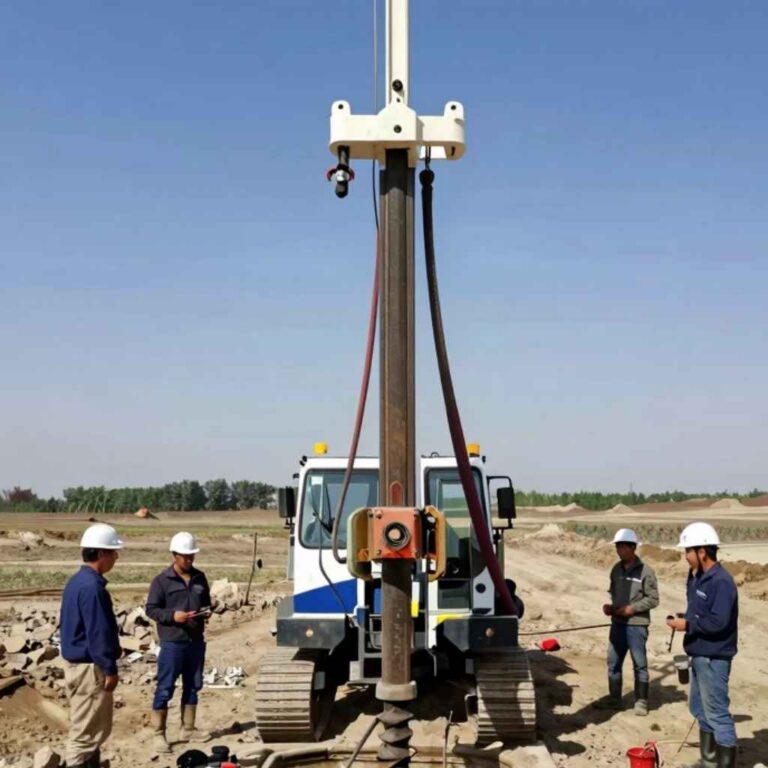
We needed water to live there. The drilling crew started. They worked for two days straight.
You could hear the drill grinding through the rock. It was a constant, loud noise. When they finally hit water, it was a huge relief.
But the bill was just the first step.
The Hidden Costs: What Else Adds Up?
The “per foot” price is only part of the story. There are other costs you need to be ready for. These can sometimes add a significant amount to the total.
Pump System
You need a pump to get water from the well to your house. This includes the submersible pump (if it’s a deep well), the pressure tank, and all the pipes and wires. The cost of a good pump system can be anywhere from $1,000 to $5,000 or more.
It depends on how much water you need and how much pressure you want.
Permits and Inspections
Most towns and counties require permits to drill a water well. There are fees for these permits. You might also need inspections during and after the drilling.
These are to make sure the well is built correctly and won’t pollute groundwater. These fees can range from a few hundred to over a thousand dollars.
Wellhead Protection and Sealing
When the well is done, they need to seal it properly at the surface. This prevents contamination from surface water or animals. This sealing, called grouting, uses cement or bentonite clay.
It’s a crucial safety step, and it has a cost.
Water Testing
Once the well is drilled, you should test the water. This checks for bacteria, minerals, and other contaminants. Testing can cost $100 to $500 or more.
If there are problems, you might need to pay for water treatment systems, which can be quite expensive.
Electricity Hookup
The pump needs power. You might need an electrician to run a new power line to the wellhead. This cost depends on how far away your nearest power source is and what kind of work is needed.
Myth vs. Reality: Well Drilling Costs
Myth
The per-foot price is the final price.
Reality
Many other costs like pumps, permits, and testing add up.
Myth
All drilling companies charge the same.
Reality
Prices vary widely based on location, geology, and services.
Real-World Scenarios and What They Mean for Your Wallet
Let’s look at a few different situations to see how costs can change.
Scenario 1: The Easy Dig in Soft Soil
Imagine you live in a sandy area, like Florida or parts of the East Coast. The water table is also pretty high, maybe only 50 feet down. A local driller quotes you $30 per foot.
For a 75-foot well, that’s $2,250 for drilling. Add a basic pump system for $1,500 and permits for $300. Your total is around $4,050.
This is on the lower end.
Scenario 2: The Rocky Mountain Drill
Now, picture a home in Colorado or Montana. You’re in the mountains, and the ground is mostly solid rock. The water table is deep, say 200 feet.
A driller charges $120 per foot because of the hard drilling. Drilling alone is $24,000. A robust pump system is needed, maybe $4,000.
Permits and testing could be $1,000. Your total jumps to $29,000.
Scenario 3: The Remote Alaskan Adventure
This is where costs can skyrocket. If you’re in a very remote area, like Alaska, getting equipment and supplies to your site is a major challenge. Special rigs might be needed.
Fuel costs are high. Labor might be priced higher due to remoteness. A well that might cost $50 per foot in Ohio could easily be $200-$300 per foot or more in a very isolated region, plus significant mobilization fees.
These examples show why getting local quotes is so important. What’s normal in one place is very different somewhere else.
What This Means for You: Planning Your Budget
Knowing these factors helps you plan. It’s not just about the price per foot you see online. You need to think about the total picture.
When is it Normal?
It’s normal for the cost to vary. Prices from $25 to $150 per foot are common. It’s also normal to have extra costs for pumps, permits, and testing.
A total well project cost of $7,000 to $20,000 for a typical home is not unusual in many areas of the U.S.
When Should You Worry?
Be wary of quotes that seem way too low. This could mean they are cutting corners on materials, safety, or permits. It could lead to problems down the road.
Also, be concerned if a driller can’t explain their pricing clearly. Lack of transparency is a red flag.
If the quoted price is far beyond your budget, talk to the driller. Can they suggest a slightly shallower well? Are there more basic pump options?
Sometimes adjustments can be made.
Simple Checks Before You Sign
Before you commit to a driller:
- Get at least three written quotes from reputable, local companies.
- Ask them about their experience in your specific area.
- Understand exactly what is included in the “per foot” price.
- Ask for a detailed breakdown of all potential costs.
- Check their licensing and insurance.
- Read reviews or ask for references.
Quick Scan: Factors Affecting Well Drilling Cost
| Factor | Impact on Cost | Why? |
|---|---|---|
| Well Depth | Higher | More time, materials, effort. |
| Geology (Rock vs. Soil) | Higher for rock | Harder to drill, more equipment wear. |
| Location Accessibility | Higher for remote/difficult | Mobilization costs, special equipment. |
| Casing Quality | Higher for premium | Stronger, more durable materials. |
Getting Quotes: Your Best Tool
The most important step is getting local quotes. Even with all this information, your area’s specific conditions will determine the real cost. Don’t be afraid to ask questions.
A good well driller will be happy to explain everything to you.
When you talk to them, ask specifically about their “per foot” cost. Also ask about mobilization fees, casing costs, and any other charges. Make sure you understand the total estimated cost before they start digging.
Some companies might offer package deals that include drilling and a basic pump system. Compare these carefully.
It’s also worth asking if they offer any warranties on their work. A reputable company will stand behind their drilling and installation.
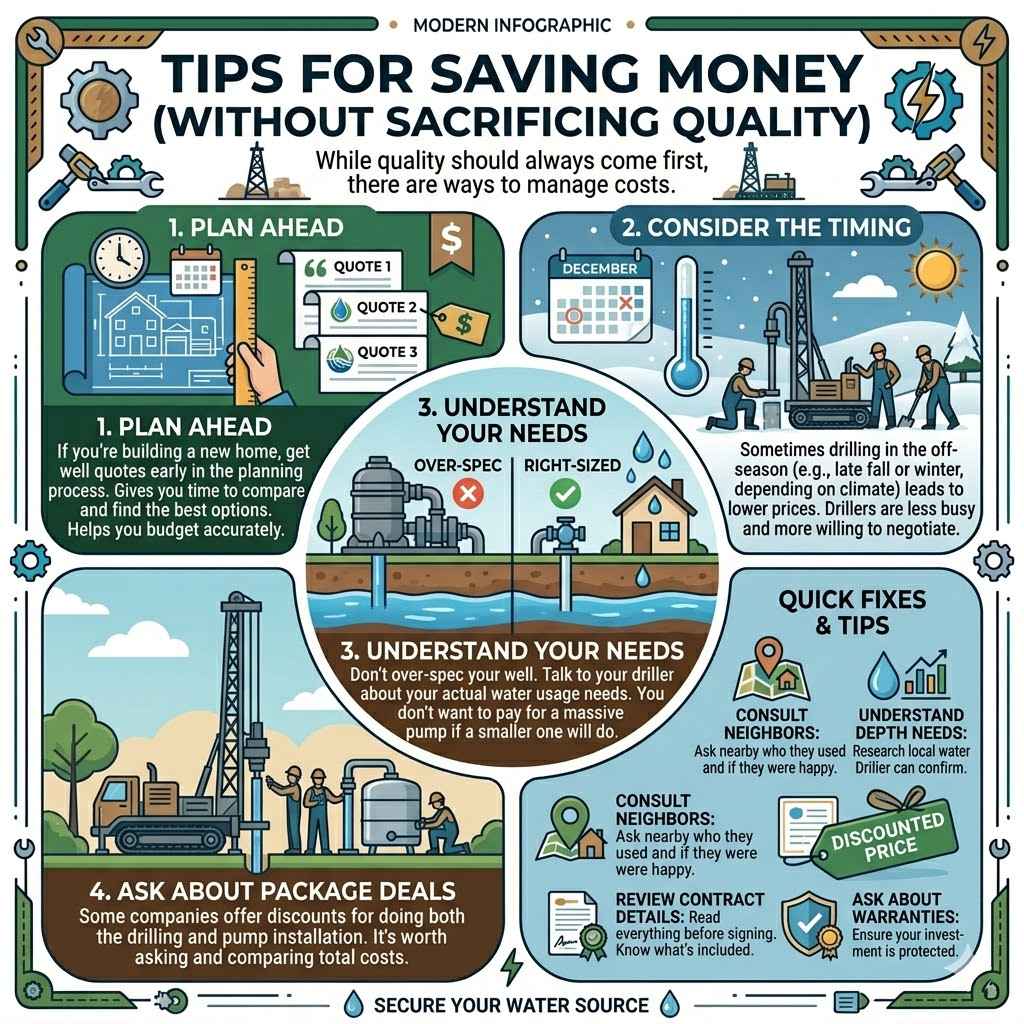
Tips for Saving Money (Without Sacrificing Quality)
While quality should always come first, there are ways to manage costs.
Plan Ahead
If you’re building a new home, try to get well quotes early in the planning process. This gives you more time to compare and find the best options. It also helps you budget accurately.
Consider the Timing
Sometimes, drilling in the off-season (maybe late fall or winter, depending on your climate) can lead to lower prices. Drillers might be less busy and more willing to negotiate.
Understand Your Needs
Don’t over-spec your well. Talk to the driller about your actual water usage needs. You don’t want to pay for a massive pump system if a smaller one will do the job.
A good driller can help you figure this out.
Ask About Package Deals
Some companies offer discounts if you have them do both the drilling and install the pump system. It’s worth asking if this is an option and comparing the total cost.
Quick Fixes & Tips for Well Drilling
Consult Neighbors: Ask people nearby who they used and if they were happy.
Understand Depth Needs: Research local water tables. Your driller can confirm.
Review Contract Details: Read everything before signing. Know what’s included.
Ask About Warranties: Ensure your investment is protected.
Frequently Asked Questions About Water Well Drilling Costs
How much does it cost to drill a 100-foot well?
A 100-foot well can cost anywhere from $2,500 to $15,000 or more. This depends heavily on your location, the type of ground, and the included equipment. The basic drilling might be $2,500-$5,000, but the pump, casing, and other fees add to the total.
Is drilling a well cheaper than connecting to city water?
In the long run, drilling a well is often cheaper than paying monthly water bills. However, the upfront cost of drilling can be very high. You also have to pay for your own maintenance.
Connecting to city water has a lower upfront cost but ongoing fees.
Can I drill a well myself?
In most places, you cannot legally or practically drill a well yourself. It requires specialized, heavy equipment and knowledge of regulations. Local laws usually require licensed professionals for well drilling to ensure safety and water quality.
What’s the most expensive part of drilling a well?
The most expensive part is typically the drilling itself, especially if you encounter hard rock or need to go very deep. However, a high-quality pump system can also be a significant cost, sometimes making up 20-30% of the total project price.
How long does it take to drill a water well?
Drilling a typical home well can take anywhere from one to three days. This can vary greatly. Factors like depth, ground conditions, and weather can speed up or slow down the process.
It doesn’t include time for permits or pump installation.
What is the average depth of a residential water well in the US?
The average depth varies widely by region. In some areas with shallow water tables, wells might be 50-100 feet deep. In other regions, especially those with more arid climates or where the best aquifers are deep, wells can be 200-500 feet or even much deeper.
Conclusion: Investing in Your Water Future
Drilling a water well is a big project. The cost per foot is a starting point, but the total investment is more complex. By understanding the factors like depth, geology, and location, you can better estimate your budget.
Always get detailed quotes from local experts. This ensures you get quality water for years to come. It’s an investment in your home and your independence.
Sponsored / affiliate links. As an Amazon Associate I earn from qualifying purchases. I may earn additional commission from eligible campaigns.