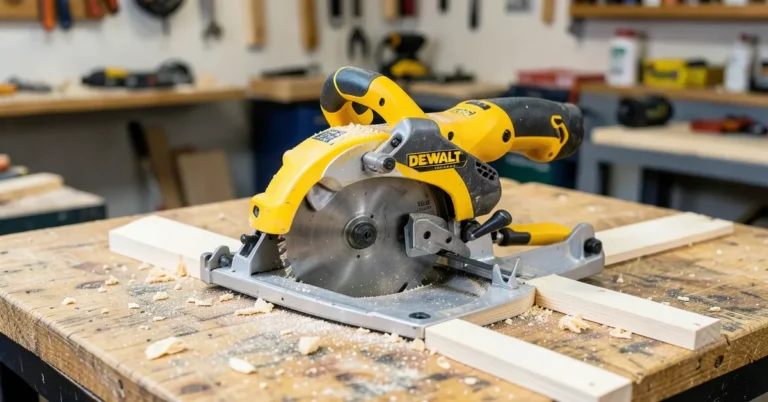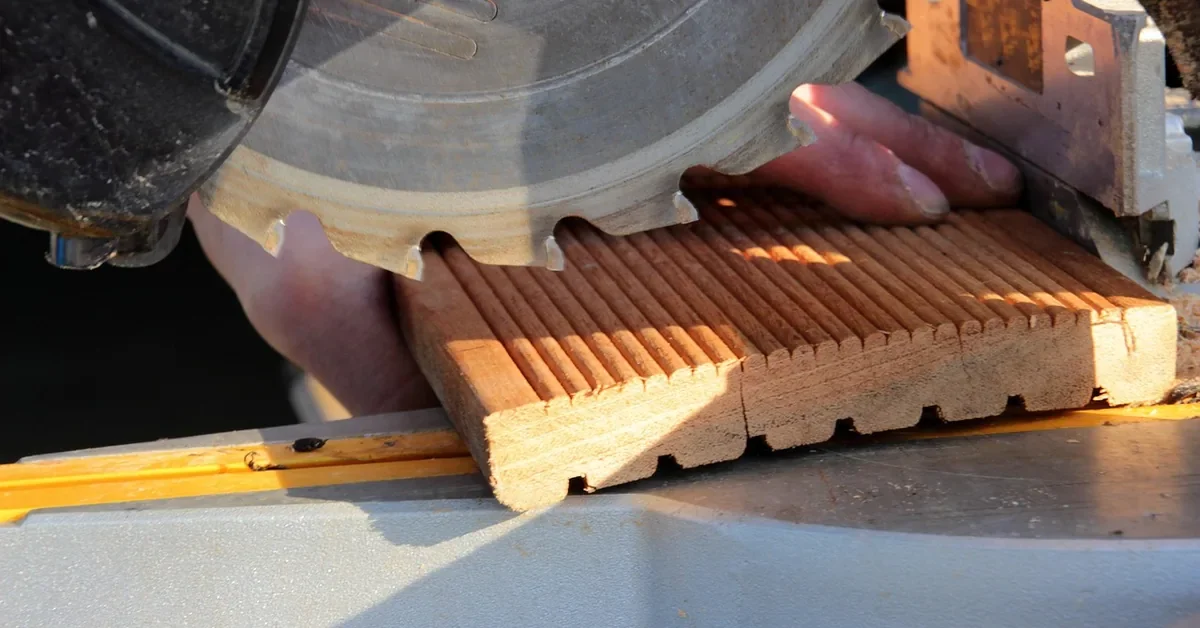
WEN Compound Miter Saw Review: MM1014T vs MM1213T vs MM1015
WEN’s compound miter saws share the same 15-amp motor across three current models, but the MM1015’s LED cutline beats the MM1014T’s laser diode for daylight accuracy, while only the 12-inch MM1213T crosscuts wide baseboard and crown molding in one pass. Picking the wrong model means re-cutting oversized stock by hand. This guide covers real cutting capacities, the laser-vs-LED difference, and which WEN model fits a home shop versus a job site.
Quick Answer
For most home shops, the WEN MM1015 (10-inch, dual-bevel, LED cutline, around $267) is the best all-rounder. Go with the 12-inch MM1213T only if you regularly cut wide crown molding or 2x lumber and can find one in stock. The 10-inch MM1014T (single-bevel, laser guide, around $204) is the budget entry point if you never need dual-bevel compound cuts.
WEN MM1014T vs MM1213T vs MM1015: Specs Compared
All three WEN compound miter saws run on the same 15-amp motor, so the real differences come down to blade size, bevel capability, and how each saw shows you the cutline. Here’s what actually separates them, pulled from WEN’s published specs and current Amazon listings.
| Spec | MM1014T | MM1213T | MM1015 |
|---|---|---|---|
| Blade size | 10 inch | 12 inch | 10 inch |
| Bevel | Single (0-45°) | Dual (0-45° each way) | Dual (0-45° each way) |
| Max crosscut | 13.4″ wide x 3.5″ thick | 13″ wide x 4.1″ thick | 12″ wide x 3.75″ thick |
| Miter range | 45°, 5 positive stops | 45°, 5 positive stops | 49°, 9 positive stops |
| Cutline guide | Laser diode | Laser diode | LED shadow-line (LED Cutline) |
| Included blade | Carbide-tipped | 48-tooth carbide (BL1248) | 40-tooth carbide |
| Current price* | ~$204 | Frequently out of stock | ~$267 |
| Best for | Budget single-bevel work | Wide crown molding, 2x stock | Everyday dual-bevel work |
*Prices checked live on Amazon and change often. One gap most reviews of this saw line skip: the MM1213T’s own Amazon listing has shown “Currently unavailable” repeatedly, even though wenproducts.com still lists it as active. If you specifically need 12-inch capacity, check WEN’s MM1215, which has the same 12-inch dual-bevel spec sheet with the newer LED cutline instead of a laser.
Best All-Around WEN Miter Saw Pick
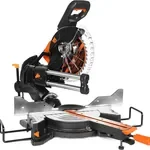 |
WEN MM1015 15-Amp 10-Inch Dual Bevel Miter Saw – $266.96 The dual-bevel spec and LED cutline this guide’s comparison table calls out are exactly why this is the model we point most home-shop readers to over the single-bevel MM1014T.
|

Where WEN Compound Miter Saws Come From
WEN Products was founded in 1951 by Nick Anton and is still headquartered in Elgin, Illinois. The company’s engineers have credits on some genuinely foundational power-tool designs, including early electric jigsaws and random-orbital sanding technology – the same mechanism used in most orbital sanders and buffers sold today.
📊 WEN has been building power tools since 1951 and was an early developer of random-orbital sanding technology – Source: WEN Products, About Us
That budget-friendly-but-serious positioning carries through to the miter saw line: WEN’s compound miter saws are priced well below Dewalt and Makita’s comparable dual-bevel saws, at the cost of a plainer fit-and-finish and lighter-duty bearings – fine for weekend and home-shop use, less so for daily job-site abuse.
Laser Guide vs. LED Cutline: What’s Actually Different
A laser guide projects a thin red dot or line onto the workpiece from an angled diode; a LED cutline (WEN’s term for it) instead shines an LED down onto the spinning blade, casting the blade’s own shadow onto the wood. The shadow method is what the MM1015 uses, and it stays visible under bright shop lighting or sunlight where a laser dot washes out – the tradeoff is that a shadow line is slightly wider than a laser dot, so it’s marginally less precise on very fine joinery cuts.
Which guide type should I trust for finish work?
For picture-frame miters and other fine joinery, both types need a test cut to confirm the actual kerf offset before you trust the line – neither a laser nor a shadow line accounts for blade width. For general framing, decking, and crown molding, either guide is accurate enough once you’ve made that one calibration cut.
Cutting Capacity and What Each Saw Actually Handles
The 12-inch MM1213T is the only one of the three that reliably handles a full 2×8 or wide baseboard in a single crosscut – its 4.1-inch cut depth beats both 10-inch models. The MM1015 and MM1014T top out closer to 3.5-3.75 inches thick, which still covers standard 2×4 framing lumber and most trim and molding, just not thick posts or doubled-up stock in one pass.
Miter range matters for the specific cut, too: the MM1015’s 49-degree miter (versus 45 degrees on the other two) covers the rare out-of-square corner you’ll hit on older houses without needing to compensate with a bevel cut on a table saw instead. All three saws bevel up to 45 degrees for compound cuts like crown molding installed flat.
Safety Features
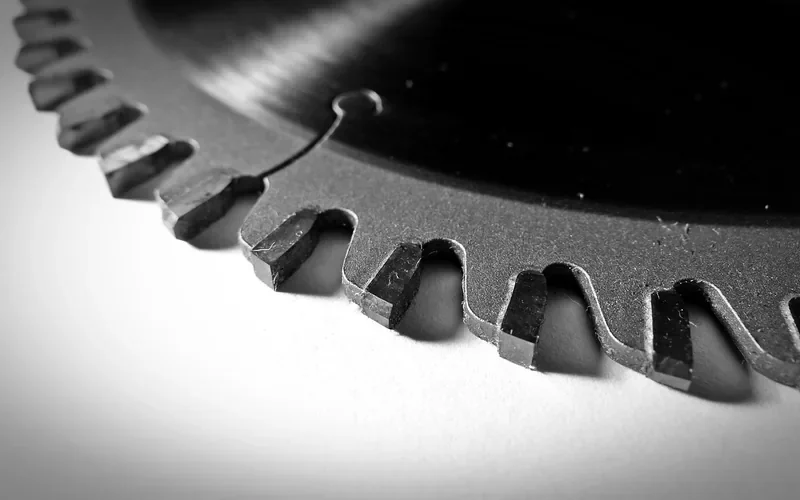
All three models share the same core safety hardware: a spring-loaded blade guard that automatically covers the blade except during the actual cut, an electric brake that stops the blade within seconds of releasing the trigger, and a dust port that connects to either the included bag or a shop vacuum to cut down on airborne debris.
- Keep the blade guard’s spring mechanism free of sawdust buildup – a sticking guard is the most common safety complaint on this saw line.
- Use the included hold-down clamp on any board shorter than about 8 inches; hand-holding short offcuts near the blade is how most miter saw injuries happen.
- Wear eye and hearing protection – the 15-amp motor runs loud enough at full speed to warrant it during extended cuts.
Maintenance and Replacement Parts
Brush out sawdust from the blade guard and base after every use, and wipe the sliding rails with a light machine oil every few months to keep the slide smooth – a gritty slide is the usual cause of a saw that suddenly cuts less accurately than it used to. WEN stocks replacement blades, brushes, and base plates directly, and genuine parts are worth the extra cost over generic ones since the arbor size differs between the 10-inch and 12-inch models.
Is a WEN Compound Miter Saw Worth It?
For a home shop or occasional job-site use, yes – the spec sheet (15-amp motor, dual-bevel on two of the three models, carbide blade included) matches saws from Dewalt and Makita that typically cost noticeably more, and the two-year warranty covers manufacturing defects. What you give up at this price is fit-and-finish: expect a bit more play in the miter detents and a plainer table than a contractor-grade saw, which matters more if you’re cutting all day, every day, than if you’re framing a deck on weekends.
If you’re deciding between a compound miter saw and a different saw type entirely for your shop, our saw buying guide breaks down when a miter saw beats a table saw with a miter gauge, and our miter saw machine overview covers sliding versus non-sliding designs and how to size a saw stand for either WEN model. If you’re weighing blade diameter specifically, see our 7-1/4 vs 10-inch miter saw comparison for how that tradeoff plays out on smaller saws, and for finishing a straight reference edge before you cut, our guide to cutting a straight line with a circular saw covers the same squaring technique.
Frequently Asked Questions
What’s the difference between WEN’s laser guide and LED cutline?
A laser guide projects a red line from a diode; a LED cutline shines light onto the blade to cast its shadow onto the workpiece instead. The MM1014T and MM1213T use a laser; the MM1015 uses the LED shadow-line, which stays more visible in bright shop light. Both still need a test cut to confirm the actual kerf offset.
Which WEN compound miter saw should I buy?
For most home shops, the 10-inch MM1015 is the best balance of price, dual-bevel capability, and cutline visibility. Choose the 12-inch MM1213T only if you regularly cut boards wider than 12 inches thick or over 3.75 inches, and confirm it’s actually in stock first. The MM1014T is the budget option if you never need dual-bevel compound cuts.
Is the WEN MM1213T still available to buy?
Availability has been inconsistent – its Amazon listing has repeatedly shown “Currently unavailable” even though WEN still lists it as an active product on wenproducts.com. If you need 12-inch dual-bevel capacity and the MM1213T is out of stock, the MM1215 covers the same cutting capacity with a newer LED cutline in place of the laser.
How long is the warranty on a WEN compound miter saw?
WEN backs its compound miter saw line with a two-year warranty covering defects in materials and workmanship. Register the saw after purchase to speed up any future warranty claim, and keep your receipt as proof of purchase date since the warranty period is calculated from the sale, not the manufacture date.
Conclusion
All three WEN compound miter saws share the same reliable 15-amp motor and two-year warranty, so the real decision comes down to cutting capacity and how you want the cutline shown to you. The MM1015 is the pick for most home shops; step up to the MM1213T (or its MM1215 sibling, if the T-model is out of stock) only when you genuinely need the extra 12-inch capacity.
Sponsored / affiliate links. As an Amazon Associate I earn from qualifying purchases. I may earn additional commission from eligible campaigns.