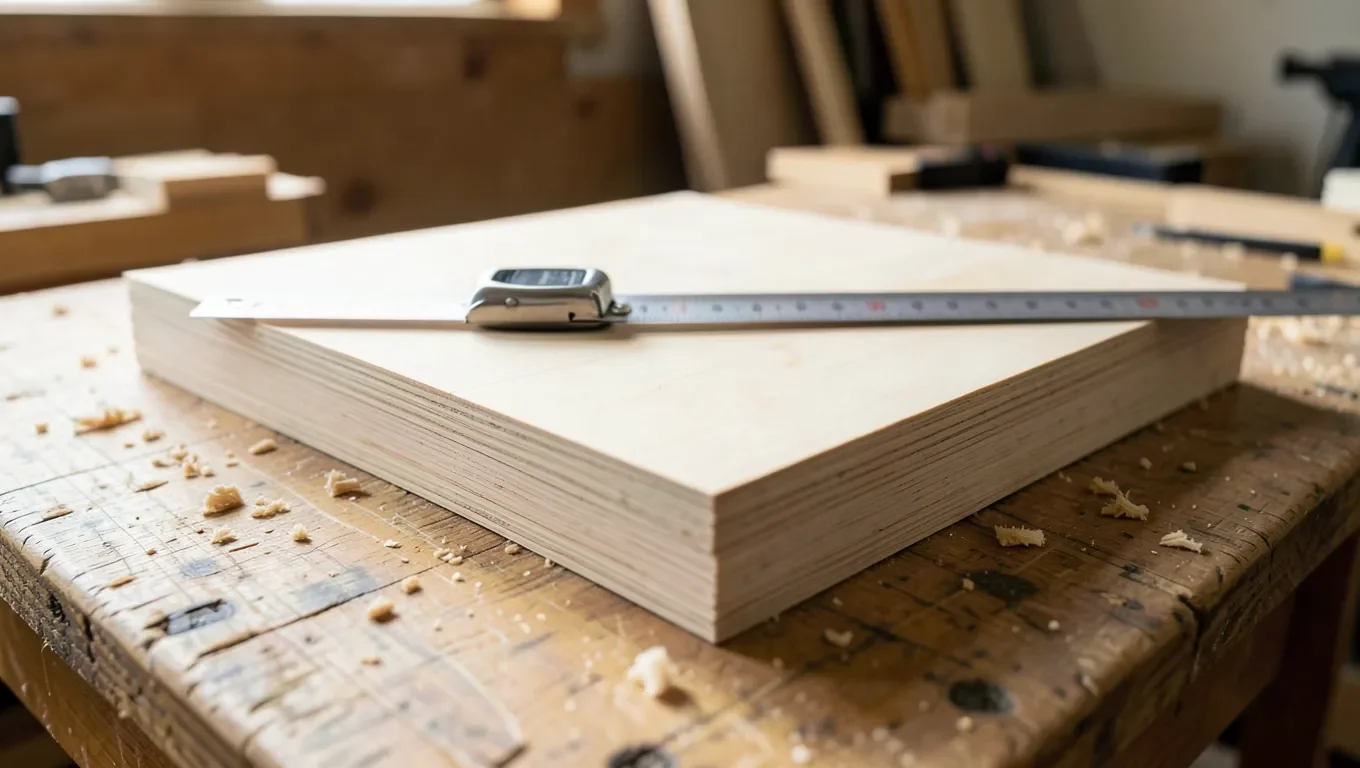
15/32 vs 1/2 Plywood: Are They Really the Same Thickness?
Short answer: in almost every case, no — not by a full measurement. Plywood sold and labeled as “1/2 inch” is, under the APA’s own manufacturing standard, built to an actual thickness of 15/32″ (0.469″), not a true 0.500″. That’s not a defect or a bad batch — it’s how the panel is designed to come out after the mill sands it. Most of the time this 1/32″ gap is invisible in a finished project. But if you’ve ever set a dado stack to exactly 1/2″, tried to seat a panel into a track system spec’d for true 1/2″ stock, or wondered why your “1/2 inch” shelf measures thin on a tape, this is why. Below is the actual APA tolerance data, when the gap is big enough to matter, and how to check what you really bought before you cut.
Is 15/32 Plywood the Same as 1/2 Inch? The Real Answer
Yes — usually literally the same sheet, sold under two different names. The APA (The Engineered Wood Association) publishes Voluntary Product Standard PS 1-19, which governs construction and industrial plywood in the U.S. Under that standard, a panel labeled “1/2 inch” (sanded grade) is allowed to measure anywhere from roughly 0.452″ to 0.484″. Fifteen thirty-seconds of an inch works out to 0.469″ — comfortably inside that range. A true 0.500″ panel would actually be thicker than the standard’s own upper limit for a nominal 1/2″ sheet.
In practice, that means when you ask a big-box lumber associate for “half-inch plywood” and a sheet stamped “15/32”” comes off the rack, nothing has gone wrong. You didn’t get the wrong product. Softwood sheathing and sanded-grade plywood in the U.S. is manufactured this way on purpose, and has been for decades — the “1/2 inch” on the label is a nominal size, not a guaranteed measurement.
Best Way to Check Actual Thickness
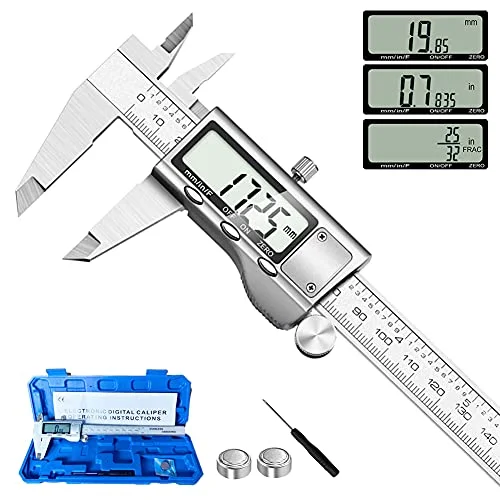 |
Jiavarry 6-Inch Digital Caliper – $21.98 Switches between inch, millimeter, and fraction display — so you can check whether a “1/2 inch” panel is really 15/32″ before you set a dado stack or router bit to it.
|
Nominal vs. Actual Plywood Thickness: The Full Chart
The 15/32″ vs. 1/2″ gap isn’t a one-off — it’s part of a consistent pattern across every standard plywood thickness. Sanded panels lose roughly 1/32″ of material during the final sanding pass, which is what brings a rough-milled panel down to a smooth, consistent face. Here’s how nominal and actual thickness compare for the sizes you’ll run into most:
| Nominal (Labeled) Size | Actual Thickness | Decimal Equivalent |
|---|---|---|
| 3/8″ | 11/32″ | 0.344″ |
| 1/2″ | 15/32″ | 0.469″ |
| 5/8″ | 19/32″ | 0.594″ |
| 3/4″ | 23/32″ | 0.719″ |
The same nominal-vs-actual gap shows up in dimensional lumber, too — a “2×4” is actually 1.5″ × 3.5″ after milling and drying, for the same reason: the labeled size describes the rough stock before it’s surfaced down. It also affects how lumber volume gets calculated for pricing — our guide to board feet walks through a worked example showing how much a nominal-vs-actual mix-up can throw off a board-foot count on the same piece of wood.
When the 1/32-Inch Gap Actually Matters
For most builds — shelving, sheathing, general boxes — a 1/32″ difference is nothing. You won’t see it, and it won’t affect how the piece performs. There are a handful of situations where it’s worth stopping to measure first.
Dado Cuts and Router Bits Sized to True 1/2″
A dado stack or straight router bit sold as “1/2 inch” is generally machined to an actual 0.500″ width. Run that through a cabinet side to seat a 15/32″ plywood shelf, and the shelf will sit loose in the groove — roughly 0.03″ of slop, enough to rock or need glue and shims to lock in place. The fix is simple: measure the actual panel edge with calipers, then dial the dado stack’s shim set (or take a second pass with a router) to match that real number instead of the nominal one.
Track, Slide, and Jig Hardware
Some drawer slide systems, T-track hardware, and shop-made jigs are machined to accept a true 1/2″ panel. If the hardware’s tolerance is tight, a 15/32″ sheet can sit loose enough to rattle or bind. Cabinet-grade drawer systems in particular are worth double-checking against the spec sheet rather than assuming “1/2 inch plywood” will be a guaranteed fit.
Flush Reveals and Inset Doors
On face-frame cabinetry where a door or panel needs to sit perfectly flush, a consistent 1/32″ shortfall across several parts can stack up into a visible gap by the time you reach the last joint. It’s rarely a dealbreaker, but it’s the kind of thing that’s easier to plan for up front than to shim around at final assembly.
The Exception: When 1/2 Inch Plywood Really Is 1/2 Inch
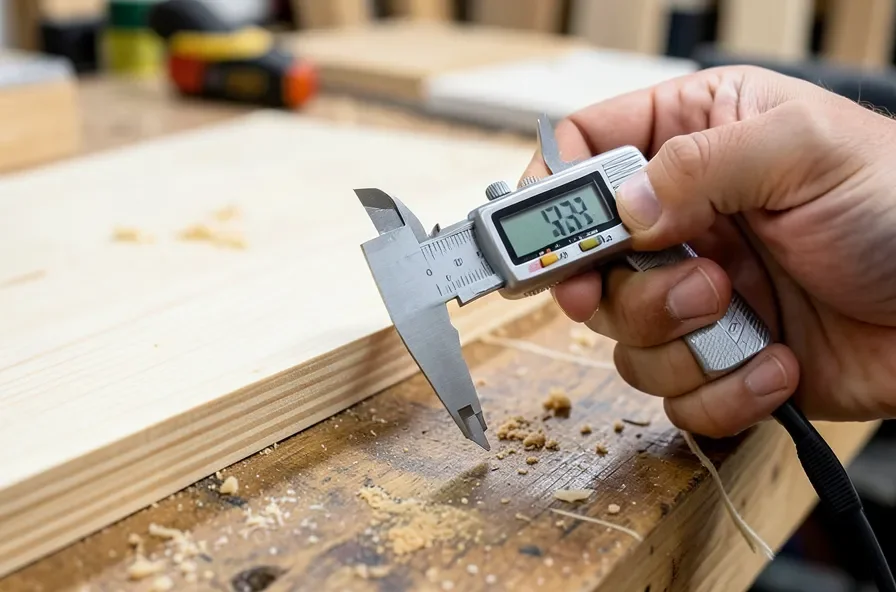
PS 1-19 covers softwood construction and sanded-grade plywood, which is the vast majority of what’s stocked at home centers. It doesn’t automatically apply to every panel on the market. Baltic birch and other void-free hardwood plywoods are often produced to metric sizing or tighter cabinet-grade tolerances, and some specialty or imported panels measure at or very close to their labeled thickness. That’s not a guarantee, though — grade and origin are a hint, not a substitute for actually measuring the sheet you have in your hands.
Choosing Plywood Thickness for Your Project
Because a “15/32”” stamp and a “1/2 inch” stamp usually describe the same physical panel, this isn’t really a choice between two different-strength products the way it might read on the shelf. The real decision is which nominal size class fits your project — 1/2″ nominal vs. 5/8″ or 3/4″ nominal — and then which grade and face veneer suit the job. A few common uses for panels in the 1/2″ nominal class:
- Subflooring and wall sheathing: A standard, economical choice for covering framing where the panel will be fastened across many studs or joists.
- Cabinet sides and backs: Common for interior cabinet parts, especially when paired with a hardwood face veneer for a furniture-grade look.
- Shelving: Workable for light-to-moderate loads; for longer spans or heavy books, a thicker nominal size or added edge banding/cleats will resist sag better than relying on the 1/32″ difference between 15/32″ and a hypothetical true 1/2″.
If you’re weighing a step up in thickness rather than the labeling question, our comparisons of 1/2 vs. 3/4 inch plywood and 11/32 vs. 1/4 inch plywood cover how the next sizes up and down the scale perform for load-bearing and lighter-duty projects.
How to Verify What You Actually Bought
The label on the panel or the shelf tag tells you the nominal size class, not the number you should cut to. Before a project depends on a precise fit, measure the actual sheet:
- Measure at the panel edge, not near a corner where sanding can be slightly uneven.
- Use a caliper rather than a tape measure — a tape’s fractional markings aren’t precise enough to reliably tell 15/32″ (0.469″) apart from a true 1/2″ (0.500″).
- Set your dado stack, router bit depth, or hardware spacing to the number you actually measured, not the number printed on the panel.
Cutting, Fastening, and Finishing Tips
Cutting and Measuring
Mark your cut lines from an actual measurement of the sheet, not the nominal size. A circular saw or table saw gives the straightest, most repeatable rip cuts; support the panel well along its full length so it doesn’t flex mid-cut, and keep the good face up to minimize tear-out.
Fastening
Screws hold better than nails for anything that needs to stay tight over time; add wood glue in the joint for extra strength on permanent assemblies. If a dado or rabbet is sized to the panel’s actual (not nominal) thickness, the joint itself does most of the alignment work before you ever drive a fastener.
Finishing
Sand the surface before finishing to knock down any raised grain, then apply a finish rated for the panel’s end use — an exterior-rated sealant for anything exposed to weather, or paint/stain for interior work. Follow the product’s dry-time and coat-count directions; skipping a coat is a common reason finishes wear through early.
Frequently Asked Questions
Is 15/32 inch plywood the same as 1/2 inch plywood?
In almost every case, yes. What’s labeled and sold as “1/2 inch” plywood is manufactured to an actual thickness of 15/32″ (0.469″) under the APA’s PS 1-19 product standard, which allows a nominal 1/2″ sanded panel to measure between about 0.452″ and 0.484″. A true 0.500″ panel would actually fail that tolerance range on the thick side. So on a typical trip to a home center, “15/32″” and “1/2″” plywood aren’t two competing products — they’re usually the same physical sheet, just labeled two different ways.
Why isn’t 1/2 inch plywood actually 1/2 inch thick?
Manufacturing tolerance and sanding. Plywood is built up from an odd number of veneer plies glued under heat and pressure, then run through a sander to true up both faces and remove overlap and glue squeeze-out. That sanding pass typically takes off close to 1/32″ of material. Panel makers size the raw layup to land inside the PS 1 tolerance band after sanding, and for the 1/2″ nominal size, that lands the finished panel at 15/32″ rather than a full 0.500″.
Will 15/32 plywood fit a dado cut for 1/2 inch material?
Not snugly if the dado was cut with a stack or router bit set to a true 0.500″ width. The roughly 1/32″ (about 0.03″) gap is small, but it’s enough for a panel to wobble or need shimming in an otherwise tight joint. The fix is to size the dado to the plywood you’re actually using — measure the panel edge with calipers first and set the stack to match, rather than trusting the “1/2 inch” label.
Is any plywood actually a full 1/2 inch thick?
Occasionally. Baltic birch and other void-free hardwood plywoods are often produced to metric thicknesses or tighter shop-grade tolerances and aren’t always governed by the same softwood PS 1 standard, so a panel sold as 1/2″ in that category can measure closer to true. It’s not guaranteed, though — the only way to know for certain is to measure the actual sheet in front of you.
What’s the actual thickness of other common plywood sizes?
The same nominal-minus-sanding pattern shows up across the range: 3/8″ nominal plywood measures about 11/32″ (0.344″) actual, 5/8″ measures about 19/32″ (0.594″), and 3/4″ measures about 23/32″ (0.719″). The full breakdown is in the chart above.
Final Thoughts
The 15/32″ vs. 1/2″ question isn’t really a comparison between two products — it’s a labeling quirk built into how U.S. softwood plywood is manufactured and standardized under APA PS 1-19. For the vast majority of projects, treat them as the same material and move on. The only time it’s worth slowing down is when a cut, a piece of hardware, or a flush joint depends on a precise 0.500″ fit — in which case, measure the actual sheet with a caliper before you commit a saw or router to a number that was never guaranteed in the first place.
Sponsored / affiliate links. As an Amazon Associate I earn from qualifying purchases. I may earn additional commission from eligible campaigns.
 Baltic Birch Plywood Sheets Box of 45 - Laser Engraving Cutting, Scroll Saw Nature Veneer Color, Stronger Than Basswood, A/A Grade,12 x 12 x 1/8”, 3mm Thickness Perfect for Wood Burning
 Gavigain Circular Saw Guide Rail, Heavy Duty Aluminum, Non Slip Clamping, Universal Compatibility, Adjustable Extension Rail for Woodworking Projects