Best Clear Deck Sealers for Winter (2026): We Compared
A good clear deck sealer for winter weather protection is a penetrating, water-repellent exterior sealer that cures before rain; choose one with about a 24 to 48 hour dry window, a listed minimum application temperature, and resistance to water intrusion and freeze-thaw. Bad timing or the wrong product lets moisture soak in, then expansion and contraction can split boards, peel coatings, and shorten the deck’s life. This guide explains how to choose by winter failure mode, compare labels, and time application around rain and temperature drops.
This guide is part of our Cold Weather Wood Finishing: What Works Below 50°F series.
Quick comparison
| Product | Badge | Best for | Price | ||
|---|---|---|---|---|---|
 |
Ready Seal Exterior Wood Stain & Sealer, Natural Cedar, 5Ready Seal | Our pick | 5 gal · Natural Cedar · Goof Proof | $189.94
Price as of 21 Oct 2026
|
View |
 |
DEFY Extreme Crystal Clear Outdoor Wood Stain and Sealer inDEFY | Also great | 1 gal · Crystal Clear · Made in USA | $54.54
Price as of 21 Oct 2026
|
View |
Use this page to match the product to the weather window, not to a vague “waterproof” claim. The best pick depends on surface temperature, how long rain stays away, and whether the deck is new, weathered, or previously coated.
How we chose
The comparison centers on five points: winter water resistance, cure timing before rain, coat count, clear or transparent finish, and whether the product fits a cold-weather deck without forcing risky timing. Labels that separate moisture resistance from UV resistance got extra weight, because those are different problems.
Product details also had to be specific enough to matter in shoulder-season work. That means an application temperature, a rain window, or a coat schedule you can plan around, not just a broad promise of weather protection.
For winter use, surface dryness matters as much as the bottle. A deck that is damp, dirty, or close to a cold night can fail even if the label sounds strong.
Thompson’s WaterSeal Clear Wood Sealer: best for wet-weather protection
Who it fits: This clear wood sealer suits a homeowner who wants a clear finish and a simple waterproofing option for a deck that needs rain resistance more than a strong color shift. Bob Vila lists Thompson’s WaterSeal Clear Wood Sealer as best for waterproofing, and the product’s clear, water-based profile makes it an easy fit for wood grain you want to keep visible.
What stands out: The value here is the waterproofing focus. For winter prep, that matters because the first failure often starts with water entering the wood, then freezing, then forcing movement in the fibers. A clear sealer that aims at water intrusion can help slow that chain.
Watch-outs: Clear sealers do not give the same UV control as a tint or stain, so sun exposure can still age the surface. Also, “waterproofing” on a label should not be read as a guarantee for snow, standing meltwater, or a bad forecast window. You still need dry wood and enough rain-free time.
If the deck is already showing gray wear, check whether you need more than clear waterproofing. A product built mainly for water resistance may not address the full mix of winter wear, especially on sun-hit boards or spots that stay damp after storms.
What it protects against
Winter-ready clear sealers need to reduce water entry first. Thompson’s WaterSeal is positioned around waterproofing and weather resistance, which makes it relevant where rain, snowmelt, and repeated wetting are the main concern.
That matters because freeze-thaw damage starts with moisture in the wood. If water is kept out, the wood has less to expand against when temperatures fall.
Where it fits in winter use
This is a practical choice for a clear finish on a sound deck that needs better wet-weather defense before cold sets in. It fits best when the forecast gives you a clean drying window and the boards are already dry, clean, and free of mildew.
A common first-timer mistake is to wait for the first frost warning, then try to seal in a short dry spell. That approach leaves too little time for the product to bond and leaves the deck vulnerable the next morning.
Watch-outs before you buy
Do not treat a waterproofing label as the same thing as UV protection. Those are separate buying priorities, and winter calls for both moisture control and enough durability to survive winter sun, meltwater, and foot traffic.
Also, a clear finish will not hide poor prep. If the deck is dirty or mold-stained, the sealer will not fix that problem.
Seal-Once Marine Premium Wood Sealer: best for cold, damp decks
Who it fits: Seal-Once Marine Premium Wood Sealer fits decks where moisture control is the main job and cleanup matters too. The same source says it is water-based, needs two coats, and resists UV and moisture, while also resisting salt, mold, and algae. That combination makes it attractive for damp, exposed wood.
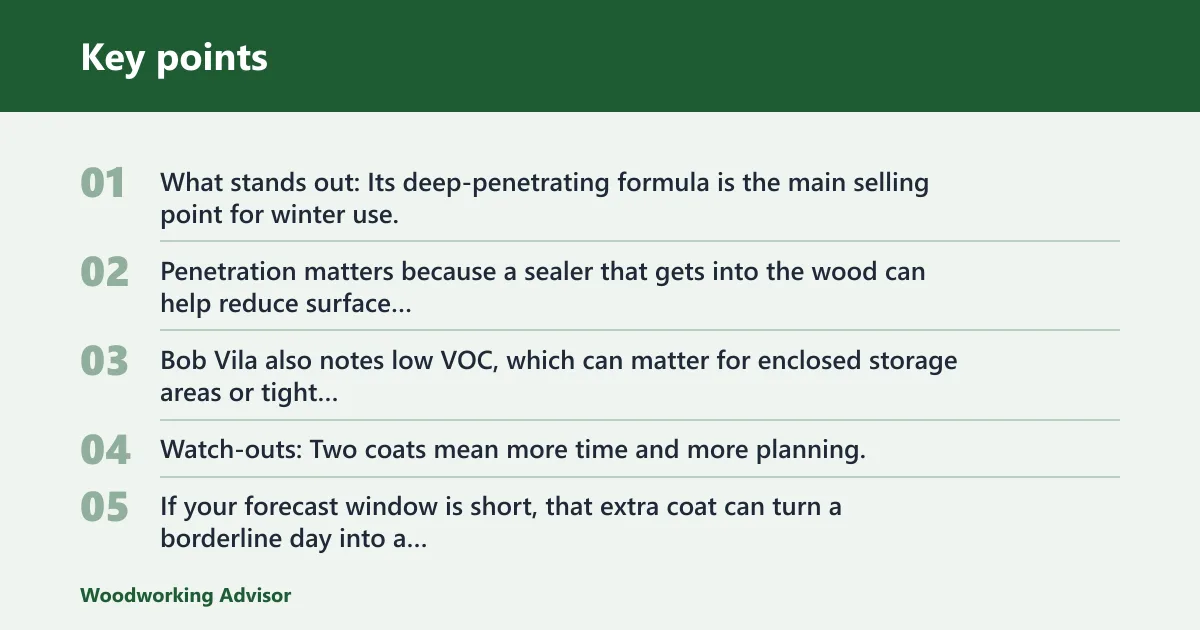
What stands out: Its deep-penetrating formula is the main selling point for winter use. Penetration matters because a sealer that gets into the wood can help reduce surface wetting and slow the kind of water uptake that worsens freeze-thaw stress. Bob Vila also notes low VOC, which can matter for enclosed storage areas or tight residential settings.
Watch-outs: Two coats mean more time and more planning. If your forecast window is short, that extra coat can turn a borderline day into a missed one. It is also still a clear-type choice, so it is not a cure-all for UV exposure or a substitute for a dry deck.
For a deck that already sits close to the shade line, the key question is whether the wood is dry enough to take the product before another rain or freeze cycle arrives. If not, hold off.
Why deep penetration matters
Deep penetration helps a sealer protect the wood instead of sitting mostly on top of it. That is useful in winter, because the wood can take on moisture from rain, snowmelt, and humidity even when the surface looks dry.
With cold weather, the risk is not only wet wood. The risk is wet wood that freezes before the coating can settle and cure properly.
Low-VOC and cleanup considerations
The same source lists Seal-Once as water-based, which generally makes cleanup simpler than many solvent-heavy products. Low VOC can also be a practical plus if you are sealing near doors, windows, or other occupied areas.
That said, easier cleanup does not remove the need for prep. You still need to remove debris, wash away grime, treat mold or mildew where present, and let the deck dry fully.
Best deck conditions for this pick
This option fits best on sound wood that is clean, dry, and not rushed by a sharp overnight drop. It also suits decks where mold, algae, or salt exposure are part of the problem list.
Use it when you can complete both coats without forcing the second one into a shrinking forecast window.
Ronseal Ultimate Protection Decking Stain: best for fast rain windows

Who it fits: Ronseal Ultimate Protection Decking Stain fits a narrow weather gap where you need a fast return-to-rain window and a clear, practical coat schedule. Ronseal says it is best applied above 10°C, becomes rainproof in 90 minutes, needs 24 hours to dry, should get four hours between coats, and uses two coats. It is also water-based.
What stands out: The timing data is unusually specific. That makes it easier to plan around a winter workday when the weather gives you only a brief safe window. Ronseal also says the product stays tough through winter, which points to cold-season use rather than warm-weather only.
Watch-outs: Above 10°C is a real limit for planning, not a casual suggestion. If the deck, the air, or the overnight low is too cold, the safer move is to wait. The product also needs two coats, so the first dry window must leave room for the second.
This is the product in the group with the clearest rain timing. That helps when the forecast is tight, but it does not override a cold surface or a frost risk.
Temperature and rain timing
Ronseal’s stated application point is above 10°C, and that figure should guide the whole plan. If the deck surface is colder than the air, the surface can lag behind the forecast and slow curing.
The rainproof-in-90-minutes detail helps most when a shower threat is near but not immediate. Still, if frost is likely that night, a short rain window does not make the job safe.
Coat count and recoat spacing
Ronseal specifies two coats and four hours between coats. That means you need more than a single dry spell; you need enough daytime left to complete both passes without straining the schedule.
If you cannot finish the second coat in good time, stop. A rushed second coat can trap moisture and make the finish more vulnerable when temperatures fall.
When a faster dry time helps
A faster dry time helps on decks that need protection before the next wet front moves in. It also helps when the deck sees light use and you want a more predictable return to service.
Suppose your deck is shaded most of the day and only gets a few warm hours in the afternoon. A product with a defined rain window can be easier to plan than one that only says “weather resistant.”
Winter deck decision table
| Deck condition | Forecast window | Minimum application temp | Rain-free hours | Coat count | Likely failure mode |
|---|---|---|---|---|---|
| New or bare wood, dry and sound | At least one clear drying day, no frost overnight | Above 10°C for Ronseal; otherwise use the warmest dry period available | At least a full dry window before rain | 2 coats for Seal-Once or Ronseal | Trapped moisture, uneven uptake, early wear |
| Weathered but sound wood | Two dry days are safer than one | Stable surface temperature, not near a cold snap | Enough time for cure before evening dew | 2 coats if the label calls for it | Spotty penetration and patchy protection |
| Previously sealed wood that is still intact | Dry, mild stretch with no rain and no frost risk | Above the label minimum, with the deck fully dry | Long enough for the coating to set before nighttime cooling | Follow the existing coating system | Poor bonding, peeling, or a slick surface |
| Deck with mildew, algae, or salt exposure | Only after cleaning and full dry time | Warm enough to dry the wood thoroughly | Not a short window | 2 coats for a product like Seal-Once | Locked-in contamination and early discoloration |
| Deck facing an overnight low near freezing | Do not coat | Too risky if the surface is cooling fast | Too short | Skip the job | Freeze-thaw stress, poor cure, coating failure |
This table is the main winter rule set: do not choose by marketing first. Choose by the deck’s condition, the forecast, and whether the surface can stay above the product’s minimum and dry through the night.
Which one should you buy?
Best for new or bare wood: Seal-Once Marine Premium Wood Sealer is the strongest fit if you want deep penetration, low VOC, and a two-coat system that also handles moisture, salt, mold, and algae exposure.
Best for weathered but sound decks: Thompson’s WaterSeal Clear Wood Sealer is a straightforward choice when the priority is clear waterproofing and the deck needs a simple protective step before winter.
Best for the narrowest forecast window: Ronseal Ultimate Protection Decking Stain is the most timing-specific pick here because it lists above 10°C, rainproof in 90 minutes, four hours between coats, and 24-hour dry time.
Best if you need low-VOC cleanup: Seal-Once has the clearest low-VOC signal in this group, which can make the job easier to manage around a home and neighboring spaces.
If your deck is already close to the first cold snap, the safest choice may be no product at all until conditions improve. A clear sealer is not worth applying if frost, rain, or a steep overnight drop is sitting in the forecast.
Say your deck is a 12-by-16-foot back porch with gray but sound boards and an overnight low near freezing. The better move is to wait for a milder stretch, clean the boards thoroughly, and seal only when the wood can stay dry through the night.
How to choose
Start with the failure mode, not the brand name. If water intrusion is the main risk, focus on waterproofing and moisture resistance. If the deck gets strong sun too, separate UV protection from water protection and make sure the label addresses both.
Next, match the product to the weather window. The minimum application temperature, the rain-free hours, and the overnight low matter more than a marketing phrase about toughness.
Then check the deck itself. Clean debris, remove dirt, wash off mildew or mold, and let the boards dry completely before sealing. Power washing can help, but only if you give the wood enough time to dry after it.
Finally, choose coat count based on the available time. Two-coat products need real room in the forecast. If you only have a short window, a faster-drying option may fit better, but only if the deck stays above the temperature limit long enough to cure.
Frequently asked questions
What is the best clear deck sealer for winter weather protection?
The best choice is a penetrating, water-repellent exterior sealer that has a defined drying window before rain and clear resistance to water intrusion. For a short forecast window, Ronseal stands out on timing. For deeper moisture control, Seal-Once is a strong fit. Thompson’s WaterSeal is a straightforward waterproofing option.
Can I apply a clear deck sealer in cold weather?
Yes, but only if the label allows it and the deck stays above the product’s minimum application temperature through cure time. Cold air, a cold deck surface, or a falling overnight temperature can slow drying and raise failure risk. If frost is likely, wait.
What temperature should a clear deck sealer be applied at?
Use the product label first. The same source says above 10°C, which gives a concrete planning point. Other clear sealers may list different minimums, but the deck surface should also be dry and warm enough to stay out of a sudden freeze after application.
How long does deck sealer need to dry before rain or frost?
That depends on the product. The same source states rainproof in 90 minutes and a 24-hour dry time, with four hours between coats. For winter work, frost is often the bigger threat than rain, because a cold night can interrupt cure even after a brief dry window.
Does a clear sealer protect against snow and freeze-thaw cycles?
It can help, but only by slowing water entry. Snow and freeze-thaw are still a risk if meltwater reaches the wood or if the product has not cured properly. Clear sealer is part of the defense, not a guarantee against winter movement and cracking.
Should I use a water-based or oil-based clear deck sealer for winter?
Water-based products often clean up more easily and can dry faster, which helps when weather windows are tight. Oil-based products may fit some decks better for wet-line handling. The right choice depends on the deck’s condition, the forecast, and whether the product has a real rain window before cold sets in.
How do I prepare a deck before sealing it for winter?
Remove debris, scrub off dirt, and clear mold or mildew before you seal. If the deck needs power washing, let it dry fully afterward. A sealer should go on clean, dry wood, not on a damp surface that is already carrying winter moisture into the grain.
Will clear deck sealer protect against moisture, mold, and algae?
Some products do better than others. Seal-Once is noted for moisture resistance and for resisting salt, mold, and algae. That said, no sealer replaces cleaning and dry prep. If the deck already has growth or grime, remove it first or the coating starts at a disadvantage.
Sponsored / affiliate links. As an Amazon Associate I earn from qualifying purchases. I may earn additional commission from eligible campaigns.