How Much Does Baltic Birch Plywood Cost?
Baltic birch plywood usually costs about $70 to $150 for a 4×8 sheet, with thicker panels, better face grades, and local scarcity tending to push it higher. Buy the wrong grade or thickness, and your project can warp, telegraph voids, or cost far more than needed. This guide breaks down current sheet pricing, the biggest cost drivers, and when Baltic birch is worth the premium for cabinets, drawers, jigs, and visible parts.
Typical Cost range
For shopper budgeting, a comparable 4×8 panel often lands around $70 to $150, though pricing can vary by supplier and by whether the sheet is imported or local metric stock. A lower face grade and thinner sheet sit near the bottom of that band; thicker, cleaner, or wet-use-rated panels sit higher.
True Baltic birch is commonly associated with Russia, Finland, and nearby Baltic states, and the same name does not guarantee the same sheet size at every store. Many buyers still compare pricing in 4×8 terms because that is the familiar benchmark for sheet goods, even when the actual panel sold is a 5×5 metric sheet or a specialty cut size.
Typical price bands by sheet size
| Sheet size | Thickness | Face grade | Estimated store price band | Cost drivers |
|---|---|---|---|---|
| 4×8 | 3.2 mm | B/BB | $70-$95 | Import source, lower ply count, interior glue, standard retail stock |
| 4×8 | 6.3 mm | B/BB | $80-$110 | Thicker layup, more plies, freight, regional availability |
| 4×8 | 9 mm | BB/BB | $95-$125 | Better back face, more grading yield loss, supplier margin |
| 4×8 | 12 mm | B/BB or BB/BB | $110-$150 | Higher ply count, more material per sheet, wet-use bond option |
| 5×5 | 12 mm | B/BB | $90-$140 | True Baltic supply, sheet-size difference, distributor handling |
Those bands are useful because they separate size from grade. A 4×8 sheet that looks cheap may still be the wrong buy if the core is thin, the back face is rough, or the stamp does not match the job.
Cost per square foot
Using a 4×8 sheet, the surface area is 32 square feet. That means a $70 sheet works out to about $2.19 per square foot, while a $150 sheet is about $4.69 per square foot. The premium is easier to judge once you convert the sticker price into usable area.
That number rises again if you need straight, void-light cuts for joinery or CNC work. For a cabinet carcass, a panel that saves one hour of rework may be cheaper in practice than a bargain sheet that chips, wanders, or leaves edge voids.
Why is Baltic birch plywood expensive?
Baltic birch costs more because it uses all-birch plies, a high ply count, and tighter grading than ordinary utility plywood. Freight also matters. Sheets are often imported from Russia, Finland, or nearby Baltic states, so availability and trade conditions can move price faster than many buyers expect.
All-birch construction and ply count
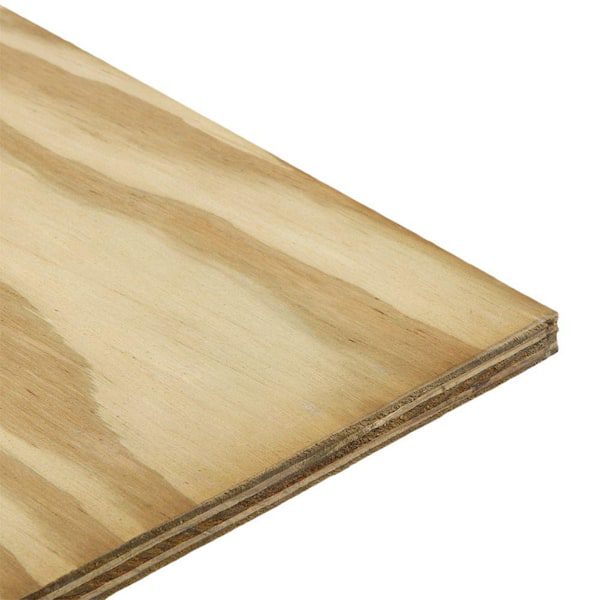
A true sheet is made from birch plies throughout, with no softwood or filler plies in the center. Wood Work Science states that a 3/4-inch panel commonly has 13 plies, which helps explain the price: more veneers mean more peeling, drying, pressing, and quality sorting.
This construction also keeps the sheet flatter and leaves a cleaner edge than many standard plywoods. That matters for cabinet parts, drawer boxes, and parts that need repeatable machining. The tradeoff is direct: more material steps cost more money.
Glue class and wet-use bonding
Waterproof or wet-use bonding, often labeled WBP, can add value when the panel will live near sinks, damp garages, or shop fixtures that see seasonal moisture. Interior-grade panels are cheaper, but they give up some resistance to humidity and occasional wetting.
Do not pay for wet-use adhesive if the panel stays dry behind a finished wall or inside a climate-controlled cabinet. Pay for it when failure would be expensive, hidden, or hard to replace.
Origin, freight, and supply swings
Origin influences both availability and price. Regional sourcing from Russia, Finland, and nearby Baltic states can tighten supply when shipping, sanctions, or distributor stock change. Because the market is import-heavy, two stores can list similar-looking plywood at very different prices in the same week.
That is why a fixed “normal” price is risky. For Baltic birch, the quote on the rack often reflects freight, not only wood content.
How grades change the price
Grade changes both appearance and yield, so it changes the cost. B/BB is usually cleaner than BB/BB, and both are more attractive than CP or C when the face will stay visible. The back side matters too, because many projects need both faces to stay presentable.
B/BB, BB/BB, CP, and C explained
Baltic birch grading uses a front/back format such as B/BB. A B/BB sheet has a B-grade front ply and a BB-grade back ply. B-grade faces allow limited small pin knots and minor color inconsistencies, while BB-grade faces allow color variations, plugs, cracks, splits, and unlimited pin knots. (Wood-database)
That means a cleaner front face costs more because more sheets fail to meet the higher face standard. BB/BB is often the practical middle ground for shop furniture, while CP and C are utility grades better suited to hidden parts, shop fixtures, and rougher work.
Appearance grade versus utility grade
Use B/BB when the face will be seen, stained, or clear-finished. Use BB/BB when the sheet needs decent appearance but the part will be painted or partially hidden. Use CP or C when utility matters more than visual consistency.
A common first-timer mistake is buying a lower grade for cabinet ends and then trying to hide patches with filler or paint. That usually costs more time than the upgrade would have cost at the store.
What to expect on the back side
The back face is part of the price equation, not an afterthought. A cleaner back is useful for reversible parts, open shelving, and furniture that may be seen from both sides. If one face will be hidden inside a cabinet, paying for a high-grade back often adds little value.
Baltic birch thickness and price
Thickness changes price because it changes material volume and ply count. The common buying sizes include 3.2 mm, 6.3 mm, 9 mm, and 12 mm. Nominal and actual thickness can differ, so check the seller’s listing before you cut joinery or set CNC depths.
Nominal versus actual thickness
SendCutSend lists .125, .250, .354, and .472 inch thicknesses, with metric equivalents of 3.18mm, 6.35mm, 9.00mm, and 12.00mm. Those numbers are useful because they show the actual working thickness you should expect for machine setup.
For joinery, a small difference matters. A dado sized for nominal 1/4-inch stock can be loose if the sheet is truly 6.35mm, and a 12.00mm panel will not behave like a thin imported “half-inch” substitute.
Which thickness usually costs most?
The thickest sheet usually costs the most, both in total price and often in cost per square foot. 12 mm panels need more birch veneer and more press work than 3.2 mm or 6.3 mm stock. If the project does not need extra stiffness, the upgrade may be wasted.
Picture a set of shop drawers built from 12 mm sheets when 6.35mm stock would have worked. The drawers get heavier, the cost climbs, and the extra stiffness may not improve the finished cabinet in a meaningful way.
Baltic birch buying worksheet
Use this worksheet before you buy. It turns the rack label into a practical choice by tying sheet size, thickness, and face grade to the work you plan to do.
| Sheet size | Thickness | Face grade | Estimated store price band | Cost drivers | Premium justified? |
|---|---|---|---|---|---|
| 4×8 | 3.2 mm | CP | $70-$85 | Lower appearance demand, interior glue, import availability | Jigs only if edges stay hidden |
| 4×8 | 6.3 mm | B/BB | $80-$110 | Higher face quality, more plies, cleaner machining | Yes for drawers and cabinet backs |
| 4×8 | 9 mm | BB/BB | $95-$125 | Balanced appearance, better yield, supplier stock | Yes for visible shop furniture |
| 4×8 | 12 mm | B/BB | $110-$150 | Thicker layup, more plies, WBP option, freight | Yes for cabinets near moisture |
| 5×5 | 12 mm | B/BB | $90-$140 | True Baltic sheet size, origin, local supply | Yes when you need true Baltic stock |
- Cabinets: Is the panel visible, load-bearing, or near moisture?
- Jigs: Do you need accurate thickness, flatness, and clean edges more than a perfect face?
- Visible furniture: Will the edge or face stay exposed after finishing?
If you answer yes to two of those questions, the premium is usually easier to justify. If you answer no to all three, cheaper shop stock may be the smarter buy.
The premium is worth paying when failure, movement, or ugly edges would ruin the project. That includes cabinet parts that must stay square, drawer boxes that see constant use, and jigs that depend on consistent thickness. It also matters on furniture where the plywood edge will remain visible.
Cabinets and drawer boxes
For cabinets, the value comes from stable sizing, predictable thickness, and cleaner edges for joinery. Drawer boxes benefit from the same traits, especially when slides and dados need repeatable dimensions. If the cabinet sits near a sink, a WBP or other wet-use bond can be money well spent.
Jigs, fixtures, and CNC parts
For jigs and fixtures, consistency often matters more than face beauty. CNC-cut Baltic birch can cost more because the shop is charging for routing time, setup, and tolerance control. SendCutSend’s custom quote limit of 46 by 46 inches shows how machining services also impose size limits that affect final cost.
Suppose you need a router template that must register the same way every time. A cheap panel with unpredictable thickness can throw off cutter depth and spoil the work, while a better sheet saves setup time and reduces correction cuts.
Visible furniture parts
Visible furniture parts reward a cleaner face grade and a better edge. If the design leaves ply edges exposed, higher-grade Baltic birch usually earns its keep. If the piece will be painted solid and the edges are hidden, a lower grade may be enough.
Is Baltic birch worth more than birch-faced plywood?
Often, yes, but only when the job needs the construction quality. Birch-faced plywood may look similar at first glance, yet the core can differ in species mix, ply count, and void content. That changes stiffness, edge quality, and the chance that a cut reveals gaps.
Construction differences that affect value
A true Baltic birch sheet is made from the same species throughout, with all-birch construction. Birch-faced plywood may only have birch veneer on the outside, with a mixed core inside. The name on the label does not guarantee the same performance or the same price.
Edge voids, machining, and stability
For edge bandless projects, the core matters a great deal. A cleaner all-birch panel usually machines better, holds fasteners more predictably, and leaves fewer surprises at the edge. The same source notes that true Baltic birch is often not found at a home center, which helps explain why shoppers may see more birch-faced substitutes in big-box aisles.
Check product stamps, edge quality, and any visible voids before you buy. Minor imperfections can still appear depending on grade and manufacturer, so inspect the sheet instead of assuming the label tells the whole story.
When a cheaper panel is the smarter buy
If the part will be painted, hidden, or replaced cheaply later, birch-faced plywood or another shop stock panel can be the better value. Paying for Baltic birch makes less sense when appearance does not matter and moisture risk is low. Spend the premium where the sheet will be seen, stressed, or hard to swap out.
Frequently asked questions
How much does Baltic birch plywood cost?
Most shopper-facing price ranges fall around $70 to $150 for a comparable 4×8 sheet, with size, grade, and thickness moving the number. Lower grades and thinner panels sit nearer the bottom; thicker stock, cleaner faces, and wet-use bonding push the price upward.
How much is a 4×8 sheet of Baltic birch plywood?
A 4×8 sheet is the most useful buying benchmark, even though true Baltic birch is often sold in 5×5 metric sheets. For 4×8 import panels sold under that name, a realistic retail range is about $70 to $150, depending on face grade and thickness.
Is Baltic birch plywood expensive?
Compared with standard plywood, yes. It usually costs more because it uses all-birch construction, more plies, and tighter grading. The premium is easier to justify when the part is visible, must stay square, or needs cleaner machining than ordinary sheet goods can provide.
Why is Baltic birch plywood so expensive?
The price comes from material content, ply count, and supply. True Baltic birch uses birch throughout, often with 13 plies in a 3/4-inch panel, and it is tied to import sourcing from Russia, Finland, and nearby Baltic states. Freight and availability shifts can raise the sticker quickly.
Does Baltic birch pricing change by grade or supplier?
Yes. A B/BB sheet costs more than BB/BB, and both often cost more than CP or C because cleaner faces reduce defects and waste. Supplier differences also matter because one dealer may stock true Baltic sheets while another sells a birch-faced substitute under a similar name.
How do Baltic birch prices compare with birch-faced plywood?
Baltic birch usually costs more because the entire panel is birch and the core is tighter and more consistent. Birch-faced plywood can be cheaper, but the core may not match the same ply count or void control. For hidden or painted work, the less costly panel is often enough.
Sponsored / affiliate links. As an Amazon Associate I earn from qualifying purchases. I may earn additional commission from eligible campaigns.
 Baltic Birch Plywood Sheets Box of 45 - Laser Engraving Cutting, Scroll Saw Nature Veneer Color, Stronger Than Basswood, A/A Grade,12 x 12 x 1/8”, 3mm Thickness Perfect for Wood Burning
 Baltic Birch Plywood 1/8'' x 12'' x 18'', 6 Pack, B/BB Grade, Void-Free Core, Laser Cutting Ready, Flat Sheets for CNC, Engraving, DIY Crafts, Art Painting, Wood Burning, Staining