How to Clean a Wooden Cutting Board (USDA-Backed Method)
Wash a wooden cutting board with hot, soapy water and a stiff brush right after each use, rinse it, and dry it standing on its edge. Sanitize it with 1 tablespoon of unscented bleach per gallon of water after raw meat, and oil it about monthly. The USDA says solid wood can even go in a dishwasher, though hand washing keeps it from warping.
What You Need to Clean a Wooden Cutting Board
Best Board Conditioner Pick | |
 |
Howard Products Butcher Block Conditioner and Food Grade Mineral Oil, 12 oz A food-grade mineral oil and beeswax blend for the monthly oiling that keeps a washed board from drying out and cracking.
|
As an Amazon Associate we earn from qualifying purchases. | |
- Dish soap and hot water
- A stiff-bristled brush or scrub sponge
- Coarse salt and a lemon (for stains and odors)
- Baking soda (for odor and light stains)
- Unscented liquid chlorine bleach or undiluted white vinegar (for sanitizing)
- Food-grade mineral oil or a mineral oil and beeswax conditioner
- A clean dish towel
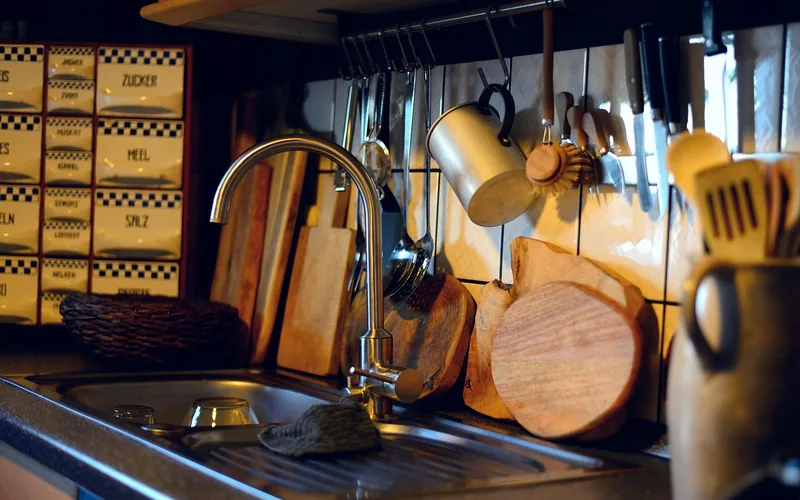
How to Clean a Wooden Cutting Board After Every Use
- Rinse right away: run warm water over the board to wash off loose food before it dries on.
- Scrub with soap: use hot, soapy water and a brush on both faces and all four edges.
- Rinse thoroughly: rinse with hot water until no soap film is left.
- Dry completely: wipe off the water with a clean towel, then stand the board on its edge or on a rack so air reaches both faces.
- Oil monthly: once the board is fully dry, rub on food-grade mineral oil or board conditioner (details below).
That sequence matches the guidance from the USDA Food Safety and Inspection Service and the University of Maine Cooperative Extension: wash with soap and a brush, rinse, then dry completely. Everything else in this guide is an add-on for specific problems.
Cleaning vs. Sanitizing: What the USDA and Extension Services Actually Say
Washing and sanitizing are different jobs. Soap and a brush remove food and grease; a sanitizer is what you add after raw meat, poultry, or seafood touched the board. Most websites blur the two, and several give weaker or stronger mixes than the primary sources do.
| Step | What it does | Amount and method | Source |
|---|---|---|---|
| Hot, soapy water and a brush | Cleans (removes food and grease) | After every use, then rinse and dry fully | USDA FSIS, UMaine Extension |
| Unscented liquid chlorine bleach | Sanitizes | 1 tablespoon per gallon of water; flood the surface, let it stand several minutes, rinse, dry | USDA FSIS |
| Lower-strength bleach mix | Sanitizes (occasional) | 1/2 tablespoon per gallon; soak no more than 2 minutes, rinse well, dry | UMaine Extension |
| Undiluted white vinegar (5%) | Household sanitizer option | Use full strength, not diluted | UMaine Extension |
| 3% hydrogen peroxide | Household sanitizer option | Rinse thoroughly with clean water, then air dry | UMaine Extension |
| Lemon and coarse salt | Lifts stains and odors | Scrub, rinse, dry; treat it as a deodorizer, not a sanitizer | Shop practice |
The USDA Food Safety and Inspection Service says both wooden and plastic boards can be sanitized with 1 tablespoon of unscented liquid chlorine bleach per gallon of water. The University of Maine Cooperative Extension gives a gentler 1/2 tablespoon per gallon option for occasional use, which is half the strength, and warns that bleach and moisture can damage wood, so keep contact short. Use only unscented bleach, and never mix it with vinegar or any other cleaner.
Note that the common internet recipe of one part vinegar to four parts water is weaker than the undiluted vinegar the extension service lists. For contact times, label checks, and what to do with wipes and sprays, see our full guide to how to disinfect a wooden cutting board.
Can a Wooden Cutting Board Go in the Dishwasher?
The USDA says it can: its guidance states that solid wood boards can be washed in a dishwasher, while laminated boards may crack and split. That surprises people who have always heard the opposite, and it is true as far as food safety goes. Hot water and detergent clean the board.
The catch is durability. A dishwasher soaks the board in heat and moisture for a long cycle and then dries it unevenly, which is the same stress that causes warping and cracks over time, especially in glued-up and end-grain boards. If you do run a solid board through, pull it out right away, dry it, and oil it. For a board you care about, hand washing is the safer routine for the wood, even though it is not required for safety.
How to Remove Stains and Odors From a Wooden Cutting Board
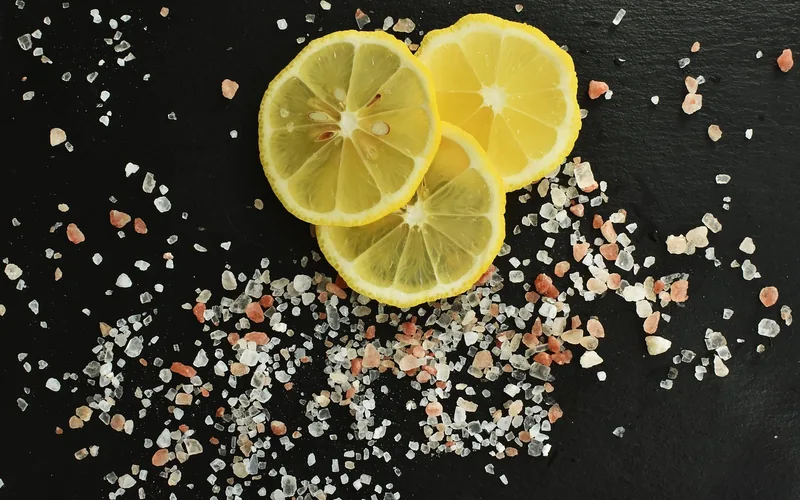
Lemon and Coarse Salt
Sprinkle coarse salt over the board, then scrub with the cut side of half a lemon, squeezing lightly as you go. Let it sit about five minutes, then rinse and dry. This lifts stains and light odors from the surface. It is a cleaning step, not a sanitizing step, so follow it with bleach or vinegar if raw meat was involved.
Baking Soda Paste
For a stubborn smell, scrub with a paste of baking soda and a little water, then rinse well. If garlic or onion smell lingers after that, see our guide on getting onion smell out of a wood cutting board.
Deep Stains
If a dark stain is still visible after salt and lemon, it has probably soaked in. A light sanding with fine-grit paper, followed by fresh oil, removes the stained layer on a thick board. Do this only on a board thick enough to lose a little surface, and re-oil afterward.
How to Dry, Oil, and Store a Wooden Cutting Board
Never leave a wet board lying flat. One face stays damp far longer than the other, and that uneven drying is what warps boards. The University of Maine Cooperative Extension advises drying completely with the board upright or on a rack, and not stacking boards while they are wet.
Oil after the board is clean and fully dry, not before. The University of Maine Cooperative Extension recommends food-safe mineral oil or beeswax at least once a month, or more often if the board looks dry. Rub it in evenly, let it absorb for several hours or overnight, then wipe off the excess. Avoid olive and vegetable oil, which can turn sticky and rancid. If you built your own board, see how to finish a cutting board with food-safe oil for the first seasoning, and our cutting board build guide for the construction side.
Store the board somewhere dry and away from a hot stove or a sunny window, which dry the wood faster than normal use does. The same care applies to wooden spoons and spatulas; see our guide to the best wood for wooden cooking utensils.
Wood or Plastic for Raw Meat?
The USDA Food Safety and Inspection Service says consumers may use wood or a nonporous surface for raw meat and poultry. The University of Maine Cooperative Extension is more cautious: it suggests wood is best for lower-risk foods like vegetables, fruit, and bread, because wood can be harder to sanitize thoroughly after raw meat or seafood, and recommends plastic for raw meat since it can be sanitized thoroughly. Either way, wash and sanitize between raw meat and anything that will not be cooked. Our article on cutting chicken on a wood cutting board goes through the practical side.
When to Replace a Wooden Cutting Board
The USDA says all cutting boards wear out over time, and that a board should be discarded once it becomes excessively worn or develops hard-to-clean grooves. In practice, replace a wood board when knife grooves are too deep to sand out, when a crack runs through the board, or when a musty smell survives a full wash and sanitize.
Common Mistakes That Ruin Wooden Cutting Boards
- Soaking the board in the sink: water swells the fibers and starts cracks and warping.
- Putting it away damp: trapped moisture breeds odor and mold.
- Skipping the oil for months: a dry board cracks, and cracks are harder to clean.
- Using bleach on every wash: reserve it for after raw meat, and keep contact short.
- Oiling with cooking oil: olive and vegetable oil can go rancid on the board.
Frequently Asked Questions
What is the best way to clean a wooden cutting board?
Wash it with hot, soapy water and a stiff brush right after use, rinse well, and dry it standing on its edge. After raw meat, sanitize with 1 tablespoon of unscented liquid chlorine bleach per gallon of water, let it stand several minutes, then rinse. Oil the board about once a month with food-grade mineral oil.
Can you put a wooden cutting board in the dishwasher?
The USDA says solid wood boards can be washed in a dishwasher, while laminated or glued boards may crack and split. Most woodworkers still hand wash, because repeated heat and soaking is what warps and cracks wood over time. That is a durability problem, not a food-safety one.
Does vinegar disinfect a wooden cutting board?
University of Maine Cooperative Extension lists undiluted white vinegar (5%) as a household sanitizer option for cutting boards. Diluting it weakens it, so a 1 to 4 vinegar-water mix is a cleaner and deodorizer rather than a sanitizer. For the full comparison see our guide to disinfecting a wooden cutting board.
How often should you oil a wooden cutting board?
At least once a month, and more often if the board looks dry or pale. Apply food-grade mineral oil or a mineral oil and beeswax blend, let it absorb for several hours or overnight, then wipe off the excess. Avoid olive and vegetable oil, which can turn sticky and rancid.
When should you throw away a wooden cutting board?
The USDA says to discard a board once it is excessively worn or has grooves that are hard to clean. Deep knife cuts, cracks that run through the board, and a smell that stays after a full wash and sanitize all mean it is time to replace it.
Washing and drying after every use, sanitizing after raw meat, and oiling monthly are all a wooden board needs. For finishes and repairs on other wooden kitchenware, see our wood care and maintenance guide.
Sponsored / affiliate links. As an Amazon Associate I earn from qualifying purchases. I may earn additional commission from eligible campaigns.