Borate Treatment vs Pressure Treatment for Rot Prevention
Borate Treatment is a retrofit preservative for dry, existing wood; Pressure Treatment is the materials choice for new wood that will face weather or ground contact. Ignore that split and rot can spread, fasteners can fail, and repairs can mean replacing whole sections. This guide compares where each belongs, how each works, and the limits that matter for DIY exterior projects.
This guide is part of our Wood care and protection series.
Comparing key factors and best use cases
| Decision factor | Borate Treatment | Pressure Treatment | Winner |
|---|---|---|---|
| Best use case | Retrofit rot control for installed wood that can be dried and treated in place. | New lumber for outdoor exposure, especially posts and fencing lumber. | Pressure Treatment |
| Moisture exposure | Works best while wood stays relatively dry; water-soluble borate can leach in wet service. | Made for weather exposure and repeated wetting. | Pressure Treatment |
| Already installed | Yes. That is where it fits best. | No. It is a factory-applied choice made before installation. | Borate Treatment |
| Active rot | Can help kill fungi in treated wood, but it does not restore strength by itself. | Not a repair for existing decay. | Borate Treatment |
| Expected maintenance | Needs moisture control and often follow-up repair steps such as epoxy after loose wood is removed. | Lower preservative-related upkeep, though finish or hardware upkeep depends on exposure. | Pressure Treatment |
| Structural repair value | Useful as part of repair, not as the repair itself. | Useful as a starting material, not a fix for damaged members. | Tie |
Best use case
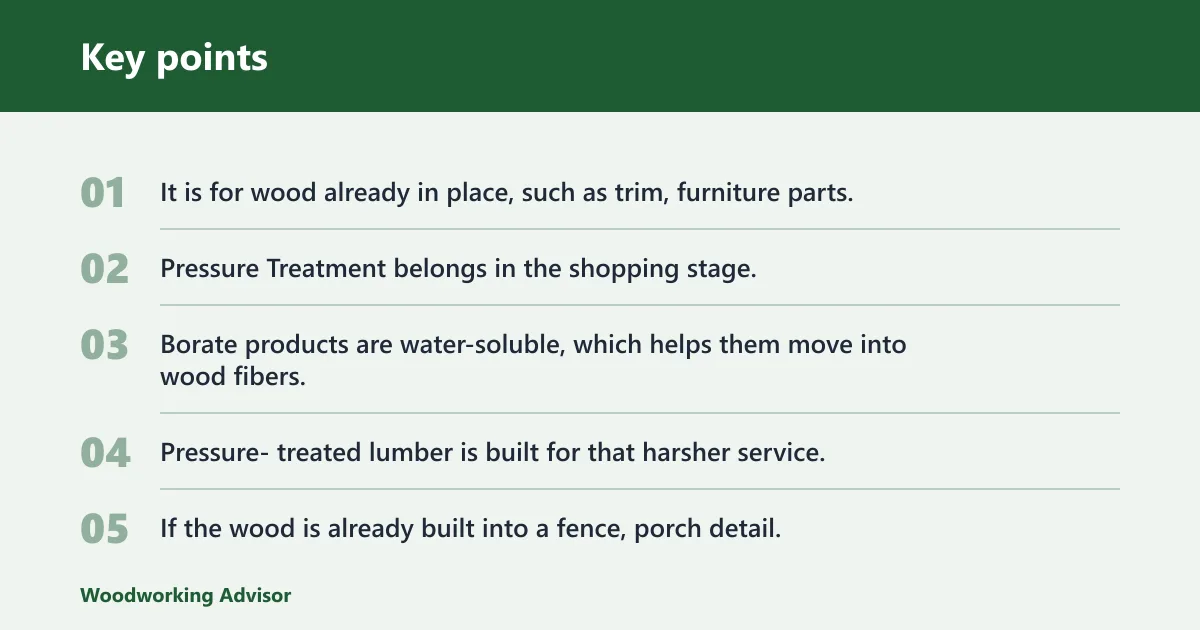
Borate Treatment belongs in repair work. It is for wood already in place, such as trim, furniture parts, or framing that can be dried and treated after a leak is fixed. Pressure Treatment belongs in the shopping stage, when you are choosing lumber for a fence, post, or other exterior member that will face weather from day one.
Moisture exposure
Moisture decides a lot here. Borate products are water-soluble, which helps them move into wood fibers, but that also makes them poor for members that stay wet or cycle through wetting and drying. Pressure-treated lumber is built for that harsher service.
Already installed
If the wood is already built into a fence, porch detail, or cabinet-style outdoor project, borate is the practical retrofit. If you are still selecting material for a new build, pressure-treated lumber is the cleaner choice because the preservative is applied at the factory before the board ever goes into service.
Active rot
Borate Treatment can kill wood-destroying fungi when the treatment reaches the affected fibers. That matters because those fungi attack cellulose and need steady dampness to keep going. Pressure Treatment is aimed at prevention, so it does not solve wood that is already soft, crumbling, or structurally weakened.
Expected maintenance
Borate work usually goes with more maintenance because you also need drainage fixes, drying time, and sometimes a repair coating afterward. Pressure-treated lumber is the lower-maintenance answer as a starting material, but finish life still depends on exposure, product, and detailing.
Structural repair value
Neither method rebuilds wood. Borate can stop active decay, and pressure treatment can help prevent future decay, but if the member has lost strength you may still need removal, patching, or an epoxy-based repair sequence after loose material is gone.
Rot treatment decision table
| Use case | Moisture exposure | Already installed? | Active rot? | Expected maintenance | Recommended path |
|---|---|---|---|---|---|
| Fence boards with surface decay | Moderate to high, depending on rain and sprinkler spray | Yes | Yes, if the wood is still mostly firm after drying | Drainage correction, drying, then sealing or paint after repair | Borate Treatment |
| New fence posts | High, including soil splash and weather exposure | No | No | Routine exterior maintenance, depending on finish and hardware | Pressure Treatment |
| Trim around a leak | Low to moderate after the leak is fixed | Yes | Maybe, if the trim has softened | Drying, repair, then paint or sealant | Borate Treatment |
| Outdoor furniture with sheltered exposure | Low to moderate | Yes or no | No | Periodic finish upkeep and keeping water from pooling | Borate Treatment |
| Hidden framing with past leak damage | High until the leak is fixed | Yes | Yes, if decay is present | Leak repair, drying, treatment, then rebuild as needed | Borate Treatment |
| New deck posts or ground-contact members | High | No | No | Normal exterior upkeep for the finished assembly | Pressure Treatment |
Fence boards with surface decay
For an existing fence that has isolated rot, borate can be the better path if the boards can be dried and the softened wood is limited. Pressure treatment does not repair boards already in place. If the structure is still sound after cleaning out damaged fibers, borate plus repair work is the practical route.
New fence posts
For posts that will face rain, splash, and soil moisture, pressure-treated lumber is the straightforward choice. It is a factory-applied preservative process built for weather exposure. Borate is not the better pick here because the post is not dry-service wood anymore once it is installed in that setting.
Trim around a leak
Trim is often the place where borate earns its keep, because the wood is already installed and the problem is usually localized. Fix the leak first. Then dry the trim, treat it, and only after loose material is removed should you consider a consolidant or filler system.
Outdoor furniture with sheltered exposure
Sheltered furniture is one of the better retrofit uses for borate, especially if the piece can stay relatively dry and is not sitting in standing water. If the furniture will live under open rain or constant splash, pressure-treated lumber would have been the wiser material choice at the start.
Hidden framing with past leak damage
Hidden framing often points to a repair sequence, not a material swap. Borate can be part of that sequence if the framing is dried and the rot is localized, but a persistent leak or an enclosed wet cavity will keep feeding decay no matter what preservative you apply.
New deck posts or ground-contact members
These belong in the pressure-treated column. They are exposed by design, and the preservative package is intended for that service. Borate is not a wash-proof substitute for lumber that lives in wet conditions.
- Fix the moisture source first.
- Check whether the wood is already installed.
- Dry the wood before treatment; repair guidance says moisture content should be below 20%.
- If the wood is new and exposed, choose Pressure Treatment.
- If the wood is existing, dry, and needs rot control, choose Borate Treatment.
- If rot has left the member weak, plan repair or replacement before you rely on finish coats.
How does borate treatment work?
Borate Treatment uses boron-based preservatives sold as products such as Tim-bor, Bora-Care, or Shell-Guard. Borate products are often applied in water or glycol carriers so the borate can move into the wood. The preservative can help kill wood-destroying fungi and help prevent future fungal decay, as long as the wood stays relatively dry.
Why dry wood matters
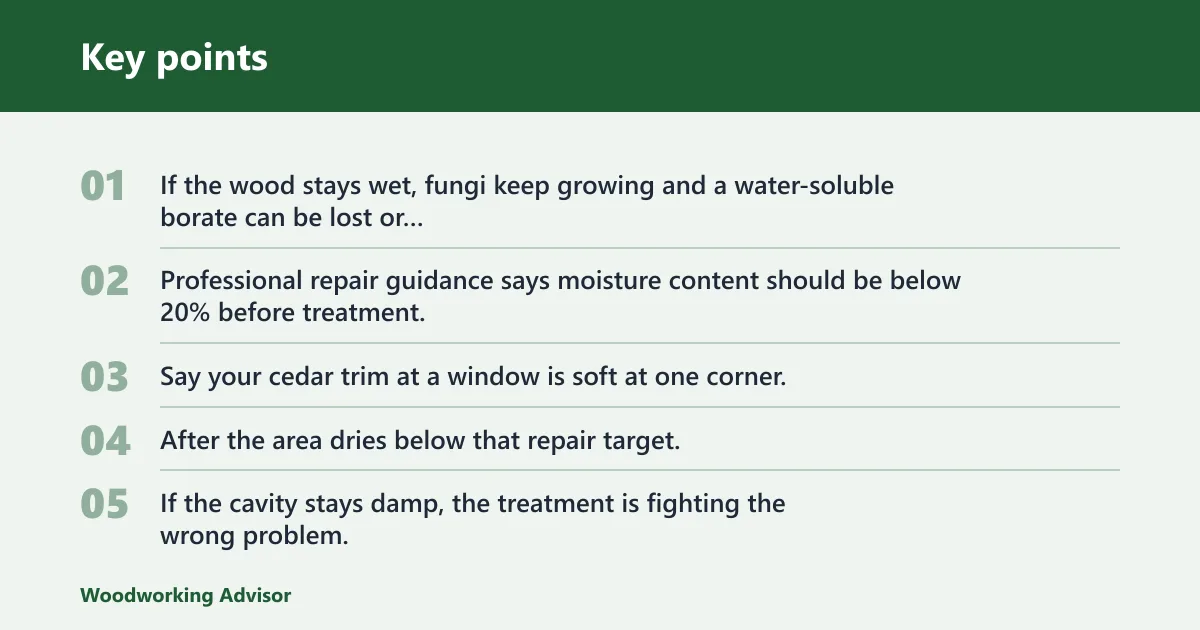
Moisture is the gatekeeper. If the wood stays wet, fungi keep growing and a water-soluble borate can be lost or diluted. Professional repair guidance says moisture content should be below 20% before treatment, which is why drying and leak repair come before the preservative step.
Say your cedar trim at a window is soft at one corner, but the leak has already been fixed. After the area dries below that repair target, borate can be applied to the remaining sound fibers. If the cavity stays damp, the treatment is fighting the wrong problem.
Where tim-bor, bora-Care, and shell-Guard fit
These are common borate product names used in wood treatment systems. They are often chosen for retrofit work because they can be brushed, sprayed, or otherwise applied to installed wood. They are not a substitute for drainage, flashing, or replacement when decay is too advanced.
How does pressure treatment prevent rot?
Pressure-treated lumber is a preservative treatment commonly used for outdoor lumber. The lumber is typically treated before installation, so the preservatives are already in the board when it goes into service. That is why pressure-treated fencing lumber is commonly described as having preservatives that make wood inedible for fungi.
Why it fits exposed new wood
This method is built for weather exposure. New posts, fence members, and other exterior parts can start with the right material instead of relying on a later repair treatment. It is a materials choice, not a rot fix.
Where pressure-treated lumber is the default
Use it when the piece will be exposed from the start, especially where rain, soil contact, or repeated wetting is expected. That includes many fence and post jobs. It is the better first choice when there is no decay to repair and no need for a retrofit chemical step.
Can borate stop existing rot?
Borate can stop active fungus in wood that is still reachable and not too far gone. That makes it useful in early to moderate rot repair. It does not restore strength by itself, so soft or crumbling wood still needs removal, rebuilding, or replacement before the assembly is safe again.
When epoxy consolidant fits
Epoxy consolidant comes after borate treatment in many professional repair sequences. It is used to harden compromised fibers after loose material is removed. The order matters: treat first, dry the wood, then rebuild strength where the remaining wood can still support repair.
A common first-timer mistake is brushing on borate and then sealing over wet, punky wood. That traps moisture and hides the real damage. If the member is already badly weakened, the right fix may be partial replacement, not another coat.
Will borate wash out outdoors?
Yes, leaching is a real concern. Borate is water-soluble, which helps it penetrate wood but also makes it less suited to places that stay wet or see repeated runoff. If a member is in constant wet service, borate is not the right long-term answer on its own.
Leaching risk in cavities and leak zones
Enclosed wet cavities are especially bad for borate-only repair. The chemistry cannot solve a recurring leak, failed flashing, or drainage problem. Fix the moisture source first, then treat dry wood that can actually hold the preservative.
Moisture control comes first
Moisture management matters more than chemistry alone. If the wood stays damp, wood-destroying fungi keep feeding on cellulose and decay keeps spreading. That is why exterior repair should start with drying, airflow, and leak correction before any preservative choice.
Choose Borate Treatment if… / Choose Pressure Treatment if…
Choose Borate Treatment if the wood is already installed, the moisture source can be fixed, and the member can be dried enough for repair. It fits trim, sheltered furniture, hidden framing with localized decay, and fence repairs where the wood is still mostly sound but needs rot control.
Choose Pressure Treatment if you are buying new lumber for fences, posts, or other exposed exterior parts. It is the better pick for weather exposure, soil contact, and jobs where prevention matters more than repair. For wet service, it is the safer material choice.
Frequently asked questions
What is the difference between borate treatment and pressure treated wood?
Borate Treatment is a retrofit preservative for wood that is already installed and can be dried. Pressure Treatment is a factory-applied preservative process for new lumber that will face weather or ground contact. One is a repair tool; the other is a material choice made before installation.
Does borate stop wood rot or only prevent it?
It can do both, but only within limits. Borate can kill fungi in wood it reaches and can help prevent future decay in dry service. It does not restore strength, so damaged wood still needs repair, replacement, or consolidation after the source of moisture is fixed.
Can you use borate on pressure treated wood?
You can apply borate in some repair situations, but it is not a stand-in for the factory preservative package in pressure-treated lumber, and it is not the standard answer for field cuts or wet exposure. The safer assumption is that borate is for dry retrofit work, not a replacement for proper end protection or wet-service detailing.
Is borate treatment safe for outdoor furniture and fences?
It can be, if the wood is relatively dry and the piece is not in constant wet service. Borate works best where you can control moisture and keep the wood out of pooling water. For fences and furniture that see heavy exposure, pressure-treated lumber is usually the better starting material.
Will borate wash out of wood if it gets wet?
Yes, repeated wetting raises the risk of leaching because borate is water-soluble. A little incidental moisture is not the same as persistent dampness, but recurring rain, leaks, or splash zones can shorten its useful life. That is why moisture control is part of the treatment, not an afterthought.
When is pressure treated lumber better than borate treatment?
Pressure-treated lumber is better when you are starting with new wood that will be exposed to weather, soil, or repeated wetting. It is also the better pick when you want the preservative built into the material from the start, rather than relying on a retrofit treatment after installation.
Can borate kill existing fungus in rotted wood?
Yes, if the affected wood is still reachable and dry enough for the treatment to penetrate. That is why borate can be useful in rot repair. But if the wood is soft, wet, or structurally compromised, killing fungus is only part of the job; repair or replacement still matters.
Do I still need paint or sealant after borate treatment?
Usually yes, if the piece is meant to stay in service outdoors. Paint or sealant helps slow moisture entry, and moisture control is what lets borate keep working. Do not use finish as a cover for unresolved rot or an active leak; fix the problem, dry the wood, then finish it.
Sponsored / affiliate links. As an Amazon Associate I earn from qualifying purchases. I may earn additional commission from eligible campaigns.