Can Danish Oil Be Used Outside?
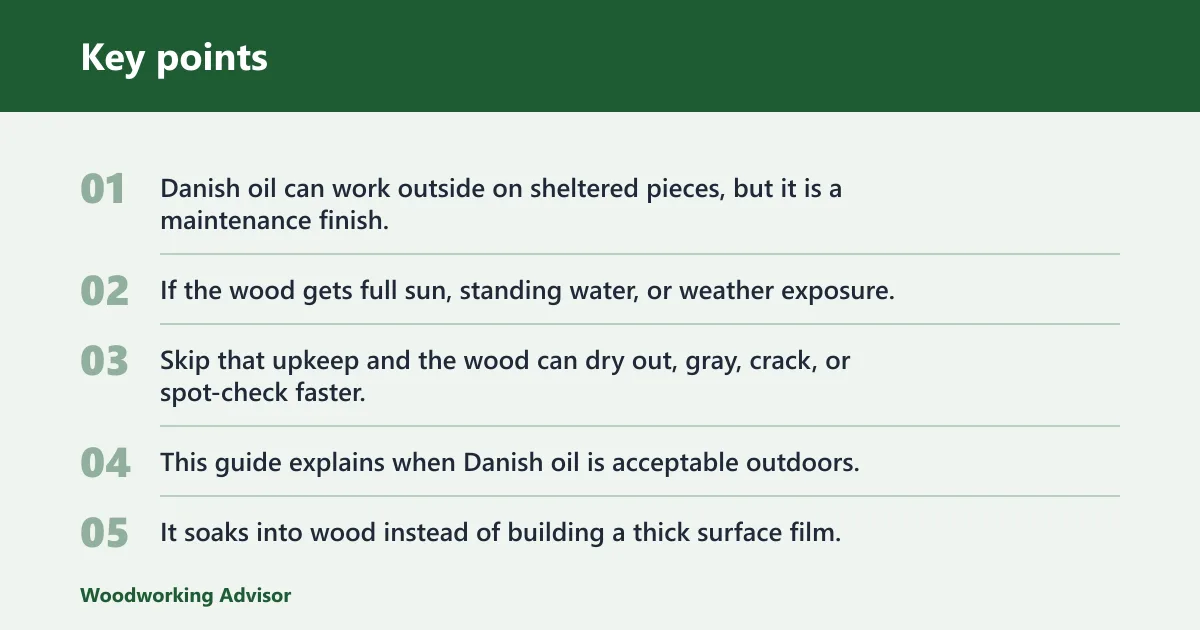
Danish oil can work outside on sheltered pieces, but it is a maintenance finish. If the wood gets full sun, standing water, or weather exposure, a common rule of thumb is recoat intervals of about 1 to 3 months at first, with no lasting film protection. Skip that upkeep and the wood can dry out, gray, crack, or spot-check faster. This guide explains when Danish oil is acceptable outdoors, when it becomes high-maintenance, and when a spar varnish, exterior paint, or another finish is the better choice.
Danish oil outdoors: when it works

What Danish oil
Danish oil is an oil/varnish blend. It soaks into wood instead of building a thick surface film, and it leaves a satin or low-lustre look. The same product is often described as a thin, soak-in varnish. It can repel water well enough for indoor use, but it is not waterproof.
Why outdoor exposure changes the answer
Outdoor wood faces rain, humidity swings, sunlight, and seasonal freeze-thaw movement. Those conditions break down a penetrating finish faster than normal indoor wear. Danish oil can still help exterior wood, but it does not create the hard weather barrier that many fully exposed projects need.
Short-term use versus long-term weathering
For a weekend project, a porch chair, or a bench under cover, Danish oil can be a practical choice. For doors, window frames, trim, or any part that sees direct rain and sun, the finish usually turns into a repeat-application job. That is the main decision point.
Can Danish oil be used on outdoor furniture?
Yes, Danish oil can be used on outdoor furniture, especially when the piece sits under a roof or sees only light weather exposure. It is a reasonable choice for covered patio furniture and occasional-use pieces, but it needs upkeep. The more sun, rain, and seasonal moisture a chair or table gets, the shorter the service life becomes.
Covered patio furniture
Covered patio furniture is a common outdoor use case for Danish oil. A porch ceiling or deep overhang cuts direct rain and UV exposure, so the finish has a better chance of staying even and presentable. Expect periodic maintenance rather than one-and-done protection.
Semi-exposed seating and tables
Semi-exposed furniture includes items that get splashed, wind-driven moisture, or partial sun. Danish oil can still be used, but the finish will need more frequent attention. If the surface begins to look dry, faded, or dull, it is time for another light coat.
When a harder finish is the better choice
Choose a tougher exterior finish when long service matters more than a natural oiled look. If the piece sits in open yard exposure, gets rain on all sides, or must stay protected with minimal upkeep, a spar varnish, exterior paint system, or purpose-made exterior sealer is usually the better call.
Danish oil be used decision matrix
This matrix gives a practical yes/no guide based on exposure level. The key question is not only whether the wood is outdoors, but how much rain, UV, and seasonal movement it sees. Use the maintenance interval as a planning guide, not a guarantee.
| Exposure level | Expected performance | Recommended maintenance interval |
|---|---|---|
| Covered patio furniture | Yes. Best outdoor match for Danish oil. It can hold a clean, natural look because direct rain and sun are limited. | A common rule of thumb is to inspect every 3 to 6 months; recoat when the surface looks dry or dull. |
| Semi-exposed furniture | Yes, with caution. Works for porches, partial cover, and light splash zones, but color and water repellency fade faster. | A common rule of thumb is to plan maintenance about every 1 to 3 months in active weather, then as needed based on appearance. |
| Fully exposed exterior wood | No, for long-term protection. Rain, UV, and freeze-thaw cycling shorten finish life quickly, and the wood will need frequent attention. | Recoat often if you use it at all; a tougher exterior finish is the better choice. |
Plain-English decision rule
If the wood stays mostly dry, Danish oil is acceptable. If the wood gets regular weather exposure, it becomes a maintenance finish. If the wood is fully exposed, pick a different system. That rule is simple, and it matches how penetrating finishes age outdoors.
How to prep bare wood
Bare wood should be clean, dry, and sanded before you apply Danish oil. Remove dust before finishing, and test on a scrap piece if you want to check color or sheen first. Good prep matters more outdoors because moisture and UV expose weak spots faster.
Sanding and dust removal
Most projects do well with sanding to 180 or 220 grit. That range leaves the surface smooth without closing the grain too much. After sanding, remove dust carefully so the oil can soak in evenly instead of sitting on loose particles.
Dryness checks before finishing
Do not coat wood that feels damp, cold from recent rain, or stored in a humid space with surface moisture. Aiming for 12-15% moisture content at application. That is a useful target for exterior wood because trapped moisture can shorten finish life.
Scrap test before the final coat
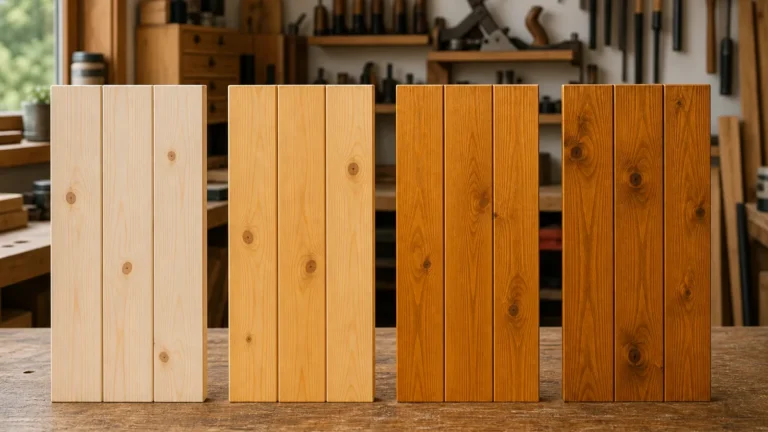
Test on a scrap board from the same species whenever possible. Teak, oak, mahogany, and many softwoods can all take Danish oil differently. A quick test shows whether the tone is too dark, too uneven, or too glossy for the project.
- Sand the surface evenly.
- Remove all dust from pores, edges, and corners.
- Check that the wood is dry before coating.
- Brush or wipe on a test coat on scrap.
- Wait for the scrap to dry before judging color and sheen.
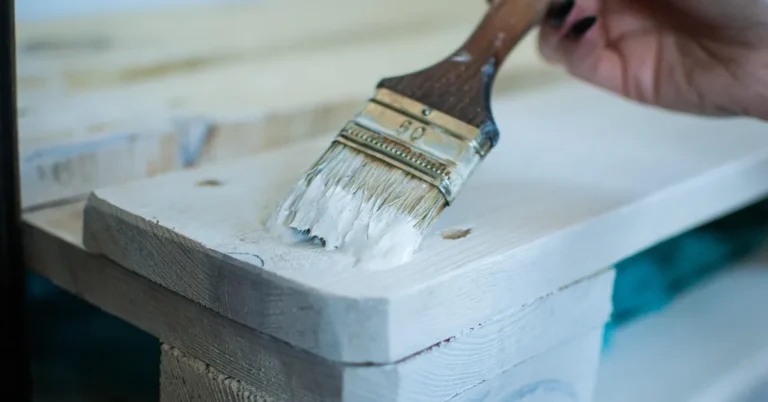
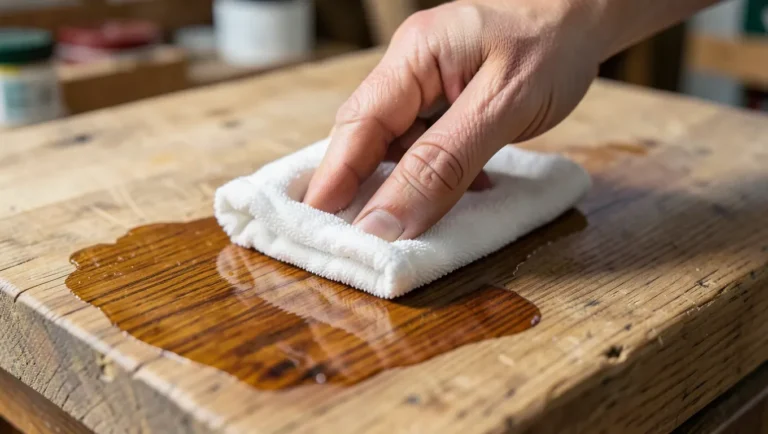
Apply Danish oil with a brush or lint-free cloth, then follow the grain and wipe off excess. Thin coats matter more outdoors than heavy ones. Thick application leaves sticky spots and does not improve weather resistance.
Brush or lint-free cloth application
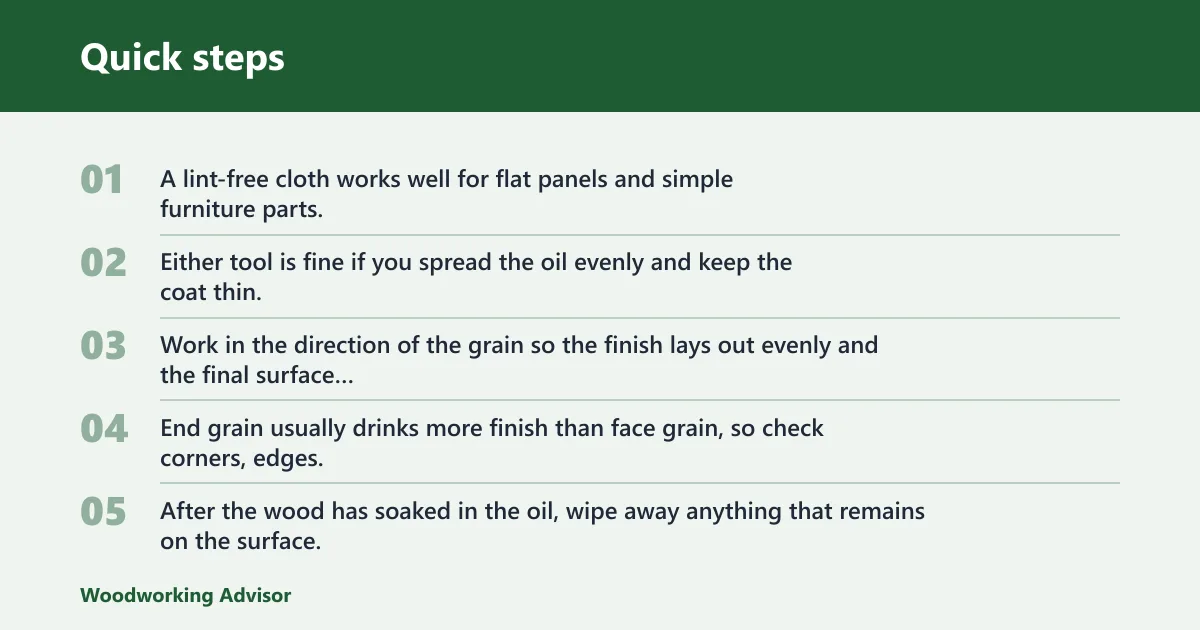
A brush helps on large or detailed surfaces. A lint-free cloth works well for flat panels and simple furniture parts. Either tool is fine if you spread the oil evenly and keep the coat thin.
Following the grain
Work in the direction of the grain so the finish lays out evenly and the final surface looks cleaner. End grain usually drinks more finish than face grain, so check corners, edges, and cut ends for dry patches after the first pass.
Wiping off excess and thin coats
After the wood has soaked in the oil, wipe away anything that remains on the surface. Several hours between coats are common, and the first coat often gets a 15-30 minute dwell time before the wipe-down. Thin coats dry and cure more reliably than heavy ones.
Say your cedar planter stays on a covered porch, but afternoon storms still splash water onto the exposed lower slats. A thin first coat will help the grain take on an even satin look, but the end grain may need extra attention. If the bench stays outdoors through wet months, plan on checking it often for dull spots.
How long does it take to dry in cold weather?
Cold weather slows Danish oil. Lower temperatures and higher humidity both extend drying time, delay recoating, and push full cure farther out. If you apply it in cool, damp conditions, expect the schedule to stretch well beyond what you see on a warm, dry day.
Temperature and humidity effects
Drying slows as temperature drops because the oil and solvents release more slowly. High humidity does the same thing by making it harder for moisture and solvent to leave the wood surface. That is why autumn and early spring often create the longest wait times outdoors.
Recoat timing
Danish oil needs several hours between coats under typical conditions, and colder weather can make that longer. Do not rush the next coat just because the surface no longer feels wet. If the wood still feels tacky or cool, give it more time.
Full cure timing
Full cure takes days, not hours. That matters outdoors because a finish that feels dry can still be soft enough to mark or pick up dust. If overnight temperatures fall sharply, the cure slows further, and the surface may stay vulnerable longer than expected.
Maintenance for exterior wood
Outdoor Danish oil needs periodic upkeep. Reapply when the surface looks dry or dull, not only when it fails completely. The more sun and rain the wood sees, the shorter the maintenance interval becomes.
Signs a maintenance coat is due
Watch for a flat, chalky look, faster water soak-in, or dry-feeling grain. Those are common signs that the oil has worn down. A maintenance coat should be light and thin, not a heavy refresh that leaves excess sitting on the surface.
Typical upkeep intervals by exposure
Covered patio furniture may need attention only a few times per year. Semi-exposed furniture often needs more frequent reapplication, especially during wet or sunny seasons. Fully exposed exterior wood can need upkeep so often that another finish becomes the better long-term answer.
What to do before reapplication
Clean the surface first, let it dry, and scuff-sand only if needed to remove roughness or stubborn residue. Then apply a light maintenance coat. Do not simply pile fresh oil on top of dirt, pollen, or weathered residue.
When to choose another finish
Danish oil is a reasonable exterior choice for furniture and sheltered wood, but it is not the best answer for every project. Doors, window frames, trim, and other exposed joinery usually need more weather resistance than a penetrating oil can provide.
Doors, window frames, and trim
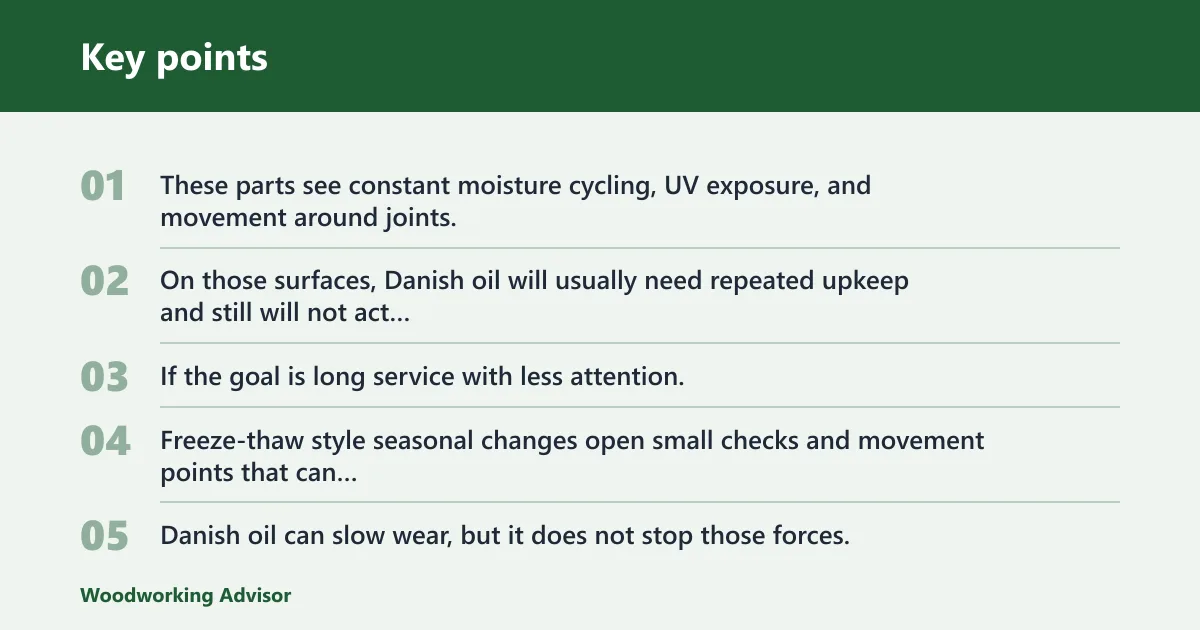
These parts see constant moisture cycling, UV exposure, and movement around joints. On those surfaces, Danish oil will usually need repeated upkeep and still will not act like a durable exterior film. If the goal is long service with less attention, use a more weather-resistant finish system.
Rain, UV, and seasonal movement
Rain drives water into end grain and joints. UV breaks down the surface. Freeze-thaw style seasonal changes open small checks and movement points that can shorten finish life even faster. Danish oil can slow wear, but it does not stop those forces.
Better exterior finish options
For exposed joinery, exterior paint gives the strongest protection when appearance allows it. A spar varnish is better when you want a clear finish and are willing to maintain it. Exterior stains and sealers can also outlast Danish oil in demanding outdoor spots.
Suppose a pair of oak garden chairs sits under a pergola on one side of a patio, while the table in the center gets direct afternoon sun. The chairs are a good Danish oil candidate. The table is likely to need recoat work much sooner because exposure is the variable that changes the outcome.
Frequently asked questions
Can Danish oil be used outside?
Yes, Danish oil can be used outside on many interior and exterior wood projects, especially where exposure is limited. It is best viewed as a maintenance finish rather than a waterproof barrier. If the wood gets regular rain or strong sun, plan on periodic reapplication.
Can Danish oil be used outdoors?
Yes, and that answer is the same for many sheltered outdoor projects. The finish works best on pieces that stay under cover or see only light weather exposure. Outdoors, it is the exposure level, not the location alone, that determines whether it is a smart choice.
Is Danish oil ok for exterior use?
It is okay for some exterior use, but not for every exterior duty. On furniture and other sheltered pieces, it can provide a natural look and moderate water resistance. On exposed wood that must stay protected with minimal upkeep, a tougher exterior system is the better fit.
Can Watco Danish oil be used outside?
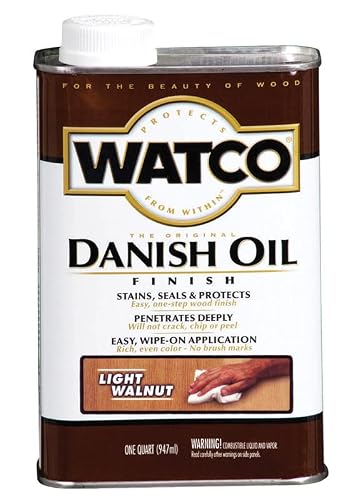
Watco Danish oil can be used outside in the same broad situations as other Danish oils. The name on the can matters less than the finish type and the exposure level. Check whether the wood is covered, semi-exposed, or fully exposed before deciding how long it is likely to last.
Can Danish oil be used on outside furniture?
Yes, especially on patio chairs, benches, and tables that live under cover or partial shelter. It gives a low-lustre finish and is easy to refresh. For furniture left in open weather, expect shorter maintenance intervals and more visible fading between coats.
How often does outdoor Danish oil need reapplication?
That depends on exposure. Covered patio furniture may only need upkeep a few times a year, while semi-exposed pieces can need fresh coats every 1 to 3 months in active weather. Fully exposed exterior wood usually needs attention so often that a tougher finish is the better choice.
Sponsored / affiliate links. As an Amazon Associate I earn from qualifying purchases. I may earn additional commission from eligible campaigns.