
Garage Temperature Compared to Outside in Winter
A winter garage can be usable for woodworking when the indoor air and the coldest surfaces stay above the dew point; if the garage tracks outside temperature too closely, condensation, rust, and swollen wood can follow. Ignore that gap and your tools can corrode, glue joints can fail, and lumber can move before you cut it. This guide explains how garage temperature compares with outside winter air, what numbers matter, and how to judge whether the space is cold, safe, and workable.
Why garage temperature changes in winter
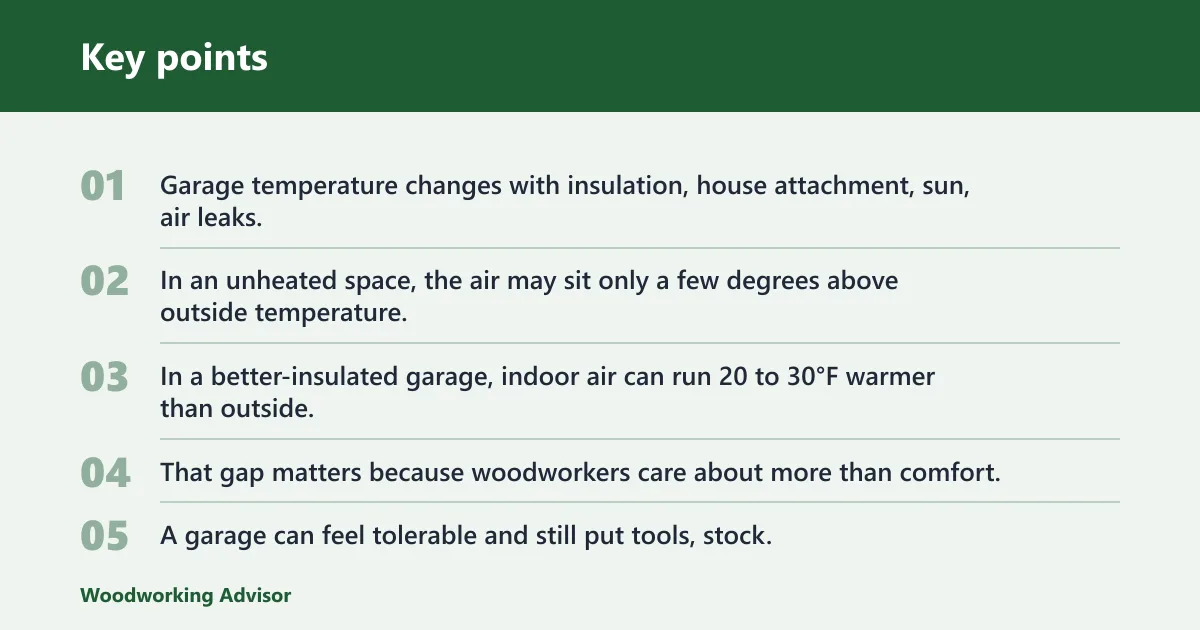

Garage temperature changes with insulation, house attachment, sun, air leaks, and heater use. In an unheated space, the air may sit only a few degrees above outside temperature. In a better-insulated garage, indoor air can run 20 to 30°F warmer than outside.
That gap matters because woodworkers care about more than comfort. A garage can feel tolerable and still put tools, stock, and finishes near a condensation threshold. The key question is not “Does it feel warm?” It is “Does the garage stay above the dew point, and do cold surfaces stay above it too?”
Attached vs. detached garages
Attached garages usually hold more heat than detached garages because they receive some warmth from the house wall they share. Detached garages sit farther from that heat source and usually follow outdoor temperature more closely. The difference can be small on a mild day and much larger during a cold snap, especially when wind drives air through gaps.
Sun exposure can shift the numbers during the day, but it does not fix a leaky shell. A sunny south-facing wall may warm one side of the garage while the slab, door panels, and metal tools stay cold enough to condense moisture.
Insulation, air leaks, and sun exposure
Insulation in the garage door, walls, and ceiling helps hold heat. Air sealing matters too, because a high R-value does little if the door edges leak or the ceiling has open paths to cold attic air. Weather stripping at the door perimeter reduces heat loss, but worn seals and gaps lower indoor temperature fast.
Think of insulation as slowing heat loss through the shell, while air sealing blocks direct exchange with outdoor air. Both matter. A garage with decent insulation and poor sealing can still behave like a cold shell.
Heater use and moisture load
A garage heater can raise temperature, and that often reduces condensation risk by warming the air and surfaces. Safe heater use also requires ventilation and carbon monoxide protection.
Portable and wall-mounted heaters can help, but they are not a substitute for sealing leaks or managing moisture. In a winter woodshop, the goal is usually controlled warmth, not a living-room temperature.
What temperature should a garage be in winter?

A winter garage should be warm enough to stay above the dew point, not merely warm enough to feel comfortable. The right target is the one that keeps both air and cold surfaces above condensation risk.
If the garage air stays above the dew point but the slab, steel bench, or tool cabinet does not, condensation can still form. Surface temperature is the trigger. Air temperature helps, but it is not the whole answer.
Why dew point matters more than comfort
Moist air condenses when it touches a colder surface. That water can collect on metal, glass, or concrete, then drive rust, mold, mildew, and warped wood. Comfort alone tells you little about that process. A garage at 55°F may be safe in a dry inland winter and too wet in a coastal one.
The dew point is the baseline target for winter garage decisions. If the garage air and the coldest surfaces stay above it, the risk drops. If they sit below it, water can collect even when the space seems reasonably warm.
When a few degrees above outside is enough
In some situations, a garage that is only a few degrees warmer than outside can still be workable, especially if the indoor dew point is low and you are not storing moisture-sensitive items long term. That is the narrow case, not the general rule. It works best for short tasks and dry weather.
Suppose outside air is 28°F and the garage holds at 33°F. That may be enough for brief tool access, but it is not enough if a damp car brings in moisture, or if you plan glue-up, finishing, or overnight storage of steel tools.
When you need active heat or moisture control
You need active heat, active moisture control, or both when the garage cannot stay above dew point on its own. That is common in detached garages, in leaky garages, and in coastal climates with higher dew points. A dehumidifier can help when temperature targets are hard to hold, and low-temperature-rated models matter in cold garages.
If you cannot keep the whole room warm, aim to protect the items that care most about moisture: cutting tools, fasteners, batteries, and unfinished wood. A small controlled zone is often more practical than heating the entire garage.
Garage temperature checklist
Use this checklist as a winter decision guide. The “estimated condensation risk” column assumes ordinary winter use, not a sealed climate-controlled shop. If the garage is close to or below the indoor dew point, or if the coldest surface is below dew point, treat the risk as higher than the air reading alone suggests.
| Garage type | Outside temperature | Indoor garage temperature | Estimated condensation risk | Recommended action |
|---|---|---|---|---|
| Attached insulated garage | 20°F | 40–50°F | Low to moderate if surfaces stay dry | Check dew point, confirm door seals, and keep metal tools off cold concrete |
| Attached uninsulated garage | 20°F | 25–35°F | Moderate to high if humid air enters | Seal gaps, improve door insulation, and add heat or dehumidification if needed |
| Detached insulated garage | 20°F | 35–45°F | Moderate if humidity rises from cars, snow, or wet wood | Measure dew point and surface temperature before woodworking |
| Detached uninsulated garage | 20°F | 22–28°F | High unless the air is very dry | Expect near-outdoor conditions; add insulation, sealing, and targeted heat or storage changes |
This table is not a promise. It is a field check. The same garage can land in different rows on different days, especially after rain, snow melt, car parking, or a heater cycle.
How much warmer is a garage than outside?
How much warmer a garage is than outside depends on its shell and exposure. A detached unheated garage may stay only a few degrees above outdoor air. A better-insulated garage can run 20 to 30°F warmer than outside. The useful number is the measured difference, not a guess based on the weather.
That gap tells you more about control than comfort does. A small delta usually means the garage is acting like outdoors with a roof. A larger delta suggests the insulation, sealing, or heating is doing real work.
What a 2 to 5°F gain means
A 2 to 5°F gain means the garage is barely separating itself from winter air. That is common in a detached, unheated space or in a garage with leaks around the door and ceiling. It may still be fine for short access, but it is marginal for moisture-sensitive woodworking.
In that range, tools can sit close to outdoor temperature, and cold metal can become a condensation surface as soon as humid air enters. That is why a garage can seem “not that cold” yet still rust hand tools.
What a 20 to 30°F gain means
A 20 to 30°F gain usually means insulation, air sealing, or heating is doing enough to create a real winter buffer. That is the range where a garage begins to behave more like a controlled workspace.
Even then, the air temperature alone is not enough. A cold slab or steel cabinet can lag behind the room air and still condense moisture. That is why the surface check matters.
How to measure the actual delta
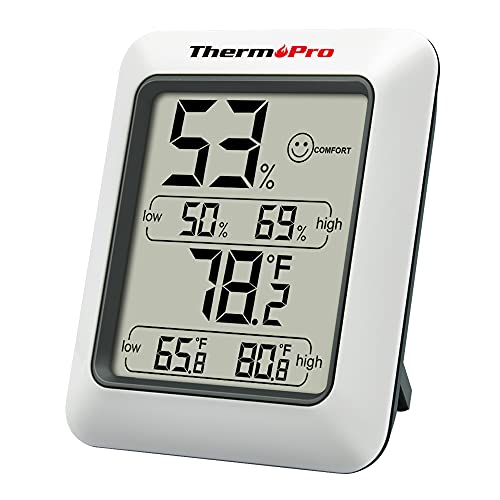
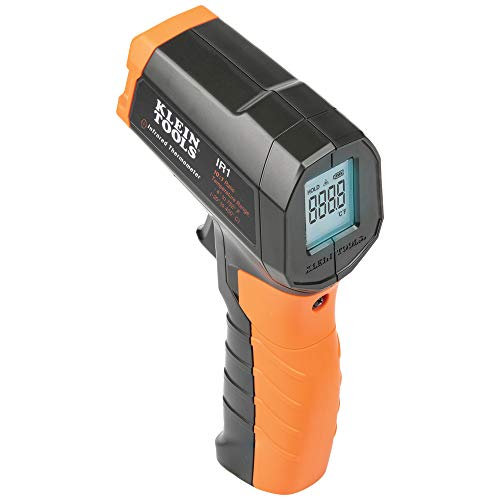
Use a thermometer inside the garage and a second reading outside at the same time. Compare the two numbers before you start work, not after the space has been open to the driveway for an hour. If the garage is only a few degrees warmer than outside, assume surface temperatures are also close to outdoor conditions.
- Take an outdoor air reading in shade, away from the wall.
- Take an indoor garage reading away from the heater and door.
- Compare both values to the indoor dew point.
- Touch-check or measure cold surfaces such as the slab, tool cabinet, and door panels.
- If either the air or the surface is near dew point, delay woodworking or add control measures.
Why is my garage cold even when it is attached to the house?
An attached garage can still be cold because the house does not heat it directly, and the garage door is often the weakest thermal boundary. Even with a shared wall, heat loss through the door, slab, ceiling, and gaps can erase much of the benefit. The garage may get some heat from the house, but not enough to keep it far above outside air.
Air movement matters too. Warm house air may not reach the garage floor or door corners in useful amounts, while cold air can enter through worn seals and cracks much more easily.
Heat loss through the garage door
The garage door is often the biggest weak point. If the panels are thin, the seals are worn, or the door has gaps at the edges, cold air moves in and indoor heat moves out. Weather stripping reduces that loss, but only when it is intact and compressed properly.
Door insulation helps, but it works best with good perimeter sealing. A well-insulated panel with open gaps can still leave the garage cold.
Gaps around walls, ceiling, and threshold
Small openings around framing, ceiling penetrations, and the threshold can matter as much as the door itself. Warm air escapes through the top of the garage while cold air enters low on the walls and at the floor edge. That movement lowers indoor temperature and raises condensation risk on the coldest surfaces.
A common first-timer mistake is to insulate one wall and stop there, then wonder why the garage still feels damp. The missing piece is usually the leak path.
Air movement from the house versus the garage
An attached garage may gain some heat from the house, but that transfer is limited and uneven. If the house side wall is insulated and sealed well, little heat reaches the garage. If the door and threshold leak badly, the garage still behaves like an outdoor space with one shared wall.
Picture a two-car attached garage with a drafty overhead door and a cold concrete slab. The room air may be a bit warmer than outside, yet the slab and steel workbench stay cold enough to attract moisture the moment you park a wet car inside.
Condensation control for winter woodshops
Condensation control starts with understanding where moisture lands. When warm air touches a colder surface, water forms on the surface. That moisture can collect on metal, glass, or concrete. For woodworking, that means rust risk on tools, mildew on stored wood, and warped stock if the humidity stays high.
That is why the woodshop answer is not “warm the garage as much as possible.” It is “keep the air and the coldest surfaces above dew point, or lower the moisture load until they are.”
Where dehumidifiers help
A dehumidifier helps when you cannot keep the garage warm enough to stay above dew point. It lowers moisture in the air so surfaces are less likely to condense water. In a cold garage, choose a model rated for low-temperature use, because ordinary units can struggle or shut down in cold spaces.
Dehumidifiers are useful when the garage is moderately cold but not extreme. They are less effective if the room constantly pulls in outdoor air through leaks.
When heating is the better answer
Heating is the better answer when the room is so cold that even a dry air setting cannot keep surfaces above dew point. It is also the better answer when you need to glue, finish, or store sensitive items for longer periods. Heat adds temperature margin; dehumidification adds moisture margin.
For many garages, the best result comes from both. Use insulation and sealing to reduce the load, then add modest heat or dehumidification to finish the job.
Heating and insulation options that change garage temperature
Door, wall, and ceiling insulation all help hold heat. Air sealing and weather stripping matter alongside R-value because heat loss often happens through gaps, not just through panels. If you are choosing where to spend effort first, start with the garage door edges, then the ceiling leaks, then the weakest wall sections.
A garage heater can raise the room temperature, but only if the shell is not bleeding heat faster than the heater can supply it. That is why insulation and sealing usually save more energy than simply turning up the heat.
Portable and wall-mounted heater safety
If you use a heater, keep ventilation in mind and add carbon monoxide protection. Do not run combustion heaters in an enclosed garage without proper venting. Even electric heaters need clearance from combustibles, and they should not be placed where sawdust, rags, or solvent containers can contact them.
Safety is part of temperature control. A warmer garage is not useful if the heating method creates a fire or CO hazard.
What this means for tools, batteries, glue, and finish
Cold temperatures affect more than comfort. Garage Transformed notes lead-acid car batteries work between -20°C and 50°C, while Li-ion, NiCd, and NiMH batteries work between 0°C and 45°C. It also says battery performance can drop fast in deep cold. That means a tool battery may still function, but runtime and output can drop fast in winter cold.
Glue and finish also become less forgiving. Cold stock, cold air, and cold tools can slow cure behavior and cause condensation that ruins adhesion or surface quality. If the garage is near dew point, warm the workpieces and the room before you start.
Frequently asked questions
How warm does a garage stay in winter?
It depends on insulation, attachment to the house, leaks, sun exposure, and heater use. An unheated garage may stay only a few degrees above outside temperature, while a better-insulated garage can run 20 to 30°F warmer. The real check is whether the space stays above dew point.
How much warmer is an unheated garage than outside?
Often not by much. A detached unheated garage may sit just a few degrees above outdoor air, especially in wind or severe cold. Attached garages may run a bit warmer, but without insulation and sealing, the difference can still be small enough for condensation risk to remain high.
Is a garage warmer than outside in winter?
Sometimes, but not by enough to matter. A garage can be warmer than outside and still be too cold for woodworking if the air and surfaces stay near the dew point. The useful question is not whether it is warmer, but how much warmer and whether the coldest surfaces stay dry.
Should I keep my garage above the dew point?
Yes. That is the key winter target. Staying above the indoor dew point lowers the chance that warm, humid air will condense on cold metal, glass, or concrete. If you work wood in the garage, that helps protect tools, fasteners, and stored lumber from moisture damage.
How can I tell whether my garage is too cold for tools or batteries?
Compare the indoor reading to the outdoor temperature and the dew point, then check the coldest surfaces too. If the garage is only a few degrees warmer than outside, treat it as a cold-storage space. If batteries are very cold, expect reduced performance even when they still function.
Sponsored / affiliate links. As an Amazon Associate I earn from qualifying purchases. I may earn additional commission from eligible campaigns.