How Much Does It Cost to Install a Wood Gate?
A wood gate is commonly estimated to cost about $300 to $1,500 to install, with about $150 to $500 for swapping a gate in an existing opening and about $800 to $3,000+ if new posts and footings are also needed. Poorly sized hardware or shallow posts can lead to sagging, dragging, and repeat labor. This guide breaks down gate-only pricing by replacement, existing openings, and full post work so you can budget accurately.
Wood gate cost breakdown


| Scenario | Likely cost drivers | Labor intensity | Parts that usually dominate the bill |
|---|---|---|---|
| Replace existing walk gate | Gate leaf size, hinge and latch quality, removal of old leaf, minor frame repair | Low to moderate | Leaf plus hardware |
| Install new walk gate in an existing opening | Custom sizing to the opening, hinge alignment, latch strike adjustment, whether the posts are already sound | Moderate | Leaf, hardware, and labor |
| Add a new gate with posts | New post size, deeper footings, more concrete, digging conditions, hardware, and possible fence tie-in work | High | Posts and footings |
| Replace a wider double gate | Two leaves, heavier hinges, center drop rod or cane bolt, stiffer posts, wider opening, and more adjustment time | High | Posts, hardware, and custom fabrication |
These four jobs are priced differently because a gate-only replacement can reuse sound structure, while a new opening often needs heavier support. A wider gate adds more load at the hinges and more stress on the posts. That is why a single number for “wood gate installation” misses the job that matters most.
What does a wood gate installation cost?
For gate-only work, many homeowners land in the low hundreds when the opening already exists and the posts are usable. A fuller wood gate job with new posts, concrete, and heavier hardware can move into the low thousands. The gap is mostly structural, not cosmetic.
Typical range for gate-only jobs
A walk gate is a single-swing panel wide enough for foot traffic. Typical walk-gate installations run approximately $200 to $600, while single-width driveway gates run approximately $400 to $900 installed. Those figures fit a simpler job with an existing opening, though custom wood, upgraded hardware, and harder site conditions can push the total higher.
Why replacement and new install differ
Replacement often means the frame opening is already there, so the installer can focus on fit, hinges, latch alignment, and removal of the old leaf. New installation is broader work. It can require setting posts, pouring concrete, checking layout, and then hanging the gate after the concrete has cured enough for stable fastening.
Wood gate pricing also differs from full fence pricing. Most homes should budget between $1,600 and $4,000 for fence installation, and fence installation can cost anywhere from $1,000 to $10,000. Those numbers are useful context, but they are not gate-only prices. A gate project may be far smaller, or it may climb toward fence-level labor if it needs structural work.
Where material, labor, and hardware sit in the total
Wood fences range from $15 to $35 per linear foot, while fence installation often runs $15 to $60 per linear foot installed. Labor may be $5 to $20 per linear foot for fence installation, and most fence contractors charge between $30 and $75 per hour. Those benchmarks help explain why a short gate can still be expensive: fixed labor and setup time matter more on small jobs.
Say your old 36-inch walk gate sags because the hinge side post is still sound but the leaf frame has twisted from moisture. Replacing only the leaf and hardware can stay near the lower end of the range. If the post has rotated or the base is rotted, the project stops being a simple swap and becomes a structural repair.
What changes the price most?
Gate cost depends on type, width, material, hardware, post requirements, and whether it is added to an existing fence. Width is often the first price jump, but it is not the only one. Frame build, wood species, and site access can change the budget as much as the gate style itself.
Gate width and custom sizing
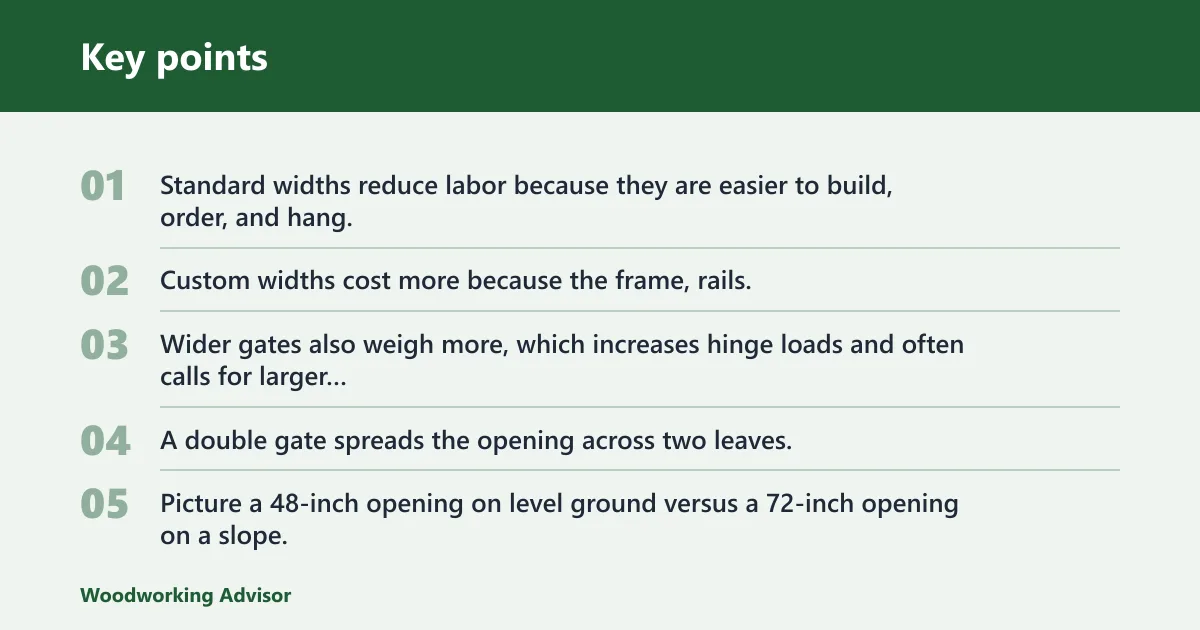
Standard widths reduce labor because they are easier to build, order, and hang. Custom widths cost more because the frame, rails, and bracing must match the opening exactly. Wider gates also weigh more, which increases hinge loads and often calls for larger posts and stronger footing support. A double gate spreads the opening across two leaves, and it also adds hardware and adjustment time.
Picture a 48-inch opening on level ground versus a 72-inch opening on a slope. The wider opening usually needs heavier support, and the slope makes alignment harder. That can mean more labor even if the wood species stays the same.
Wood species and frame build
Wood choice affects both the purchase price and future upkeep. A denser or more durable species usually costs more up front, while softer wood may be cheaper but need more maintenance in weather exposure. Frame construction matters too. A heavier frame, diagonal bracing, and better joinery help resist racking, but they add material and shop time.
Frame movement from moisture is one of the most common wood-gate problems. As boards expand and contract, the gate can drag, latch poorly, or twist out of square. That is one reason the cheapest option is not always the cheapest over time.
Gate hardware tier
Hardware can be a small line item or a noticeable one. Basic hinges and a simple latch cost less than heavy-duty hinges, a self-closing spring, or a double-gate setup with a drop rod or cane bolt. Hardware also has to match the gate’s weight and the way the frame is built. Misfit hardware often shortens the life of the install.
For a wood frame, hinge selection matters because screw pullout and sag resistance depend on the gate load. A light latch on a heavy gate can fail early. A self-closing spring adds convenience, but it also adds cost and adjustment time.
Site access, slope, and soil
Labor climbs when the crew has to work around tight access, rocky ground, steep grades, or a narrow side yard. Digging post holes in hard soil takes longer and may need more concrete or deeper digging to reach stable support. Removal of an old gate or old posts can add disposal time too.
A common first-timer mistake is budgeting only for the gate leaf. The opening may be ready, but the site may still need post excavation, leveling, and cleanup before the gate can hang correctly.
When do you need new gate posts?
You need new gate posts when the existing posts cannot carry the gate load safely or stay plumb over time. Gate posts are not the same as line posts, and a line post adequate for fence panels is not always enough for a gate opening. The deciding question is not just whether a post exists, but whether it is sized and founded for the gate weight.
Reusing existing posts safely
Existing posts can sometimes stay in place if they are straight, solid, and set deeply enough for the new gate. That is common in replacement work where the opening already exists and the old gate failed from hinge wear rather than structural damage. If the post does not move, rot, or lean, reuse can save a lot of labor.
If the gate is wider or heavier than the old one, reuse becomes less certain. The same post that held a light walk gate may not be a good fit for a heavier double gate or a new wooden leaf with a stiffer frame.
Post size, footing depth, and concrete
Gate posts are heavier than line posts because they resist sideways pull from the opening and closing action. They also need deeper footings and more concrete than a typical fence run. That is why adding new posts often becomes the largest cost component in a gate-only project.
There is no universal footing depth that fits every yard, since soil type and local code can change the requirement. The practical point is simple: deeper, larger footings cost more in digging, concrete, and labor than a shallow fence support.
Why gate posts cost more than line posts
A line post supports fence boards or panels along a straight run. A gate post has to resist movement every time the gate swings. That extra load means stronger material, more concrete, and more time to set and check plumb. If a contractor has to replace both posts on a double gate opening, the structural portion can dominate the total bill.
Wood gate hardware costs
Hardware choices are small in size but not always small in price. Hinges, latch systems, self-closing springs, and drop rods all affect how the gate moves and how long the installation stays aligned. The right hardware can prevent sagging and reduce repeat service calls.
Hinges and latch options
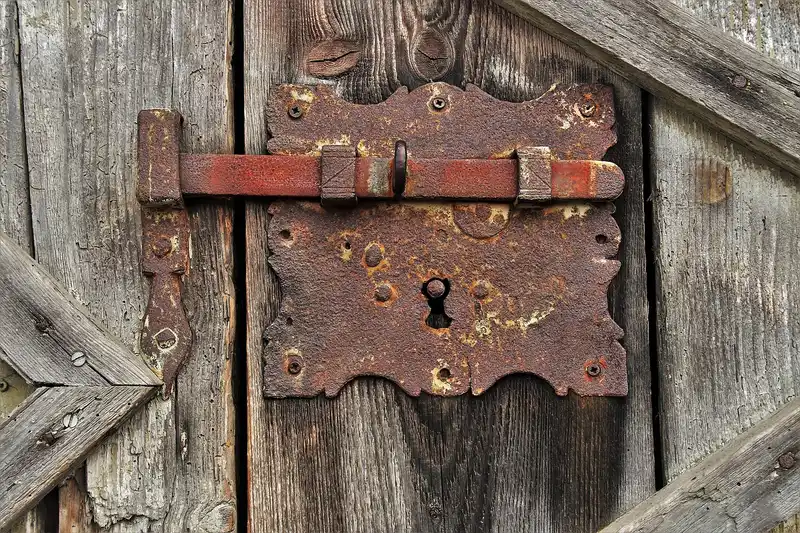
Heavy-duty strap hinges usually cost more than light hinges, but they hold a wood gate better when the leaf is wide or heavy. Latches vary by finish and function. A basic latch is cheaper, while a more secure or more durable unit can add cost. The main issue is compatibility with the gate frame and post layout.
Self-closing springs
A self-closing spring helps a gate return to a closed position, which can matter for privacy, pets, or pool-area access. It adds hardware cost and setup time, and it needs careful adjustment so the gate closes without slamming or binding. On a wood frame, that adjustment can be important because wood movement changes fit over time.
Drop rods and cane bolts for double gates
Double gates often need a drop rod or cane bolt to lock one leaf in place while the other leaf swings. That hardware is especially useful for driveway-width openings. It adds both material cost and labor, because the installer must align the leaves so the center meeting point stays square.
Compatibility with wood frames
Wood frames need hardware that matches the screw holding power and the gate weight. If the frame is light or the lumber is soft, oversized hardware alone will not solve a sagging problem. The gate must be built and hung as a system, with the frame, hinges, post, and latch working together.
Labor, permits, and site prep
Labor can be a small share of a simple replacement or the largest share of a post-and-footing job. Professional installation is usually worth more on a difficult site because the work includes layout, digging, hanging, adjustment, and cleanup. DIY can save money, but only when the opening is square and the support is already sound.
DIY vs professional installation
DIY works best for a straightforward swap in an existing opening. The risks rise fast once you have to set posts, pour concrete, or correct a racked opening. A professional can also spot a post that is sound at the surface but failing below grade, which helps avoid a second round of labor.
Most fence contractors charge between $30 and $75 per hour, so labor adds up quickly on a repair that needs careful alignment. A 150-foot-long fence will take roughly 20 hours to build, which shows how setup and finishing time can matter even more than the visible gate itself.
Removal of the old gate
Taking out the old gate is not always a simple pull-and-replace. If the frame is swollen, rusted, or twisted, removal can take extra time. Hauling away debris may also add to the bill, especially if the old gate is pressure-treated, heavy, or tied into a damaged post.
Permits, utility locate, and survey checks
Check local building codes before you dig, especially for driveway openings, pool access, or gate placement near property lines. Some projects may need a permit, and utility marking is important before any post hole is dug. A survey check can also prevent a gate from being set over a boundary problem that later needs correction.
Rocky ground, steep slopes, and tight access
Rocky soil can slow digging and increase equipment time. Steep grades can force custom post heights and extra leveling. Tight access may require hand tools instead of faster equipment, which raises labor. These conditions do not just add inconvenience; they change the hours on the invoice.
Wood gate vs other fence materials
Wood is often chosen to match an existing fence, but it brings more maintenance than some other materials. Vinyl, aluminum, and chain link all have different cost and upkeep patterns, and the gate choice should fit the rest of the fence system, not just the opening.
Wood vs vinyl
Vinyl fence installation costs between $25 and $40 per linear foot, while wood fences range from $15 to $35 per linear foot. Wood can be cheaper up front, and it is easier to match a wood fence gate to an existing wood run. Vinyl usually needs different hardware and can be less forgiving if the opening is out of square.
Wood vs aluminum
Aluminum gates usually weigh less and can need less maintenance, but they do not match the look or repair method of a wood fence. Wood is more exposed to rot at the base and movement from moisture. That means more inspection and periodic tightening, especially around hinges and latch points.
Wood vs chain link
Chain link gates are often less fussy to maintain, but they have a different visual and structural profile than wood. If the rest of the fence is wood, a chain link gate can look out of place and may need different posts and hardware. Matching the material often matters as much as the purchase price.
Frequently asked questions
How much does it cost to install a wood gate?
Most wood gate installs land between $300 and $1,500, with simpler replacements at the low end and new posts pushing the price higher. If the opening already exists and the posts are solid, the job can stay near a few hundred dollars. Once you add excavation and concrete, the total rises fast.
How much does it cost to replace a wood gate?
Replacing a wood gate in an existing opening often costs $150 to $500 when the posts and frame are usable. The price climbs if the old gate is swollen, the hinges are damaged, or the latch area needs repair. Reuse of structure is what keeps replacement cheaper than new installation.
How much does it cost to replace a wood fence gate?
Replacing a wood fence gate usually follows the same pricing logic as any other wood gate replacement, because the key factor is whether you can keep the opening and posts. A fence gate replacement can be relatively simple if the opening is square, but rot, sagging, or post movement can turn it into a structural job.
How much does it cost to install a wood fence gate?
Installing a wood fence gate can start near a few hundred dollars for a walk gate in an existing opening and move much higher when you need new posts. The best budget check is whether the opening already exists, whether the posts can carry gate loads, and whether the gate width is standard or custom.
What affects the cost of a wood gate installation?
Width, wood species, hardware quality, post size, footing depth, and site conditions have the biggest effect. A wider gate needs more support. A custom opening needs more labor. Rocky soil, slope, or poor access adds time. That is why two wood gates of the same look can cost very differently.
Do I need new posts to install a wood gate?
Not always. If the existing posts are straight, sound, and built for gate loads, they may be reused. New posts are usually needed when the old ones are too light, too shallow, leaning, or rotten at the base. For heavier or wider gates, stronger posts are often the safer choice.
Is it cheaper to add a gate to an existing fence or replace the whole gate?
It is usually cheaper to replace only the gate if the opening already exists and the posts are in good shape. Adding a gate to a fence can require new posts, footings, and tie-in work, which pushes the cost higher. The main budget difference is structural work, not the wood leaf alone.
Sponsored / affiliate links. As an Amazon Associate I earn from qualifying purchases. I may earn additional commission from eligible campaigns.