How to Get Polyurethane to Dry Faster
Keep the shop at 65–75°F, apply thin coats, and move air lightly. If polyurethane is still cool or tacky after 24 hours, wait instead of adding heat. Push it too hard and you can trap solvent, leave a soft film, or cause wrinkling and later adhesion failure. This guide covers safe ways to shorten dry time in cold or humid shops, plus a do-not-do list that helps you avoid trapped solvents and finish failure.
This guide is part of our Cold Weather Wood Finishing: What Works Below 50°F series.
What actually controls dry time?
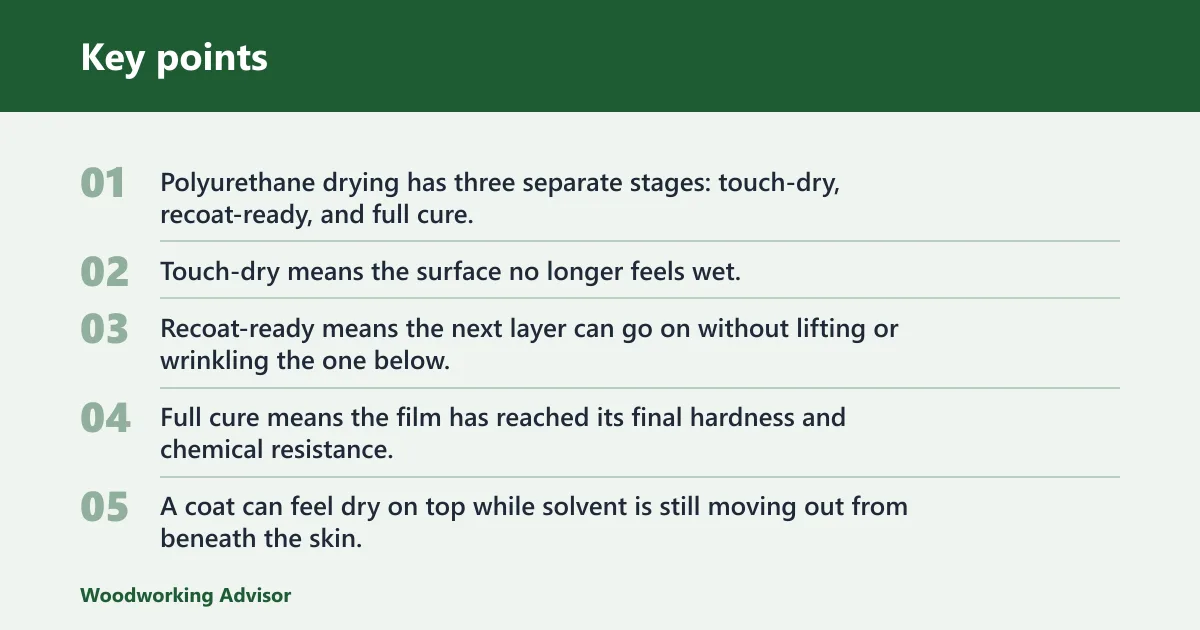
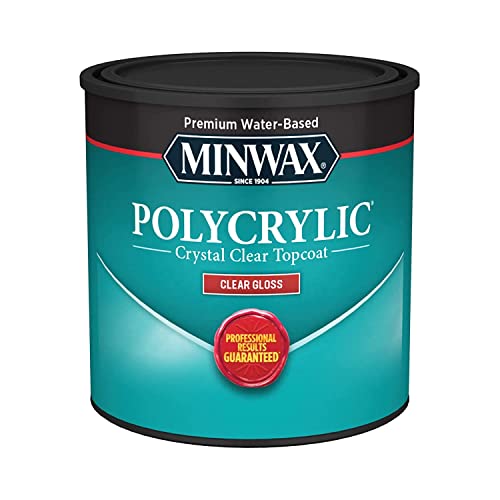


Polyurethane drying has three separate stages: touch-dry, recoat-ready, and full cure. Touch-dry means the surface no longer feels wet. Recoat-ready means the next layer can go on without lifting or wrinkling the one below. Full cure means the film has reached its final hardness and chemical resistance, which takes much longer than either of the first two stages.
Touch-dry versus recoat-ready versus full cure
Those stages do not line up. A coat can feel dry on top while solvent is still moving out from beneath the skin. That is why a finish can look ready for another coat and still be soft enough to trap solvent if you rush.
For timing, some guides say oil-based polyurethane takes a minimum of 24 hours to dry under favorable conditions. The same source says water-based polyurethane takes up to six hours to dry. Another guide lists water-based polyurethane as recoat-ready in 2 hours at 70°F/50% RH, while oil-based fast-dry recoats in 3–4 hours at 77°F/50% RH.
Why the same finish can feel dry and still be soft underneath
The top skin dries first. The layers below lag behind, especially on thicker coats, in cool air, or when humidity is high. If you sand or recoat too soon, you can seal in solvent and slow the film even more.
Which polyurethane dries fastest?
Water-based polyurethane usually dries faster than oil-based polyurethane, so it is the better choice when you need a short project timeline. Even so, fast touch-dry time does not mean fast full cure. Oil-based products often look slower at first, but they can give you a tougher schedule only if you can leave the piece alone long enough.
Water-based polyurethane
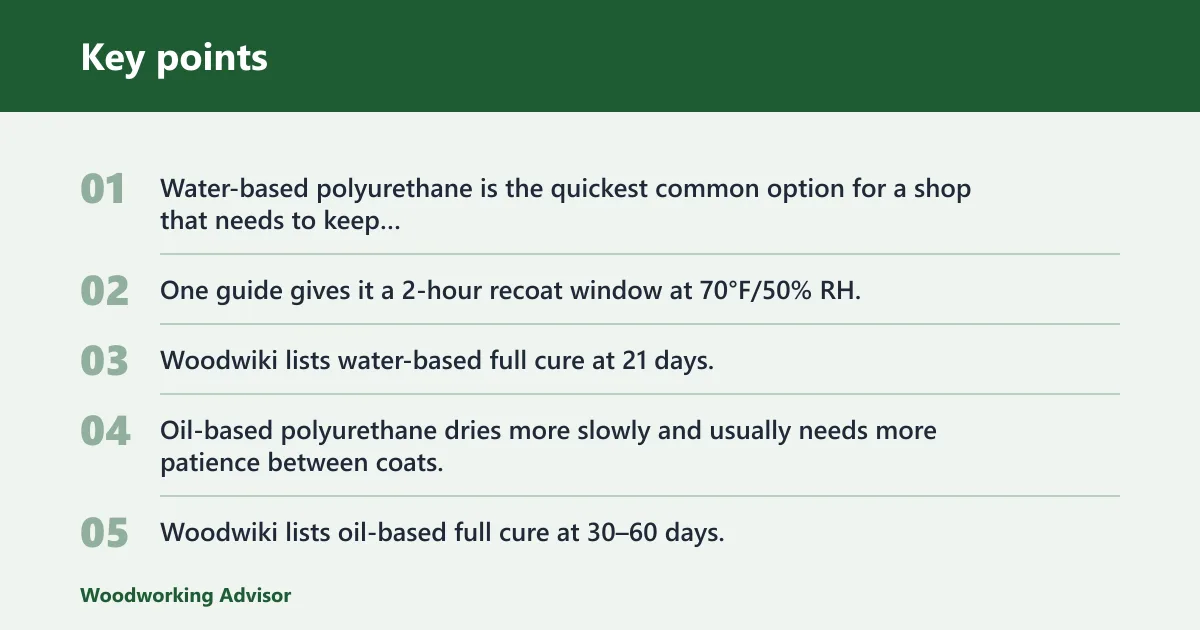
Water-based polyurethane is the quickest common option for a shop that needs to keep moving. One guide gives it a 2-hour recoat window at 70°F/50% RH, and another says it can take up to six hours to dry. Woodwiki lists water-based full cure at 21 days, so the surface can be ready well before the film is fully hardened.
Oil-based polyurethane
Oil-based polyurethane dries more slowly and usually needs more patience between coats. The same source lists oil-based full cure at 30–60 days, and some guides say it needs a minimum of 24 hours to dry under favorable conditions. It also adds amber tone, which matters if you want a warmer look on trim or furniture.
Wipe-on polyurethane
Wipe-on polyurethane often dries faster in practice because each pass leaves a thinner film. That thinner film reduces the chance of sags and bubbles. It is useful when you want more control on detailed parts, but it still follows the same rule: thin coats help, thick coats slow everything down.
When a faster formula is the better choice
Choose the faster formula when the room is cold, the project is a tabletop that must return to service soon, or you cannot keep dust off the surface for long. Choose slower oil-based finish when appearance, open time, or amber color matters more than speed. If the product data sheet offers a faster-curing version or compatible accelerator, that may be the better route than trying to force a standard formula to behave like a fast one.
Temperature, humidity, and airflow
Warm, dry, moving air helps polyurethane dry faster because it pulls moisture and solvent vapor away from the film surface. Cold air slows evaporation and curing. High humidity slows the film because the air is already carrying a lot of moisture, so the finish cannot release solvent as quickly. Good airflow removes moisture and solvent vapor from the surface without blasting dust into the wet film.
Practical room conditions that help drying
CraftyCedar recommends a temperature range of 70–85°F for optimal drying results. The same source lists a minimum shop temperature of 55°F, with 65°F preferred. For humidity, Woodwiki lists 85% RH as the maximum for application and 60% as preferred, while CraftyCedar says humidity should ideally be below 50% for optimal drying conditions.
Why cold, damp air slows the film
Cold conditions slow solvent release and make the finish stay soft longer. Damp air creates the same problem from another direction. The film may look set on top, then stay gummy underneath long enough to cause lint pickup, sanding drag, or a print mark from the first thing that touches it.
How cross-ventilation helps without stirring up dust
Open windows or use fans so air moves across the room, not directly at the fresh coat. Cross-ventilation helps evaporation without creating a hard blast on the surface. Place the fan so it exchanges room air, not so it blows debris onto the wet film.
Say your garage is 62°F and the windows are closed, leaving the polyurethane slow to cure. A water-based coat that would normally be recoat-ready in a few hours can stay tacky much longer there, even if the label timing looked short. The room condition changed, so the finish behaves differently.
Can you speed it up safely?
Yes, but only within the product limits. The safest shortcuts are thin coats, good airflow, and careful use of a formula that is meant to dry faster. Use warmth only if it is modest and controlled. Do not try to force the film with a heat gun, hair dryer, or space heater near solvent vapors.
Use thin coats and the right applicator
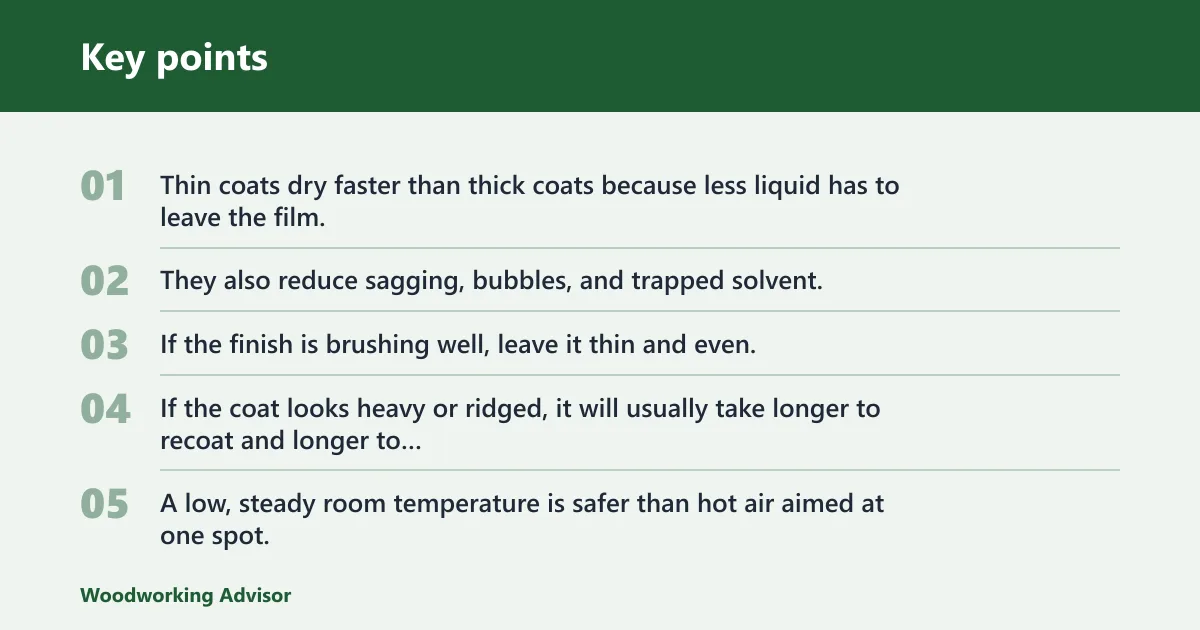
Thin coats dry faster than thick coats because less liquid has to leave the film. They also reduce sagging, bubbles, and trapped solvent. If the finish is brushing well, leave it thin and even. If the coat looks heavy or ridged, it will usually take longer to recoat and longer to cure.
Use airflow, not direct heat blast
A low, steady room temperature is safer than hot air aimed at one spot. Too much heat can scorch, bubble, or crack the finish. That risk is higher with solvent-based products because vapors can build up near the surface. Keep warmth indirect and mild, and stop if the film starts to skin over unevenly.
Follow label limits for thinning or additives
Some guides allow mineral spirits or naphtha thinning for certain formulas, but only within the maker’s limits. That can help the finish spread more evenly and may shorten the drying window for that product, but it is not universal. Test on a small hidden area first, and stop if the film looks cloudy, weak, or slow to level.
Suppose you are finishing a trim board in winter and the coat still looks wet after lunch. Change to a lighter application and improve room airflow rather than adding a hot blast. The first step changes the film build; the second can ruin it.
Polyurethane drying table
This table helps you choose the fastest safe setup without confusing dry time with full cure. Treat the recoat window as a guide, not a guarantee, because brand chemistry, coat thickness, and room conditions all matter.
| Finish type | Room temperature | Humidity | Airflow | Coat thickness | Expected recoat window | Risk level |
|---|---|---|---|---|---|---|
| Water-based poly | 70–75°F | About 50% RH | Light cross-ventilation | Thin, even coat | About 2 hours in some guides | Low if the film stays even |
| Oil-based poly | 77°F | About 50% RH | Light cross-ventilation | Thin coat | 3–4 hours for fast-dry products in one guide | Moderate because solvent retention matters |
| Wipe-on poly | 65–75°F | Under 60% RH | Gentle room exchange | Very thin film | Often sooner than brushed coats, depending on product | Low to moderate |
| Cold, humid room scenario | Below 65°F | Above 60% RH | Poor or stagnant air | Any heavy coat | Longer than label timing | High |
| Tacky finish troubleshooting | Keep stable; do not chase heat | Lower if possible | Improve air exchange | Do not add another thick coat | Wait until the film is truly ready | High until the cause is corrected |
How to read the risk level column
Low risk means the setup follows the finish maker’s normal drying conditions. Moderate risk means the finish may still work, but you need more patience and closer inspection. High risk means the room is working against you, so forcing a recoat or piling on heat can create solvent trapping, bubbles, or a soft film that never behaves right.
What can go wrong if you rush it?
Speeding drying can backfire if the surface skins over too fast. You may trap solvent beneath the film, leave the finish tacky, or create a weak layer that later peels or scratches easily. The goal is not the fastest possible surface dry. The goal is a sound film that can accept the next coat and cure normally.
Trapped solvent and a tacky surface
Insufficient airflow can leave polyurethane tacky well past the expected window. High humidity, thick coats, and low room temperature make that more likely. If the surface stays soft, do not seal it under another coat just because it seems close.
Bubbles, orange peel, sagging, and cracking
Too much heat can drive the surface too fast and leave defects behind. That includes bubbles, orange peel texture, sagging from a heavy coat, and cracking if the film skins too quickly. These problems are harder to fix than a simple wait-and-recoat approach.
When to stop applying more heat or another coat
Stop adding heat if the film wrinkles, dulls in patches, or smells strongly of trapped solvent. Stop recoating if the layer still dents with light finger pressure or feels cool and rubbery. Waiting is often the safest move, especially with oil-based finish in a closed room.
Frequently asked questions
How long does polyurethane take to dry?
Dry time varies by type and room conditions. Water-based polyurethane can dry in up to six hours, while oil-based polyurethane may need a minimum of 24 hours under favorable conditions. Recoat time can be much shorter than full cure, so a dry surface is not the same as a fully hardened film.
What temperature helps polyurethane dry faster
Warm rooms help, and one guide recommends 70–85°F for optimal drying. The same source lists 65°F as preferred and 55°F as the minimum shop temperature. Very high heat is a problem, though, because it can cause bubbling, cracking, or other film defects if you try to rush the surface.
How to get oil based polyurethane to dry faster
Use a thin coat, keep the room warm and dry, and maintain gentle airflow. Some fast-dry oil-based products have shorter recoat windows, but they still need proper conditions. Do not use aggressive heat or extra-thick coats, because those can trap solvent and slow the cure instead of helping it.
Sponsored / affiliate links. As an Amazon Associate I earn from qualifying purchases. I may earn additional commission from eligible campaigns.