Morakniv 120 Wood Carving Knife Review
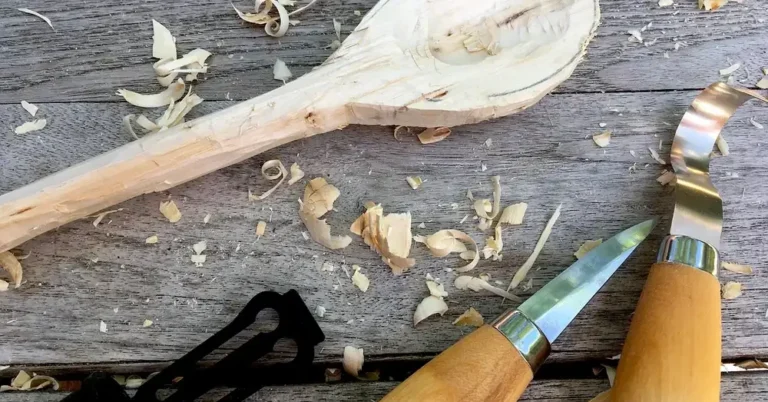
The Morakniv 120 fits small, controlled cuts and beginner detail work. Its 60 mm blade is easier to guide than longer carving blades, but that short length slows larger cuts and limits reach. Based on the published specs and buyer feedback, it suits whittling better than broad stock removal.
Verdict
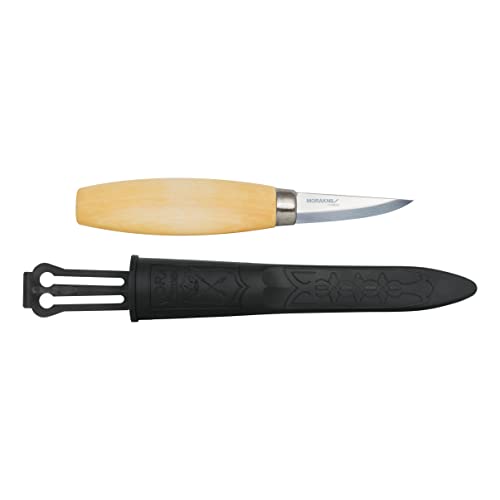
Blade length matters more than brand name. The 120’s short straight blade, birch handle, and simple sheath fit spoon carving, small figures, and fine cleanup, while the 106 gives more reach, the 122 shifts the size profile again, and the hook knife belongs to a different task altogether.
Specs at a glance
| Spec | Morakniv 120 |
|---|---|
| Blade length | 60 mm |
| Overall length | 165 mm |
| Weight | 69 g to 69.5 g |
| Blade material | Carbon steel |
| Hardness listings | HRC 58-60 or HRC 61, depending on retailer listing |
| Handle | Natural birch wood |
| Sheath | Black plastic sheath |
| Construction | Fixed-blade carving knife |
| Positioning | Beginner carving knife |
The listing details are not perfectly uniform across retailers. Weight appears as 69 g on one page and 69.5 g on another, while hardness is listed as HRC 58-60 in one place and HRC 61 in another, so buyers should treat those as retailer-level specifications unless the exact source is confirmed.
Who it
The Morakniv 120 fits beginners and intermediate carvers who want a short straight knife for whittling, chip cleanup, and small figure work. It is a poor match if you want one knife to handle larger blank reduction, deep scoop work, or spoon bowls, because the 60 mm blade runs out of reach quickly.
Say your first project is a small basswood fox, and the cuts are mostly thumb-guided paring along short grain. The 120 is the better fit because it stays easier to place. Suppose the blank is a thicker branch with rough bark and heavy material to remove; the short blade will feel slower and less efficient.
Pros and cons
- Pros: short blade gives fine control, carbon steel is easy to sharpen, birch handle has a traditional grip shape, sheath supports simple storage.
- Cons: limited reach on bigger cuts, carbon steel needs drying and oiling, retailer specs for hardness and weight are not perfectly consistent.
What works
The 120’s control comes from its 60 mm blade. Less exposed edge means easier placement on small push cuts, stop cuts, and cleanup cuts than with a longer carving knife. For beginners, that often matters more than raw speed.
Carbon steel helps the same way. One retailer listing identifies the blade as carbon steel, and that matters because carbon steel is generally easy to sharpen and can hold a useful edge well. It also needs basic care: wipe it dry after use, keep it lightly oiled, and avoid leaving it wet in the sheath.
The birch handle is another practical point. A natural birch wood handle with a Mora-style shape gives a familiar, round-ended grip that supports a pinch hold and short controlled strokes. The shape is not meant for heavy prying. It is meant for steady carving.
The sheath is sensible for a starter knife. The black plastic sheath is washable, has a drain opening at the tip, and is designed for ordinary carry and storage. That matters because carbon steel and wet wood chips do not mix well in a closed, damp pocket.
Care workflow for carbon steel
- Wipe the blade clean as soon as you finish cutting.
- Dry the steel fully, including the area near the handle.
- Apply a light coat of oil before storage if the knife will sit unused.
- Store it in a dry place, not in a damp bag or wet sheath.
- Touch up the edge as soon as cutting starts to feel rough.
What does not?
The 120 is not the best choice for larger cuts. A short blade means less reach into a thicker blank, less edge contact on longer strokes, and more passes to remove the same amount of wood. That is not a flaw if you want detail work, but it is a real limit if you are roughing out larger shapes.
It can also feel less efficient on rough or uneven stock. A common first-timer mistake is to start with a thick, barky branch and expect a small carving knife to do all the work. On that kind of material, a short blade can bounce across grain or force you into awkward hand positions.
Carbon steel adds maintenance. If you leave the blade damp, it can rust. If you skip oiling and storage discipline, the edge and surface can degrade faster than many buyers expect from a starter knife. The sheath helps, but it is not a substitute for drying the blade first.
Morakniv carving decision table
| Carving job | Cut type | Control | Reach | Safety | Best use case | 120 | 106 | 122 | Hook knife |
|---|---|---|---|---|---|---|---|---|---|
| Small detail cuts | Short push cuts and stop cuts | High | Low | Good for short, deliberate strokes | Fine figure work, small whittling | Best fit | Works, but longer than needed | Works, but less nimble | Not suitable |
| General whittling | Controlled paring cuts | High | Medium | Good when cuts stay short | Knives, animals, small shapes | Best fit | Better if the blank is larger | Useful if you want a different size feel | Not suitable |
| Roughing a larger blank | Longer stock removal cuts | Medium | High | Requires more blade travel | Initial shaping of thicker wood | Less efficient | Better fit | Possible, but still a short knife | Not suitable |
| Spoon bowl work | Curved hollowing cuts | Low with a straight knife | Low | Awkward with a straight edge | Hollowing concave surfaces | Poor fit | Poor fit | Poor fit | Best fit |
| Handle shaping | Mixed paring and cleanup | Medium | Medium to high | Depends on grain and blank size | Tool handles, thicker stock | Works for final shaping | Better for longer passes | Works for smaller handles | Not suitable |
This table separates the 120 from the 106, 122, and hook knife. The 120 is the short straight knife here. The 106 gives more reach. The 122 sits as a similar-family option with a different size profile. The hook knife is a separate tool for curved hollowing, not a substitute for a straight carving blade.
What size is the Morakniv 120 blade
The Morakniv 120 blade is 60 mm long. That is short enough to favor detail and control, yet long enough for ordinary whittling, trimming, and small shaping tasks. The total knife length is 165 mm, so this is a compact carving knife rather than a full-size general-purpose blade.
This size is why online comparisons can mislead buyers. If a listing is talking about a different Morakniv carving knife, the blade length may be longer or shorter, and the cutting feel changes with it. The 120 should be judged on its own 60 mm blade, not on the assumption that all Morakniv carving knives feel alike.
What steel is the Morakniv 120 made
One retailer listing says the Morakniv 120 uses a carbon steel blade. That type of steel is a common choice for carving knives because it sharpens easily and can hold an edge well, but it needs more care than stainless steel. Dry it after use and oil it lightly if it will sit unused.
Retail listings also disagree on hardness, with HRC 58-60 in one place and HRC 61 in another. Those numbers suggest a hardenable working blade, but they should not be treated as one single confirmed specification unless the exact source is verified. The practical point for buyers is simple: this is a sharpening-friendly carving blade that needs rust prevention.
Does the Morakniv 120 come with a sheath?
Yes. The Morakniv 120 is listed with a black plastic sheath, and one retailer describes that sheath as having a belt clip. The sheath is also described as washable, with a drain opening at the tip, which makes storage and cleaning easier after a carving session.
The practical limit is worth stating plainly. A sheath helps with carry and storage, but it does not replace drying the blade first. If the knife goes into the sheath wet, moisture can stay trapped around the steel.
Is the Morakniv 120 good for beginners?
Yes. The Morakniv 120 is positioned as a beginner carving knife, and its short 60 mm blade makes that positioning believable. Beginners often benefit from a blade that is easier to place, easier to steer, and less likely to feel unwieldy on small work.
That said, beginner-friendly does not mean universal. A beginner who wants to rough out larger blanks fast may prefer the 106, while someone focused on spoon bowls needs a hook knife instead. The 120 is best when the first projects are small, straight, and controlled.
Is the Morakniv 120 better than the 106 or 122?
It is better than the 106 and 122 for short, controlled detail cuts, but not for every job. The 106’s 8.2 cm blade gives more reach, so it is better when you need longer cuts or want less blade swapping across a larger blank. The 122’s 5.9 cm blade sits close in size to the 120, but it is a separate adjacent option rather than a direct task substitute.
Choose the 120 if your work is small and deliberate. Choose the 106 if you want a little more reach and a larger working envelope. Choose the 122 only if its exact profile, listing, or price makes more sense for your kit, because the real question is blade length and task fit, not brand family alone.
What works well
The 120 matches beginner carving tasks with little fuss. It is a straight knife for whittling, general carving, and small shaping jobs. That narrow job description is useful. It keeps the knife from pretending to be a do-everything tool.
Its handle and sheath support that role. The birch handle gives a familiar natural grip, and the plastic sheath adds easy storage. Buyers who want a simple fixed-blade carving knife can understand what this knife is for at a glance.
Alternatives
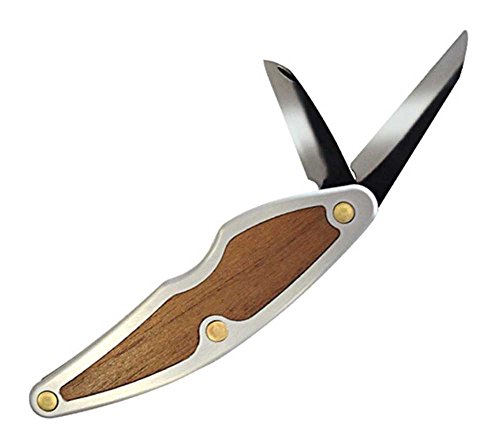
The FLEXCUT Whittlin’ Jack is the better choice if you want a pocketable two-blade setup rather than a fixed carving knife. Based on the listed specs, it gives you a 1.5″ detail blade and a 2″ roughing blade, plus fold-up portability. The drawback is that folding convenience comes with a different feel from a dedicated Mora-style straight carving knife.
Morakniv 106
The Morakniv 106 is the better comparison if you want a straight carving knife with more reach. One listing gives it an 8.2 cm blade and a 190 mm overall length, which puts it in a more extended carving role than the 120. The tradeoff is less compact control on very small detail cuts.
Morakniv 122 (LC)
The Morakniv 122 is the adjacent family option with a 5.9 cm blade in one listing. That makes it close to the 120 in overall intent, but buyers should treat it as a separate model choice, not as a duplicate. The drawback is that its exact fit depends heavily on the specific listing and price you find.
Morakniv hook Knife 164
The Morakniv Hook Knife 164 is the right tool if your project is spoon carving rather than straight whittling. It comes in right-handed and left-handed versions and uses a single-bevel hook shape for hollowing. Its drawback is simple: it does not replace a straight carving knife for ordinary detail cuts.
Should you buy it?
Buy the Morakniv 120 if your priority is a short, easy-to-steer carving knife for small detail work, beginner whittling, and controlled cuts. Based on the published specs, it is a sensible first straight carving knife because it keeps the task narrow and the handling simple.
Skip it if you already know you need longer reach, spoon work, or a pocketable folding setup. The 106 is the more natural step up for longer straight cuts, the 122 is a nearby family option with its own size profile, and the hook knife belongs in a spoon-carving kit, not a whittling kit.
Frequently asked questions
Are morakniv knives good?
Morakniv is widely regarded as a reliable Swedish carving brand, and the 120 fits that reputation as a straightforward, task-specific tool. Buyers usually choose Morakniv for simple geometry, easy sharpening, and practical handles. The better question is not whether the brand is good, but whether the blade length matches the work you plan to do.
Is the morakniv 120 good for whittling?
Yes. The 120 is a strong whittling knife because its 60 mm blade favors short, controlled cuts. It is especially suited to small figures, cleanup work, and other tasks where precision matters more than reach. It is less suitable for roughing out thicker stock or moving wood fast.
What steel is the morakniv 120 made from: one retailer listing says
One retailer listing says the blade is carbon steel. That means you should expect easy sharpening, good edge retention for a carving knife, and basic rust care. Dry the blade after use and apply light oil before storage if it will not be used again soon.
What size is the morakniv 120 blade: the blade is 60 mm
The blade is 60 mm long, and the overall length is 165 mm. That compact size is the main reason the 120 feels easier to control than longer carving knives. It is a short tool made for small, precise cuts.
What’s the difference between morakniv 120 and morakniv hook knife
The 120 is a straight carving knife for whittling and general detail work. The Morakniv Hook Knife 164 is a single-bevel curved knife made for spoon carving and hollowing. They are not interchangeable. Choose the straight knife for edges and shapes, and the hook knife for bowls and curved interiors.
Sponsored / affiliate links. As an Amazon Associate I earn from qualifying purchases. I may earn additional commission from eligible campaigns.