Walnut Hardwood Flooring: Pros, Cons and Cost
Walnut hardwood flooring fits low- to moderate-traffic rooms when you want a dark, premium look. Expect roughly $8 to $18 per square foot for the wood alone, and engineered walnut is often considered a more practical choice than solid wood for wide-plank installs. Pick the wrong construction or use it in a hard-wear room, and you can pay more up front for a floor that dents, fades, or needs replacement sooner. This guide covers walnut’s pros, cons, pricing, and the room-by-room factors that decide whether it is worth the cost.
Walnut flooring overview

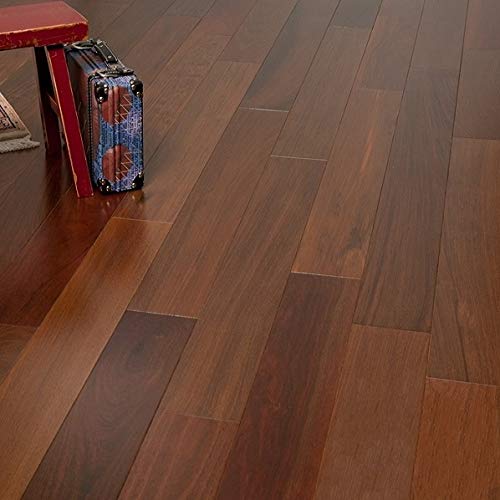
Walnut flooring is a premium hardwood choice known for its color, grain, and the way it reads in a finished room. Start with the species and the construction, because “walnut” can mean a domestic American product, an imported European product, or a Brazilian wood that is not a true walnut botanically.
American black walnut, Juglans nigra, usually shows chocolate-brown heartwood with lighter sapwood at the edges. That contrast, plus the open grain and dark tone, gives it a formal look without stain-heavy character lines.
Walnut often costs more than plain oak because the market treats it as a premium hardwood, not because it is the hardest or most practical floor for every room. That matters in open-plan spaces, where the floor is a large visual surface and a large budget item at the same time.
Where walnut fits in a flooring budget
Walnut makes the most sense when the room earns its appearance value. Living rooms, studies, dining rooms, and other lower-wear spaces can justify the price better than mudrooms or family entry paths.
For many buyers, the better comparison is not walnut versus “better hardwood.” It is walnut versus white oak or stained oak, with a clear look at how much more you are paying for color, species, and construction.
American, European, and Brazilian walnut
These products do not belong in one bucket. American walnut, European walnut, and Brazilian walnut differ in hardness, sourcing, price, and how they behave during installation, so you need to match the species to the room and subfloor instead of buying by color alone.
American black walnut characteristics
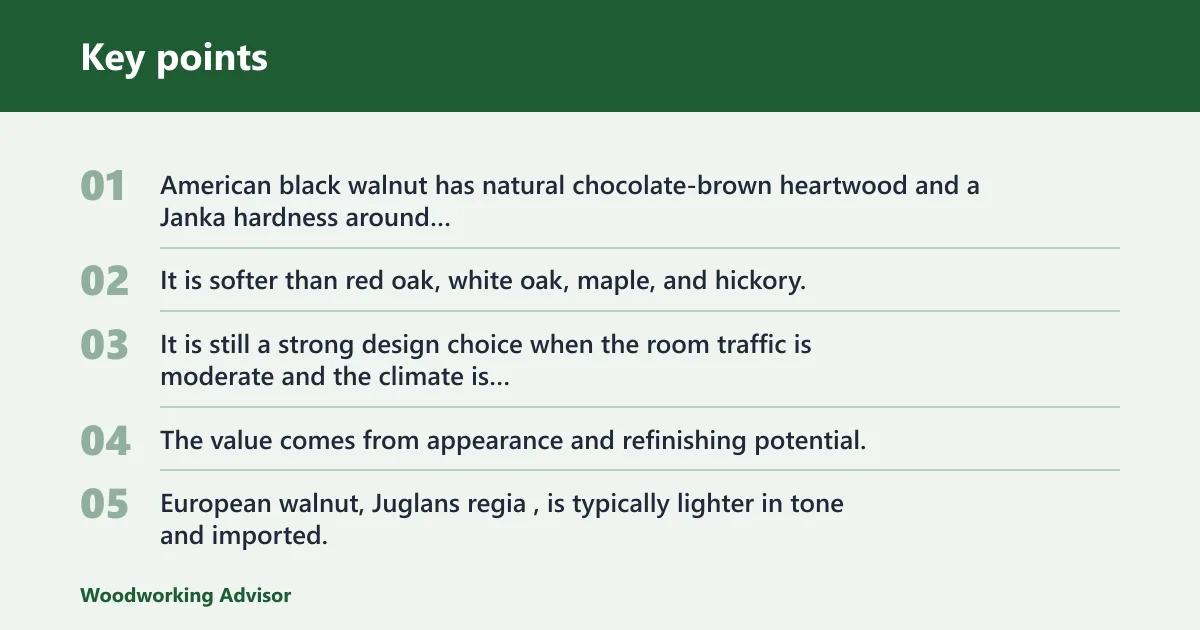
American black walnut has natural chocolate-brown heartwood and a Janka hardness around 1,010 lbf. It is softer than red oak, white oak, maple, and hickory, which means it can show dents sooner in busy rooms or under hard chair feet.
It is still a strong design choice when the room traffic is moderate and the climate is stable. The value comes from appearance and refinishing potential, not from top-tier dent resistance.
European walnut differences
European walnut, Juglans regia, is typically lighter in tone and imported. In many markets it costs more than American walnut, and the competitor comparison table often shows a higher Janka figure, around 1,220 lbf, which points to somewhat better dent resistance than American walnut.
That does not automatically make it the better buy. Import pricing, availability, and finish choice can outweigh the small gain in hardness if the room still has rolling loads, sand, or heavy pet traffic.
Brazilian walnut is not true walnut
Brazilian walnut is a different species with different pricing, sourcing, and installation considerations. It is much harder than American walnut, but that extra hardness comes with harder cutting and fastening, which can raise labor difficulty and change the installed cost.
Because it is not a true walnut botanically, it should be compared on performance and sourcing, not by name alone. Buyers often look at it when they want a darker, tougher floor, but the installation burden can offset part of the appeal.
Walnut flooring hardness and wear
The Janka scale measures resistance to denting. It does not predict every scratch or finish issue, but it is useful when you want to compare walnut with oak, maple, hickory, and pine in real household use.
How walnut compares with common woods
American walnut at about 1,010 lbf sits below red oak, white oak, maple, and hickory. That means dining chairs, toy wheels, pet claws, and dropped objects are more likely to leave visible marks than they would on a harder species.
In an entryway, the failure pattern is often repeated heel impacts and grit. In a dining room, chair legs and sliding casters matter more. On a wide kitchen path, rolling loads and dropped utensils become the main wear points.
What dents and scratches look like in real rooms
A common first-timer mistake is choosing walnut hardwood flooring without budgeting for its softer surface and the refinishing it may need over time. Walnut can hide some surface dust, but dents and sheen changes still show up where light hits the board edge or where furniture slides every day.
Say your dining table has six chairs with hard plastic glides. On walnut, the chair paths can polish dull over time, and a dropped pan or toy can leave a dent that reads more clearly than it would on a harder oak floor.
Walnut flooring pros
Walnut’s main advantages are appearance, a premium feel underfoot, and the option to refinish solid boards later. It is a strong choice when the room is dry, the traffic is moderate, and the owner values the look enough to manage the floor carefully.
Color and grain appeal
Walnut flooring often includes chocolate and medium-brown heartwood plus lighter sapwood. That natural variation can look expensive without stain, and it gives the room a calmer tone than many reddish hardwoods.
Premium feel in living spaces
In a formal living room or a quiet bedroom suite, walnut reads as deliberate and finished. The color can make white trim, stone, and painted cabinetry stand out without forcing a high-contrast look across the whole house.
Refinishing potential with solid flooring
Solid walnut flooring can be the better long-term choice when you want the best future refinishing potential and the site conditions are stable. If the board thickness and wear allow it, sanding and recoating can extend service life without replacing the floor.
Walnut flooring cons
The tradeoffs are real. Walnut can dent and scratch more easily than harder woods, it lightens over time under sunlight, and it is less forgiving when humidity swings or subfloor moisture are part of the project.
Denting and scratching risk
Kids, pets, and everyday furniture movement are where walnut’s softer profile shows up. It can still work in these homes, but you should expect more visible marks than you would from white oak, and you should plan for felt pads, mats, and careful chair selection.
Sunlight and color change
Walnut lightens over time. South-facing rooms accelerate that shift because they get stronger UV exposure, and area rugs can leave lighter and darker zones if they stay in one place too long.
Window treatments help slow the change, but they do not stop it. If you want a floor that keeps the same dark tone year after year, walnut is the wrong expectation.
Moisture and installation limits
Walnut is not a first pick for bathrooms, basements, or other moisture-prone spaces. Stable humidity and temperature matter, especially for solid boards, because movement and cupping risk rise when the environment swings too much.
Suppose a basement rec room sits over concrete and sees seasonal humidity spikes. Engineered walnut is the safer construction there, but even then you still need moisture control, a proper subfloor system, and confirmation from the manufacturer.
Solid or engineered walnut?
Choose solid walnut when the subfloor is dry, the climate is stable, and you want the best refinish potential. Choose engineered walnut when you need better dimensional stability, a concrete slab, or radiant heat compatibility. The construction matters as much as the species.
When solid walnut makes sense
Solid walnut flooring is 100% walnut construction. It fits above-grade rooms with controlled humidity, and it can be a good fit if you expect to refinish the floor several times over its life.
It is less forgiving over slabs and in rooms where humidity swings are common. That narrow installation window is part of the cost.
When engineered walnut is the better fit
Engineered walnut flooring uses a walnut veneer over a layered core. It is more dimensionally stable than solid wood in changing humidity, and that makes it better suited to concrete slab installs and many radiant heat systems.
Engineered walnut also broadens the room list. That said, the wear layer thickness affects price and refinishability, so a thin veneer may look attractive now but leave fewer options later.
How veneer thickness affects refinishability
A thicker wear layer usually costs more but gives you more sanding margin. A thinner wear layer may still be fine in a living area if you are buying the floor mainly for stability and appearance, but it should not be treated like a full solid plank.
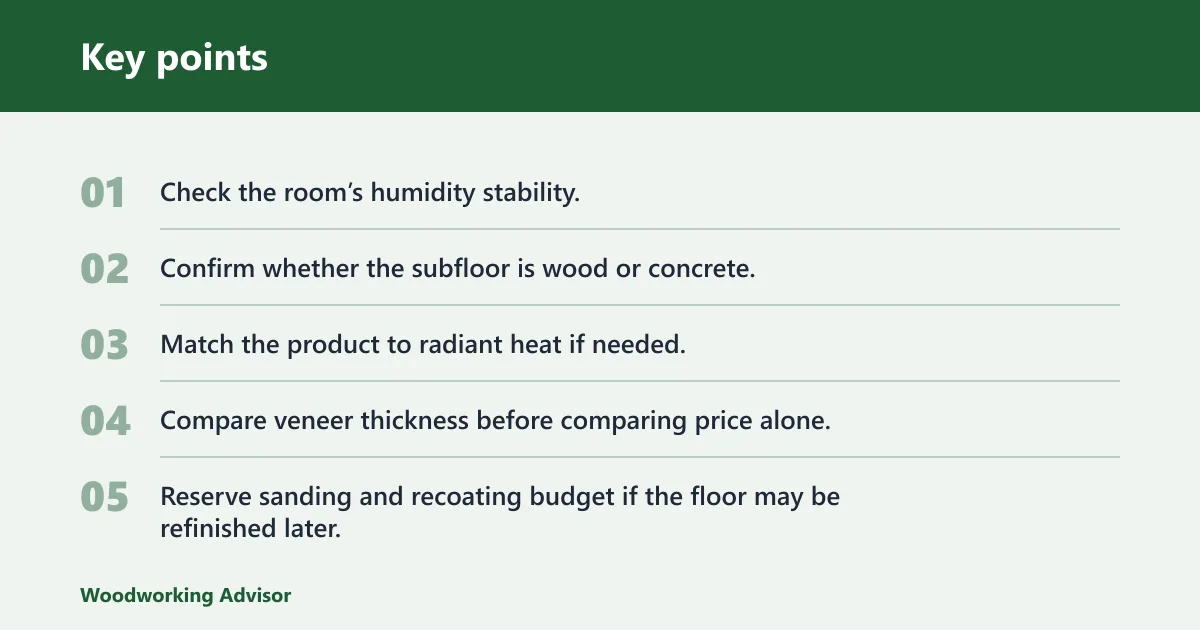
- Check the room’s humidity stability.
- Confirm whether the subfloor is wood or concrete.
- Match the product to radiant heat if needed.
- Compare veneer thickness before comparing price alone.
- Reserve sanding and recoating budget if the floor may be refinished later.
Walnut flooring cost breakdown
Walnut price makes more sense when you separate materials, labor, underlayment, moisture control, and future refinishing. Broad installed ranges hide the parts that change the total most.
Material price versus installed price
Solid walnut flooring commonly costs $9 to $15 per square foot for materials alone, while engineered walnut flooring typically costs $7 to $12 per square foot for materials. Professional installation labor is shown at $3 to $7 per square foot, and total installed cost is shown at $10 to $25 per square foot.
Those numbers still leave out project-specific extras. Underlayment, moisture barrier, stair work, floor leveling, trim replacement, and refinish reserves can move the total meaningfully.
How walnut compares with oak
Walnut usually sits above many oak floors on material cost, and the premium gets larger once you add labor and higher-end finishes. If your goal is simply a durable floor at a lower price, oak is often the stronger value.
If your goal is a darker, more formal look with less stain dependence, walnut may justify the premium in a main room or suite. If the room is highly trafficked, the extra cost can be hard to recover in wear life.
What to include in total project cost
Use a full budget, not just a board price. A practical estimate should include flooring material, installation labor, underlayment, moisture barrier where needed, floor prep, and a reserve for refinishing or replacement if the room sees heavy use.
Walnut hardwood flooring pros and cons
The best thing about walnut is its appearance. The main drawback is that its softer profile and moisture sensitivity limit where it makes sense, especially if you want a floor to look good after years of heavy use.
Pros and cons at a glance
| Factor | Pros | Cons |
|---|---|---|
| Appearance | Dark, premium look with natural grain variation | UV exposure can lighten it over time |
| Durability | Works well in moderate-traffic rooms | More dent-prone than harder woods |
| Construction | Solid offers strong refinishing potential | Solid has tighter location limits than engineered |
| Installation | Engineered suits concrete and radiant heat | Some products have limited wear layers |
Walnut flooring decision matrix
Use this matrix to match species and construction to the room. The right choice depends on traffic, moisture risk, heat source, and whether you care more about refinishability or initial budget.
| Walnut type | Janka hardness | Likely wear in high-traffic rooms | Radiant-heat suitability | Concrete-slab suitability | Refinish potential | Value-for-money score |
|---|---|---|---|---|---|---|
| American walnut | 1,010 lbf | Moderate denting and visible chair wear in busy rooms | Best in engineered form only, with manufacturer approval | Better as engineered than solid | High in solid form, moderate in engineered | 7/10 |
| European walnut | 1,220 lbf | Moderate wear, slightly better dent resistance than American walnut | Best in engineered form only, with manufacturer approval | Better as engineered than solid | High in solid form, moderate in engineered | 6/10 |
| Brazilian walnut | Much harder than American walnut | Better dent resistance, but still finish wear can appear in busy areas | Case-by-case; often less practical because of hardness and installation demands | Possible in engineered products, depending on the system | Varies by construction; harder to work can limit convenience | 5/10 |
How to read the matrix
American walnut is the balanced domestic choice when you want the look and accept moderate wear. European walnut costs more and may buy slightly better dent resistance, but it does not solve the core traffic and moisture limits. Brazilian walnut can be tougher, yet that does not automatically make it the best value once labor and sourcing are counted.
Frequently asked questions
How much does walnut flooring cost per square foot compared with oak?
Walnut usually costs more than oak because it is often positioned as a premium hardwood and commonly carries higher material pricing. A realistic walnut budget should include $7 to $15 per square foot for materials depending on construction, plus labor, underlayment, and any moisture control. Oak is often the lower-cost value option.
Is American walnut harder than white oak or maple?
No. American black walnut is softer than red oak, white oak, maple, and hickory. Its approximate Janka hardness is 1,010 lbf, so it gives up some dent resistance in exchange for its color and appearance.
What is the difference between American walnut and European walnut flooring?
American walnut is Juglans nigra with a darker chocolate-brown heartwood and a Janka hardness around 1,010 lbf. European walnut is typically lighter, imported, and often priced above American walnut, with the comparison table showing a higher hardness figure of 1,220 lbf.
Is walnut flooring good for high-traffic areas with kids and pets?
It can work, but it is not the best choice if you expect rough treatment. American walnut will show dents, chair marks, and finish wear sooner than harder species, so it fits better in moderate-traffic rooms than in entryways, play zones, or busy family paths.
Should I choose solid or engineered walnut flooring?
Choose solid walnut if you want the best refinishing potential and the room has stable humidity, a suitable wood subfloor, and no slab or heat concerns. Choose engineered walnut if you need better dimensional stability, concrete-slab installation, or radiant-heat compatibility.
Does walnut flooring lighten or darken over time?
Walnut lightens over time. Sun exposure speeds that change, and south-facing rooms usually see it faster. Rugs and window treatments can slow the shift, but they cannot stop it completely, so expect some color movement in any bright room.
Can walnut flooring be installed over radiant heat or concrete?
Yes, but engineered walnut is the safer choice in both cases. Its layered core gives it better dimensional stability in changing humidity, which is why it is better suited to concrete slabs and many radiant heat systems than solid walnut.
Sponsored / affiliate links. As an Amazon Associate I earn from qualifying purchases. I may earn additional commission from eligible campaigns.