Why Are My Oak Tree’s Leaves Turning Brown Early?
Oak leaves turning brown early often point to drought, root stress, or leaf disease; brown tips after heat may mean water stress, while rapid whole-leaf browning may need an arborist. Miss the pattern and you can waste water, delay real treatment, or lose branches. This guide shows how browning starts, how fast it spreads, and which recent weather or root changes matter most.
Telling normal autumn color change from real stress
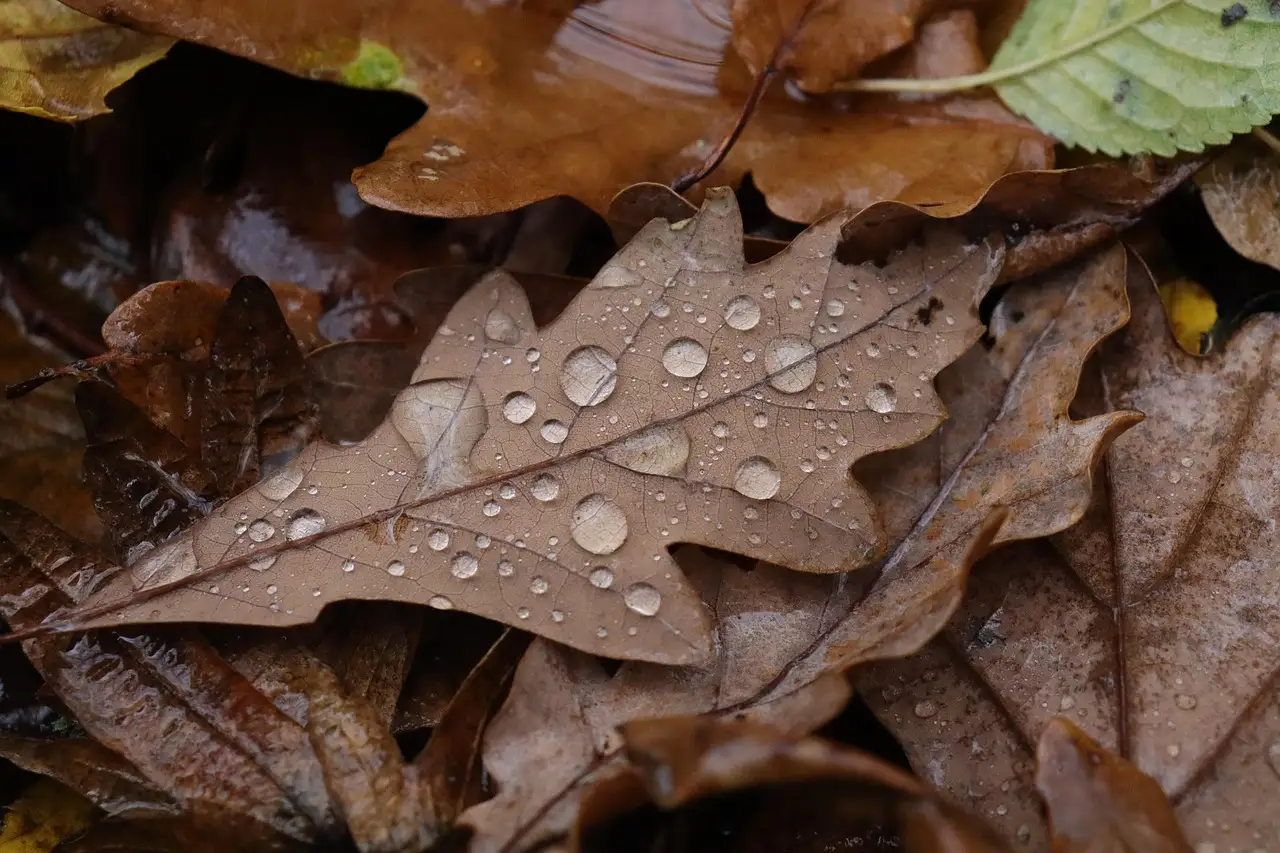


Premature browning usually points to stress, not normal seasonal color change. Oak leaves do turn color and drop as part of fall, but early browning in midsummer or early fall is different, especially if the canopy changes fast or the tree is young, newly planted, or already stressed.
Normal fall color vs premature browning
Normal seasonal change usually brings gradual yellowing, tan, or brown leaf drop later in the season. Early browning is more suspicious when leaves crisp before nearby trees change, when the edges go brown first, or when the tree drops leaves long before its usual fall timing.
Red oak group vs white oak group timing
Oak species matter. Red oak group trees often hold leaves longer and can show stronger late-season color, while white oak group trees may drop leaves earlier or keep some brown leaves into winter. That timing difference matters because early leaf loss on a red oak is often more alarming than the same timing on a white oak.
When early leaf drop is a warning sign
If browning starts in midsummer, spreads over days or weeks, or affects one branch or one side of the canopy, treat it as a stress pattern that deserves closer inspection. Rapid browning, sudden defoliation, or a tree that looks thin across the whole crown can signal a problem that needs prompt diagnosis.
Picture a mature red oak beside a driveway that starts turning brown at the leaf edges in July. If the same tree also has hard, dry soil and no recent deep watering, drought stress rises to the top of the list before disease does.
What the browning pattern tells you
Where the browning starts often tells you more than the color itself. Leaf-edge scorch, scattered spots, branch-level decline, and one-sided browning each point toward different causes, and they do not all call for the same response.
Leaf-edge scorch and drought stress
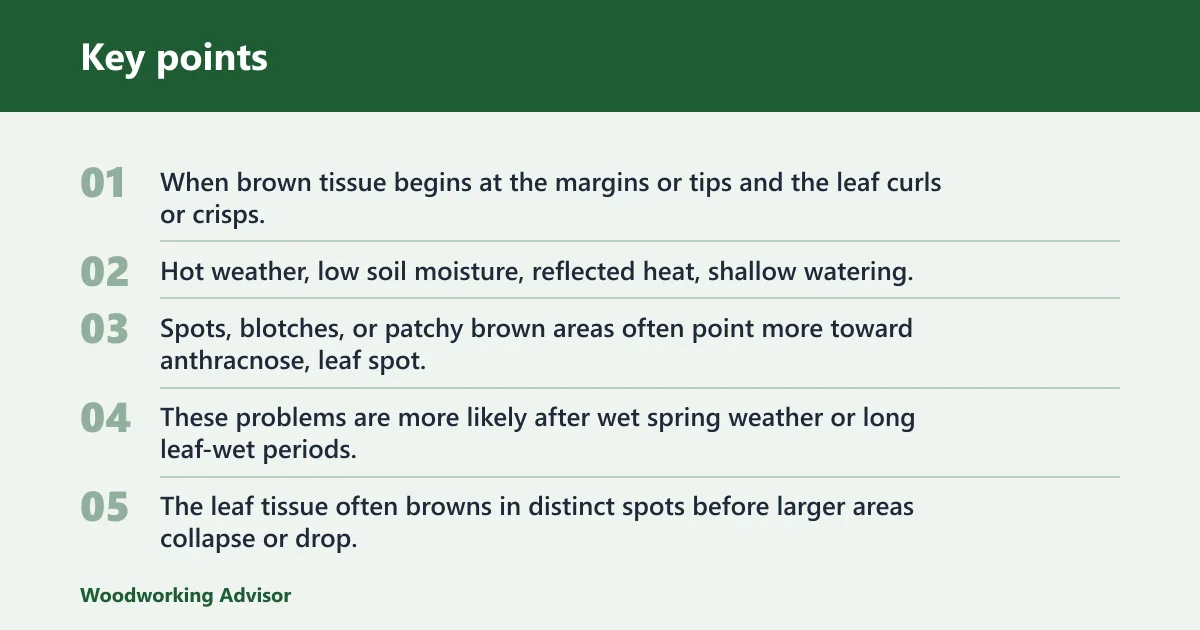
When brown tissue begins at the margins or tips and the leaf curls or crisps, drought stress is a common cause. Hot weather, low soil moisture, reflected heat, shallow watering, and compacted roots can all reduce water movement into the canopy, which shows up first at the leaf edges.
Scattered brown spots and fungal leaf disease
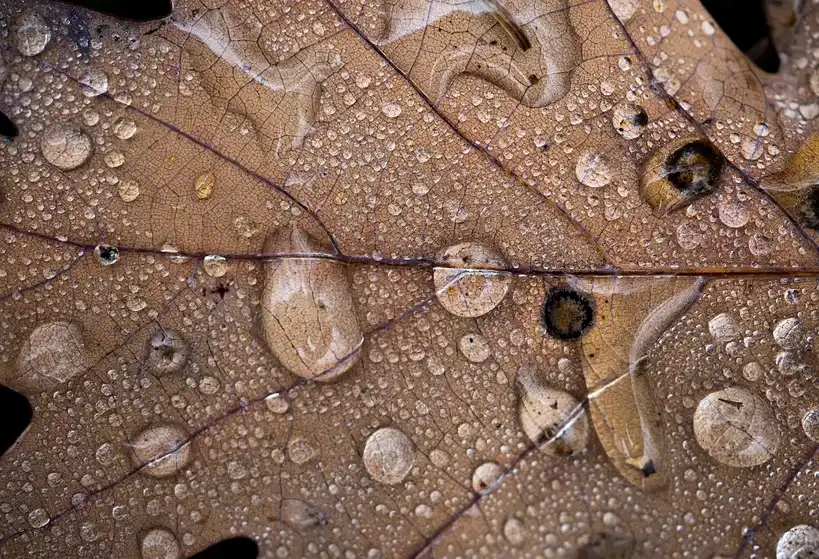
Spots, blotches, or patchy brown areas often point more toward anthracnose, leaf spot, or black spot than drought. These problems are more likely after wet spring weather or long leaf-wet periods. The leaf tissue often browns in distinct spots before larger areas collapse or drop.
One branch, one side, or the whole canopy
A single branch with browning can point to a local root issue, a vascular problem, or branch dieback. Browning on one side of the tree often tracks with root damage, trenching, pavement heat, or a site problem on that side. Whole-canopy browning is more urgent and can signal severe stress or oak wilt.
Oak leaves diagnostic matrix
Use symptom pattern first, then match the most likely cause to the next step. This table is meant to narrow the problem before you water, prune, or call for disease treatment.
| Symptom pattern | Likely cause | Confirming clue | Immediate action |
|---|---|---|---|
| Leaf-edge scorch | Drought stress or heat stress | Brown tips and margins, dry soil, hot exposure, reflected pavement heat | Check soil moisture and water deeply if the root zone is dry |
| Scattered brown spots | Fungal leaf disease such as anthracnose, leaf spot, or black spot | Wet spring weather, distinct spots or blotches, early leaf drop after spotting | Rake up fallen leaves and watch whether fresh leaves keep showing new spots |
| Branch browning or one-sided decline | Root damage, compaction, trenching, or a vascular problem | One side of the canopy thins first, nearby construction, soil heave, or dead twigs on that side | Inspect the root flare and call an arborist if decline continues |
| Sudden mid-summer drop | Severe stress, oak wilt concern, or major root disruption | Rapid defoliation, browning that moves quickly through the crown, branch-level dieback | Seek professional confirmation quickly and avoid pruning unless advised |
Can drought and heat brown oak leaves?
Yes. Drought stress and heat are among the most common reasons oak leaves brown early. The pattern often starts as marginal browning or tip burn, then spreads if the tree cannot take up enough water. Hot weather makes the problem worse, especially on exposed sites.
Hot weather and low soil moisture
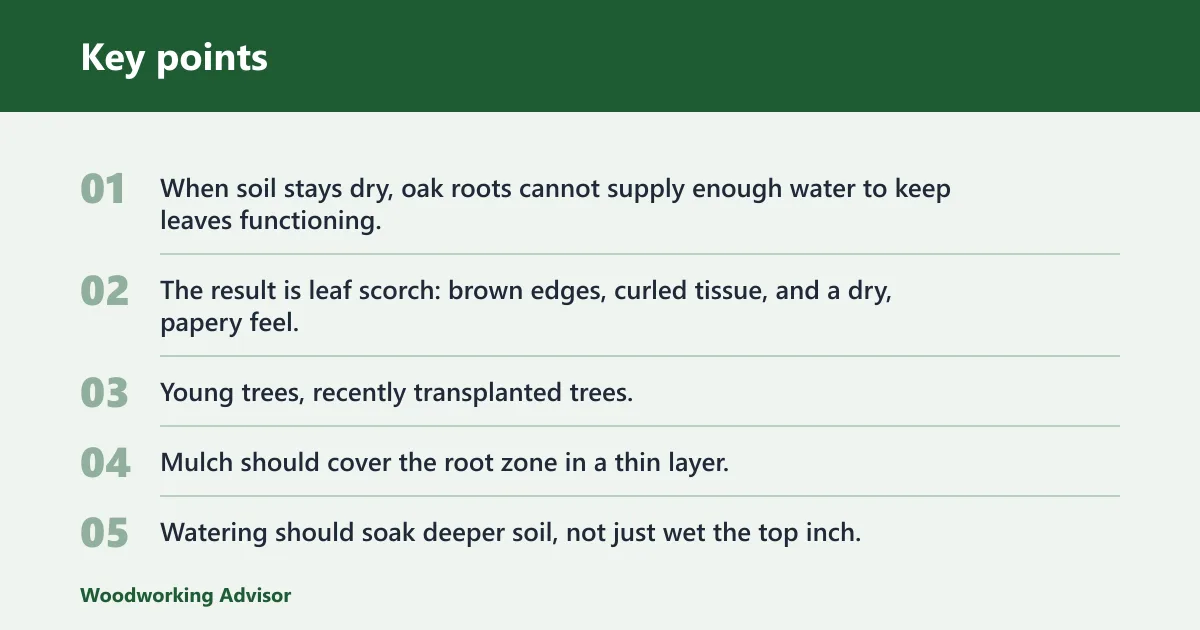
When soil stays dry, oak roots cannot supply enough water to keep leaves functioning. The result is leaf scorch: brown edges, curled tissue, and a dry, papery feel. Young trees, recently transplanted trees, and trees with limited root space usually show this sooner than established trees.
Mulch coverage and watering depth
Check the soil, not just the surface. Mulch should cover the root zone in a thin layer, but it should not pile against the trunk. Watering should soak deeper soil, not just wet the top inch. If the root zone is dry several inches down, a deep watering plan makes more sense than a light sprinkle.
Signs of heat reflected from pavement
Leaves on the side facing asphalt, concrete, or a south- or west-facing wall may brown first because reflected heat dries the canopy faster. That one-sided pattern matters. If the same side of the tree browns year after year, site stress is likely part of the problem.
Suppose a white oak near a parking pad develops brown leaf edges on the sun-facing side after a week of 90-degree weather. If the soil under the mulch is dry 4 to 6 inches down, that pattern fits heat and water stress better than a leaf disease outbreak.
What fungal leaf diseases look like
Fungal leaf diseases usually leave a spotted or blotchy pattern before leaves fall. They are common after wet spring conditions, especially when new leaves stay wet for long periods. These problems can look alarming, but they are not the same as oak wilt or drought scorch.
Anthracnose after wet spring weather
Anthracnose often follows cool, wet springs. It can cause irregular brown blotches, curled leaves, and early leaf drop, especially on lower or inner leaves. The damage is usually more noticeable after a wet start to the season than after a hot, dry one.
Leaf spot and black spot symptoms
Leaf spot diseases create small to medium brown lesions that may stay scattered or merge into larger dead areas. Black spot may darken as tissue collapses. If spotting starts across many leaves at once, especially after rainy weather, disease becomes more likely than drought.
When spotted leaves drop early
Leaves with repeated spotting may fall before normal autumn color. That can thin the canopy, but early drop alone does not prove a deadly problem. The key is whether the spots are isolated to a few leaves or are spreading quickly through the tree.
Could oak wilt or root damage be the cause?
Rapid browning, fast defoliation, and decline that moves through a branch or one side of the tree are high-risk patterns. Oak wilt needs professional confirmation, and root problems can mimic disease by cutting off water uptake. Both deserve faster attention than simple drought scorch.
Rapid browning and defoliation
Oak wilt is a vascular disease that can cause leaves to brown and drop quickly, sometimes while veins or leaf parts stay green briefly. Because the pattern can move fast, a tree that loses foliage suddenly in summer should be treated as urgent until proven otherwise.
Compaction, construction damage, and trenching
Roots injured by trenching, heavy equipment, grade changes, or repeated traffic may not show stress right away. Browning can appear weeks later because the roots are no longer taking up enough water. Compacted soil can cause the same delayed decline by squeezing out oxygen and limiting root growth.
Poor drainage and reduced water uptake
Soil that stays waterlogged can also brown leaves early because roots need oxygen as well as water. Poor drainage often looks like general thinning, yellowing before browning, and slow decline after wet periods. Dry soil and waterlogged soil can both produce water stress, even though the causes differ.
Insect damage as a secondary stress
Leaf chewing and sap-feeding pests can add pressure, but they are often secondary. If the tree already has drought stress, root damage, or disease, insect feeding can push it further. Look for holes, chewed edges, sticky residue, or distorted leaves, but do not assume insects are the main cause without checking the rest of the pattern.
What to do next
Start with a quick decision path: check where the browning begins, how fast it spreads, and whether recent weather or root disturbance fits. Then decide whether the tree needs water, simple monitoring, or a professional evaluation. Do not treat all brown leaves the same way.
- Check soil moisture 4 to 6 inches below the mulch.
- Look for browning on one branch, one side, or the whole canopy.
- Review recent heat, drought, heavy rain, construction, trenching, or soil compaction.
- Note whether the leaves show scorch, spots, blotches, or rapid whole-leaf browning.
- Water deeply if the soil is dry and the pattern fits drought stress.
- Call an arborist or extension service if decline spreads fast, a major branch browns, or oak wilt seems possible.
Frequently asked questions
When do oak trees lose their leaves?
Many oaks lose leaves in fall, but timing varies by species, weather, and tree stress. Red oak group trees often hold leaves longer into autumn, while white oak group trees may drop leaves earlier or keep brown leaves through winter. Early summer or midsummer drop is usually a stress signal, not normal timing.
Why are my oak trees dropping leaves?
Oak trees drop leaves early when drought, root damage, disease, or severe stress limits water uptake. If leaves drop after scorching, dry soil is a likely cause. If they drop after spotting, wet-weather fungal disease is more likely. Fast summer drop on one side of the canopy deserves prompt inspection.
Why are my oak trees dying?
Decline can come from several causes at once, including drought stress, compacted or damaged roots, poor drainage, and vascular disease. A tree that loses leaves quickly, shows branch dieback, or browns from the top or one side should be checked soon. The pattern often tells you whether the problem is local or widespread.
When do oak trees drop their leaves?
Most oaks drop leaves in late season, but species timing differs. White oak group trees may hang onto leaves longer or shed some leaves earlier than red oak group trees. If a tree drops leaves in spring or midsummer, that timing is outside normal fall color change and often points to stress or disease.
Why are my oak tree leaves turning yellow and brown?
Yellowing followed by browning often points to water stress, root problems, or declining root function. Wet soil can do this as easily as dry soil because roots cannot absorb well when oxygen is low. If yellowing begins before browning and spreads across the canopy, check drainage, recent rain, and root disturbance.
What causes brown spots on oak leaves?
Brown spots usually come from fungal leaf diseases such as anthracnose, leaf spot, or black spot, especially after wet spring weather. Spots that stay scattered and distinct fit disease better than drought. If the spots are followed by early leaf drop, collect the fallen leaves and monitor whether new growth repeats the same pattern.
Why is my oak tree dropping leaves in spring?
Spring leaf drop is not normal seasonal color change. It can follow winter injury, root stress, trunk or root damage, or a disease that affected the previous season’s leaves and buds. If spring drop is paired with dieback, sparse leafing, or browning on one side, get the tree inspected rather than waiting for fall.
When do oak trees leaf out?
Oak trees leaf out in spring, but the exact timing depends on species and local weather. Some trees open later after a cold spring, and stressed trees may leaf out unevenly. If leaf-out is patchy and the new leaves brown soon after expanding, that points to an active stress problem rather than a normal seasonal delay.
Sponsored / affiliate links. As an Amazon Associate I earn from qualifying purchases. I may earn additional commission from eligible campaigns.