Wood Filler in Cold Weather: Dry Time and Hardening
Many water-based wood fillers cure reliably only above about 50°F; below that, dry time can stretch, and some fillers may stay soft, shrink, or crack, so use a product rated for colder conditions or move the repair somewhere warmer. Ignore the temperature, and you may sand too early, tear out the patch, or rebuild the hole later. This guide covers filler choice, dry-time checks, warm-up options, layering, and when to wait.
Wood filler vs. wood putty



Wood filler hardens so you can sand it flush. Wood putty usually stays slightly pliable and is meant for small cosmetic touch-ups, not structural repairs. That difference matters in cold weather, where a soft patch can look set on the surface while the core remains weak.
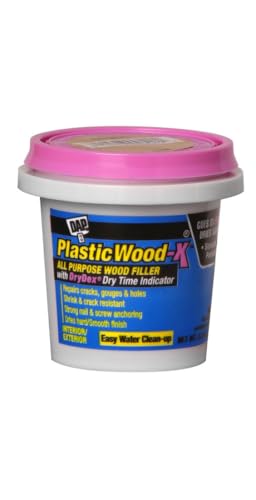
The label matters more than the name on the can. Some products sold as filler are water-based, some are solvent-based, and two-part systems cure chemically. If you need a repair that takes sanding and finishing, read for the stated cure method and the listed application temperature, not just the product title.
Why putty is not for structural repairs
Putty can fill a nail head or a tiny ding, but it is not the right choice for a stripped screw hole, a deep gouge, or any area that must hold shape under sanding pressure. In cold conditions, a pliable patch can smear, pull out, or show through the finish later.
How cold changes dry time
Cold air slows evaporation and slows chemical cure. Manufacturers often test drying claims around 70°F, so a printed “ready in minutes” time may assume conditions that are warmer than a cold garage or unheated porch. Lower temperature usually means longer wait time, and sometimes a different product choice.
Humidity adds another layer. Humidity below about 60% is often considered better for drying, and around 80% relative humidity can roughly double or even triple drying time for water-based filler. A cool, damp space slows the water leaving the patch and can leave the surface dry before the middle is ready.
Why manufacturers test at 70°F
Published dry times usually come from standard room conditions, not a garage at 38°F with damp air and no airflow. That is why the same filler can behave very differently from one jobsite to the next. A label time is a baseline, not a guarantee.
A common first-timer mistake is sanding as soon as the surface stops feeling tacky. That can leave a soft core under a hard skin, which tears out under the sanding block and later shrinks back under paint.
Water-based filler in cold weather
Water-based fillers usually harden enough for light sanding in 15 to 30 minutes under better conditions, and shallow holes or scratches can often be sanded in 15 minutes to 2 hours. Deep fills can take several hours to overnight. Cold weather pushes those numbers longer, and at 50°F latex wood filler can take roughly twice as long as at 70°F.
Below 40°F, water-based fillers may not cure properly. That does not mean every patch will fail, but it does mean you should be cautious about using them in an unheated space unless the label specifically allows low-temperature use.
When to use layers instead of one thick fill
Thin skim coats dry much faster than a thick glob. For repairs deeper than about 1/4 inch, layering is usually the safer choice. Deep fills in water-based filler are often built in layers because the outside can skin over before the inside hardens, trapping moisture in the core.
Picture a 3/8-inch gouge in a garage at 42°F. A single packed fill may look firm on top while the middle stays soft. Two thinner passes reduce the chance of a hollow-sounding repair and make sanding cleaner the next day.
Will solvent-based filler harden faster?
Solvent-based fillers often sand in 1 to 2 hours, and some products may be ready sooner on shallow repairs. They still slow down in cold air, and deeper fills can take hours. They do not remove the cold-weather problem; they change the timing and the handling characteristics.
Fumes, airflow, and cold-garage cautions
Solvent-based filler shrinks as solvent leaves, and the fumes call for ventilation. Use airflow, not flame or a high direct-heat setup. In a closed garage, those fumes can linger longer in cold air, and enclosed heating around solvent vapors is not a safe shortcut.
Solvent-based filler still makes sense when you need a relatively fast repair in a cool but ventilated space, especially for a shallow patch where the listed dry time still fits your schedule. It is not the right choice if you cannot ventilate the area safely.
Typical dry time and deeper-fill limits
For shallow work, solvent-based filler can be convenient. For deeper voids, the surface may firm before the interior does, which makes sanding risky. If the patch is more than a cosmetic skim, layer it and wait longer than the package minimum.
Two-part epoxy filler in winter
Two-part filler does not dry by evaporation; it cures chemically. Epoxy types often have roughly 15 to 30 minutes of working time, may be sandable in a few hours, and full cure is commonly around 16 to 24 hours. That makes them useful when cold air would slow a water-based patch too much.
Why epoxy suits deep or structural repairs
Two-part fillers are a strong choice for deep patches, edge rebuilds, and repairs that need body before sanding. They are often better than a one-component filler when the hole is large or the surrounding wood has missing fibers. Polyester types are also sandable in well under an hour, but the exact product instructions still control timing.
Suppose you are rebuilding a damaged chair stretcher notch in an unheated shop at 48°F. A chemically curing filler may be the better planning choice than a water-based product that may stall in the cold. Even then, you still need to respect the full cure window before load-bearing use.
Working time versus cure time
Two-part systems can seem ready because they stop moving early, but that is not the same as full cure. Sanding too soon can clog the paper or chip the edge. For winter work, plan around the full cure time, not only the working time.
Cold-weather decision table
Use this table to decide whether to wait, warm the space, apply in layers, or switch filler type. It separates the sandable window from the risk level so you can match the repair to the conditions.
| Filler type | Ambient temperature band | Expected sandable window | Risk level | Recommended action |
|---|---|---|---|---|
| Water-based | 35-40°F | Often unreliable; may not cure properly | High | Wait for warmer conditions or move the repair indoors. |
| Water-based | 41-50°F | Longer than normal; shallow fills only | Medium to high | Use thin layers, add airflow, and expect extra drying time. |
| Water-based | 51-70°F | Closer to the labeled sandable window | Lower | Follow the label, but still check for powdery sanding before finishing. |
| Solvent-based | 35-40°F | May still be slow; deeper fills can take hours | Medium to high | Ventilate well, avoid enclosed heat, and allow extra time. |
| Solvent-based | 41-50°F | Closer to typical 1 to 2 hours for shallow work | Medium | Use for shallow repairs only if fumes can be managed safely. |
| Solvent-based | 51-70°F | Usually within the normal sandable range | Lower | Proceed normally, but still verify the patch before sanding. |
| Two-part epoxy | 35-40°F | Working time may stretch; cure slows | Medium | Use for deep repairs only if the product allows low-temperature cure. |
| Two-part epoxy | 41-50°F | Often sandable in a few hours, but slower than label ideal | Medium | Plan on extra cure time before sanding and finishing. |
| Two-part epoxy | 51-70°F | Usually within the expected working and cure range | Lower | Use for structural or deep patches when the schedule allows full cure. |
Wood filler checklist
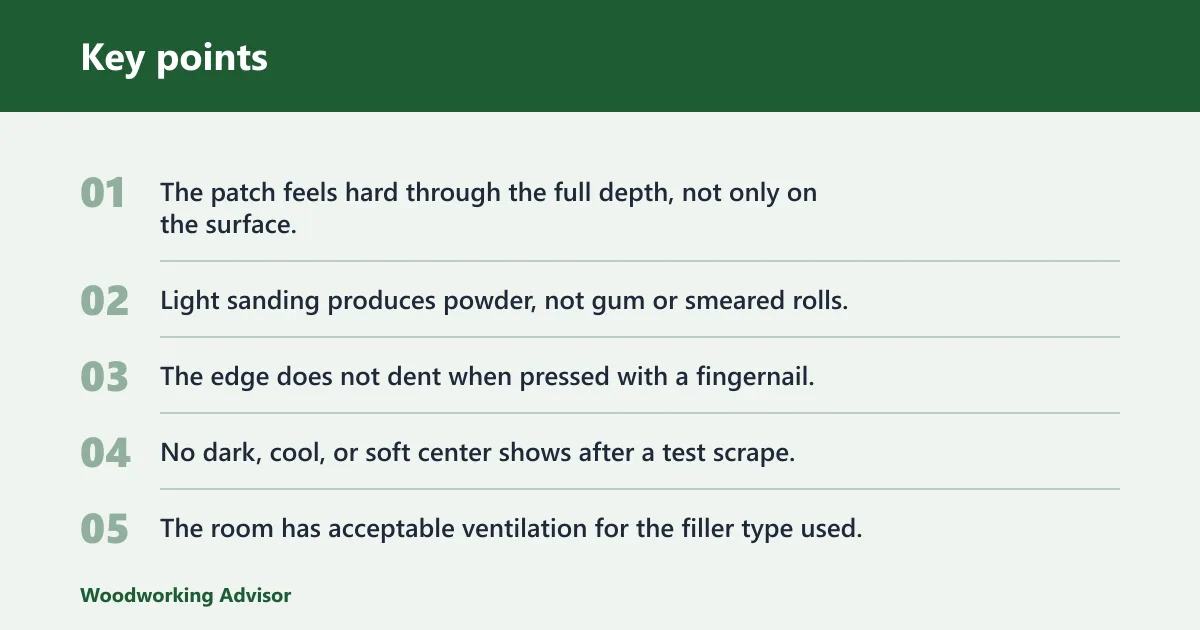
- The patch feels hard through the full depth, not only on the surface.
- Light sanding produces powder, not gum or smeared rolls.
- The edge does not dent when pressed with a fingernail.
- No dark, cool, or soft center shows after a test scrape.
- The room has acceptable ventilation for the filler type used.
- The repair has had enough time for the stated sandable window, plus extra time if the space was cold or humid.
- If the patch is deeper than 1/4 inch, each layer has set before the next pass.
Can you speed drying safely?
Yes, but only by changing conditions, not by cooking the patch. Warm the room, not the filler. Gentle heat, steady airflow, and lower humidity help more than blasting hot air at one spot. The goal is even drying, not a hard skin over a wet center.
Use airflow and dehumidification
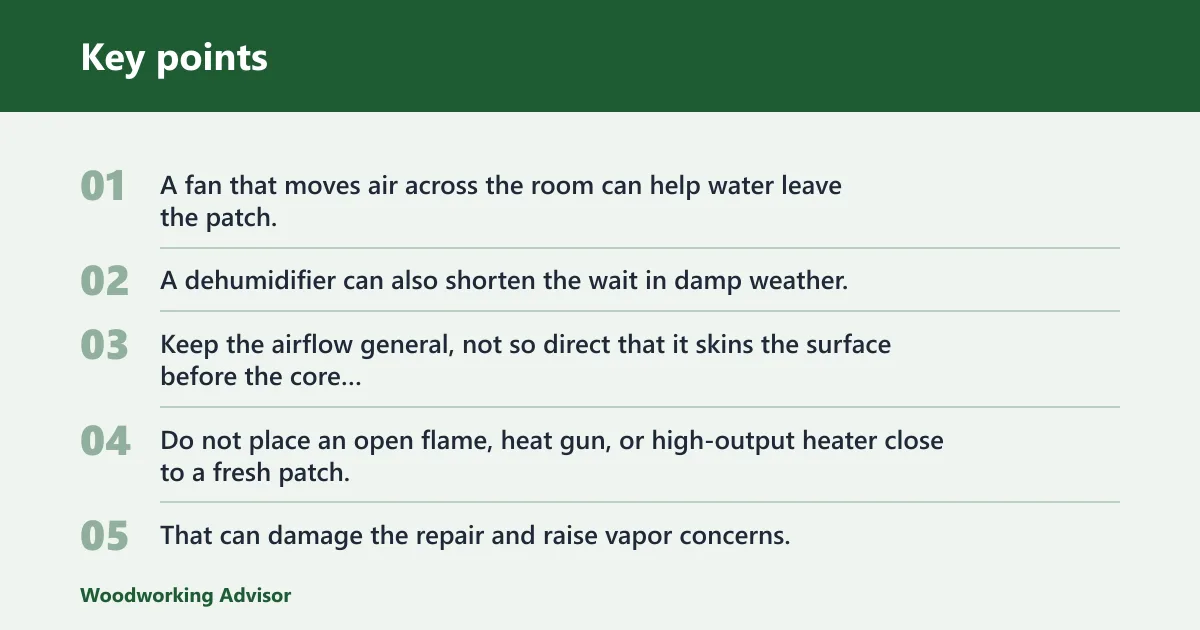
A fan that moves air across the room can help water leave the patch. A dehumidifier can also shorten the wait in damp weather, especially for water-based filler. Keep the airflow general, not so direct that it skins the surface before the core catches up.
Do not place an open flame, heat gun, or high-output heater close to a fresh patch, especially near solvent-based filler. That can damage the repair and raise vapor concerns. If the space is too cold to keep safely warm, the better choice is usually to wait.
When to stop and wait instead
If the temperature is below 40°F and the product is water-based, waiting is often the best call. If humidity is high and the repair is deep, more time is usually safer than more heat. A label can only do so much against bad conditions.
What happens if you rush? The top may sand cleanly while the core stays soft. That can lead to shrink-back after finishing, or a patch that gums the paper instead of turning to dust.
Frequently asked questions
How long does wood filler take to dry in cold weather?
Cold weather pushes the dry time past the label’s normal window. Water-based filler may need far longer than 15 minutes to 2 hours, solvent-based filler may need more than 1 to 2 hours, and two-part systems still need full cure time. Depth and humidity can stretch the wait further.
Will wood filler harden below 50°F?
Sometimes, but not always reliably. Below 50°F, water-based filler can slow enough to stay soft or shrink later, and below 40°F it may not cure properly. Solvent-based and two-part products may still work, but you should verify the label and expect longer cure times.
Can you use wood filler in an unheated garage?
Yes, if the product rating fits the temperature and you can manage airflow safely. An unheated garage below 40°F is risky for water-based filler, and high humidity can make the wait much longer. For deep repairs, move the job indoors or choose a chemically curing filler.
How do I know wood filler is actually hard enough to sand?
Test a small spot first. Ready filler should sand into powder, not roll up or clog the paper, and it should resist a fingernail pressed into the edge. If the sanding dust turns gummy or the patch dents, give it more time before finishing.
What happens if I paint or stain wood filler too soon?
Painting or staining too early can trap a soft core under the finish. That often leads to shrink-back, a visible seam, or poor adhesion later. In cold conditions, waiting for true sandability is more important than chasing the earliest possible finish time.
Does humidity make wood filler take longer to dry?
Yes. High humidity slows water-based filler because evaporation drops, and 80% relative humidity can double or triple drying time. Low humidity helps, but ventilation matters too. If the room is cool and damp, the patch may look dry on top while the center still needs time.
Sponsored / affiliate links. As an Amazon Associate I earn from qualifying purchases. I may earn additional commission from eligible campaigns.