Best Furniture Wax for Wood (2026): Research Shows
Paste wax is the best furniture wax for most finished wood; choose beeswax blends for antique patina, microcrystalline wax for painted or high-touch pieces, and skip wax on raw wood unless you seal it first. Wrong wax can leave streaks, soft buildup, silicone contamination risks, or a slippery surface that gets in the way of later refinishing. This guide shows how to choose by finish condition, wood species, and food-contact use, plus which wax to avoid on antique, painted, or kitchen furniture.
Quick comparison
| Product | Badge | Best for | Price | ||
|---|---|---|---|---|---|
 |
Howard Products Beeswax Wood Polish & ConditionerHOWARD | Our pick | 16 oz ·, · orange | $10.98
Price as of 2 Nov 2026
|
View |
 |
Briwax Furniture Wax for WoodBriwax | Also great | 16 oz ·, · clear | $28.98
Price as of 2 Nov 2026
|
View |
 |
Minwax Paste Finishing WaxMinwax | Budget pick | 1 lb ·, · natural | $14.29
Price as of 2 Nov 2026
|
View |
 |
CARGEN Beeswax Furniture PolishCARGEN | Pair with it | 300 ml ·, · natural beeswax | $7.59
Price as of 2 Nov 2026
|
View |
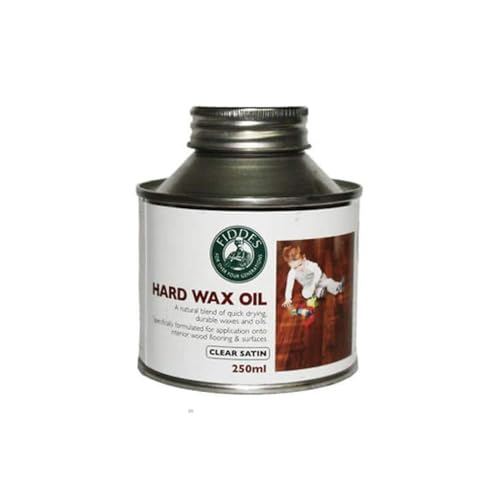 |
Fiddes Hard Wax Wood Oil – Clear Satin 250mlFiddes | Our pick | $41.99
Price as of 18 Nov 2026
|
View |
Use the table to sort surface type from product type before you buy. That matters more than ingredient claims, because a wax that works on a finished dining table can fail on raw pine, painted furniture, or a cutting board.
How we chose
The comparison below starts with surface compatibility. It also weighs odor, cleanup, sheen, food-contact labeling, and the chance of residue or buildup.
Use the supplied product details and published buyer guidance to separate paste wax, polish, conditioner, and food-grade wax. That keeps finished furniture, unfinished wood, antiques, and kitchen surfaces in their own lanes.
The main filter is failure risk. If a product is likely to streak, cloud, or leave a film that complicates later refinishing, it ranks lower for general furniture use.
Wax selection matrix
| Surface type | Wax format | Ingredient profile | Sheen | Reapplication frequency | Odor | Failure risk | Do not use |
|---|---|---|---|---|---|---|---|
| Finished wood | Paste wax or furniture polish | Beeswax and carnauba blends are common; conditioning oils may be included | Natural to hand-rubbed luster | About every 3 to 6 months in normal indoor use | Low to moderate, depending on solvent and oil content | Medium if applied too thick or over old residue | Raw wood without a sealer |
| Unfinished wood | Labeled conditioner or wax-oil blend only | Conditioning oils matter more than a hard wax film | Soft glow, not a durable film | More frequent care, often monthly to seasonal | Moderate to noticeable for some oil-based formulas | High if the product is meant for finished wood only | Heavy paste wax, painted surfaces, food-contact unless labeled |
| Painted finishes | Finishing wax or microcrystalline-type wax | Low-color waxes or clear waxes reduce tinting | Soft sheen to satin | Every 6 to 12 months in light-use rooms | Usually low, but check solvent load | Medium if the wax yellows, smears, or traps dust | Raw wood, porous chalky paint without cure time |
| Antique furniture | Beeswax blend or gentle paste wax | Beeswax and carnauba can deepen grain and luster | Warm patina, not a glossy film | Light maintenance after cleaning, often 2 to 4 times per year | Low to moderate | High if old layers are dirty, silicone-contaminated, or overbuilt | Food-contact surfaces, raw wood that still absorbs unevenly |
| Food-contact surfaces | Food-grade paste wax only | Label must support cutting boards, utensils, or food-contact use | Low gloss | As needed after washing and drying cycles | Usually mild, but varies by formula | High if the label does not allow food-contact use | Any furniture wax without food-safe labeling |
This matrix reflects the main divide WoodnBits draws across 13 and 14 wax comparisons for furniture, painted surfaces, and food-contact projects, and it tracks with Knife Professor’s and other buyers’ guidance on finish type. The useful rule is simple: finished wood gets the widest set of options, while food-contact surfaces require the narrowest and strictest label check.
Howard Feed-N-Wax: best for mixed-condition furniture
Howard Feed-N-Wax is the best fit for many finished furniture pieces that also need some conditioning help. Its beeswax and carnauba wax blend, plus orange oil scent, makes it a practical choice for antiques, dining tables, kitchen cabinets, doors, and trim.
That mix matters because beeswax and carnauba are the most common ingredients in furniture polishes and finishing waxes. They help build grain depth and luster without turning the surface into a hard film, and the added conditioning oils give tired wood a more cared-for look.
The drawback is the same one that makes it useful: it is not the answer for every surface. On a piece with old wax buildup, silicone residue, or a surface that needs refinishing, it can leave a soft layer that needs cleanup before you do anything else.
Minwax Paste Finishing Wax: best for a natural sheen
Minwax Paste Finishing Wax is the better match when you want a traditional paste format and a natural finish on completed wood. Published guidance points to it as a conventional finishing wax, and that fits finished furniture that needs a hand-rubbed luster without a heavy gloss.
Paste format suits finished wood because it stays where you place it and buffs to an even sheen. Daily Hand Tools describes it as for finished wood, and Knife Professor notes the hand-rubbed luster, which is the look most buyers want from a classic paste wax.
The limit is clear: interior use only. If you need a product for raw wood, kitchen prep tools, or a surface that sees frequent wet cleaning, this is not the first choice.
Walrus Oil Wood Wax: best for food-contact wood
Walrus Oil Wood Wax is the best fit for cutting boards and utensils because the label positioning is food-contact-safe. WoodnBits names it a top pick for food-contact work, and Knife Professor also flags it as food-safe and suitable for cutting boards.
Its low-gloss finish makes sense for kitchen wood, where you want protection without a slick film. The 3 oz and 14 oz size references also make it easy to match the purchase to the task, whether you are maintaining one board or several utensils.
The drawback is that food-contact waxes are narrower in use. They should not be treated as a general furniture wax unless the label explicitly supports that surface and use case, and maintenance cadence depends on washing and drying, not just calendar time.
Howard Wax-It-All: best for food-grade versatility
Howard Wax-It-All is the more versatile food-grade paste wax in this group. It is labeled for wood, stone, metal, cement, paint, and plastics, so it fits repair-minded users who need one product for several hard surfaces and want a food-grade option.
That versatility comes with a familiar application process: apply, let it set as directed, then buff. Because it is a paste wax, it behaves more like a finish-maintenance product than a cleaner, and the final look depends on how thinly you apply it.
The drawback is that it is still a wax, not a fix for a failing finish. If the surface needs stripping, recoating, or a film finish repair, a food-grade paste wax is the wrong tool.
Should you wax wood furniture?
Yes, if the furniture already has a stable finish and you want more luster, easier dusting, and a modest moisture barrier. Wax is a maintenance layer, not a primary finish, so it works best on completed wood that is cleaned first and buffed thinly after application.
When wax helps
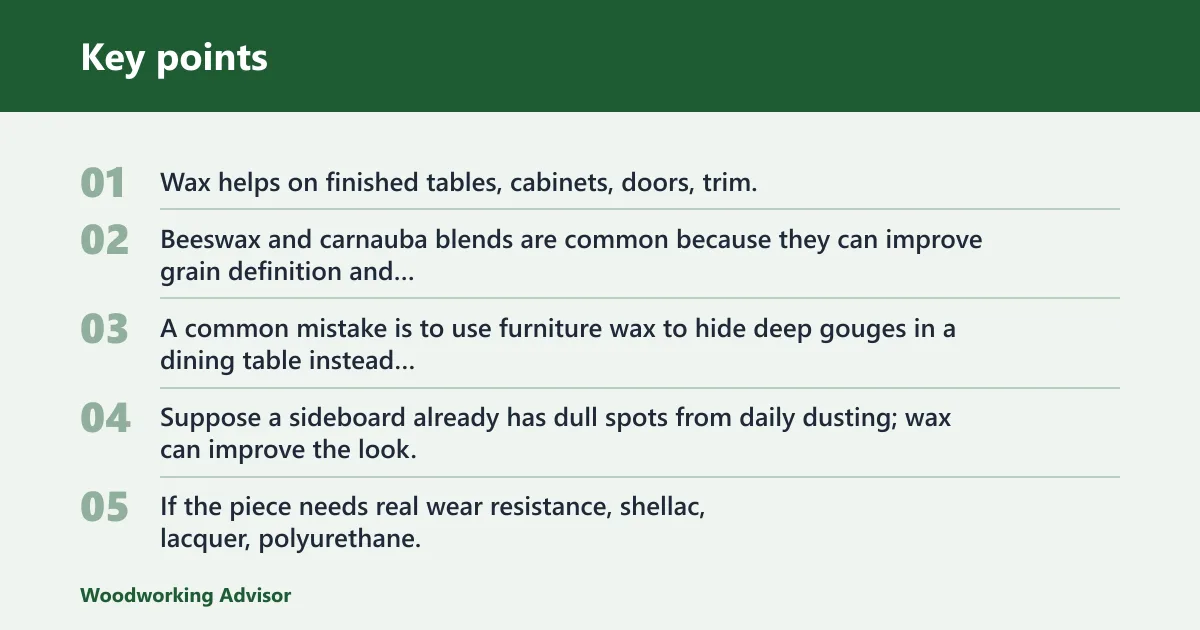
Wax helps on finished tables, cabinets, doors, trim, and many antiques where the goal is depth and a softer sheen. Beeswax and carnauba blends are common because they can improve grain definition and leave a more hand-finished look than a bare surface.
A common mistake is to use furniture wax to hide deep gouges in a dining table instead of choosing a proper wood filler first. Suppose a sideboard already has dull spots from daily dusting; wax can improve the look, but it will not hide swollen veneer, deep scratches, or worn-through film finish.
When another finish is better
If the piece needs real wear resistance, shellac, lacquer, polyurethane, or another film finish is usually the better choice. Wax cannot replace a durable finish on high-touch tabletops, chair arms, or kitchen work surfaces that see repeated wet cleaning.
Raw wood is another limit. Without a sealer or a labeled conditioning product, wax can soak unevenly and leave blotches or drag marks instead of a clean surface.
Signs there is too much wax
Look for cloudy patches, sticky feel, smeared dust, or a dull film that never seems to buff clean. Those signs often point to buildup, overapplication, or a mix of incompatible old products.
If the surface feels slick but looks streaky, you likely have too much product left behind. In that case, stop adding wax and clean the surface before you reapply anything.
Can you use wax on unfinished wood furniture?
Sometimes, but only when the label specifically supports unfinished wood or the product is a conditioner designed for that surface. Unfinished wood absorbs unevenly, so a wax that works well on a sealed dresser can blotch, darken, or sit patchy on raw furniture.
Why unfinished wood is a special case
Raw wood does not have the same barrier as finished wood, so the product can sink in unevenly. That is why conditioning oils matter here more than a standard furniture wax, and why many paste waxes are a poor fit.
Howard Feed-N-Wax is one of the few products in this set that is described as working on both finished and unfinished wood, but that should still be read as a surface-specific claim, not a blanket permission for every wax.
How to avoid blotching
Start with a small hidden area. If the surface darkens unevenly, stays tacky, or shows lap marks after buffing, stop and choose a labeled conditioner or seal the wood first.
Use thin coats and clean cloths. Heavy application gives raw wood too much material at once and raises the chance of streaking or a cloudy residue.
What is the best furniture wax for wood furniture?
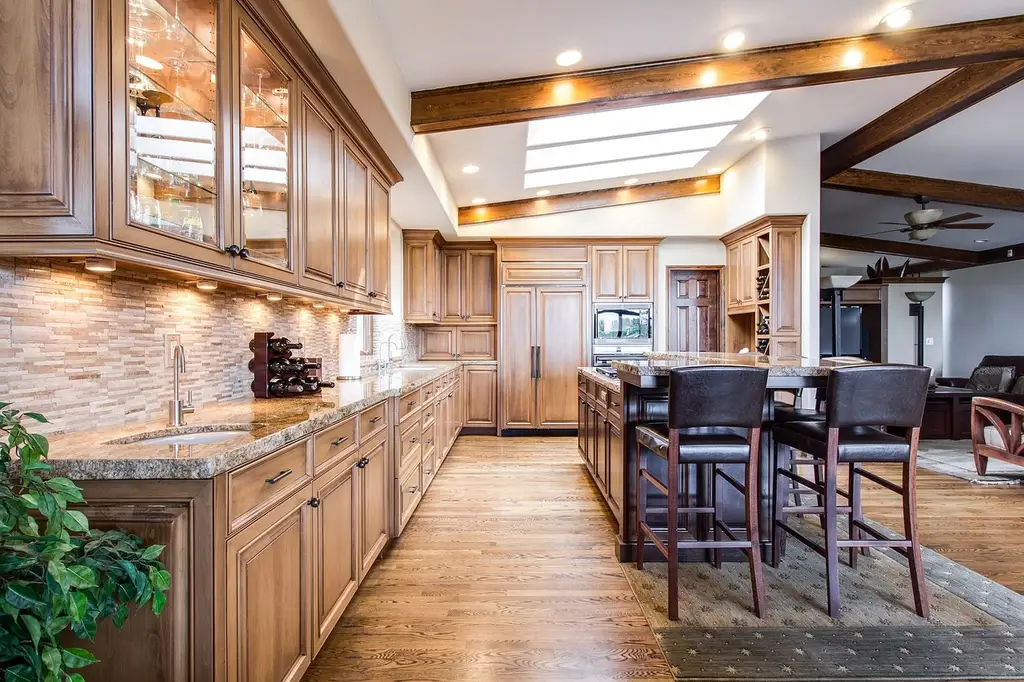
For most finished furniture, the best all-around choice is a paste wax or a conditioning polish designed for finished wood, with Howard Feed-N-Wax leading for mixed-condition pieces and Minwax Paste Finishing Wax leading for a more traditional finish. The right answer changes with the surface, not the brand name.
Best for finished furniture
Choose a paste wax when the piece is already sealed and you want controlled sheen. Minwax Paste Finishing Wax fits that role well because it is a classic indoor paste option that adds a hand-rubbed look.
Best for antiques
Choose a beeswax blend when the goal is patina and gentle maintenance. Howard Feed-N-Wax is a practical pick for antiques because it is commonly used on furniture where you want conditioning, luster, and a cleaner-looking surface without a heavy buildup.
Best for kitchen wood
Choose a product labeled for food-contact use, such as Walrus Oil Wood Wax or Howard Wax-It-All when the label supports that application. Do not rely on a general furniture wax for cutting boards or utensils.
Best low-odor option
Lower-odor choices usually come from formulas with less solvent or a milder scent profile, but odor is not the same as safety. If scent matters in a small room, check whether the product leans on orange oil or other added fragrance notes before you buy.
Best value option
Value depends on how much surface you need to cover and how often you will reapply. A larger paste can be better for multiple pieces, while a smaller food-contact wax can be the smarter buy for a single board or utensil set.
How often should you reapply furniture wax?
Most indoor furniture needs reapplication every 3 to 6 months, but that range moves faster with frequent cleaning, sunlight, or heavy handling. If a surface gets wiped often or sees daily use, the protective feel and sheen can fade sooner.
What changes the cadence
Wear matters most on table tops, chair arms, and cabinet pulls. Cleaning frequency matters next, because repeated wiping removes wax faster than occasional dusting.
Exposure matters too. A dining table in a bright room or a kitchen cabinet near steam usually needs attention sooner than a display piece in a low-use room.
How to tell it is time
If the surface looks dry, feels grabby, or loses its even sheen after cleaning, it is time to refresh it. If dust starts clinging to a tacky film, stop adding more wax and clean back to a stable surface first.
Which one should you buy?
Buy Howard Feed-N-Wax if you need one product for finished furniture, antiques, and mixed-condition pieces. Buy Minwax Paste Finishing Wax if you want a classic paste for a natural sheen on indoor finished wood.
Buy Walrus Oil Wood Wax if the wood will touch food, such as cutting boards and utensils. Buy Howard Wax-It-All if you want a food-grade paste for multiple hard surfaces and are willing to buff it correctly.
If you have a painted piece, a previously waxed surface, or a raw board, step back before buying. The wrong wax can leave buildup, clouding, or a slippery coat that makes later refinishing harder, not easier.
How to choose the right wax
- Identify the surface first: finished, unfinished, painted, antique, or food-contact.
- Match the format to the goal: polish for conditioning, paste wax for sheen, food-grade wax for kitchen wood.
- Check the label for compatibility instead of assuming all furniture waxes are interchangeable.
- Look for odor and solvent load if the room is small or poorly ventilated.
- Plan for thin coats, dry time, and buffing before you start.
- Choose the lowest-risk product for the finish you already have, not the finish you wish you had.
Say your oak dining table is already sealed but looks dull after months of dusting. A paste wax can restore sheen and make cleanup feel easier, while a food-contact label is unnecessary unless the table is used directly for cutting or prep.
Suppose a pine cabinet door is raw on the inside and finished on the outside. Use a finish-safe product only on the sealed face; the raw side needs a labeled conditioner or a proper finish first, or the wax may absorb unevenly.
Frequently asked questions
Is wax good for wood?
Wax is good for wood when the goal is appearance and light surface care, not major protection. Beeswax and carnauba blends can deepen grain and add a soft sheen, but they do not replace lacquer, shellac, or polyurethane on surfaces that need stronger wear resistance.
What kind of wax should I use on antique wood furniture?
Use a gentle beeswax blend or a traditional paste wax designed for finished furniture. Antiques often benefit from a warm patina and light conditioning, but old buildup, dirty residue, or silicone contamination can make the wrong wax look cloudy instead of clean.
Is paste wax better than liquid wax for furniture?
Paste wax is usually better for finished furniture because it gives you more control over buildup and buffing. Liquid or polish-style products can be easier to spread, but paste wax often delivers a more predictable hand-rubbed result when you want a controlled sheen.
What wax is safe for kitchen wood furniture?
Choose only a product labeled food-safe or food-contact-safe for cutting boards, utensils, and similar kitchen wood. Walrus Oil Wood Wax is positioned for that use, and Howard Wax-It-All is food-grade, but general furniture wax should not be assumed safe for food-contact surfaces.
Sponsored / affiliate links. As an Amazon Associate I earn from qualifying purchases. I may earn additional commission from eligible campaigns.