How Much Does Professional Furniture Restoration Cost vs DIY?
Professional furniture restoration is commonly reported to cost about $150 to $1,500+, while DIY is often about $20 to $200 in materials; hire a restorer when the piece is valuable, veneered, structurally damaged, or antique. A bad repair can cut resale value, spread the damage, or turn a repairable piece into a replacement. This guide compares real costs, risk, and which repairs are safe to do yourself.
| Decision factor | How Much Does Professional Furniture Restoration Cost | DIY | Winner |
|---|---|---|---|
| Up-front cash cost | $150 to $1,500+ depending on job type and size | $20 to $200 in materials, with tools often adding more | DIY |
| Risk of making the damage worse | Lower, because finish matching and repair sequence are part of the job | Higher, especially with over-sanding, solvent mistakes, or glue squeeze-out | How Much Does Professional Furniture Restoration Cost |
| Value preservation | Better for resale value and antiques | Riskier if the repair changes the original finish or veneer | How Much Does Professional Furniture Restoration Cost |
| Time | Less owner time, but longer calendar wait because of queue and curing | More owner time for prep, learning, drying, and rework | How Much Does Professional Furniture Restoration Cost |
| Best fit | Structural repair, antiques, and finish-sensitive pieces | Small cosmetic fixes on low-value wood furniture | Tie |
Cosmetic vs structural damage pricing
The cheapest path is not always the least risky. A small DIY repair can stay cheap if the damage is only on the surface, but one wrong step can create a full refinishing job that costs more than hiring a restorer from the start.
Use the table above as the base comparison. Professional work costs more because you are paying for labor, prep, finish matching, and the ability to repair without ruining the original surface.
What this comparison includes
This article separates cosmetic finish work from structural repair. That matters because a scratch and a loose leg do not cost the same, and they do not fail in the same way.
Cosmetic work includes touch-up, stain repair, blending, and refinishing. Structural work includes broken joints, veneer failure, and damage that affects stability.
What professional restoration costs
Professional furniture restoration usually falls into a few price bands depending on the repair type. Simple finish touch-up may be at the low end, while refinishing, veneer replacement, and antique work push the total much higher.
Cosmetic finish work
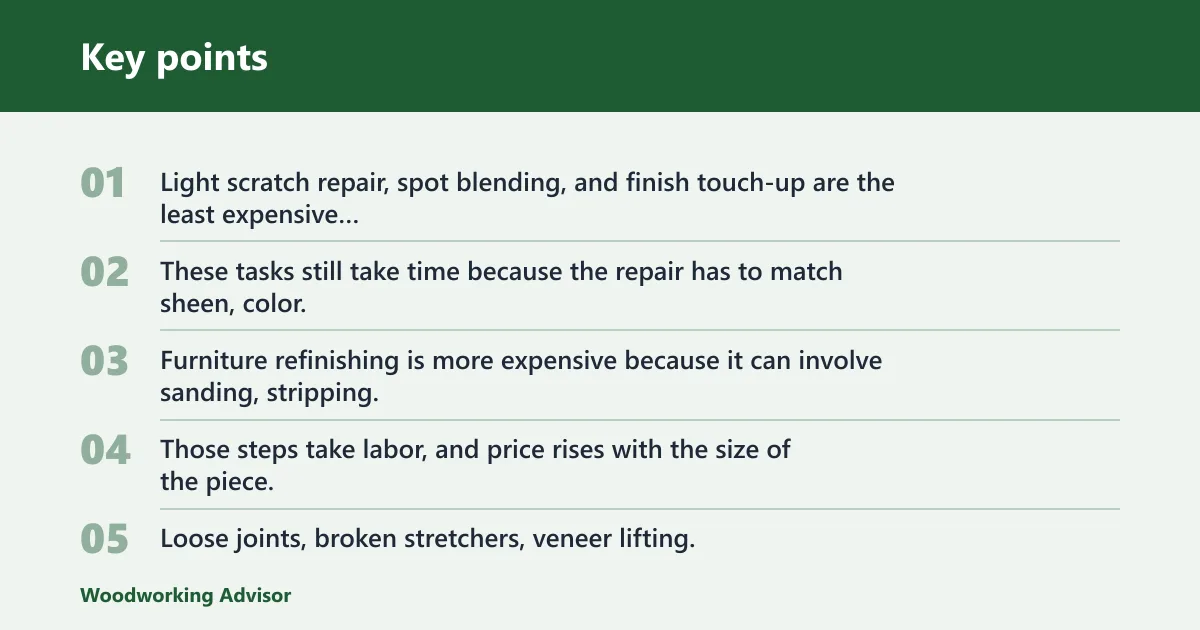
Light scratch repair, spot blending, and finish touch-up are the least expensive professional jobs. These tasks still take time because the repair has to match sheen, color, and surrounding wear, not only fill the mark.
Furniture refinishing is more expensive because it can involve sanding, stripping, staining, and topcoat application. Those steps take labor, and price rises with the size of the piece, the number of finish layers, and the condition of the existing coating.
Structural repair and joinery
Loose joints, broken stretchers, veneer lifting, and deep gouges usually cost more than simple surface repairs. Structural work takes more setup, more clamp time, and more precision, especially when old glue, warped wood, or missing veneer is involved.
A chair with a loose rung is one thing. A table with separated joints, chipped veneer, and water damage is another. Once the repair affects strength, the job is more than cosmetic.
Pickup, delivery, and turnaround
Pickup and delivery can add to the bill, especially for large cabinets, dining tables, or heavy case pieces. Turnaround time also matters because a restorer may need time for disassembly, adhesive curing, finish drying, and final buffing.
If the piece is awkward to move or too fragile to transport safely, that extra handling often becomes part of the quote. That is one reason on-site touch-up can cost less than shop-based repair, but not every job can be done at the home.
Antique and specialty pricing
Antique furniture often costs more to restore because the finish, veneer, and joinery can be fragile. The risk is not only cosmetic; over-sanding, the wrong stripper, or an aggressive clamp setup can erase value that exceeds the repair bill.
Specialty work also takes more judgment. A restorer may need to match older shellac, French polish, period stain, or hand-built veneer patterns, and that raises labor time even when the damage looks minor.
If the piece includes upholstery, separate cleaning can add more cost. Professional couch cleaning costs $80 to $200 per couch on average; steam cleaning costs $100 to $250 for upholstery cleaning; dry cleaning costs $80 to $150; eco-friendly upholstery cleaning costs $90 to $200; stain or odor removal can add $20 to $50; leather and suede upholstery costs $150 to $300 to clean. A loveseat cleaning estimate is $60 to $120, a standard three-seater cleaning estimate is $80 to $150, and an L-shaped sectional cleaning estimate is $150 to $300.
What DIY really costs
DIY looks cheap until you add the full cost stack. Materials are only part of it; abrasives, strippers, fillers, adhesives, clamps, brushes, finish materials, and safety gear can add up fast.
Materials and tool purchases
For a basic repair, you may need sandpaper, tack cloths, wood filler, glue, clamps, putty knives, rags, stain, and topcoat. If the old finish must be stripped, add chemical stripper, scraper blades, masking supplies, and disposal materials.
Many first-time repairs also require tools you may not already own, such as a respirator, detail sander, or specialty brushes. That is why a “cheap” DIY job can drift past the cost of a professional touch-up before the piece is even finished.
Time and setup
DIY also costs time. You need to identify the finish, test compatibility, prep the surface, wait for dry time, and often repeat the process if the first coat does not match.
Suppose a small side table has a cloudy water ring and a faded top. A quick patch may look fine in bright light, then flash against the rest of the surface once the topcoat cures. That turns a one-evening fix into a strip-and-refinish project.
Redo risk and waste
The hidden cost of DIY is rework. A bad stain match, over-sanding, or a glue stain can force a larger repair area than you planned, which means more materials and more time.
A common first-timer mistake is to chase a shallow gouge until the surrounding veneer thins out. At that point, the repair stops being a spot fix and becomes a surface rebuild.
Common repair costs by job type
Job type matters more than the word “restore.” Two pieces with the same size can land in different price bands if one needs finish touch-up and the other needs structural repair.
Scratches, water rings, and faded finish
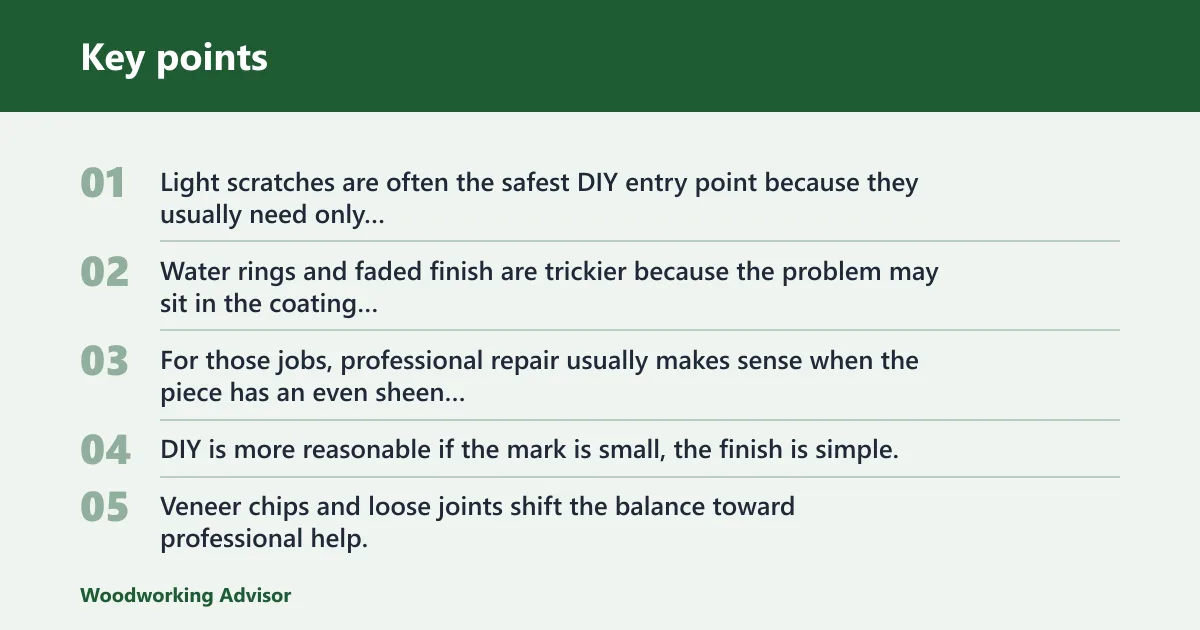
Light scratches are often the safest DIY entry point because they usually need only cleaning, color blend, or a small amount of filler. Water rings and faded finish are trickier because the problem may sit in the coating layer, not only on top of it.
For those jobs, professional repair usually makes sense when the piece has an even sheen that must be preserved. DIY is more reasonable if the mark is small, the finish is simple, and you can test the repair in an inconspicuous spot.
Veneer chips, loose joints, and gouges
Veneer chips and loose joints shift the balance toward professional help. Veneer is thin, and once it is sanded through or lifted badly, the repair can require patching, edge build-up, or full replacement of the damaged section.
Deep gouges also need caution. If the gouge reaches through the finish and into the wood, the fill, color, and topcoat all have to line up or the patch will stand out.
Surface staining and finish mismatch
Surface stains sometimes respond to localized repair, but finish compatibility matters. A spot fix can fail if the new stain or topcoat reacts with the old coating, leaving halos, blotches, or shine differences.
When the surrounding finish is already aged, a pro may recommend a broader blend or a full refinish instead of a narrow patch. That costs more, but it avoids a visible repair line.
Antique pieces and value-sensitive repairs
Antique furniture costs more to repair because the wrong fix can lower collectible value. Over-sanding can remove original patina, and aggressive stripping can erase finish layers that matter to a buyer or appraiser.
Picture an old walnut chest with worn edges, a lifted veneer corner, and a water mark on the top. A cautious restorer may keep as much original material as possible; a rushed DIY repair can make the piece look newer while making it worth less.
Furniture restoration decision matrix
This matrix compares the common problems most homeowners face. Use it to decide whether a repair is worth doing yourself or worth paying for once risk is included.
| Problem | Professional cost | DIY cost | Time | Risk | Likely outcome | Best pick |
|---|---|---|---|---|---|---|
| Light scratches | $150 to $250 | $20 to $60 | 1 to 3 hours | Low to moderate | Good if color match is simple | DIY |
| Water rings | $175 to $350 | $25 to $75 | 2 to 4 hours | Moderate | May need broader finish blending | DIY for small marks; pro for large or old rings |
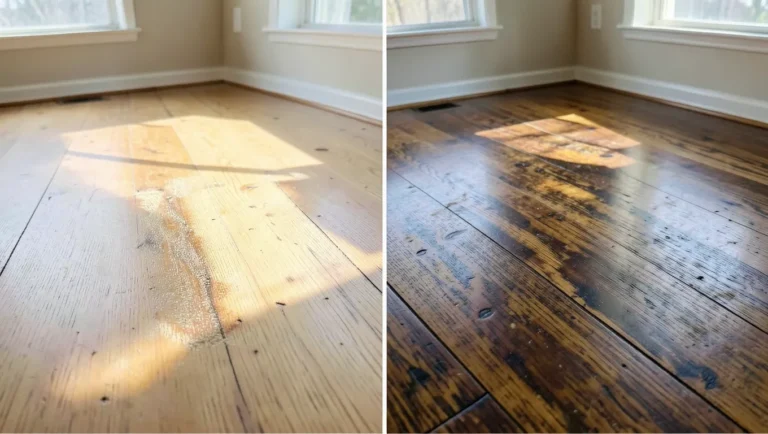
| Faded finish | $300 to $900 | $60 to $180 | 1 to 2 days | Moderate to high | Color mismatch is common | How Much Does Professional Furniture Restoration Cost |
| Veneer chips | $250 to $800 | $40 to $150 | 3 to 8 hours | High | Patches can show or lift later | How Much Does Professional Furniture Restoration Cost |
| Loose joints | $200 to $600 | $25 to $120 | 2 to 6 hours | High if the piece carries weight | Can fail again without proper clamp and glue prep | How Much Does Professional Furniture Restoration Cost |
| Surface staining | $150 to $500 | $20 to $100 | 1 to 5 hours | Moderate | May need finish compatibility testing | Tie |
| Deep gouges | $250 to $700 | $40 to $160 | 3 to 7 hours | High | Easy to overfill or over-sand | How Much Does Professional Furniture Restoration Cost |
| Antique pieces | $400 to $1,500+ | $50 to $200, plus value risk | 1 to 3 days | Very high | Wrong repair can lower collectible value | How Much Does Professional Furniture Restoration Cost |
One simple rule helps here: if the DIY spend reaches about half of a professional quote, or if the repair touches veneer, joinery, or an antique finish, stop and compare the full risk. At that point, the savings usually shrink fast.
When DIY stops being economical
DIY stops being economical when the expected total cost includes materials, tool purchases, extra time, and the chance of a redo. If a mistake can turn a spot repair into a full refinish, the cheaper route may no longer be cheaper.
The break-even rule
Use this rule: if your material and tool cost is already climbing toward the pro estimate, and the repair affects visible finish or structure, a restorer is usually the better buy. The gap between the first attempt and the final result matters more than the sticker price on a single can of finish.
That is especially true for pieces with resale value. A repair that lowers value by more than the labor savings is a bad deal, even if the bill looked small at first.
Red flags that justify a pro
Hire out if the piece has separated joints, peeling veneer, deep finish loss, or a stain that keeps bleeding back. Those problems are hard to control because the surface condition may hide a larger failure under the coating.
Antique furniture is another red flag. The wrong sandpaper, stripper, or filler can remove originality that cannot be replaced.
Resale and collectible value
Restoration is not only a repair expense; it is a value-preservation expense. A bad color match, over-sanding, or modern-looking patch can reduce what a buyer will pay, and that loss can exceed the saved labor cost.
Choose How Much Does Professional Furniture Restoration Cost if… / DIY if…
Choose How Much Does Professional Furniture Restoration Cost if the piece is antique, veneered, structurally damaged, or worth more than the repair. It is also the better pick when the finish must match closely, pickup is needed, or the damage could spread during sanding or stripping.
Choose DIY if the damage is small, cosmetic, and isolated, such as a light scratch, a small water ring, or minor surface staining on a low-value piece. DIY also fits when you can accept a less-than-perfect blend and you already have the basic tools.
Borderline cases are often the most expensive mistakes. If the repair is visible, the finish is old, or the piece has sentimental or resale value, the safer decision is usually to pay for professional restoration.

Frequently asked questions
How much does professional furniture restoration cost?
Professional furniture restoration is commonly reported to cost about $150 to $1,500+, with simpler touch-up at the low end and refinishing, veneer repair, or antique work at the high end. The final price depends on size, condition, finish type, and whether the job is cosmetic or structural.
Is DIY furniture restoration cheaper than hiring a pro?
Yes, DIY is often cheaper in cash terms, especially for scratches, small water rings, or minor touch-up. It becomes less cheap when you need special tools, waste materials on a wrong finish match, or damage the surface enough to require a full refinish.
What makes furniture restoration more expensive?
Labor time, detailed prep, finish matching, structural repair, and pickup or delivery all raise the price. Antique pieces also cost more because the restorer has to protect old veneer, old glue joints, and original finish layers that can be damaged by aggressive methods.
When is it worth restoring furniture professionally?
It is worth paying for professional restoration when the piece is valuable, antique, veneered, or structurally weak. Professional work is also the better choice when the repair affects appearance in a high-visibility area, because a bad patch can reduce resale value fast.
What repairs can I safely do myself on old wood furniture?
Safe DIY jobs are usually limited to light scratches, very small water rings, minor surface staining, and simple cosmetic touch-up on low-value pieces. If the job needs sanding through old finish, re-gluing joints, or veneer replacement, the risk level rises quickly.
Hidden costs include abrasives, strippers, clamps, fillers, adhesives, brushes, finish materials, and a respirator. The bigger cost is redo risk: a mismatch, over-sanding, or finish failure can expand the job from spot repair to full refinishing.
Sponsored / affiliate links. As an Amazon Associate I earn from qualifying purchases. I may earn additional commission from eligible campaigns.