Can You Freeze Cherry Angiomas? What Doctors Say About It
Freezing cherry angiomas is not typically a recommended home treatment. While professional cryotherapy can remove them, DIY freezing methods are risky and can lead to skin damage or infection. Doctors advise consulting a dermatologist for safe and effective removal.
Understanding Cherry Angiomas: What They Are
So, what exactly is a cherry angioma? Think of them as small, bright red bumps on your skin. They are made of tiny blood vessels.
Most of the time, they are completely harmless. They don’t usually cause pain or itching. Doctors call them cherry angiomas because of their bright red color.
They can show up on almost any part of your body. Your face, chest, back, and arms are common spots. They can vary in size, from as small as a pinhead to about a quarter-inch wide.
Some people get just one, while others get many.
The exact reason why we get them isn’t always clear. Genetics might play a role. If your parents had them, you might get them too.
Age is another big factor. They tend to appear more as we get older, usually after age 30. Hormonal changes can also be linked.
Some studies suggest a connection with pregnancy or menopause. Certain medical conditions or medications might also influence their development, but this is less common.
Why the “Freezing” Idea Pops Up
The idea of freezing something off your skin sounds pretty modern, right? It’s often linked to procedures like cryotherapy. This is a real medical treatment.
Doctors use liquid nitrogen to freeze off warts or other skin growths. It’s very precise and done under controlled conditions. Because this is a known medical treatment, people sometimes think they can do it themselves at home.
They might see products advertised for freezing skin tags or warts. This leads to the thought that maybe you can freeze a cherry angioma too.
It’s easy to see why this method seems appealing. It promises a quick result. You imagine a simple, one-time fix.
No need for appointments or lengthy procedures. This desire for a fast solution is powerful. It’s human nature to want things resolved quickly.
Especially when it’s something visible on your skin. However, what works for one skin issue might not work for another. And what a doctor can do safely is very different from what you might try at home.
My Own Cherry Angioma Scare
I remember a time a few years back. I was getting ready for a summer vacation. I noticed a new, bright red spot on my arm.
It was small, but it really stood out. My first thought was, “Oh no, what is that?” I immediately imagined all sorts of scary skin problems. My mind went to dark places.
I pictured something serious that needed immediate attention.
I spent way too much time online, convinced it was a melanoma. I was losing sleep over it. My partner kept telling me to calm down.
He said it looked like those little red dots his dad had. But I was too worried to listen. The thought of needing a biopsy or worse made me feel sick.
I was starting to research at-home removal kits. One of them even mentioned freezing. It seemed so easy in the pictures.
I almost bought it. Thankfully, my curiosity got the better of me. I decided to see a dermatologist first, just to be sure.
What Dermatologists Say About Freezing Angiomas
When I finally saw the dermatologist, I was so relieved. She took one look at the spot and smiled. “That’s a cherry angioma,” she said.
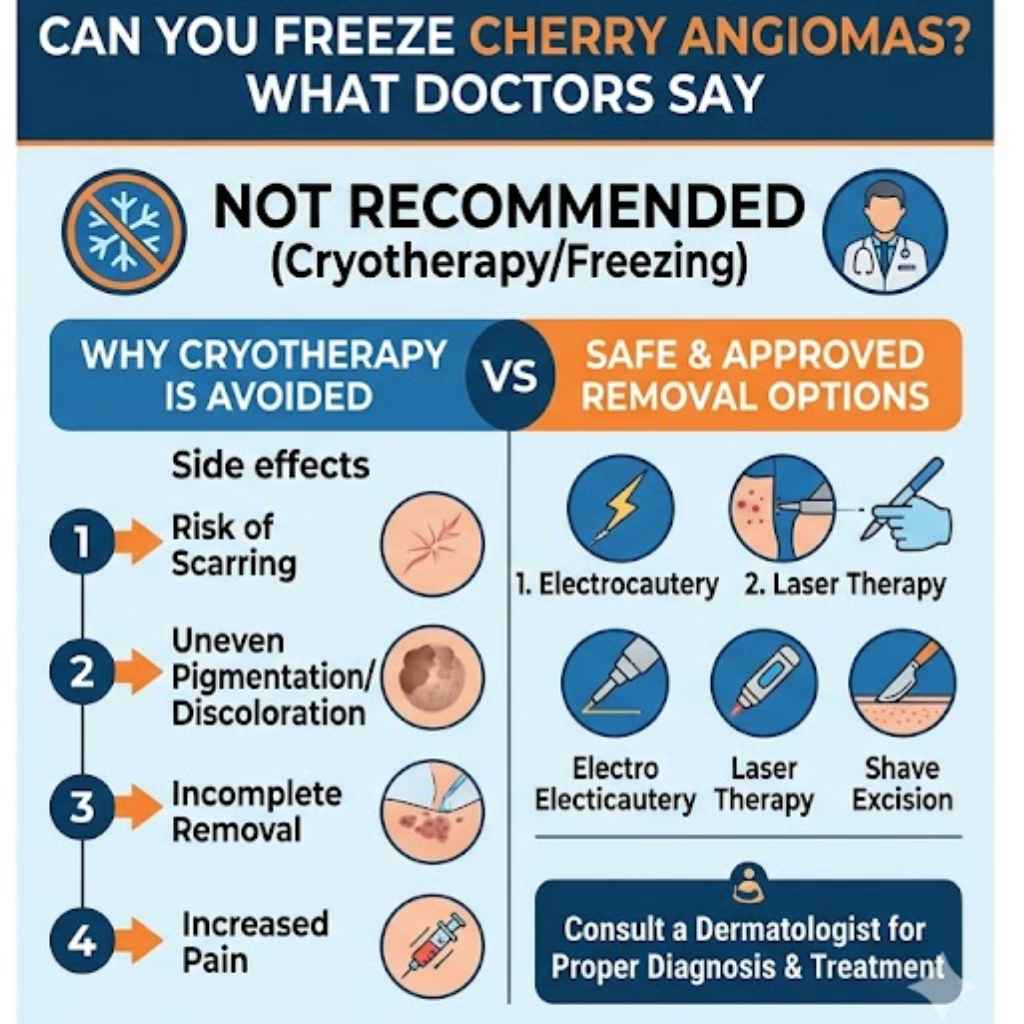
“Completely harmless.” I told her about my panic and my research into at-home freezing. She kindly explained why that’s a bad idea. She said that while freezing (cryotherapy) is a valid treatment, it needs to be done by a professional.
They use very specific amounts of liquid nitrogen. They know exactly how long to apply it. They understand the layers of skin.
This is crucial. Trying to freeze it yourself, especially with over-the-counter products meant for other things, is risky. You could burn your skin.
You could cause scarring. You might even get an infection. Sometimes, it just won’t work and you’ll end up with damaged skin and the angioma still there.
She stressed that it’s always best to get a professional diagnosis and treatment plan.
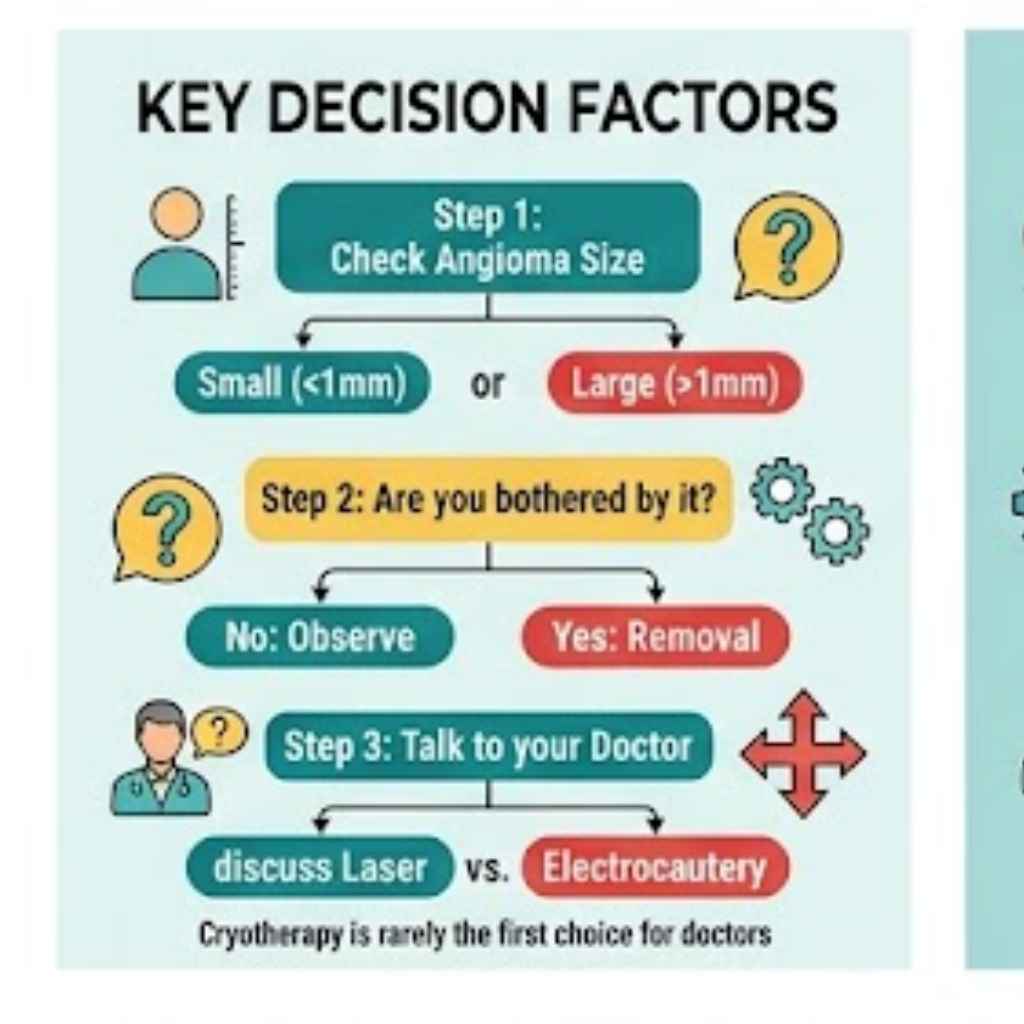
Safe Ways to Remove Cherry Angiomas
Dermatologists offer several safe methods:
- Electrocautery: This uses heat from an electric current to burn off the angioma.
- Laser Therapy: Lasers can target and destroy the blood vessels causing the angioma.
- Cryotherapy: This is the professional freezing method using liquid nitrogen.
- Surgical Excision: For larger ones, a doctor might carefully cut it out.
These methods are performed by trained professionals. They minimize risks like scarring and infection.
Why DIY Freezing Is a Risky Business
Let’s talk more about why freezing cherry angiomas at home is a bad idea. Imagine using something meant for a common wart on a cluster of blood vessels. They are different kinds of skin growths.
The temperature and duration of freezing are critical. Too cold, or too long, and you damage healthy skin around it. Too little, and it won’t work at all.
Home freezing kits often use a cooling spray. They aren’t as cold as liquid nitrogen. They also aren’t as controllable.
You might end up with frostbite on your skin. This is painful and can lead to permanent marks. There’s also the risk of infection.
If you break the skin barrier trying to freeze it, bacteria can get in. This can cause redness, swelling, and pus. A minor skin concern can turn into a bigger medical problem.
The Science Behind Cherry Angiomas
To understand why freezing needs care, let’s look at what’s happening. A cherry angioma is essentially a small collection of dilated blood vessels. These vessels are usually capillaries.
They are very close to the surface of the skin. When they dilate, or widen, they become visible as a red spot. They aren’t typically a sign of internal bleeding or a serious vascular issue.
When a doctor uses cryotherapy, the extreme cold causes the cells in the angioma to freeze and burst. The blood within them also freezes. This damages the abnormal blood vessels.
Over time, the body reabsorbs the damaged tissue. The angioma then disappears. This process is precise because the doctor can control the freeze.
They can focus it only on the angioma itself. They know how deep the cold needs to go.
Cherry Angioma vs. Other Red Spots
It’s important to know what you’re dealing with. Not all red spots are cherry angiomas.
Cherry Angioma
Bright red. Smooth surface. Often slightly raised.
Can appear anywhere.
Spider Angioma
Red spot with a central feeding vessel. Looks like a spider web. Often on face and neck.
A doctor can tell the difference. This is why professional consultation is key.
My Friend Sarah’s DIY Mishap
My friend Sarah is usually very sensible. But she got a few small red spots on her stomach. She’d heard about freezing and saw a product online.
It promised to remove “skin blemishes.” She thought it would be an easy fix before her beach trip. She used the product on one of the spots. It was supposed to freeze it painlessly.
Well, it wasn’t painless. She said it stung and felt really cold. The spot turned white, then red and swollen.
It was quite painful for a few days. Instead of disappearing, it formed a little scab. When the scab fell off, the spot was still there, but now with a pinkish, slightly indented mark.
She was so upset. It looked worse than the original angioma. She ended up seeing a dermatologist anyway.
The doctor explained that the product wasn’t strong enough to remove it effectively. It just damaged the skin. She was lucky it didn’t scar badly.
It was a tough lesson for her about quick fixes.
The Importance of Professional Diagnosis
You might be thinking, “But my red spot looks exactly like a cherry angioma!” Even so, it’s wise to have a doctor check it. Why? Because other skin conditions can mimic angiomas.
Things like certain types of moles, or even small blood blisters, can look similar. A dermatologist has the tools and knowledge to be sure. They can use a dermatoscope, a special magnifying tool, to look closely at the vessels.
This helps them confirm the diagnosis.
Getting a correct diagnosis is the first step to safe treatment. If it is a cherry angioma, they can discuss the best removal options for you. If it’s something else, they can advise on that too.
There’s no cost to your health in getting a professional opinion. The cost of a mistake with DIY treatments can be much higher, both financially and emotionally.
Signs It Might NOT Be a Cherry Angioma
If your red spot:
- Changes color rapidly
- Bleeds easily
- Is very painful
- Has irregular borders
- Is growing very quickly
- Feels hard or lumpy
Then you should definitely see a doctor. These could be signs of something else.
Cherry Angiomas and Aging Skin
As we get older, our skin changes. This is a normal part of life. One of the common changes is the appearance of cherry angiomas.
They are so common in middle-aged and older adults that they are often considered a normal sign of aging. You might notice more of them appearing over the years. This can be a bit frustrating if you’re used to clear skin.
It’s part of your body’s natural process. Think of them like fine lines or gray hairs – a sign of life lived.
The blood vessels themselves don’t become dangerous. They just become more noticeable. It’s not a sign that your circulation is failing or that you have a blood disease.
It’s more about wear and tear on the tiny vessels near the skin’s surface. So, if you’re seeing more of them, take comfort in knowing you’re not alone. Most people will develop them at some point.
The Aesthetic Side: When Removal Makes Sense
While cherry angiomas are harmless medically, they can be a cosmetic concern for some people. If you have one on your face or another visible area, you might feel self-conscious. You might try to cover it up with makeup.
This is perfectly normal. Wanting to feel good about your appearance is a strong human desire.
In these cases, professional removal can be a great confidence booster. It’s not about vanity; it’s about feeling comfortable in your own skin. The procedures are usually quick.
They are done in a doctor’s office. The recovery is generally straightforward. You can often go back to your daily activities right away.
The goal is to make the skin look as smooth and even as possible. It’s about helping you feel your best.
Comparing Removal Costs (Estimates)
Costs can vary widely by location and provider. These are general ideas.
Insurance usually doesn’t cover cosmetic procedures.
When to Worry (and When Not To)
Let’s be clear: cherry angiomas themselves are not something to worry about. They are benign. They don’t turn into cancer.
The worry comes in when you can’t be sure what something is. If you have a red spot that is new, changing rapidly, bleeding, or painful, then it’s time to see a doctor. These are red flags.
They suggest it might be something other than a simple angioma.
Always err on the side of caution. A quick visit to your primary care doctor or a dermatologist can provide peace of mind. They can assess the spot.
They can tell you if it’s normal or if it needs further investigation. Don’t let worry consume you. Get informed and get checked if you have concerns.
It’s the smartest and safest approach.
Can You Prevent Them?
Unfortunately, there’s no known way to prevent cherry angiomas from forming. Because age, genetics, and hormones are big factors, they are largely outside of our control. You can’t stop your body from aging.
You can’t change your genes. And major hormonal shifts are often a natural part of life. So, trying to prevent them is usually a losing battle.
Instead of focusing on prevention, it’s more practical to focus on identification and safe management. Understanding what they are and when to seek professional advice is key. If they bother you cosmetically, then focus on safe removal options.
This is a more productive way to approach the topic.
My Experience with Laser Removal
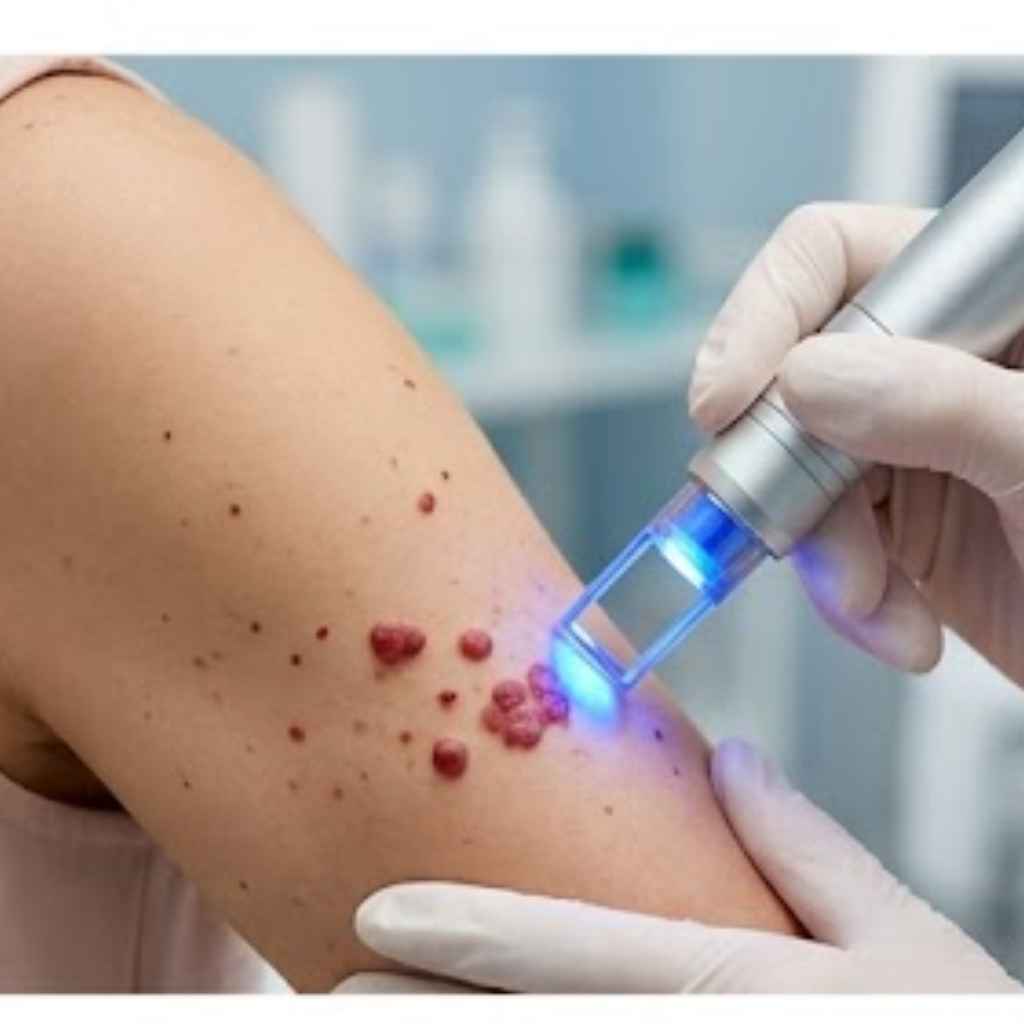
After seeing the dermatologist and being reassured, I decided to have my angioma on my arm removed. She offered laser treatment. I was a little nervous about the laser, but she explained it very well.
She said it’s a very targeted beam. It heats up and destroys the tiny blood vessels.
The procedure itself was quick. She applied a numbing cream first. Then she used the laser.
It felt like a tiny pinch, very brief. There was a slight burning smell, which she said was normal. Afterward, my arm was a little red and sore.
It looked like a small bug bite. She gave me some ointment to apply. Over the next week, it healed up completely.
The angioma was gone. There was no scar. I was so happy.
It was a simple, effective solution that a professional provided.
Quick Checks You Can Do Yourself
While you can’t diagnose yourself, there are a few simple checks you can do at home. These can help you decide if you need to see a doctor. First, look at the spot closely.
Is it bright red? Does it seem to have a clear, defined border? Is it slightly raised or flat?
Now, try to press on it gently with your finger. If it’s a cherry angioma, it might temporarily turn a lighter red or pink. This is because you’re pressing the blood vessels flat.
When you release the pressure, the red color should return fairly quickly. If the spot doesn’t change color, or if it bleeds easily when touched, that’s a sign to get it checked out by a doctor.
Are Cherry Angiomas Ever a Problem?
Generally, no. They are benign. But:
- Cosmetic concern: Some people don’t like how they look.
- Location: If one is in a spot that gets a lot of friction, it might bleed occasionally.
- Misdiagnosis risk: The main “problem” is mistaking them for something serious.
This is why seeing a doctor for a new or concerning spot is important.
The Bottom Line on Freezing Angiomas
So, to directly answer your question: can you freeze cherry angiomas? Medically, yes, professionals can freeze them using cryotherapy. But can you freeze them safely at home?
The overwhelming consensus from dermatologists is no. The risks of skin damage, scarring, and infection are too high.
It’s tempting to look for quick fixes. Especially when it comes to visible skin concerns. But when it comes to your skin’s health, it’s always best to rely on expert advice.
Consult a dermatologist. They can give you an accurate diagnosis. They can offer safe and effective treatment options.
Your skin health is worth the professional care.
Frequently Asked Questions About Freezing Cherry Angiomas
Can I use an ice pack to freeze off a cherry angioma?
No, an ice pack will not get cold enough to effectively freeze off a cherry angioma. More importantly, attempting to freeze any skin growth at home carries significant risks of frostbite, skin damage, and infection. It is always best to consult a dermatologist for removal.
Are there any over-the-counter freezing kits safe for cherry angiomas?
Over-the-counter freezing kits are typically designed for warts and may not be suitable or effective for cherry angiomas. These kits can cause skin irritation, burns, and scarring if not used correctly or if they are not appropriate for the specific skin lesion. A doctor’s evaluation is recommended.
Will freezing a cherry angioma leave a scar?
Professional cryotherapy performed by a dermatologist is done with precision to minimize scarring. However, any procedure that involves freezing or damaging skin tissue carries a small risk of scarring. DIY attempts at freezing are much more likely to result in scarring or other permanent marks.
How long does professional cryotherapy take to work on a cherry angioma?
After professional cryotherapy, the cherry angioma will typically darken or turn black within a few days. It then usually dries up and falls off within one to two weeks. Some larger or deeper angiomas might require more than one treatment session.
What is the safest way to remove a cherry angioma?
The safest ways to remove a cherry angioma are through procedures performed by a board-certified dermatologist. These include electrocautery, laser therapy, professional cryotherapy, or surgical excision. These methods are performed with sterile equipment and expert knowledge to minimize risks.
Can cherry angiomas go away on their own?
While some very small cherry angiomas might fade over a long period, it is rare for them to disappear completely on their own. Most often, they tend to stay the same size or gradually increase in number with age. Professional removal is the most reliable way to get rid of them.
Final Thoughts on Skin Health
It’s completely understandable to want to address those little red spots. But when it comes to freezing cherry angiomas, safety and expertise are paramount. Your skin is precious.
Treat it with the care it deserves. Always consult with a healthcare professional for skin concerns.
Sponsored / affiliate links. As an Amazon Associate I earn from qualifying purchases. I may earn additional commission from eligible campaigns.