How to Make a Wooden Folding Knife: 2 Methods, Best Woods
A wooden folding knife can mean two different projects, and they need different skills. One is an all-wood pocket knife that opens and closes on a pin: a craft or toy piece that cannot hold a cutting edge. The other is a real steel folding knife with wooden handle scales. This guide shows how to build both, which woods suit each, and where the safety lines are.
Which Wooden Folding Knife Are You Making?
Best Wooden Knife Kit Pick | |
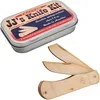 |
Channel Craft JJ’s Pocket Knife Wood Craft Kit A laser-cut maple and cherry pocket knife kit with metal pins and a tin case. It gives you a working all-wood folder without any shaping tools.
|
As an Amazon Associate we earn from qualifying purchases. | |
Search results for this topic mix the two projects, so decide first. An all-wood folder is a pivoting blade and two handle halves cut from wood. It is a good whittling and scroll-saw exercise, it is far safer to have around than a steel knife, and it makes a nice gift. A steel folder with wood scales uses a metal blade, liners, a spring or lock, and wood only for the handle. It cuts, so it is a knifemaking project with real injury risk.
A myth worth correcting: “If I sharpen the wooden blade enough, it will work like a real knife.” It will not. Wood fibers crush and tear instead of shearing cleanly, and a wooden edge dulls almost as soon as it meets anything tough. Treat an all-wood knife as a display or play piece, and buy or build a steel blade if you need something that cuts.
- All-wood folder: wood blade, wood handle, a small metal pin or dowel as the pivot. Tools: coping saw or scroll saw, drill, files, sandpaper.
- Steel folder with wood scales: pre-made blade, liners, pivot, lock or slip-joint spring, two scales. Tools add a drill press, epoxy, and finishing supplies.
- Kit route: parts kits and laser-cut wood kits remove the hardest steps. That is the honest shortcut for a first build.
If you have never carved before, warm up with our easy whittling projects and the basics in how to carve wood first. Blade control matters just as much on a small project.
Best Woods for a Wooden Folding Knife
Pick the wood for the job. Numbers below are from the Wood Database pages for each species (hardness, dried weight, and bending strength). The last column is our own reading of those numbers, not a lab test of finished knives.
| Wood | Janka (lbf) | Weight (lb/ft3) | Rupture (lbf/in2) | Where it fits |
|---|---|---|---|---|
| Basswood | 410 | 26 | 8,700 | Easy carving practice, but soft for a pivot that gets worked |
| Black cherry | 950 | 35 | 12,300 | Nice handle halves, machines cleanly |
| Black walnut | 1,010 | 38 | 14,600 | Classic scale wood, easy to work with straight grain |
| Hard maple | 1,450 | 44 | 15,800 | Best everyday choice for an all-wood blade and pivot |
| Osage orange | 2,620 | 54 | 18,650 | Hardest option here, dense and slow to shape |
What the table shows that most guides miss: hard maple is about 3.5 times as hard as basswood (1,450 versus 410 lbf) and nearly twice as strong in bending (15,800 versus 8,700 lbf/in2). For an all-wood folder, that gap matters at the pivot hole, the one spot where wood rubs on a pin every time you open the knife. Basswood carves easily but a pivot hole in it will wear out sooner. For scales on a steel knife, walnut, cherry, and maple all work, and you can compare grip and pore behavior in our page on the ash wood knife handle.
Wood choice is also a health choice. The Wood Database notes that hard maple has been reported to cause skin irritation and asthma-like respiratory effects, black cherry dust has been linked to wheezing, and black walnut can irritate eyes and skin. Wear a dust mask when sanding any of them. For carving-friendly species beyond this list, see our guide to what wood is good for carving.
How to Make an All-Wood Folding Knife
This build is a friction folder: the blade pivots on a pin and stays closed by friction in the handle slot. Dimensions are a sensible starting size for a hand-sized craft knife, not a standard, so adjust to your wood.
- Draw the pattern on paper. Sketch a closed knife about 4 inches long with a blade about 3 inches long and a rounded tip. Keep the tip blunt on purpose.
- Choose stock about 1/4 inch thick. Two handle halves and one blade blank, all with the grain running along the length so the narrow parts do not snap.
- Cut the shapes. A coping saw works well for the curves; our guide to using a coping saw covers blade tension and direction.
- Drill the pivot hole first. Clamp all three pieces together and drill through them at once so the holes line up. Use a bit matched to your pin.
- Shape the blade edge and tip. Round the tip and ease every edge with files and sandpaper. See rounding wood edges without a router for the sanding sequence.
- Fit the blade. Cut a slight recess in the handle halves so the blade nests closed. Sand until it swings freely without wobbling.
- Assemble and test. Insert the pin, cap the ends, and open and close it a few dozen times. Tight spots show up as shiny burnish marks; sand those lightly.
- Finish. A light coat of oil keeps the wood from drying out. Skip thick film finishes on the pivot area because they can gum up as the parts rub.
If you would rather skip the cutting, the kit at the top of this page includes pre-cut parts and metal pins. Building one first also gives you a working template for your own design.
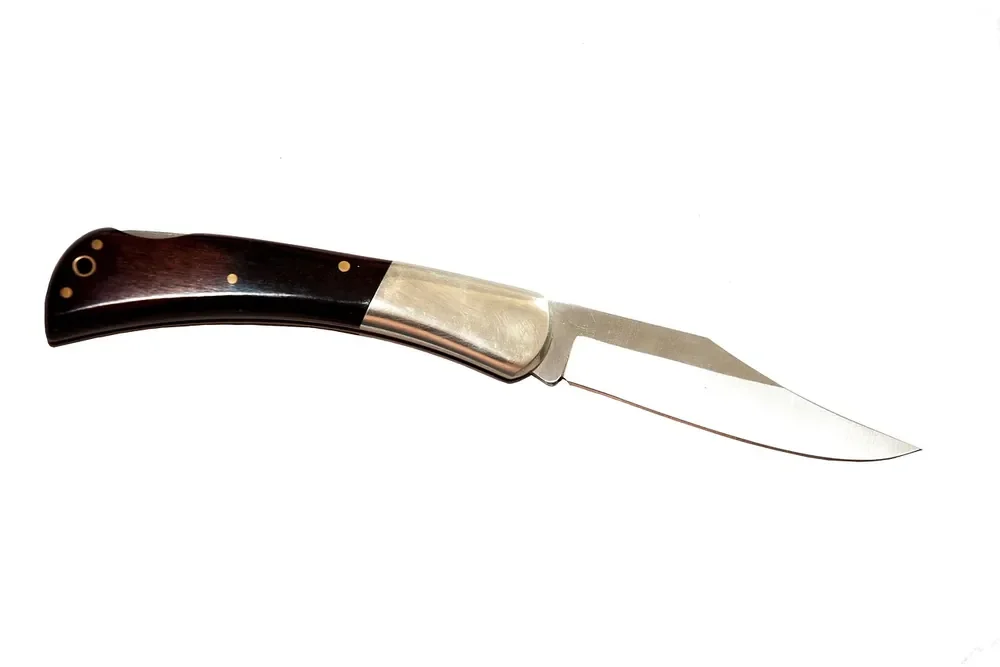
How to Make a Steel Folding Knife With Wood Scales
This is a different level of project, and the risky part is the blade, not the wood. Forging and heat treating steel needs specialized equipment and training, so most first builds start from a pre-made, pre-heat-treated blade and a parts kit that includes liners, pivot, and spring or lock.
- Start with a kit or blade. A blade blank with the right pivot hole and a matched set of liners removes the steps where mistakes are hard to undo.
- Trace the liners onto your scale stock. Cut each scale slightly oversize, at about 1/4 inch thick, and rough shape it with a saw.
- Drill the pin holes through the scale and liner together. Use a drill press or a firmly clamped stack so the holes stay square.
- Dry fit everything. Assemble with the blade in place and check that it opens, closes, and locks with no rubbing before any glue goes on.
- Glue and pin the scales. Epoxy plus pins or corby bolts is the common approach. Keep glue out of the blade path and the pivot.
- Shape the handle after gluing. Sand flush to the liners and round all the edges. Stop at 220 to 400 grit for a comfortable grip.
- Seal the wood. Penetrating oil suits most scales. Check our guide to lacquering over oiled wood if you want a harder finish.
Handle care. Wood scales swell and shrink with moisture, so keep the knife dry and wipe it after use. Our page on cleaning wooden handles has safe cleaning steps, and food-safe wood finishes matters if the knife will touch food.
Safety and Legal Basics
- Test the lock or friction hold before use. A folder that closes on your fingers is dangerous. Hold it open and press the back of the blade against a workbench, never your hand.
- Cut away from your body and keep your other hand clear of the blade path while carving or trimming.
- Wear eye and dust protection when sawing, drilling, and sanding.
- Kids and all-wood knives: the kit listing recommends ages 7 and up and warns of choking hazards for children under 3. Supervise young builders.
- Check your local knife laws. Rules on carrying folding knives, blade length, and locking blades differ by state, city, and country, and schools and airports restrict them. This is general information, not legal advice; check your local rules before you carry a steel folder.
The safest way to learn is on the all-wood version first, then move to a steel kit once your hole alignment and fitting are consistent. For a companion read on the handle side of knifemaking, see our deep dive on the ash wood knife handle.
Frequently Asked Questions
What wood is best for a wooden folding knife?
Hard maple is a strong all-wood choice at 1,450 lbf Janka and 15,800 lbf/in2 bending strength, and it should resist wear at the pivot better than softer woods. For handle scales on a steel knife, black walnut and black cherry are popular, easy-to-work options.
Can a wooden folding knife actually cut?
An all-wood folding knife is a craft piece and will not cut like a steel blade. Wood fibers crush and tear rather than shear cleanly. If you need a cutting tool, use a steel blade with wood handle scales.
Is it hard to make a folding knife?
An all-wood folder is a beginner to intermediate project with a saw, drill, and files. A steel folder with wood scales is harder because the blade, pivot, and lock have to be fitted precisely. Starting from a kit removes the most difficult steps.
How thick should the handle halves be?
About 1/4 inch is a practical starting thickness for hand-sized craft knives, thick enough to resist snapping at the pivot and thin enough to stay pocketable. Adjust to your design and test the fit before final sanding.
Are wooden pocket knife kits safe for kids?
The kit we feature lists a rounded point and no sharp edges and is recommended for ages 7 and up, with a choking hazard warning for under 3. Adult supervision is still a good idea, and steel folding knives are not toys.
Is it legal to carry a folding knife?
It depends on where you live. Blade length limits, locking-blade rules, and restrictions on schools or public buildings vary by state, city, and country. Check your local laws before carrying any steel folding knife.
Final Thoughts
Decide first whether you want a craft-grade all-wood folder or a steel knife with wood scales, choose a wood that fits the job (hard maple for an all-wood pivot, walnut or cherry for scales), and start with the simpler build. Once your fitting is clean and your safety habits are solid, the steel version is a rewarding next step. For related skills, see our stick whittling guide.
Sponsored / affiliate links. As an Amazon Associate I earn from qualifying purchases. I may earn additional commission from eligible campaigns.