Is Wood Rotting a Physical or Chemical Property: Essential Guide
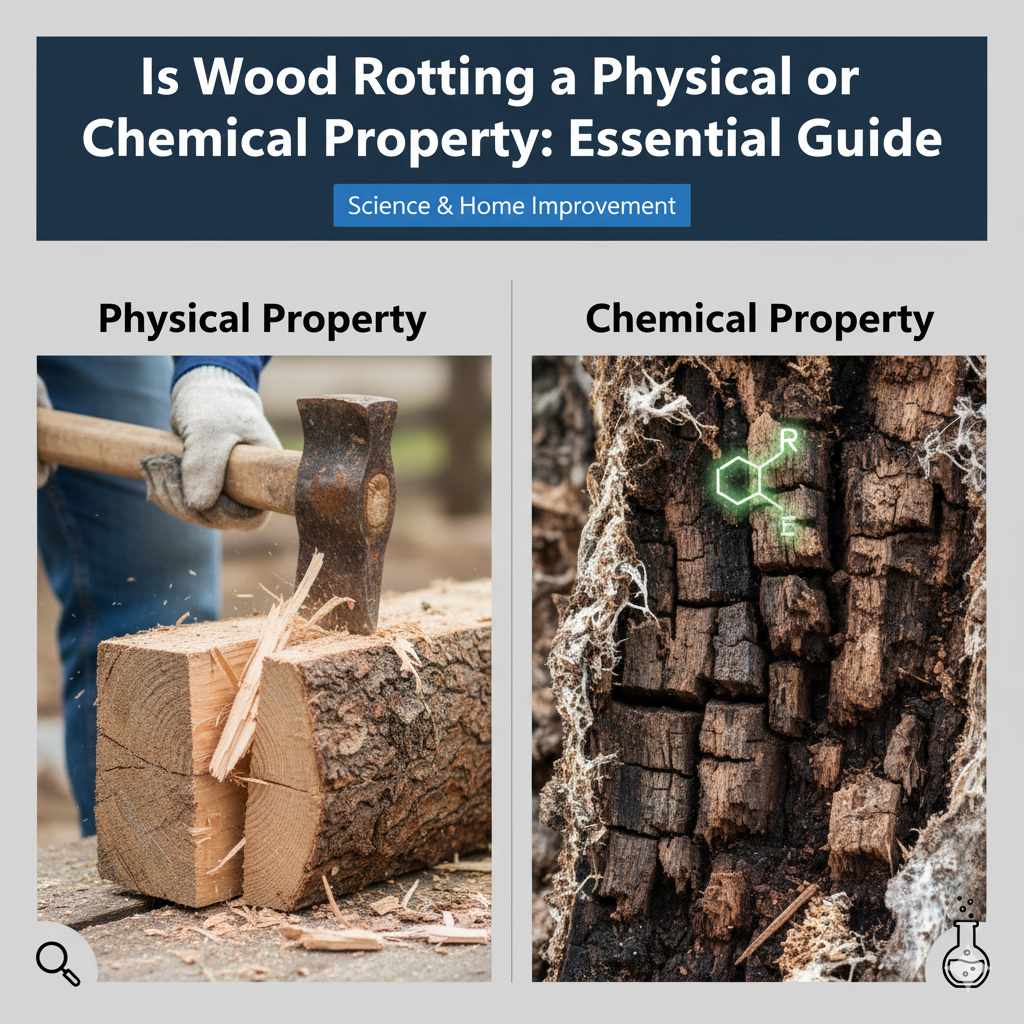
Wood rotting is fundamentally a chemical process involving decomposition. While we observe physical changes like softening and crumbling, these are the result of complex chemical reactions breaking down the wood’s structure.
Don’t you hate seeing that soft, crumbly texture appear on your beloved wooden projects or around your home? It’s a common frustration for anyone who works with wood or owns something made of it. You might wonder, “What’s really going on here?” Is it just the wood falling apart on its own, or is something more complex happening? Understanding the nature of wood rot is the first step to preventing it and keeping your wooden treasures looking great for years to come. We’ll break down exactly what wood rot is, why it happens, and how you can combat it. Let’s get started on uncovering the secrets behind this common woodworking woe!
Understanding the Core Question: Physical vs. Chemical Properties
Before we dive deep into wood rot, it’s helpful to quickly clarify what we mean by physical and chemical properties, especially when it comes to materials like wood. Think of it as understanding the difference between what a material looks like and what it is at its fundamental level.
Physical Properties: What You Can See, Touch, and Measure
Physical properties are those characteristics of a substance that can be observed or measured without changing the substance’s chemical identity. It’s about the material itself, not how it reacts with other things or breaks down. For wood, these might include:
- Color: The natural hue of the wood, like the rich brown of oak or the creamy white of pine.
- Density: How much mass is packed into a certain volume (e.g., hardwoods are generally denser than softwoods).
- Hardness: How resistant the wood is to scratching or denting (think of the Janka hardness scale).
- Grain Pattern: The arrangement and appearance of the wood’s fibers.
- Texture: Whether the wood feels smooth or rough.
- Melting Point/Boiling Point: While wood doesn’t melt or boil in the traditional sense without burning, these concepts relate to physical phase changes.
- Electrical Conductivity: Whether wood allows electricity to pass through it (it generally doesn’t).
- Thermal Conductivity: How well wood transfers heat.
These properties describe the wood in its stable, un-decomposed state. You can measure them, describe them, and they don’t fundamentally change what the wood is composed of.
Chemical Properties: What Happens When Wood Interacts
Chemical properties, on the other hand, describe a substance’s ability to undergo a chemical change or reaction by virtue of its composition. These properties are observed during or after a chemical reaction. They tell us how a substance behaves when it encounters something else or when its internal structure is altered. For wood, these might include:
- Flammability: Wood burns, which is a chemical reaction (combustion) where it reacts with oxygen to produce ash, heat, and gases.
- Reactivity with Acids/Bases: How wood might break down or change when exposed to strong chemicals.
- Oxidation: The process of reacting with oxygen, which is a slow form of degradation.
- Decomposition: The breakdown into simpler substances, which is exactly what happens during rot.
These properties reveal how the wood’s fundamental chemical makeup can change. When a chemical property is involved, the substance itself is transformed into something new.
The Science of Wood Rot: A Chemical Breakdown
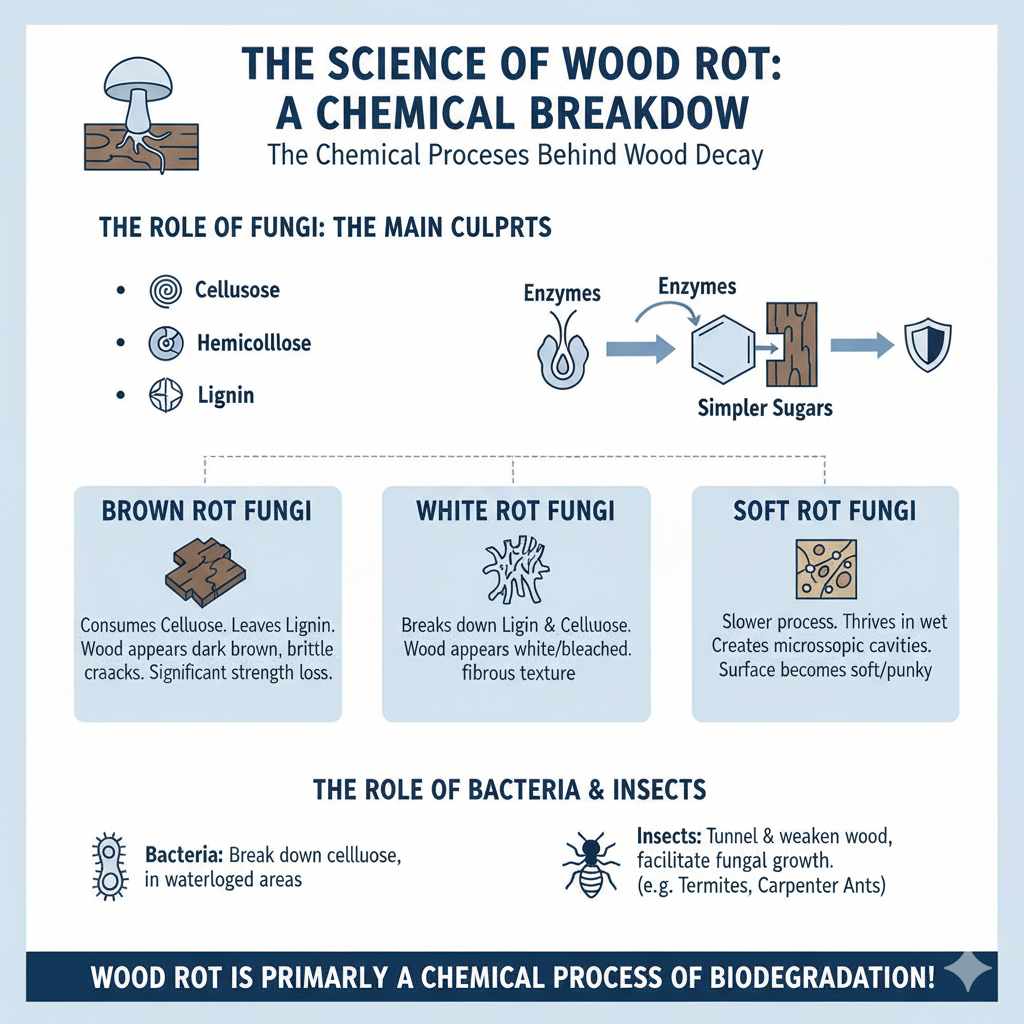
So, is wood rotting a physical or chemical property? The short answer is: almost entirely chemical. While we see physical changes like softening, loss of strength, and color alteration, these are the results of underlying chemical processes. Wood rot, also known as wood decay or biodegradation, is the breakdown of wood by living organisms, primarily fungi and bacteria.
The Role of Fungi: The Main Culprits
Fungi are the primary agents responsible for most wood rot. They are living organisms that need to feed to survive, and unfortunately for our wood, they find the components of wood to be a delicious meal. Wood is composed mainly of three complex organic polymers:
- Cellulose: The primary structural component of plant cell walls, giving wood its strength.
- Hemicellulose: A group of shorter sugar chains that bind cellulose fibers together.
- Lignin: A complex polymer that acts as a sort of glue, providing rigidity and waterproofing to the wood.
Different types of fungi specialize in consuming different parts of the wood:
- Brown Rot Fungi: These fungi are particularly destructive. They primarily consume the cellulose and hemicellulose, leaving behind the lignin. Lignin is brown, which is why decayed wood from brown rot often appears dark brown and shrinks, forming a characteristic crisscross pattern of cracks as it dries. This type of rot significantly weakens the wood, making it brittle.
- White Rot Fungi: White rot fungi are able to break down lignin in addition to cellulose and hemicellulose. Lignin is tough and resistant, so fungi that can digest it are quite potent. The wood often appears bleached or white because the lignin (the dark component) has been consumed. The texture can become stringy or fibrous.
- Soft Rot Fungi: These fungi don’t typically break down lignin as effectively and work slower than brown or white rot fungi. They thrive in very wet conditions and create characteristic microscopic “cavities” within the wood cells. The surface of the wood may become soft and punky.
In each of these cases, the fungi secrete enzymes (specialized proteins) that break down the complex polymers (cellulose, hemicellulose, lignin) into simpler sugars and other molecules that the fungi can absorb and use for energy and growth. This breakdown is a chemical transformation – the wood is literally being converted into fungal food!
The Role of Bacteria and Insects
While fungi are the main cause of decay in many situations, other organisms can contribute:
- Bacteria: Some bacteria can break down wood, particularly cellulose, often found in waterlogged or anaerobic (low oxygen) environments.
- Insects: Insects like termites, carpenter ants, and wood-boring beetles don’t technically cause rot themselves, but they can tunnel through and weaken wood, which often facilitates fungal growth by creating entry points and increasing surface area exposed to moisture. Some insects also digest wood, but their primary role in “rot” is often as a vector or contributor to structural issues rather than the direct chemical decomposition.
What Conditions Fuel Wood Rot?
Fungi, bacteria, and other decay organisms need specific conditions to thrive and break down wood. If you remove or control these conditions, you can prevent rot. This is where understanding the chemical and physical requirements of the rotters becomes crucial for us!
The Essential Ingredients for Rot
- Moisture: This is arguably the most critical factor. For fungal decay to occur, wood typically needs to contain more than 20% moisture content. Most untreated wood used outdoors or subjected to leaks will easily reach and maintain this level. Water is essential for the enzymes to work and for the fungi to grow and spread.
- Oxygen: Like most living organisms, the fungi that cause rot need oxygen to respire and survive. Wood buried deep in anaerobic mud might not rot for a very long time due to lack of oxygen, even if wet.
- Temperature: Fungi generally prefer moderate temperatures, typically between 50°F and 90°F (10°C and 32°C). Freezing temperatures can slow down their activity, and very high temperatures can kill them, but moderate conditions are ideal for rapid decay.
- Food Source: The wood itself, as we’ve seen, is the food source.
Think about it: a piece of firewood sitting in a dry, well-ventilated shed is unlikely to rot quickly, even if it’s exposed to moderate temperatures. But the same log used as a garden border that stays damp from rain and soil contact? That’s a prime target for rot!
Observing Wood Rot: Physical Manifestations of Chemical Change
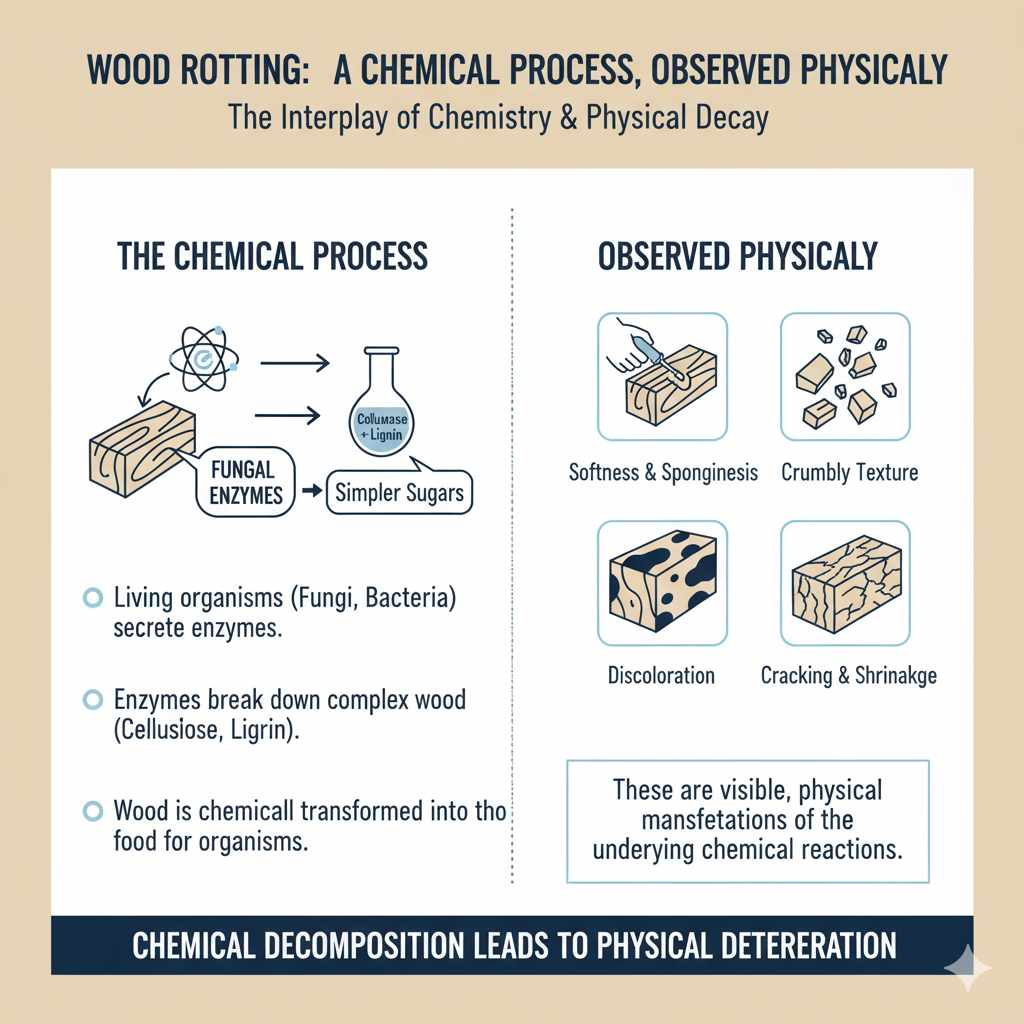
While the root cause is chemical, the signs of wood rot are entirely physical. These are the things you’ll see, feel, and notice that tell you something is wrong. Recognizing these physical symptoms is key to early detection and intervention.
Common Physical Signs of Wood Rot
- Softening and Crumbly Texture: This is the classic sign. The wood loses its rigidity and can be easily broken or crumbled by hand. Brown rot often results in a dry, crumbly texture, while soft rot can feel spongy or punky.
- Discoloration: Rotten wood might appear darker, lighter, or even have streaks of white, brown, or black, depending on the type of fungus. The natural color of the wood is altered as its components are chemically consumed.
- Cracking and Shrinkage: As wood loses its structural components (especially cellulose), it shrinks. Brown rot, in particular, causes wood to crack deeply, often in a cubical pattern, as it dries out. White rot can lead to stringy or fibrous textures.
- Visible Fungal Growth: Sometimes, you might see the actual fruiting bodies of the fungi, such as mushrooms, conks, or a white, cottony or powdery growth on the surface. These are the reproductive structures of the fungus.
- Hollow or Spongy Areas: Large sections of wood can be consumed, leaving behind hollowed-out or spongy areas, especially noticeable in posts or beams.
- Unpleasant Odor: Rotten wood often has a musty, mildewy, or even vinegary smell, indicative of the decomposition process.
It’s important to remember that these physical signs are the evidence of the chemical decomposition that has already taken place. The faster you spot these signs, the sooner you can act to stop the chemical reactions from progressing further.
Wood Rot vs. Weathering: Making the Distinction
It’s easy to confuse early-stage wood rot with weathering, especially for wood exposed to the elements. Weathering is primarily a physical process driven by UV radiation and physical abrasion, whereas rot is chemical. Here’s a quick way to tell them apart:
- Weathering: Often results in a graying of the surface layer, especially on woods like cedar or redwood. The surface might become slightly rough or fuzzy due to the outer fibers being broken down by UV light. However, the structural integrity of the wood underneath usually remains intact for a long time. It’s more of a surface-level degradation.
- Wood Rot: Affects the interior structure of the wood as well as the surface. It leads to a loss of strength, softening, and the characteristic crumbly textures we discussed. You can often probe rotten wood with a screwdriver, and it will give way easily, something that won’t happen with merely weathered wood.
If you encounter wood that feels soft, crumbles easily, or shows signs of discoloration beyond simple graying, it’s very likely rot, a chemical problem that needs addressing.
Preventing Wood Rot: Protecting Your Woodwork
Since wood rot requires moisture, oxygen, and suitable temperatures, a significant part of prevention involves controlling these factors. Here are key strategies that work by either making the wood inaccessible to decay organisms or by altering its chemical properties to resist attack:
Moisture Control: The First Line of Defense
This is paramount. If wood can’t stay wet, it can’t rot.
- Good Drainage: Ensure water drains away from wooden structures. Avoid direct contact with soil where possible. Use gravel beds or concrete footings.
- Ventilation: Allow air to circulate around wood. This helps dry out any moisture that does get on the wood. For decks, ensure there’s space underneath for airflow. For enclosed structures, consider vents.
- Water Repellents & Sealants: Applying finishes like exterior paints, stains, varnishes, or specialized water repellents can help prevent moisture from penetrating the wood. Reapply these finishes as they degrade over time.
- Flashing: In construction, proper flashing around windows, doors, and rooflines directs water away from vulnerable wooden areas.
- Avoid Traps: Design structures so water doesn’t get trapped in joints or crevices.
Wood Preservation: Making Wood Unpalatable
This involves treating the wood with chemicals that are toxic to fungi or make the wood indigestible.
- Pressure-Treated Lumber: This is wood that has been infused with chemical preservatives under pressure. These chemicals leach into the wood structure, making it resistant to fungal and insect attack. Visit the Forest Products Laboratory (FPL) at the U.S. Department of Agriculture for in-depth research on wood preservation and durability. U.S. Forest Products Laboratory – Wood Durability and Preservation
- Naturally Durable Woods: Some wood species contain natural oils and compounds (extractives) that make them resistant to decay. Examples include redwood, cedar, teak, and black locust. However, even these woods will eventually succumb to rot if consistently kept wet.
- Wood Preservative Treatments: For existing wood or DIY applications, you can apply brush-on or spray-on preservatives containing fungicides and insecticides. These are often less potent than pressure treatment but can offer good protection for less demanding applications.
Design Considerations: Building for Longevity
Smart design can go a long way in preventing rot.
- Elevate Wood: Keep wooden elements off the ground and away from standing water.
- Use Resistant Woods: Choose naturally rot-resistant species for exterior applications where possible, or where moisture is harder to control.
- Proper Connections: Design joints and connections so water can drain away and air can circulate. Avoid designs that trap moisture.
Can Wood Rot Be Reversed?
Once wood has significantly rotted, the process is irreversible. The chemical and structural components have been broken down and consumed by fungi or bacteria. You cannot simply “dry out” rotten wood to make it new again. However, you can often:
- Stop the Spread: By removing the source of moisture and the decay organisms, you can prevent the rot from progressing further into healthy wood.
- Repair or Replace: The rotted sections will need to be removed and replaced with sound wood. Surface rot can sometimes be stabilized using wood consolidants and fillers after the underlying cause of moisture is addressed.
Think of it like trying to un-bake a cake. Once the ingredients chemically change in the oven, you can’t turn them back into their original state. You can, however, prevent the cake from burning further by taking it out of the oven!
Wood Rotting: A Chemical Process, Observed Physically
To recap, wood rotting is fundamentally a chemical process. It’s the result of living organisms breaking down the complex organic molecules (cellulose, hemicellulose, lignin) that make up wood. This decomposition is a chemical reaction where the wood’s structure is transformed into simpler compounds that the organisms can use for food.
The appearance of softness, discoloration, crumbling, and cracking are all physical manifestations of this underlying chemical breakdown. You see and feel the results of the chemical reactions. Therefore, while you observe physical changes, the cause and nature of wood rot are deeply rooted in chemistry.
Frequently Asked Questions (FAQs)
Is wood rot contagious to other wood?
Not in the way an illness is. Wood rot is caused by fungi or bacteria already present in the environment or on the wood. If a piece of wood becomes infected and conditions are right for it to spread (e.g., spores landing on another piece of wood that’s also damp), then the rot can spread. It’s more about environmental conditions allowing growth than direct contagion.
Can dry wood rot?
No, dry wood generally cannot rot from fungal decay. Fungi require a significant amount of moisture (above 20% moisture content) to become active and break down wood. If a piece of wood is kept completely dry and in a low-humidity environment, fungal rot will not occur, even if oxygen and food (the wood itself) are present.