Can Polyurethane Freeze? What to Do with a Frozen Can
Yes, water-based polyurethane can freeze in a garage, while oil-based polyurethane is much less likely to freeze there. If a thawed can returns to a smooth liquid with no grainy bits, curds, or separation lines, it may still be usable; if it stays rough, split, or lumpy after it has warmed fully, discard it. Bad thawed finish can leave rough film, weak adhesion, or ruined boards.
This guide is part of our Cold Weather Wood Finishing: What Works Below 50°F series.
Can polyurethane freeze in the garage?
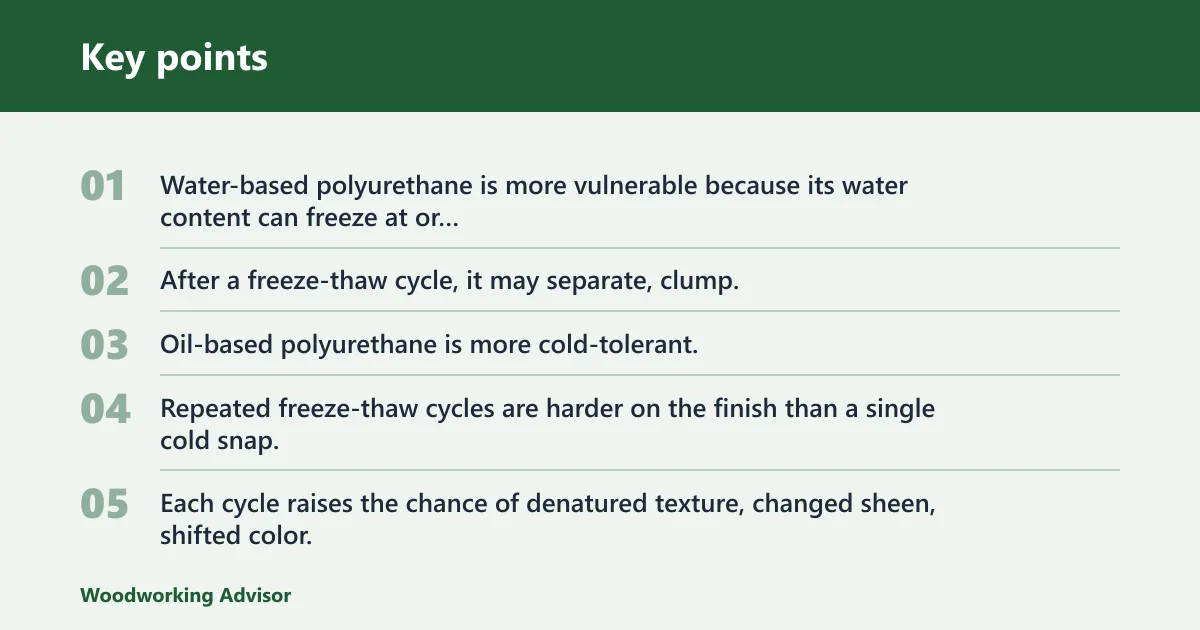
Water-based polyurethane is more vulnerable because its water content can freeze at or below about freezing (around 32°F). After a freeze-thaw cycle, it may separate, clump, or turn uneven in a way that does not fully reverse. Oil-based polyurethane is more cold-tolerant, but cold storage can still thicken it and shorten usable life.
Repeated freeze-thaw cycles are harder on the finish than a single cold snap. Each cycle raises the chance of denatured texture, changed sheen, shifted color, and weaker bonding. A can that has been in and out of freezing conditions all winter deserves a closer look than one that only saw brief cold exposure.
Why water-based polyurethane is more vulnerable
Water-based polyurethane contains enough water that freezing can break its normal structure. Once that happens, the thawed finish may no longer blend back into a stable liquid. The visible result can be clumps, haze, or a separated layer that does not behave like usable finish.
That is why water-based polyurethane needs more careful winter storage than oil-based product. If you keep both in the same place, treat the water-based can as the higher-risk one.
Why oil-based polyurethane still needs winter care
Oil-based polyurethane is not the same as water-based finish, and it is described as extremely unlikely to freeze in a garage. Even so, cold temperatures can still thicken it, slow it down, and make it harder to judge. Good storage still matters if you want the can to stay usable.
Cold alone may not ruin oil-based polyurethane, but poor storage can. Air exposure, repeated opening, and long storage all affect shelf life.
What repeated freeze-thaw cycles do to finish quality
One freeze-thaw cycle may be survivable. Many cycles over a winter are much more likely to damage the finish. The more often the can freezes and thaws, the greater the chance that the product becomes clumpy, loses consistent sheen, or bonds poorly to wood.
Suppose a half-full can sits in an unheated shed, freezes overnight, thaws during the day, then freezes again the next week. That repeated swing can do more damage than the first cold spell, because it keeps breaking down the same liquid film.
What happens if polyurethane freezes and thaws?
Frozen polyurethane can change texture, appearance, and performance after thawing. Some cans recover to a normal-looking liquid, but others turn grainy, layered, or rubbery. Even when the surface looks better, the finish may still cure differently, change sheen, or bond less reliably than before freezing.
The biggest mistake is judging the can while it is still cold. Chill can make a finish look thicker and flatter than it really is, which hides damage or makes a usable can seem ruined. Warm it to room temperature first, then inspect it.
Texture changes after thawing
Texture is the first place to look for trouble. A good thawed can should flow as a uniform liquid. If you see grainy particles, soft curds, strings, or a skin that breaks into sheets, the finish may be denatured rather than merely cold.
That matters because the texture change is not only cosmetic. A broken texture often means the chemistry has shifted enough to affect how the film cures on wood.
How sheen and color can shift
Freezing can affect sheen and color, especially after more than one freeze-thaw cycle. A finish that once dried clear may dry duller, hazier, or slightly off in tone. Those changes are hard to fix once the can has broken down.
If the goal is an even topcoat on a visible surface, small changes matter. A finish that looks close enough in the can can still dry unevenly on the board.
How bonding performance can suffer
When polyurethane loses its normal structure, it may not bond to the wood as intended. That can show up as poor leveling, weak film formation, or a soft or patchy cured surface. In the worst case, the coat may not behave like polyurethane at all.
Bad bonding is why scrap testing matters. A can that looks only slightly off can still fail on the board.
How do you tell if the can is still usable?
Let the can sit at room temperature until the finish and container are no longer cold to the touch before inspecting it. Then inspect the liquid without forcing it back together. If it looks like a normal finish with only slight thickening, it may be worth saving. If it shows clumps, skin, or layered separation, the safest call is usually to discard it.
Do not stir a badly broken can just to see if it “comes back.” Stirring can spread separated chunks through the liquid and create false confidence. First inspect, then decide.
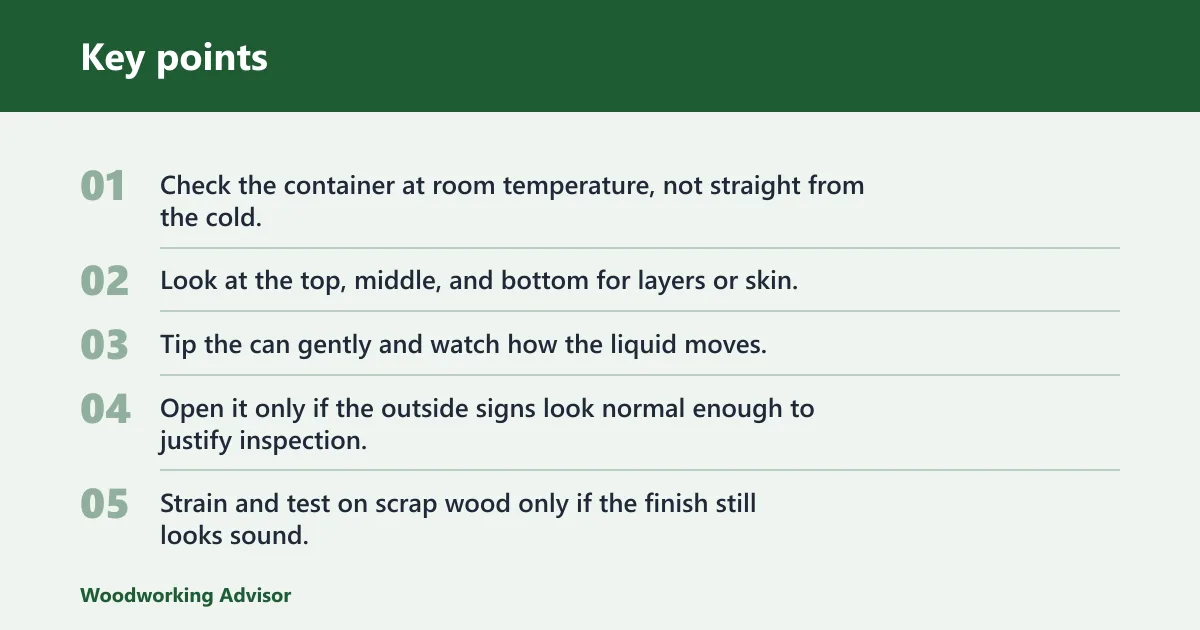
- Check the container at room temperature, not straight from the cold.
- Look at the top, middle, and bottom for layers or skin.
- Tip the can gently and watch how the liquid moves.
- Open it only if the outside signs look normal enough to justify inspection.
- Strain and test on scrap wood only if the finish still looks sound.
Polyurethane salvage checklist
| Visible symptom | Likely meaning | Recommended action |
|---|---|---|
| Clear liquid | No obvious freeze damage; finish may still be normal after thawing | Inspect at room temperature, then strain only if needed and test on scrap wood |
| Slight thickening | Cold storage may have raised viscosity without breaking the finish | Warm to room temperature, mix gently if needed, then test on scrap wood |
| Grainy clumps | Partial breakdown or denatured finish | Do not rely on it for a project; discard unless a scrap test proves it still cures normally |
| Layered separation | Components may have split during freezing or repeated cold cycles | Do not stir back into service; discard if the layers do not recombine into a uniform liquid |
| Rubbery skin | Surface oxidation or partial curing from air exposure | Remove the skin only if the liquid underneath still looks normal; otherwise discard |
| Fully cottage-cheese texture | Severe freeze damage and broken finish structure | Discard the can |
| Test on scrap wood | The finish appears normal enough to justify a final check | Use only after a normal-looking inspection; confirm cure, appearance, and bonding before a real project |
A common first-timer mistake is opening a cold can, seeing thickness, and assuming it is ruined. Thickness alone is not the problem. Clumps, separation, and a rubbery skin are the signs that should drive the decision.
How should you thaw a frozen can of polyurethane?
Let the can warm slowly to room temperature before you evaluate it. Do not use direct heat, a space heater, hot water, or any fast-warming method to thaw polyurethane. Slow warming gives you a fair read on whether the finish recovered or broke down.
Room temperature is the safe thaw target because it lets the finish settle without forcing a temporary change. If you judge it cold, you may misread normal thickening as damage or miss damage hidden by the chill.
What to check before you stir or strain
Before stirring, open the can and inspect the surface and sides. Look for a smooth liquid, not a broken skin or a layered top. If the can looks normal, straining out a few solidified chunks may be worth trying. If it looks badly separated, do not keep pushing it.
Straining is a salvage step, not a rescue for badly damaged finish. It helps only when the thawed material still looks close to normal.
Why forced heating is a bad idea
Forced heat can hide the real condition of the polyurethane. It may soften a skin enough to make the can look better than it is, while the broken structure remains underneath. Fast warming can also create uneven temperatures inside the container.
That unevenness makes judgment harder. Slow recovery is the cleaner test.
Where should you store polyurethane in winter?
A heated basement, closet, or other temperature-controlled spot is safer than an unheated garage or shed. The best storage advice for polyurethane is to keep it inside the house or in a temperature-controlled garage. Storage at 65-70°F is the listed target, and air exposure should be minimized. (Familyhandyman)
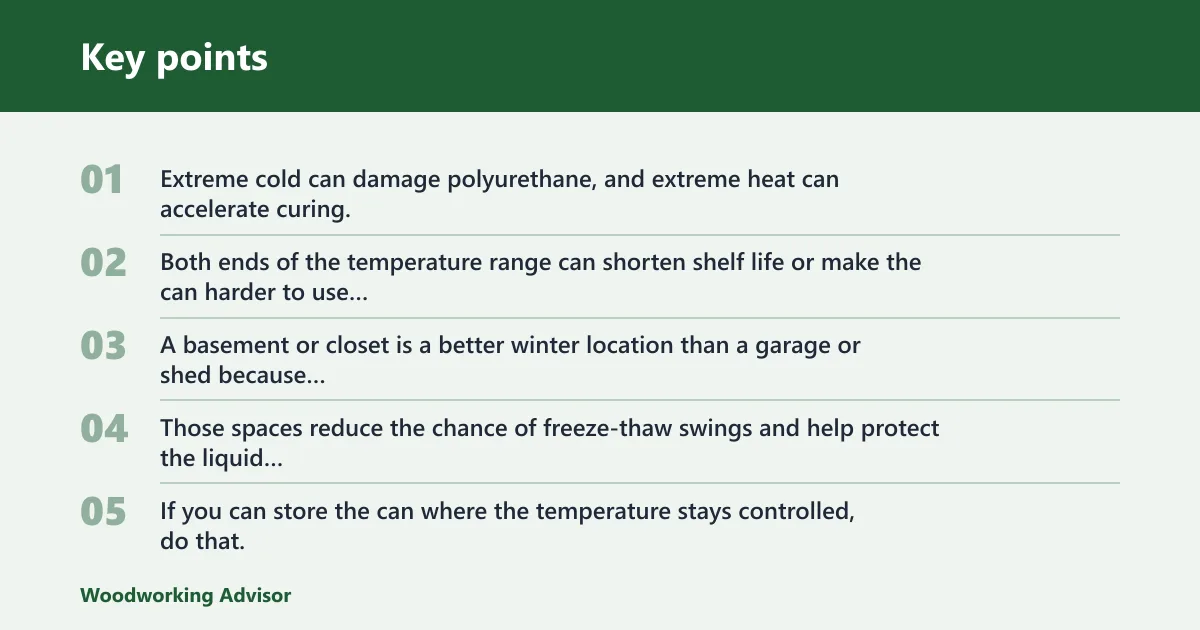
Extreme cold can damage polyurethane, and extreme heat can accelerate curing. Both ends of the temperature range can shorten shelf life or make the can harder to use later.
Heated basement or closet storage
A basement or closet is a better winter location than a garage or shed because temperatures stay steadier. Those spaces reduce the chance of freeze-thaw swings and help protect the liquid structure. If you can store the can where the temperature stays controlled, do that.
Keep the lid sealed tightly after each use. Less air in the can means less oxidation and less chance of skinning.
Why unheated garages and sheds are risky
Unheated garages and sheds can swing through freezing temperatures and back again many times in one winter. That repeated cycling is what causes the most trouble. Water-based polyurethane is the most vulnerable, but even oil-based polyurethane can thicken and age poorly in bad storage.
Say your half-used quart sits on a garage shelf next to winter tools. It may look fine one day and partially frozen the next. That kind of storage makes later inspection harder and the result less predictable.
How opening history and air exposure affect shelf life
Opening history matters because every opening adds air and can speed oxidation. If oxidation has already started, the usual recommendation is to discard the urethane. The less air you leave above the liquid, the better the odds of keeping it usable.
Some woodworkers use inert gas aerosol products such as Bloxygen to protect the finish, and some add marbles to reduce air space above the liquid. Those steps help limit oxidation, but they do not rescue a can that is already badly broken.
When should you throw away polyurethane instead of trying to save it?
Throw it away when thawed polyurethane stays grainy, separated, rubbery, or cottage-cheese-like after reaching room temperature. Those are signs that the finish has likely broken down too far to trust. If the can looks normal, salvage may be worth a try; if it does not, discard it.
Do not keep a can just because you hope a stir will fix it. Severe separation, skinning, or broken texture usually means the safer path is disposal.
Use this save-or-toss rule
Save it only if the thawed finish is smooth, uniform, and close to normal after a gentle mix. Then strain if needed and test on scrap wood before you touch the project. Toss it if the finish still looks damaged, or if you can see evidence that repeated freeze-thaw cycles have broken it down.
Scrap testing confirms whether the finish cures and looks acceptable. It does not repair a bad can.
Frequently asked questions
How do you tell if frozen polyurethane is still good?
Let it warm to room temperature, then inspect the liquid. Clear liquid or only slight thickening may be salvageable, but grainy clumps, layered separation, a rubbery skin, or a cottage-cheese texture are bad signs. If it looks normal, use a scrap test before committing to the project.
Can you use polyurethane after it has frozen?
Sometimes. If the thawed can becomes a smooth, uniform liquid and passes a scrap-wood test, it may still be usable. If it stays broken, curdled, or separated, do not trust it on a real project. Saving a bad can is not worth a ruined finish.
How should you warm up a frozen can of polyurethane?
Warm it slowly to room temperature and avoid direct heat. Do not use hot water, heaters, or rapid thawing. Once the can is fully warm, inspect it before stirring or straining. That gives you the clearest read on whether the finish recovered or failed.
Should you store polyurethane in a basement or garage in winter?
A heated basement or closet is safer than an unheated garage. The best storage is inside the house or in a temperature-controlled garage, with the container sealed tightly and air space kept low. A steady temperature helps protect both water-based and oil-based polyurethane.
Sponsored / affiliate links. As an Amazon Associate I earn from qualifying purchases. I may earn additional commission from eligible campaigns.