Simpson Strong-Tie Post Base Review
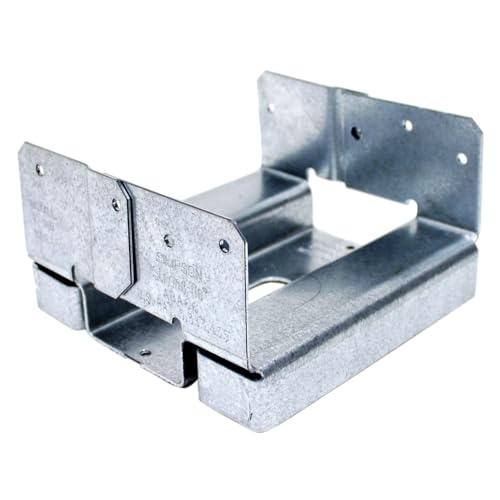
Simpson Strong-Tie’s ABA post base is the right choice for a concrete-anchored wood post when you need a standoff that keeps the post off the slab and away from standing water, typically for decks, pergolas, sheds, and pavilions. Choose the wrong base and you can trap moisture, invite rot, or get a connection that fails inspection. This review explains what the ABA does, when it fits, and which Simpson base is a better match when your post, load, or uplift demand is different.
Verdict on the ABA post base
Buy the ABA when your post lands on concrete and the job calls for a structural, adjustable, standoff connection. It is a strong fit for top-supported wood posts on slabs, piers, and similar concrete supports. It is the wrong pick for fence posts, cantilevered members, and other non-top-supported uses.
Best use cases
The ABA is aimed at deck posts, pergola posts, shed posts, and pavilion posts where the wood bears vertically on a concrete support and needs separation from wet concrete. The 1-inch stand-off matters here because moisture at the post end is a common decay path. The 14-gauge galvanized steel body fits that role well.
Where it falls short
It is not a universal post solution. If the post is not top-supported, or if the structure needs a different connector geometry, another Simpson base may be a better fit. Decorative bases are for appearance. Retrofit styles solve different layout and access problems. The ABA is not the answer to all three.
Bottom-line recommendation
If you are anchoring a new structural wood post to concrete, start with the ABA before looking elsewhere. If the post is a fence post, a side-loaded member, or a retrofit into existing work, choose a different connector suited to that condition.
Who this post base
This base suits DIYers building a deck, pergola, shed, or pavilion on a slab or pier and needing a standoff base for a structural wood post. It is less suitable for fence work, decorative posts, and any connection where the load path is not straight down through the post.
Deck posts on concrete
Deck posts are a clean match when the framing lands on top of a concrete slab or pier and the post needs a fixed, inspectable connection. The ABA helps keep the end grain off wet concrete, which matters in splash zones and damp basements.
Pergola and pavilion posts
Pergolas and pavilions often use exposed posts where appearance and layout both matter. The adjustable slot helps you square the base before final tightening, which is useful when multiple posts must line up across a slab or pier field.
Shed posts on slabs or piers
Sheds on concrete piers or pads benefit from the same standoff logic. The base keeps the post off the concrete surface and provides a structural anchor point, but only when the post is a top-supported member and the layout is already close to correct.

Pros and cons
The ABA is useful because it combines corrosion-resistant support, a standoff, and some layout forgiveness in one connector. That said, it still depends on good anchor placement, square post cuts, and the right size choice. It does not fix a bad foundation layout.
Pros
- Raises the post 1 inch above concrete.
- Helps cut direct wood-to-concrete moisture contact.
- Uses 14-gauge galvanized steel.
- Works with 1/2-inch or 5/8-inch anchor bolts.
- Allows install adjustment through the slotted anchor bolt hole.
- Fits common structural post sizes, including 4×4 and 6×6 variants.
Cons
- Not suitable for fence posts or other non-top-supported applications.
- Does not solve badly placed anchors or badly cut post ends.
- Can be the wrong choice when a retrofit connector is needed.
- Requires compatible fasteners and corrosion-aware hardware selection.
- Adds total installed cost through anchors, fasteners, and layout time.
ABA post base decision table
Use this table to match the project to the connector before you drill anything. It separates common structural jobs from misfit uses and shows the post size, anchor size, and main install risk for each one.
| Project type | Right Simpson post base type | Post size | Anchor size | Key install risk | Not recommended |
|---|---|---|---|---|---|
| Deck post on concrete slab | ABA adjustable post base | 4×4 or 6×6, based on framing load | 1/2-inch or 5/8-inch anchor bolts | Anchor layout must match the slotted hole before final tightening | No, if the post is top-supported and structural |
| Pergola post on pier | ABA adjustable post base | 6×6 is common for larger spans | 5/8-inch anchor bolts are often the safer heavy-duty pick | Pier top must be level enough to set the base plumb | No, if the post bears vertically on the pier |
| Shed post on slab | ABA adjustable post base | 4×4 or 6×6 | 1/2-inch or 5/8-inch anchor bolts | Out-of-square post ends can throw the post out of plumb | No, if the post is structural and top-supported |
| Pavilion post on concrete | ABA adjustable post base | 6×6 | 5/8-inch anchor bolts | Large posts magnify small layout errors at the base | No, if the load path is straight down through the post |
| Fence post in soil or on a side-loaded footing | Different system or no post base | Varies | Varies | Fence loads are not the same as top-supported structural loads | Yes |
| Cantilevered member or side-loaded frame | Different Simpson connector | Varies | Varies | ABA is not intended for this load path | Yes |
How do you size one for your post?
Start with the post size the framing actually needs, not the size that simply fits the lumber pile. The ABA66Z is designed for use with 6×6 pressure-treated posts. Other sizes are available for double 2×4, rough and standard 4×4, 4×6, and 6×6 posts.
4×4 versus 6×6 choice
A 4×4 is common for lighter-duty work, shorter spans, and smaller roof or pergola loads. A 6×6 is the better starting point for larger deck posts, heavier pergolas, and many pavilion or shed supports. When the structure needs stiffness and more bearing area, 6×6 usually makes more sense.
When 4×6 framing is the better fit
A 4×6 can suit some intermediate framing needs where the design calls for more depth than a 4×4 but less bulk than a 6×6. The key is matching the post base to the actual post section, not forcing a near-fit that leaves too much play or poor fastening geometry.
Model and slot fit checks
The ABA66Z fits 6×6 pressure-treated posts, and its post slot measures 5 1/2 inches by 5 3/8 inches by 3 1/8 inches. Check the cut end for square, check the post for twist, and confirm the base is centered before tightening. Small errors matter more as the post gets larger.
Say your 6×6 post looks right on the bench but the concrete anchor lands 1/4 inch off center. The slotted hole gives you some correction room. If the post is also cut out of square, though, the base cannot fix both problems at once, and the post will still fight plumb.
How do you install a Simpson Strong-Tie post base on concrete?
Install the base by anchoring it to sound concrete, checking alignment before final tightening, and then fastening the post to the connector with the specified nails or screws. The slotted anchor hole helps with layout, but it is only a correction aid, not a cure for poor placement. Anchor type, embedment, edge distance, concrete condition, and the applicable Simpson load table all matter for the finished connection.
Anchor bolt sizing
Use the anchor diameter and type specified for the exact ABA model and load condition. The right choice depends on the published connector data and the concrete support, not just on whether the bolt is large or small.
Setting the base on a slab
On a level slab, set the base location and loosely attach the base first. The slotted anchor bolt hole allows layout adjustment after the base is loosely attached. Once plumb and aligned, tighten the anchor fully and verify the post sits cleanly in the base.
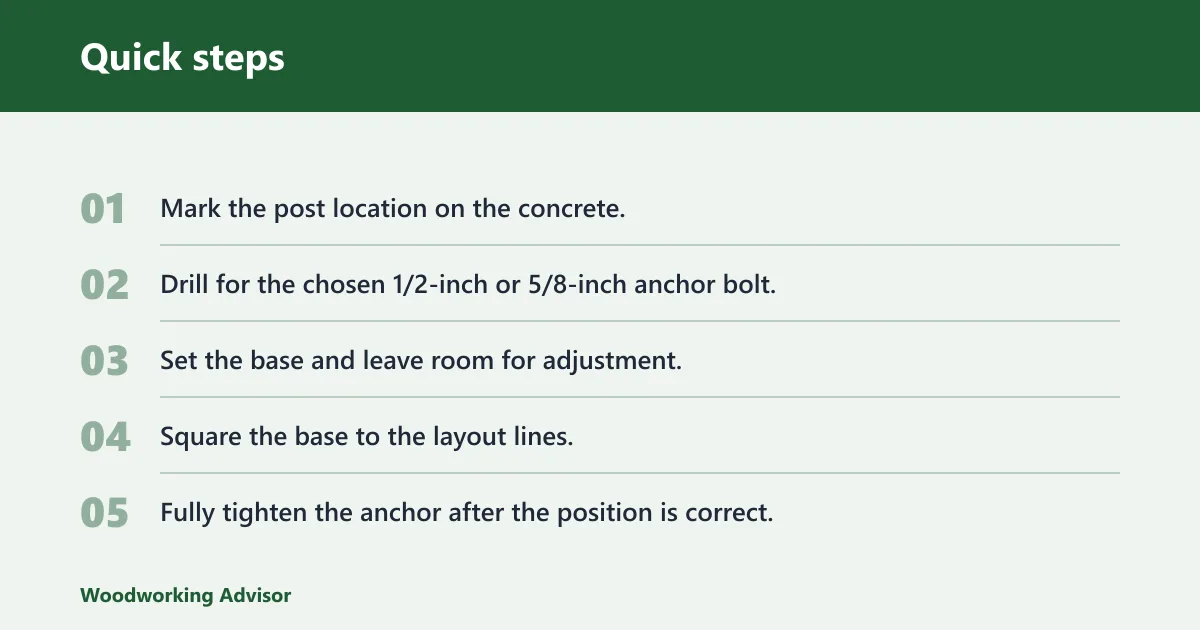
- Mark the post location on the concrete.
- Drill for the chosen 1/2-inch or 5/8-inch anchor bolt.
- Set the base and leave room for adjustment.
- Square the base to the layout lines.
- Fully tighten the anchor after the position is correct.
- Insert the post and fasten it to the base.
Pier installation and alignment
On a pier, the top surface matters more because the base must sit true before the post goes up. A slight crown or tilt in the pier can throw the post out of plumb. If the pier top is uneven, fix the support condition first or choose a connector strategy that fits the actual surface.
Fastening the post to the base
Fasten the post with the connector fasteners called for by the specific ABA model and Simpson’s published specifications. Do not assume any wood screw will do. The connector fastener has to be appropriate for structural attachment, not just for holding the post in place.
A common first-timer mistake is drilling the anchor before checking both post faces for square. That usually shows up later as a twisted base or a post that needs to be forced into position. The base may be adjustable, but it is not a substitute for a square cut and a correct hole location.
Is it the right code-friendly choice?
Yes, when the post is structural, top-supported, and exposed to moisture or splash. ABA standoff post bases are used for structural wood posts in basements or weather exposure. That value depends on using the base in the right context and on the applicable code and evaluation data, not on the product alone.
Standoff height and rot protection
The base lifts the bottom of the post 1 inch above the concrete, which reduces direct contact with standing water and splash. That gap is one of the simplest rot-control measures in post framing. It helps, but it does not excuse poor drainage or water exposure around the footing.
Pressure-treated lumber compatibility
Pressure-treated lumber uses corrosive chemicals, so the connector metal must resist corrosion. The ABA is made of 14-gauge galvanized steel, and the ABA66Z uses a zinc-galvanized finish. That matters because untreated or incompatible hardware can deteriorate faster around treated wood.
When another Simpson base makes more sense
Choose a retrofit base if you are repairing or adapting existing work and cannot start with fresh layout. Choose a decorative base if appearance is the main goal and the structural requirements are modest. Choose a different structural connector if the load path is side-loaded, cantilevered, or not top-supported.
Frequently asked questions
Is a Simpson Strong-Tie post base worth it?
It is worth it when you need a concrete-mounted structural post with a standoff that keeps wood away from moisture. The value is strongest for decks, pergolas, sheds, and pavilions. It is less compelling for non-structural work or any project that does not need a standoff base.
What size Simpson post base do I need for a 4×4 or 6×6 post?
Match the base to the actual post size and load demand. Simpson lists sizes for rough and standard 4×4, 4×6, and 6×6 posts, plus double 2×4. For heavier framing, the 6×6 ABA66Z is the straightforward choice. For lighter work, a 4×4 model may be enough.
What is the difference between adjustable and retrofit post bases?
An adjustable base like the ABA gives you some movement during layout and is aimed at new structural installs on concrete. A retrofit base is used when the project starts with an existing condition and you need to adapt to it. They solve different problems, so they are not interchangeable.
Are Simpson Strong-Tie post bases suitable for fence posts?
No. The ABA is not recommended for anchoring fence posts or other non-top-supported applications. Fence loads are different from structural post loads, and the connection geometry is wrong for that use. For fences, choose a purpose-built post anchoring method instead of a structural standoff base.
Do post bases keep wood posts from rotting?
They help, but they do not make rot impossible. By lifting the post 1 inch above concrete, the ABA cuts direct contact with wet surfaces and splash water. Good drainage, correct lumber treatment, and proper installation still matter if you want long service life.
Can I use a Simpson Strong-Tie post base on uneven concrete?
You can use it on concrete that is close enough to level for the base to sit true, and the slotted anchor hole helps with final adjustment. If the slab or pier is badly uneven, fix the support surface first. The connector cannot correct a crooked foundation.
What fasteners are used to attach the post to the base?
Use the connector fasteners specified for the exact ABA model and application to fasten the post to the base. Those are the specified connector fasteners for the post-to-base connection. Do not swap in general-purpose fasteners just because they fit the holes.
Are standoff post bases required by code?
They are commonly used to meet building-code expectations for structural wood posts in basements and in weather or splash exposure, but code requirements vary by jurisdiction and application. The safe assumption is that a standoff base is often expected for exposed structural posts, not that every post always needs one.
Sponsored / affiliate links. As an Amazon Associate I earn from qualifying purchases. I may earn additional commission from eligible campaigns.