Does Wood Glue Expire? Signs, Shelf Life, and Storage
Yes, most PVA wood glue does not keep indefinitely; unopened bottles may last around a year or two, and opened bottles often last several months. If it smells sour, has lumps, or skins over, toss it. I have seen bad glue creep, fail, and stain a repair, which burns time and lumber fast. This guide explains how brand, chemistry, storage, and simple tests tell you when old glue is usable or trash.
does wood glue go bad or expire?


Yes. Wood glue can go bad, and the failure mode depends on the chemistry inside the bottle. Some glues thicken, some separate, some skin over, and some lose bond strength long before they look awful. The bottle date is only a guide, because storage history and bottle condition tell you more.
What expiration means for wood glue
For woodworkers, “expired” means the adhesive no longer wets the wood, cures correctly, or gives a joint worth trusting. I have had glue squeeze out fine and still fail a bond test. That is why appearance, smell, and a scrap test matter more than a printed date.
Why one bottle lasts and another fails early
Two bottles of the same glue can age very differently. One kept on a cool indoor shelf with a tight cap may stay usable for years, while another sat in a cold garage or sunny truck cab and failed much sooner. Temperature swings and contamination are the usual split point.
Which glue families age fastest
PVA is the most common type of wood glue, but it is not the most durable in poor storage. CA usually loses punch fastest, especially in warm rooms. Polyurethane can go off after opening. Hide glue has a shorter shelf life than other wood glues and needs more caution.
how long does wood glue last unopened vs opened?
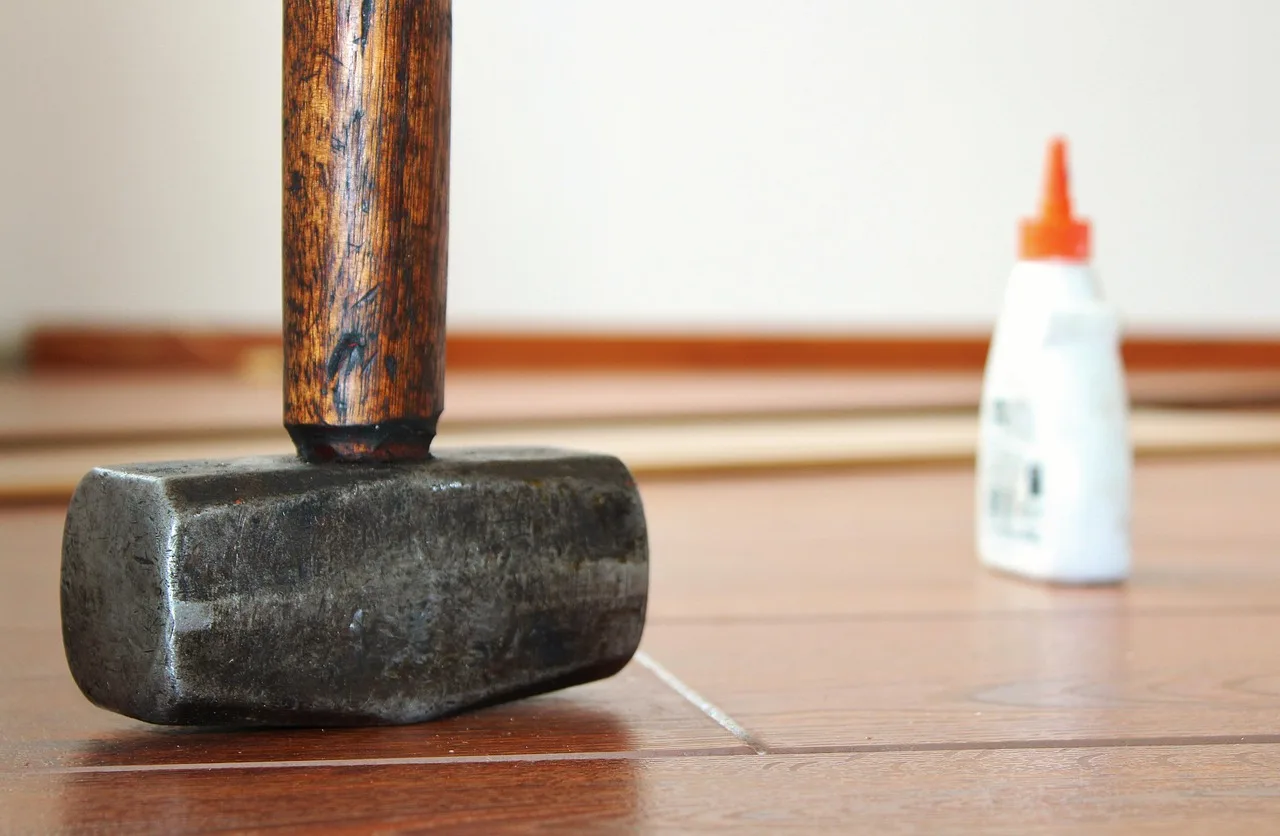
Unopened bottles usually last longer than opened ones, but the real span depends on glue type and storage. Unopened wood glue lasts 1 to 2 years on the shelf, and wood glue can last at least three years if properly stored. Opened bottles need more checking and more scrap testing.
Typical storage life by glue type
| Glue type | Typical shelf behavior | Common failure pattern |
|---|---|---|
| PVA wood glue | Often usable for years if stored well | Thickens, gels, separates, or loses wetting ability |
| Polyurethane wood glue | Often shorter life after opening | Thickens, cures in the bottle, or foams poorly |
| Epoxy wood adhesive | Can last well if both parts stay clean and sealed | Crystallizes, thickens, or hardener changes behavior |
| CA glue | Usually the shortest useful life after opening | Gels, strings, or loses grab |
| Hide glue | Shorter shelf life than many modern glues | Weakens, separates, or smells off |
What changes after the seal is broken
Once opened, glue faces air, moisture, dust, and dirty nozzle tips. That matters most with CA and polyurethane, but it affects every family. A cap that never fully closes, or a nozzle crust that falls back into the bottle, shortens service life quickly.
Why manufacturer dates are only a starting point
Printed dates can help, but they do not tell the whole story. A bottle that lived indoors with a tight cap can beat the date by a fair margin. Another bottle may fail early if it freezes, sits in sun, or picks up contamination from a brush or spreader.
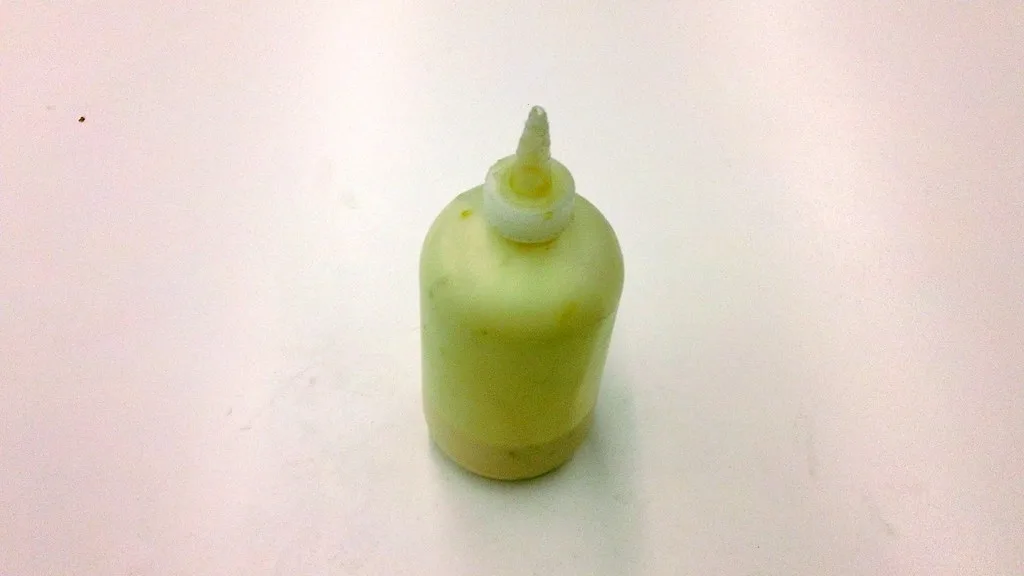
What makes old wood glue fail sooner?
Heat, cold, sunlight, and contamination are common reasons glue can fail early. Freeze/thaw cycles are a major risk for many PVA glues, especially in an unheated garage. A dirty nozzle or a cap that does not seal lets air and debris attack the bottle from both ends.
Freeze/thaw cycles in unheated spaces
Cold storage is the big one for PVA. Titebond says most wood glues withstand at least five freeze/thaw cycles, but repeated cycles still raise the odds of texture changes and weak performance. If a bottle spent winter in a garage or shed, treat it with suspicion.
Heat, sunlight, and bad cap seals
Warm rooms shorten life for CA. Sunlight and hot shelves can dry the nozzle crust faster and push water loss in emulsions. A cap that is only half-seated may let the bottle skin over or thicken from the top down, which often starts at the nozzle.
Contamination from dirty nozzles or tools
Glue does not like sawdust, finish dust, or metal shavings. A brush dipped into the bottle can carry in contamination that speeds clumping. If the nozzle shows crust or skin, clean it before judging the whole bottle, but do not excuse a bottle that already pours badly.
How can you tell if wood glue is bad?
Check the bottle first. Lumps, separation, stringiness, odor changes, skin, and crust at the nozzle are the warning signs that matter most. Good glue should pour smoothly; thick glue is a warning sign. Bad glue may come out stringy or pasty, and a sour or rotten odor is a red flag.
Bottle signs to check first
- Clumps or gels in the bottle
- Separation that does not remix cleanly
- Stringy, pasty, or rope-like flow
- Skin or crust at the nozzle
- Sour or rotten odor
- Heavy thickening compared with normal flow
How each glue type tends to fail
PVA usually shows thickness changes, gel bits, or freeze damage. Polyurethane may harden in the bottle or turn unreliable after opening. Epoxy can thicken or crystallize, and mix ratio matters when judging it. CA usually goes from free-flowing to gummy fast. Hide glue often smells off before it becomes obviously useless.
When a thickened bottle is still worth testing
A little thickening does not always mean discard, especially with PVA that was stored well. If the glue still pours smoothly enough to coat the wood and it has no bad odor, a scrap test is reasonable. If it is stringy, lumpy, or separated in a stubborn way, discard it.
How do you test questionable glue on scrap wood?
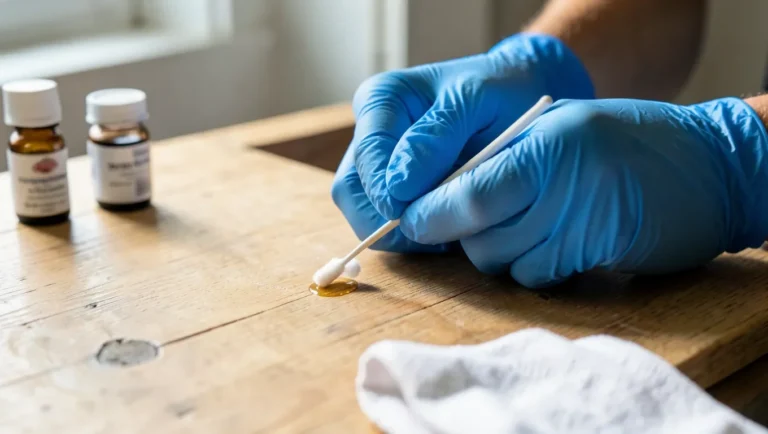
A scrap test is the practical check before using old glue on a real joint. Spread the glue on clean scrap, clamp it the way the real project will be clamped, and let it cure fully. If the bond fails weakly, gums up, or leaves a dusty line, do not trust it on the project.
A simple scrap test setup
- Pick two clean scrap pieces of the same wood.
- Apply the questionable glue at normal spread rate.
- Assemble with the same clamp pressure you would use on the project.
- Let it cure fully before testing the bond.
- Break the joint apart and inspect the failure.
What a pass and fail look like
A good test bond usually fails in the wood fibers, not at a shiny glue line. A bad one pops cleanly at the joint, feels rubbery, or leaves a brittle or dusty interface. If the glue never seems to wet the wood well, that is a fail even if it hardens.
When to test on a noncritical joint instead
If the glue is only slightly old and the project is noncritical, a small test joint can be enough. That still means a scrap trial first. Do not use a questionable bottle on a chair leg, panel glue-up, or anything that carries load just because the date stamp looks acceptable.
Can I still use this bottle? Decision matrix
This is the shop decision point. Identify the glue family, read the bottle, check storage history, and decide whether to use it, test it on a noncritical joint, or discard it. A date stamp alone is never enough when the bottle has seen heat, cold, or dirt.
One-page decision matrix titled “Can I Still Use This Bottle?”
| Glue type | Bottle symptoms | Storage history | Scrap-test result | Recommended action |
|---|---|---|---|---|
| PVA | Light thickening, no odor, no hard lumps | Indoor shelf, tight cap, no freeze/thaw | Good fiber tear | Use |
| PVA | Some separation or nozzle crust | Unknown, maybe garage or basement | Fair bond on scrap | Test on noncritical joint |
| PVA | Lumps, sour odor, stringy flow | Frozen, overheated, or contaminated | Clean joint failure | Discard |
| Polyurethane | Thick, crusty, or partly cured in bottle | Opened long ago, exposed to humidity | Unreliable foam and weak bond | Discard |
| Epoxy | Part A or B thickened, crystals present | Stored cool and sealed, but age unknown | Proper cure after correct mix | Test on noncritical joint |
| CA | Gelled, stringy, or weak squeeze-out | Warm room or frequent opening | Poor grab on scrap | Discard |
| Hide glue | Odd odor, separation, poor body | Old bottle, storage history unclear | Weak bond or slow cure | Discard |
Mini table for PVA, polyurethane, epoxy, CA, and hide glue
| Family | Best use | Main aging risk |
|---|---|---|
| PVA | Tight wood-to-wood joints | Freeze/thaw and separation |
| Polyurethane | Moisture-cured bonds and some water-resistant jobs | Shorter life after opening |
| Epoxy | Gap-filling, high-strength repair | Crystallization or mix problems |
| CA | Small repairs and stabilizing cracks | Fast loss of punch |
| Hide glue | Restoration and instrument work | Short shelf life |
Brand notes for common bottles
Titebond Original is a PVA benchmark and usually behaves like other good PVAs when stored well. Titebond II can turn orange when aged; Titebond says that is a sign it is time for a new bottle. Titebond III is Type I, or waterproof, and still deserves freeze/thaw caution.
Gorilla Wood Glue is another PVA product that should be judged by bottle condition and scrap testing when questionable. Elmer’s Carpenter’s Wood Glue is a staple interior glue, but poor storage can age it fast enough to need a simple test before use. Brand name does not override bottle symptoms.
How should you store wood glue so it lasts longer?
Store glue in a cool indoor location with a tight cap and no sunlight. Avoid garages, cars, and damp basements where temperature swings are hard on the bottle. Clean nozzles matter. Keep contamination out, and mark the purchase date so the bottle does not sit forgotten after a season change.
Best storage temperature and location
A steady indoor shelf beats seasonal storage every time. A bottle that stays out of freeze/thaw cycles usually ages better than one moved in and out of an unheated space. Keep it upright so the cap area stays cleaner and so you notice separation or crust sooner.
How to keep caps and nozzles clean
Wipe the nozzle after use, then seat the cap fully. Do not stick dirty spreaders into the bottle. If a skin forms at the tip, remove it before it falls back in. A clean nozzle is one of the simplest ways to stretch the useful life of any wood glue.
What to do after a winter in the garage
If the bottle froze, inspect it before trusting it. Look for lumps, gel pieces, and a grainy pour. With PVA, a scrap test is the minimum check. If the bottle looks split, stringy, or smells wrong, do not try to rescue it for a structural joint.
Frequently asked questions
does wood glue go bad?
Yes. Wood glue can go bad from age, heat, cold, contamination, or air exposure. The exact failure depends on the glue family. PVA may thicken or separate, CA may gel, and hide glue can lose shelf life faster than modern products. Bottle condition matters more than the label date.
does gorilla wood glue expire?
Yes, Gorilla Wood Glue can expire or at least become questionable with age and poor storage. Treat it like any PVA bottle: check for lumps, separation, odor change, or nozzle crust, then run a scrap test if the glue still looks close to usable. Do not trust appearance alone.
does titebond wood glue expire?
Yes, Titebond wood glue can expire, and the exact timing depends on the specific product and how it was stored. Titebond II turning orange is a clear warning sign. For Titebond Original and III, the safest path is bottle inspection plus a scrap test before any important joint.
does pva wood glue expire?
Yes. PVA wood glue is the most common type of wood glue, and it ages through thickening, separation, freeze damage, or contamination. Opened PVA is commonly fine for a year or more with decent storage, but a bad smell, clumps, or poor flow means it should not be trusted.
does elmer’s wood glue expire?
Yes. Elmer’s Carpenter’s Wood Glue can degrade if it sits in poor storage conditions or is repeatedly exposed to temperature swings. Check the bottle for thickening, separation, and crust at the nozzle, then verify it on scrap before using it on furniture repair or any load-bearing joint.
does wood glue ever expire?
Yes. Every wood glue family has a practical shelf life, even if the bottle is unopened. Some last longer than others, and some fail in different ways, but no bottle should be treated as permanent stock. A cool shelf and a tight cap slow the clock, they do not stop it.
Sponsored / affiliate links. As an Amazon Associate I earn from qualifying purchases. I may earn additional commission from eligible campaigns.