Water Seal for Decks: Does It Work?
Water seal for decks can help if the wood is sound and the problem is surface wetting; it will not fix rot, open cracks, or poor drainage, and badly weathered boards need repair or stain instead. Skip those limits, and you can end up with freeze-thaw splitting, slick boards, and faster decay. This guide explains when water seal helps in winter, when it only buys time, and when repairs, stain, or drainage work make more sense.
Clear sealers repel water but offer little UV protection
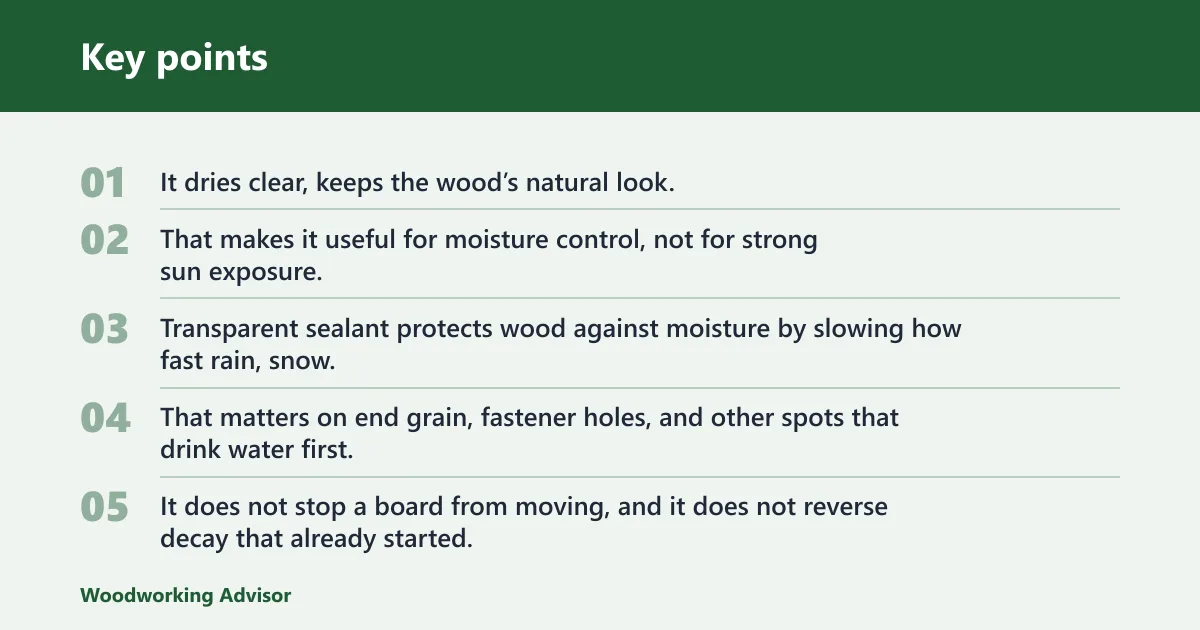
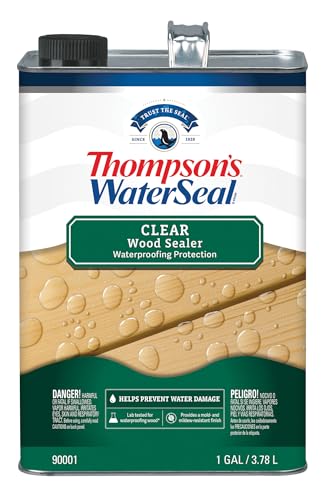


Clear deck sealer mainly repels water. It dries clear, keeps the wood’s natural look, and usually gives little UV protection because it has no pigment. That makes it useful for moisture control, not for strong sun exposure, and many products need reapplication after only a couple of years.
How clear deck sealer repels water
Transparent sealant protects wood against moisture by slowing how fast rain, snow, and meltwater soak into the fibers. That matters on end grain, fastener holes, and other spots that drink water first. It does not stop a board from moving, and it does not reverse decay that already started.
Why clear sealer gives limited sun protection
Clear sealers usually look natural because they go on clear and dry clear. That look comes with a tradeoff: most deck sealers lack UV-blocking pigment. Bob Vila notes that clear sealants rarely provide much UV protection, so a sun-exposed deck usually needs pigment if you want better color retention.
How long clear sealers usually last
Many deck sealers last only a couple of years before reapplication. Treat the coating as routine maintenance, not a repair. Once water stops beading on the surface, protection is fading and the wood is more open to moisture.
Does water seal help in winter?
Yes, but only in the right condition. Water seal can reduce how much snow and meltwater enter sound wood, which helps slow winter wetting. It is less useful on a deck with checking, rot, loose boards, or drainage issues, where the bigger problem is water trapped in the structure.
Snow, meltwater, and freeze-thaw cycling
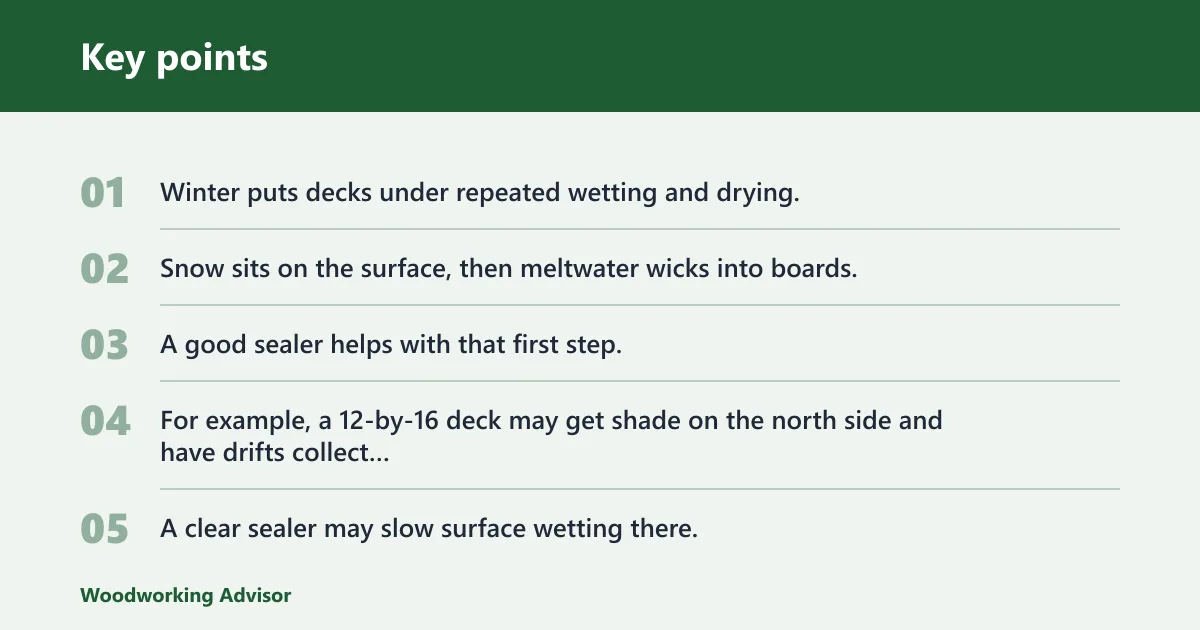
Winter puts decks under repeated wetting and drying. Snow sits on the surface, then meltwater wicks into boards, then temperature swings pull that moisture through freeze-thaw cycling. A good sealer helps with that first step, but it cannot change a deck’s movement or stop structural water from lingering under the boards.
For example, a 12-by-16 deck may get shade on the north side and have drifts collect along the rail posts. A clear sealer may slow surface wetting there, but if the posts sit in standing meltwater because the deck has poor drainage, the coating only delays the same problem.
When sealing helps and when it only delays damage
Sealing tends to help most when the deck is sound, dry, and still shedding water normally. It only buys time when the surface is already checked, the end grain is open, or the boards are cupping from long exposure. In those cases, water seal may slow damage, but it does not remove the cause.
A common first-timer mistake is sealing over loose fasteners and hoping the coating will solve squeaks and movement. It will not. If screws back out, boards lift, or gaps widen from movement, fix the fastening and drainage first, then decide whether a sealer or stain still makes sense.
Which deck conditions make winter sealing a poor bet?
Winter sealing is often a poor bet on decks with active wood rot or mildew, open cracks, loose boards, or water ponding between joists. Those are failure modes, not finish problems. A sealer can slow moisture entry, but it cannot restore wood fibers that have already broken down.

Water seal vs. deck stain
Clear sealer and deck stain are not the same product. Clear sealer focuses on moisture repellency. Deck stain adds pigment for UV protection, and semi-transparent versions can still show wood grain while giving better sun protection than a clear coating.
Clear sealer versus pigment-based stain
Deck stains add color pigment and improve sun protection. Common tones include Natural, Browns, Cedars, and Redwoods. If your deck gets strong summer sun or reflected light from snow, stain is usually the better choice because the pigment helps slow color fade and surface breakdown.
Semi-transparent stain and wood tone choices
Semi-transparent stain sits between bare-looking wood and a fully opaque coating. It lets grain show while adding enough pigment to help with UV exposure. That makes it a practical option when you want the deck to stay close to its natural tone but need more sun defense than a clear sealer can provide.
Why stain is usually better for sun exposure
Most clear sealers offer little to no UV protection. Stain is usually better for sun exposure because the pigment does work that clear coatings cannot. If the deck is shaded most of the year, clear sealer can be reasonable; if it is exposed all day, stain usually gives a better balance of appearance and protection.
Deck seal decision matrix
This table helps you decide whether water seal is worth applying now or whether you need repair, stain, or drainage work first. Use it as a winter-care screen, not as a one-size-fits-all answer.
| Deck age | Surface condition | Climate exposure | Winter moisture exposure | Product type | Expected benefit | When not to use it | Recommendation | Rationale |
|---|---|---|---|---|---|---|---|---|
| Newer deck | Clean, dry, sound boards | Moderate sun, normal wetting | Light snow, brief meltwater | Clear deck sealer | Slows moisture entry and keeps a natural look | Do not use on wet wood or before curing time is available | Yes | The deck is in good shape, so water repellency can help before winter wetting starts. |
| Older deck | Minor checking, light wear, no rot | Mixed shade and sun | Snow piles, repeated thaw cycles | Deck stain | Better sun protection with some moisture resistance | Do not use clear sealer if the goal is to slow UV damage | Yes, but use stain | Clear sealer can buy time, yet stain is the better fit when weathering and sun exposure are already visible. |
| Older deck | Heavy checking, cupping, open end grain | Full shade, cold nights | Wet snow that lingers | Repair first, then consider stain or sealer | Limited if repairs are skipped | Do not seal over active movement or damaged fibers | No | Sealer cannot fix movement or broken wood structure, so the coating would only hide the problem. |
| Any age | Loose boards, rot, mildew, or poor drainage | Freeze-thaw cycling | Standing meltwater under and between boards | Drainage or repair work | Very little from coating alone | Do not use clear sealer as a substitute for repair | No | Moisture is entering faster than a coating can control, so the fix is structural, not cosmetic. |
How to tell if your deck still has protection
A simple water test is a common quick check to see whether water beads up or absorbs quickly on the wood. If water beads on the wood, some protection remains. If it absorbs quickly and leaves the surface darkened, the sealer is fading or gone and the deck is ready for another coat, assuming the wood is still sound.
The water test on wood
Place a few drops of water on a clean spot and watch what happens. Beading means the surface still repels water. Fast absorption means the finish is no longer blocking moisture well. Use the test on several boards, because weathered areas often fail before protected ones do.
What fast absorption means
Fast absorption does not always mean the deck needs only more finish. It can also point to worn fibers, open grain, or end grain that soaks water faster than the rest of the board. If the wood feels soft, splinters easily, or stays dark for a long time, inspect for rot before recoating.
When to reapply instead of waiting for visible damage
Reapply when the water test fails, not after the deck turns gray or starts checking badly. Waiting for visible damage leaves less protection going into winter. If the deck is already weathered but still structurally sound, a stain or a repair-plus-coating plan is usually better than another coat of clear sealer alone.
How to seal a wood deck properly
Proper sealing starts with prep. Clean the deck, let it dry, and repair damaged boards before you open the can. Apply an even coat only when temperatures and cure time will work in your favor. If winter weather is close, timing matters as much as product choice.
Prep: clean, dry, and repair first
Before you coat any deck, clean the surface first. Sweep off grit, wash away mildew and old residue, and let the boards dry fully. Replace or secure loose fasteners, fix lifted boards, and address open gaps caused by damage. A coating over dirt or wet wood bonds poorly and can fail early.
- Clear debris from boards, joints, and corners.
- Clean the wood so the surface is free of dirt, algae, and loose finish.
- Repair rot, loose boards, popped fasteners, and damaged trim.
- Allow the deck to dry before applying any coating.
- Apply an even coat according to the product label.
- Keep foot traffic off the deck until the coating cures.
Application steps for water seal
Use a brush, pad, or sprayer that lets you keep coverage even. Work with the grain and avoid puddles. Focus on cut ends, rail posts, and other moisture-entry points. If the product calls for a second coat, apply it only while the first coat is still within the label’s recoat window.
Temperature and cure-time checks before winter weather
Do not rush application into cold, damp conditions. Most coatings need dry wood and enough time to cure before snow or rain returns. Temperature swings can stress a fresh coating, so check the label for application and cure limits, then leave a safe weather window before the next storm.
Deck gaps and problem spots
Gap treatment is a separate job from deck sealing. A liquid rubber coating is waterproof and flexible, and it can be used to seal gaps between deck boards, but it is not a cure for rot, warped lumber, or framing issues. Clean surfaces and cure time matter here too.
When liquid rubber coating makes sense
Liquid rubber makes sense when the goal is to block water movement through specific gaps or seams that are otherwise sound. It is a gap-sealing product, not a general deck finish. Use it where board gaps are part of a moisture problem, not where the wood itself is failing.
Why board gaps need clean surfaces
The coating has to bond to the gap edges, so the surface must be clean before application. Dust, oils, and old finish can stop adhesion. The coating must also be allowed to cure after application, or it can wash out, stay tacky, or fail before the next wet cycle.
What sealing cannot fix between boards or under framing
Sealing cannot correct cupping, open end grain from decay, or drainage problems under the deck. It also will not fix hidden rot in joists or ledgers. If water is trapped below the boards, the right solution is airflow, slope, drainage, and repair, not more coating.
Frequently asked questions
Can you still seal your wood deck?
Yes, if the wood is still sound and the surface is not already failing. A deck with light wear or fading can still benefit from a clear sealer or stain. A deck with rot, deep checking, or loose boards needs repair first, because sealer will not stabilize damaged lumber.
How to seal a wooden deck
Use the same process you would for any exterior wood surface: clean, dry, inspect, repair, then coat. For winter care, the main question is whether the finish can cure before freeze-thaw conditions return. If not, wait for a better weather window.
Sponsored / affiliate links. As an Amazon Associate I earn from qualifying purchases. I may earn additional commission from eligible campaigns.