When to Remove Masking Tape After Painting (Wet or Dry?)
Pull painter’s tape right after the final coat, while the paint is still slightly wet or just dry to the touch, and never wait for it to cure. The tape makers split on the exact moment: 3M says dry to the touch, while FrogTape and Benjamin Moore say sooner. This guide compares each brand’s advice, lists clean-removal limits from 3 to 60 days, and shows the 45 degree pull. If you are still taping, see how long you can leave painters tape on before painting.
Wet or Dry? What the Tape and Paint Makers Say
Best Wall and Trim Tape Pick | |
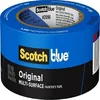 |
ScotchBlue Original Multi-Surface Painter’s Tape, 2 Inch x 60 Yds, $2.94 The tape behind 3M’s dry-to-touch, 45 degree removal instructions quoted below, and the baseline for the clean-removal table in this guide. Its 14 day rating leaves room for a slow weekend paint job.
|
As an Amazon Associate we earn from qualifying purchases. | |
Most advice online is flat and confident in both directions: “always pull it wet” or “always wait until it is dry.” The manufacturers’ own pages are less absolute, and they do not fully agree. Here is what each one actually tells you.
| Maker | When to pull the tape | Technique |
|---|---|---|
| 3M ScotchBlue (Original #2090 and Delicate #2080 data sheets) | Wait until the paint is dry to the touch | Lift the tape, slowly pull it back on itself, then remove at a 45 degree angle |
| FrogTape (how-to and technique pages) | While the paint is still slightly wet; slightly tacky on delicate surfaces | Pull slowly at a 45 degree angle |
| Benjamin Moore (fixing painting mistakes) | Immediately after the last coat | If paint lifts, touch up with a small angled brush |
| Rust-Oleum (technical data sheets for its sprays) | Right after the coating is applied; earlier is easier | Pull slowly so the coating edge is not disturbed |
Read together, the advice is more consistent than it looks. Every source says the same two things: remove tape after the final coat, and do it before the paint has had time to cure. The disagreement is only about minutes, from “while still wet” to “once it no longer feels wet.” Nobody recommends waiting until the next day.
Which end of that window to pick is a judgment call. Pulling while the paint is wet gives the crispest edge on a single clean coat, but a wet line can smear if the tape drags or the coat was heavy. Waiting until the paint is dry to the touch, as 3M instructs, is the safer reading if you are new to this or cutting a dark color against a light wall. Paint sheen also changes how forgiving a line is, which our Behr eggshell vs satin comparison covers.
Dry to the Touch vs Cured: Why Overnight Is Too Late
Dry to the touch means the surface no longer feels wet or transfers paint to a fingertip. Cured means the film has hardened through its full thickness, which takes far longer. Behr’s product pages for its Marquee and Ultra interior paints list about 1 hour to dry and 2 hours before recoating, and they note that cooler temperatures or higher humidity can slow drying and that darker colors may need extra time between coats. Full cure is measured in days or weeks, not hours.
That gap is the reason overnight is too late. Paint rolled or brushed up to a tape edge forms one continuous film across the tape and onto the wall. While the paint is wet or soft, the film separates cleanly at the tape edge. Once it has hardened, pulling the tape can tear the film along the line, which is how you get a ragged edge or a strip of fresh paint coming off with the tape. This is the mechanism trade painters describe as bridging; it is a general explanation rather than something the data sheets spell out.
3M rates ScotchBlue Original for 14 days of clean removal and its Delicate Surface tape for 60 days. It also treats paint under 24 hours old as fresh and rates only the Delicate Surface tape for it. Source: 3M ScotchBlue and Scotch Surface Guide.
If you want exact drying numbers for your paint, our guide to how long acrylic paint takes to dry and the Kilz page on dry and recoat times for primer cover the two most common cases.
Clean-Removal Windows: How Long Each Tape Can Stay On
Timing the pull is half the problem. The other half is how long the tape has been stuck down in total, because every tape has a clean-removal limit after which the adhesive can leave residue or lift the surface. These are 3M’s published interior ratings, taken from its surface guide.
| Tape | Built for | Interior clean removal |
|---|---|---|
| ScotchBlue Original #2090 | Walls, trim, baseboards, tile, glass | 14 days |
| ScotchBlue Baseboard + Trim #2093EL | Baseboards and trim | 14 days |
| ScotchBlue Ultra Sharp Lines #2098 | Walls and trim where line sharpness matters | 14 days |
| ScotchBlue Delicate Surface #2080 | Fresh paint at least 24 hours old, wood floors, wallpaper, veneer, cabinets | 60 days |
| Scotch Performance Painting masking tape #2050 | General painting masks | 5 days |
| Scotch General Purpose masking tape #2020 | Light-duty masking | 3 days |
Two things in that table are easy to miss. First, “masking tape” and “painter’s tape” are not interchangeable. The beige general-purpose rolls most people grab are rated for 3 days on 3M’s chart, against 14 for blue painter’s tape, so a job that drags on leaves you far less slack. Second, the clock starts when you press the tape down, not when you finish painting. Tape applied on Friday for a Sunday paint session has already used up two days of its allowance before the first coat goes on.
These ratings assume normal application conditions of 50 to 100 degrees Fahrenheit. 3M’s data sheet also lists UV resistance of up to 14 days for Original tape and up to 60 days indoors for Delicate Surface, so a taped window in direct sun is another reason not to stretch the limit.
How to Remove Painter’s Tape Step by Step
- Pick your moment: Decide whether you are pulling while the last coat is slightly wet (FrogTape, Benjamin Moore) or once it is dry to the touch (3M). Test a hidden stretch of paint with a light fingertip if you are using the dry-to-touch rule.
- Find a loose end: Start at a corner or the end of a strip where the tape has lifted slightly, so you are not prying at the edge of the paint line.
- Fold the tape back on itself: Lift the tape and pull it slowly back over itself, as 3M’s data sheets describe, rather than straight out from the wall.
- Pull at 45 degrees: Keep pulling slowly at a 45 degree angle, as both 3M and FrogTape instruct. A fast or 90 degree pull is what tears the edge.
- Keep tape away from the wall: Hold the removed tape away from the painted surface so wet paint on its back does not touch the wall.
- Check the line and touch up: Look along the line in good light. If a small section lifted, Benjamin Moore suggests a small angled brush to touch it up and blend the edges.
Should You Score the Tape Edge With a Knife?
Scoring is the step most online guides add, and it is worth being clear about where it comes from. Neither 3M’s data sheets nor FrogTape’s removal pages tell you to score the edge, and Benjamin Moore’s guide uses a different trick on the application side, brushing clear caulk along the tape edge before painting. Scoring is a common trade practice for tape that was left on until the paint hardened.
If you do it, use a sharp blade and the lightest pass that cuts the paint film without cutting into the wall. Drywall paper tears easily under a deep cut, and a blade dragged along stained or finished wood trim can scratch the finish. If you pull on time, you should not need to score at all.
Special Cases: Spray Paint, Multiple Coats, Textured Walls and Wood
Spray paint
Rust-Oleum’s technical data sheets for its consumer sprays tell users to remove masking right after the coating is applied, slowly, because the earlier the tape comes off, the easier it is. Sprays lay down a thin film that sets quickly, so the window is tighter than with brushed latex. Our guides on whether Rust-Oleum spray paint is oil-based and spraying wood furniture without sanding cover the paint side of the job.
Between coats
Leave the tape in place between coats and pull it after the last one. Benjamin Moore’s advice is to remove tape immediately when the last coat is done, which implies the tape stays on until then. Removing and re-taping between coats risks letting paint seep under a poorly re-sealed edge. If you are adding a second color or a stripe, FrogTape says to make sure the first paint is dry to the touch before taping over it.
Textured walls
On textured surfaces the problem is less about pull timing and more about the seal. FrogTape’s technique page recommends pressing the tape edge down firmly with a putty knife and painting with strokes parallel to or away from the tape. A poor seal lets paint creep under the tape, and no pull technique fixes that afterward. Rough panel surfaces behave the same way, as our wood paneling painting guide explains.
Fresh paint, finished floors and wood
For paint under 24 hours old, 3M points to its Delicate Surface tape, which has a gentler adhesive and a 60 day clean-removal rating. The same tape is the only ScotchBlue product 3M lists for finished hardwood floors, with a warning that polyurethane floor coatings applied poorly can lift when tape comes off, so test first. On cabinets and veneer, the Delicate tape is also the listed choice, which pairs with our guide to painting veneer furniture. For more finishing topics, browse our paints category.
Common Mistakes When Removing Masking Tape
- Waiting until the paint has cured. The hardened film bridges the tape edge and tears when you pull.
- Ignoring the clean-removal limit. A 3 day masking tape left for a week is much more likely to leave residue than blue painter’s tape inside its 14 days.
- Pulling fast or straight out. Both 3M and FrogTape instruct a slow pull at 45 degrees.
- Skipping the edge seal. Benjamin Moore and FrogTape both recommend pressing the tape down with a putty knife so paint cannot creep under it.
- Using standard tape on paint under 24 hours old. 3M rates only its Delicate Surface tape for fresh paint.
- Over-loading the brush at the tape line. Benjamin Moore advises against applying too much paint at the tape border.
Frequently Asked Questions
Do You Remove Masking Tape When Paint Is Wet or Dry?
Either, as long as it is after the final coat and before the paint cures. FrogTape and Benjamin Moore say to pull it while the paint is still slightly wet or immediately after the last coat, while 3M’s instructions say to wait until the paint is dry to the touch. Never wait overnight.
How Long Can You Leave Masking Tape On After Painting?
Remove it the same day, shortly after the last coat. The clean-removal numbers are maximum total time on the surface, counted from when you apply it: 14 days for ScotchBlue Original, 60 for Delicate Surface, and 3 for 3M’s general-purpose masking tape. Treat those as limits, not targets.
Should You Remove Painter’s Tape Between Coats?
No. Leave it up between coats and remove it after the final coat. Benjamin Moore recommends removing tape immediately when the last coat is done. If you add a second color or stripe, FrogTape says the first paint should be dry to the touch before you tape over it.
Can You Leave Painter’s Tape On Too Long?
Yes. Every tape has a clean-removal limit. 3M rates ScotchBlue Original for 14 days, Delicate Surface for 60, and its general-purpose masking tape for 3. Past that, or after the paint has fully hardened across the edge, the tape is more likely to leave residue or tear the paint line.
What Should You Do If Paint Peels Off With the Tape?
Stop pulling, let the area dry, and touch it up. Benjamin Moore suggests a small angled brush to paint the spot, dragging it slowly and blending the edges. To prevent it next time, remove tape on schedule, pull slowly at 45 degrees, and press the tape edge down firmly before painting.
How Long After Painting Can You Put Tape on a Wall?
3M treats paint under 24 hours old as fresh paint and lists only its Delicate Surface tape for it. For paint that is more than 24 hours old, 3M’s Original tape is rated, up to its 14 day limit. Always check that the paint is fully dry first.
Conclusion
Pull the tape slowly at 45 degrees right after the final coat, either while the paint is slightly wet or once it is dry to the touch, and keep the total time on the wall inside your tape’s clean-removal limit. For more on staying inside that limit, see how long painters tape can stay on.
Sponsored / affiliate links. As an Amazon Associate I earn from qualifying purchases. I may earn additional commission from eligible campaigns.