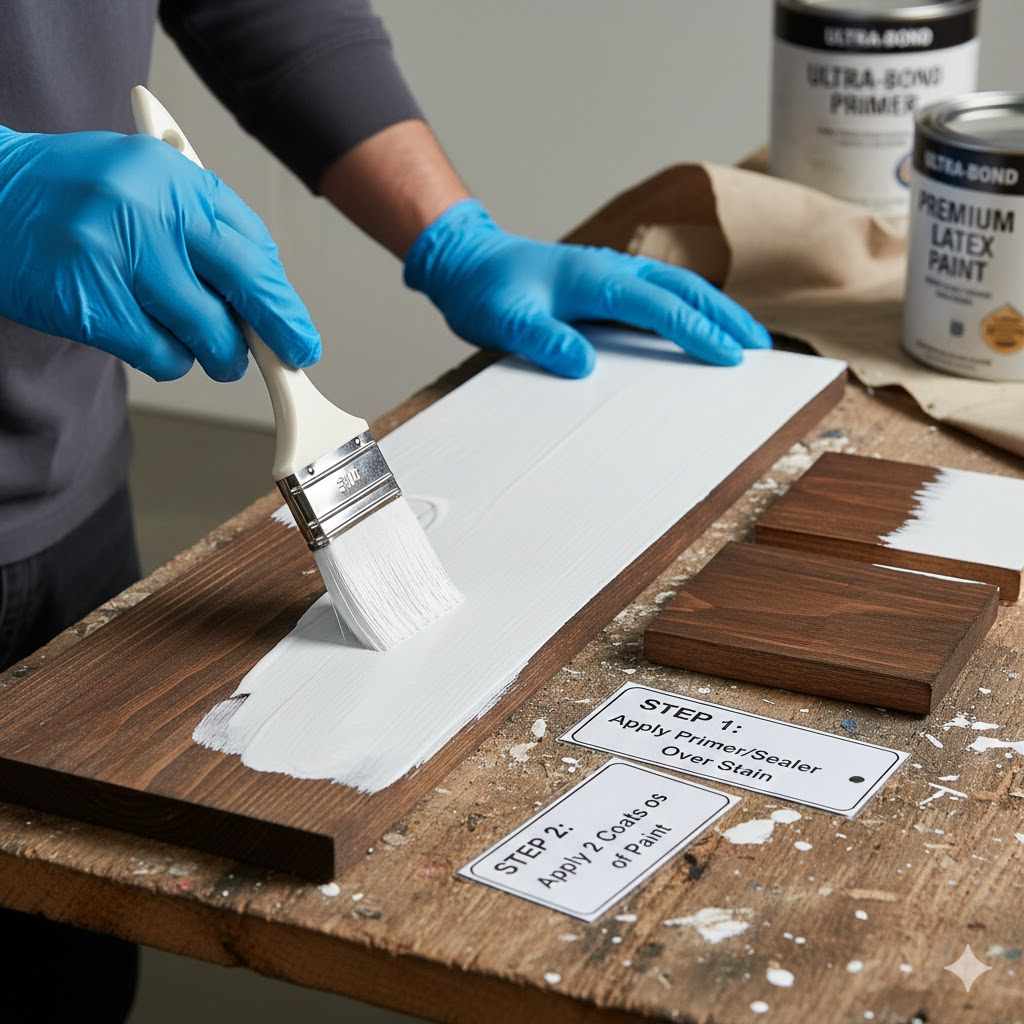
Can You Paint Over Woodstain: A Proven, Essential Guide
Yes, you can absolutely paint over wood stain! The key to a durable, beautiful finish is proper preparation. This involves cleaning the surface, scuff sanding, and—most importantly—using a high-quality stain-blocking primer. This simple process ensures your new paint color adheres perfectly and looks flawless for years to come.
Hello there, fellow creator! I’m Md Meraj, and in my workshop, I’ve seen it all. One question I hear time and time again is about those old, dark, or dated wood-stained pieces. Maybe it’s a set of kitchen cabinets from another decade or a dark-stained bookcase that no longer fits your style. You love the piece, but not the color. So, what can you do?
The good news is you don’t have to live with that outdated finish. You can give it a fresh, modern look with a simple coat of paint. It might seem like a tricky job, but I promise it’s one of the most rewarding DIY projects you can tackle. I’m here to walk you through every step, making it simple and fun. Let’s turn that old wood piece into something you’ll be proud of.
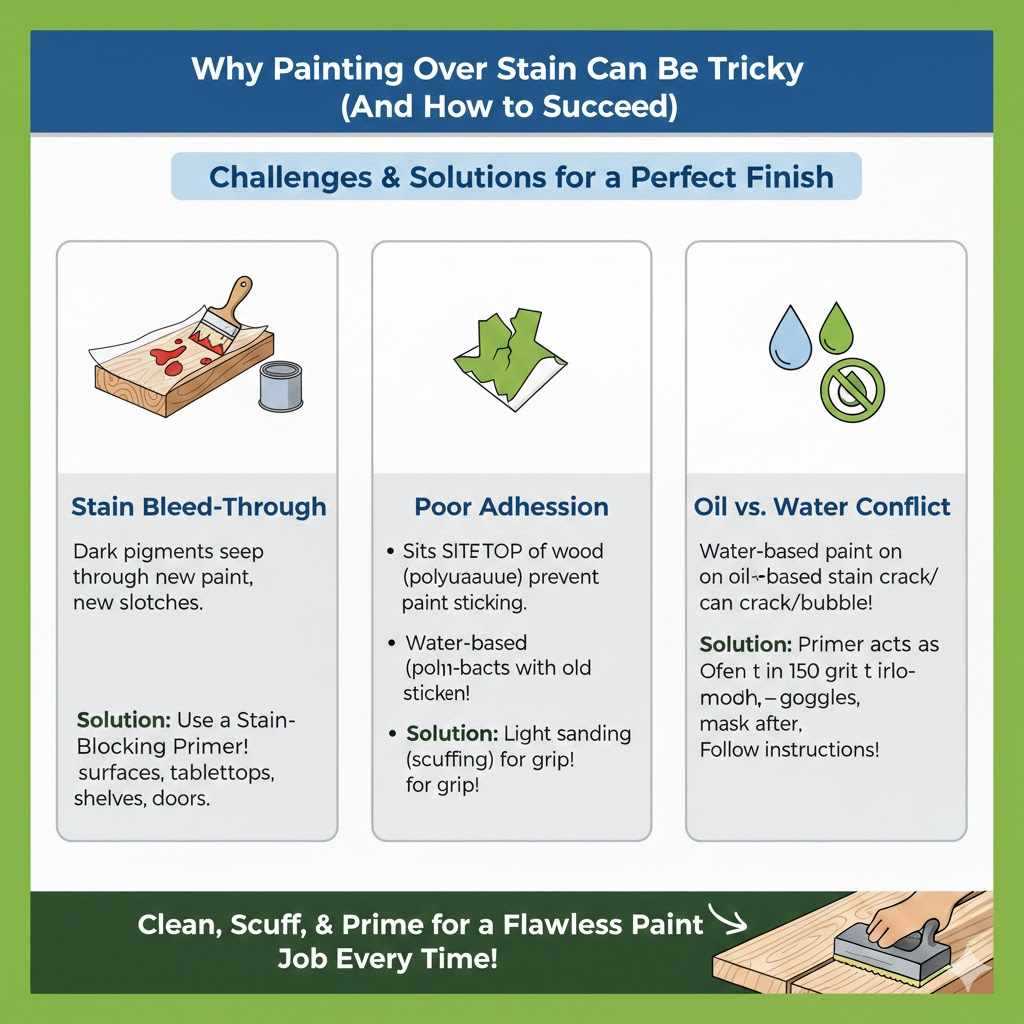
Why Painting Over Stain Can Be Tricky (And How to Succeed)
Before we grab our brushes, it’s helpful to know what we’re up against. Wood stain isn’t like paint; it soaks into the wood fibers instead of sitting on top. This can cause a few challenges if you don’t prepare correctly. But don’t worry, every challenge has a simple solution.
- Stain Bleed-Through: The biggest hurdle is “bleed-through.” This is when the pigments from the old stain, especially dark red or oil-based ones, seep through your new paint. It leaves frustrating yellowish or pinkish splotches on your beautiful new finish. The secret weapon against this is a special type of primer called a stain-blocking primer.
- Poor Adhesion: Many old stains were sealed with a clear topcoat like polyurethane or lacquer. Paint has a hard time gripping onto these slick, non-porous surfaces. Without proper prep, your new paint could easily scratch, chip, or peel off. A light sanding, or “scuffing,” is all you need to give the primer something to grab onto.
- Oil vs. Water Conflict: An old rule in painting is that water and oil don’t mix. Many older stains are oil-based. If you try to apply a water-based (latex) paint directly over an oil-based stain, the paint can bubble, crack, or fail to bond. Again, the right primer acts as a perfect bridge, allowing you to use any type of paint you want on top.
Understanding these small challenges is the first step to victory. With just a little cleaning, scuffing, and the right primer, you can guarantee a perfect paint job every time.
When to Paint vs. When to Strip and Restain
Painting is a fantastic solution, but is it always the right one? Sometimes, stripping the old finish is a better choice. It really depends on the piece of wood and your end goal. Making the right decision now will save you a lot of time and effort later. Here’s a simple guide to help you choose the best path for your project.
| Situation | Our Recommendation | Why It’s the Best Choice |
|---|---|---|
| The finish is just a dated color, but the surface is smooth and in good shape. | Paint Over It | Painting is much faster and less messy than stripping. If the underlying surface is sound, all you need is good prep to get a beautiful, modern look. |
| The old finish is chipping, cracking, or peeling badly. | Strip and Refinish | Painting over a failing finish is like building a house on a bad foundation. The new paint will just peel off with the old stuff. Stripping gives you a clean, stable slate to work from. |
| You have a high-value or sentimental antique piece. | Consult a Pro (or Strip Carefully) | Painting can significantly lower the value of a true antique. If the piece is precious, consider restoring its original finish or consulting a professional furniture restorer before making any changes. |
| You still want to see the beautiful wood grain. | Strip and Restain | Opaque paint will cover the wood grain completely. If you love the look of the wood but just want a different color, your best bet is to strip the old stain and apply a new, lighter-colored one. |
| The piece has intricate carvings or details. | Paint Over It | Stripping chemicals and sanding can be very difficult to get into tiny nooks and crannies. Painting is often much easier for very detailed pieces, as primer and paint can reach where sandpaper can’t. |
The Essential Toolkit: Everything You’ll Need
Great work starts with having the right tools on hand. You don’t need a professional workshop for this project—just a few simple items that you can find at any hardware store. Gathering everything before you start makes the whole process smoother and more enjoyable.
For Prep Work:
- Cleaner: A degreasing cleaner like Trisodium Phosphate (TSP) substitute or a simple solution of dish soap and warm water.
- Clean Rags or Sponges: You’ll need some for cleaning and others for wiping away dust.
- Sandpaper: Medium-grit (120-150 grit) sandpaper or a sanding block. This is for scuff sanding, not heavy removal.
- Painter’s Tape: To protect any areas you don’t want to get paint on, like hinges or glass.
- Drop Cloths: To protect your floor and surrounding area from drips and dust.
For Priming & Painting:
- Stain-Blocking Primer: This is the most important item on the list! Shellac-based or oil-based primers are usually best.
- Your Choice of Paint: High-quality latex (water-based) or enamel paint works great over the right primer. A satin or semi-gloss finish is very durable for furniture and cabinets.
- Brushes and Rollers: A good quality 2-inch angled brush for cutting in edges and a small foam roller for large, flat surfaces. Foam rollers give a super-smooth finish with no brush marks.
- Paint Tray: A simple plastic tray for your roller.
For Safety:
- Gloves: To protect your hands from cleaners and paints.
- Mask or Respirator: Especially important when sanding or using oil-based or shellac-based primers, which have strong fumes.
- Safety Glasses: Always a good idea to protect your eyes from splashes or dust.
Step-by-Step Guide: How to Paint Over Wood Stain Perfectly
Alright, with our tools ready and our plan in place, it’s time for the fun part! Just follow these steps one by one. Take your time and enjoy the process of bringing your vision to life. This is where the magic happens.
Step 1: Inspect and Test Your Stained Surface
First, give your piece a good look. Check for any deep scratches, dents, or damage that might need to be filled with wood putty. Now is the time to make those small repairs. Next, it’s helpful to know if your stain is oil-based or water-based. Here’s a super simple test:
- Dampen a clean, white rag with denatured alcohol.
- Find a small, hidden spot on your furniture (like the back of a leg or inside a door).
- Rub the spot gently with the rag. If some of the color or finish comes off onto the rag, you’re likely dealing with a shellac or latex finish. If nothing comes off, it’s probably an oil-based stain with a polyurethane topcoat.
Don’t worry too much about the results—a good stain-blocking primer will work on either. This test just helps you know what you’re working with.
Step 2: Clean the Surface Thoroughly
Do not skip this step! Over the years, furniture and cabinets collect grease, grime, and oils from our hands. Paint and primer cannot stick to a dirty surface. Use your TSP substitute or soapy water and a sponge to give the entire piece a good scrub. Make sure to rinse it well with a clean, damp cloth to remove any leftover soap residue. Let it dry completely. A clean surface is the foundation of a durable paint job.
Step 3: Scuff Sand for Better Grip
We are not trying to sand off the old stain. I repeat: you do not need to sand down to bare wood! The goal here is just to “scuff up” the glossy topcoat. This creates millions of microscopic scratches that give the primer something to bite into.
Take your 120 or 150-grit sandpaper and lightly rub it over the entire surface. You’re just looking to take the shine off. It should look dull and chalky when you’re done. Once finished, wipe away all the sanding dust with a clean, damp cloth or a tack cloth. Let the piece dry one more time.
Step 4: Choose and Apply the Right Primer
This is the most critical step for success. A regular wall primer won’t do the job here. You need a stain-blocking primer. This special primer creates a barrier that stops the old stain from bleeding through your new paint. My personal go-to is a shellac-based primer, but oil-based versions also work wonders. If you’re working on an old piece, remember that homes and furniture built before 1978 might have lead-based paint. For safety information, it’s always wise to check resources like the Environmental Protection Agency (EPA) guidelines.
Using your brush and roller, apply one thin, even coat of primer to the entire piece. Don’t worry if it looks a bit streaky; its job is to seal, not to provide perfect coverage. Let the primer dry completely according to the manufacturer’s instructions on the can. This can take anywhere from one hour to several hours. Don’t rush it!
Step 5: Apply Your First Coat of Paint
Once the primer is fully dry, it’s time to add your color! Stir your paint well. Using your angled brush for the edges and your foam roller for the flat surfaces, apply a thin, even coat of paint. A common beginner mistake is to apply paint too thickly, thinking it will cover better. This actually leads to drips, long drying times, and a weak finish. Two thin coats are always better than one thick one. Let this first coat dry completely.
Step 6: Apply the Second Coat
After the first coat is dry to the touch (check the can for recoat times), you can apply your second coat. This is where the color will really come to life, looking rich and uniform. Use the same technique as before—thin and even strokes. Once you’re done, give the piece a final check for any drips or missed spots. Then, let it cure. “Drying” and “curing” are different. Paint might be dry to the touch in a few hours, but it takes days or even weeks to fully harden, or cure. Be gentle with your newly painted piece for a while.
Step 7: Add a Topcoat (Optional but Recommended)
For high-traffic pieces like kitchen cabinets, tabletops, or chairs, adding a protective topcoat is a great idea. A water-based polycrylic is a fantastic choice because it’s very durable and won’t turn yellow over time like oil-based polyurethane can. Apply one or two thin coats with a clean brush, lightly sanding with 220-grit sandpaper between coats for an ultra-smooth finish.
Choosing Your Paint and Primer: A Simple Breakdown
Walking down the paint aisle can be overwhelming. Let’s make it simple. For painting over wood stain, the primer is your most important choice. It does the heavy lifting of blocking stains and ensuring your paint sticks for good.
| Primer Type | Best For… | Pros | Cons |
|---|---|---|---|
| Shellac-Based Primer | Blocking heavy stains (knots in pine, dark red mahogany), odors, and providing excellent adhesion on slick surfaces. My top choice! | – Dries very quickly – The absolute best at blocking bleed-through – Sticks to almost anything | – Strong fumes (requires good ventilation) – Requires denatured alcohol for cleanup |
| Oil-Based Primer | A great all-around choice for blocking common wood stains and providing a durable base. | – Excellent stain blocking – Very durable and tough finish – Sands easily for a smooth surface | – Slower drying time – Strong fumes and requires mineral spirits for cleanup |
| Water-Based Stain-Blocking Primer | Blocking mild stains and for projects where low odor and easy cleanup are top priorities. | – Low odor and low VOCs – Cleans up easily with soap and water – Dries relatively quickly | – May not be strong enough for heavy stains like mahogany or pine knots |
For your paint, a high-quality acrylic latex or enamel paint is perfect. Look for products labeled for “cabinets and trim,” as they are formulated to be extra durable and create a hard, smooth finish.
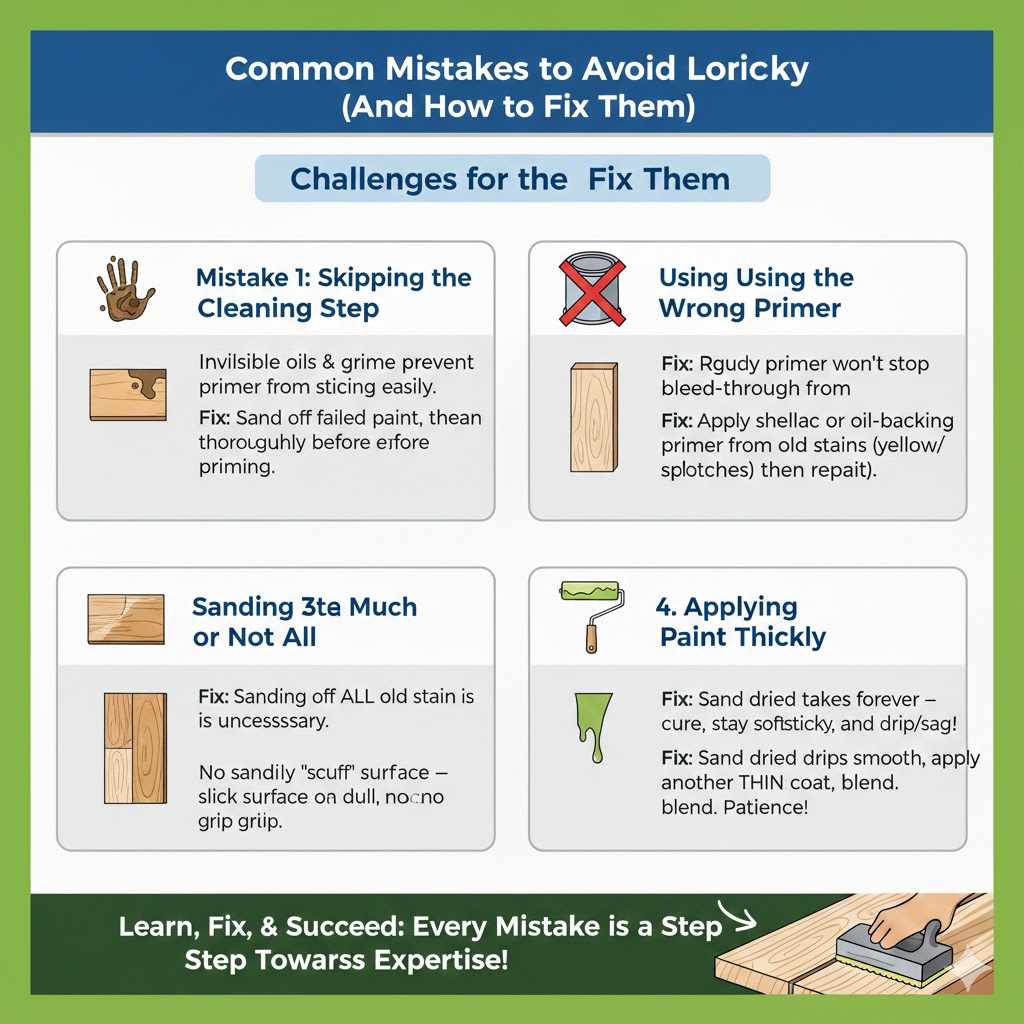
Common Mistakes to Avoid (And How to Fix Them)
We all make mistakes, but learning from them is what turns us into experts. Here are a few common slip-ups I see in the workshop and how you can easily sidestep them.
- Mistake 1: Skipping the Cleaning Step. You wouldn’t paint a dirty wall, so don’t paint dirty furniture! Even if it looks clean, invisible oils and grime will prevent your primer from sticking.
Fix: If your paint is scratching off easily, you may need to sand it off and start again with a thorough cleaning. It’s better to take 15 minutes to clean now than to have a failed paint job later.
- Mistake 2: Using the Wrong Primer (or No Primer at All). This is the number one cause of paint failure over stain. Regular wall primer will not stop bleed-through.
Fix: If you see stains bleeding through your first coat of paint, stop! Let it dry, then apply a proper coat of shellac-based or oil-based primer directly over the paint. Then you can continue painting.
- Mistake 3: Sanding Too Much or Not at All. Some people think they need to sand off all the old stain, which is a huge, unnecessary job. Others skip sanding altogether, leaving a glossy surface the primer can’t stick to.
Fix: Remember, you’re just “scuffing,” not stripping. All you need is a dull, non-shiny surface.
- Mistake 4: Applying Paint Too Thickly. One thick coat will take forever to cure, can stay soft and sticky for weeks, and is more likely to drip and sag.
Fix: If you have drips, wait for the paint to dry, sand the drip smooth, and then apply another thin coat to blend it in. Patience is key!
Frequently Asked Questions (FAQ)
Can I paint over stained wood without sanding?
While you might be able to get away with it using a very strong bonding primer on a non-glossy surface, I almost always recommend a light scuff sanding. It takes just a few minutes and dramatically improves how well the primer and paint adhere. Think of it as cheap insurance for a long-lasting finish.
What is the best primer to use over wood stain?
For guaranteed results, a shellac-based primer like Zinsser B-I-N is my top recommendation. It blocks even the toughest stains and sticks to virtually any surface. An oil-based stain-blocking primer is another excellent choice.
Do I really have to use a primer to paint over stained wood?
Yes, absolutely. A primer does two essential things: it ensures the paint adheres properly to the slick surface, and it creates a barrier to stop the old stain color from bleeding through into your new paint. Skipping primer is the fastest way to a failed project.
How can I tell if the stain on my furniture is oil-based or water-based?
The easiest way is the denatured alcohol test mentioned earlier. Rub a hidden spot with a rag soaked in denatured alcohol. If the finish gets soft or color comes off, it’s likely a shellac or water-based finish. If nothing happens, it’s almost certainly an oil-based varnish or polyurethane over the stain.
Will the wood grain show through the paint?
If the wood has a deep, heavy grain like oak, you might still see the texture of the grain through the paint, even after several coats. Some people love this look because it shows the piece is still real wood. If you want a perfectly smooth surface, you may need to apply a few coats of a grain-filling primer first.
How many coats of paint will I need over the primer?
You should always plan on applying two thin coats of paint. The first coat provides the initial coverage, and the second coat evens everything out for a rich, uniform color and durable finish.
You’ve Got This!
And there you have it—everything you need to know to confidently paint over that old wood stain. It’s not about having special skills or expensive tools; it’s about following a few simple, proven steps. By taking the time to clean, scuff, and prime properly, you are setting yourself up for a beautiful, professional-looking result that you can be proud of for years to come.
Transforming a piece of furniture or your kitchen cabinets with paint is one of the most impactful DIY projects you can do. It completely changes the feel of a room and gives new life to something that was once tired or dated. So go ahead, pick out that perfect color, and get started on your project. You’re more than ready. Happy painting!