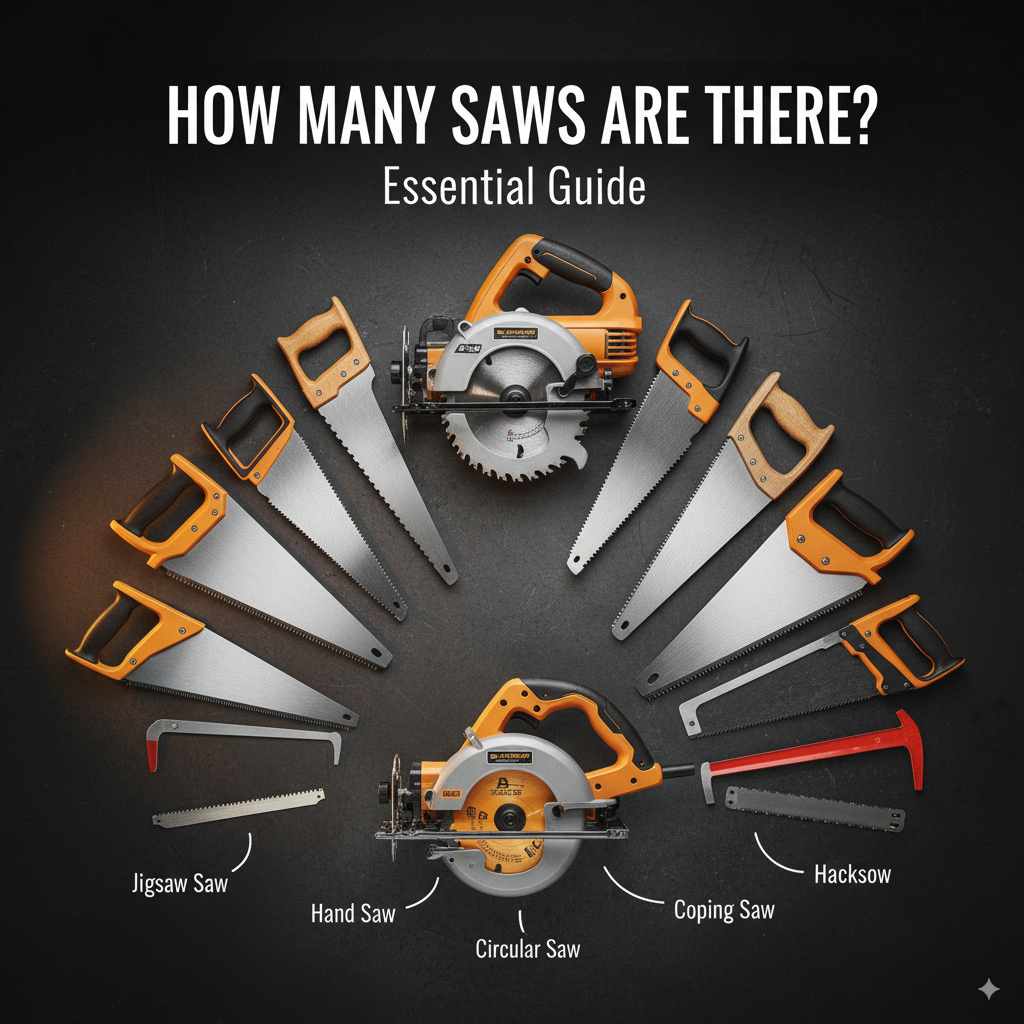
How Many Saws Are There? Essential Guide
For beginners asking “how many saws are there?”, the answer is: it depends on how you categorize them! There are dozens of saw types, but for most home DIYers, understanding a core handful of manual and a few key power saws is more than enough to get started building and fixing. This guide simplifies the world of saws to help you choose the right tool for your project.
Welcome to the workshop! If you’ve ever found yourself staring at a pile of wood, wondering what tool to use to cut it, you’re not alone. The sheer variety of saws can be a bit overwhelming when you’re just starting out. It might feel like there are a million different kinds, each with a fancy name and a specific job. But don’t let that stop you! The truth is, most woodworking, DIY, and home repair tasks can be handled with just a few essential saws. We’re here to make it simple.
This guide will walk you through the most common and useful saws out there, explaining what they do and when you might need them. Think of it as your friendly introduction to the cutting edge of DIY. No jargon, just clear explanations and helpful advice to build your confidence and get your projects done right. Let’s explore how many saws there really are, and more importantly, which ones you’ll likely use the most!
Understanding Saw Categories
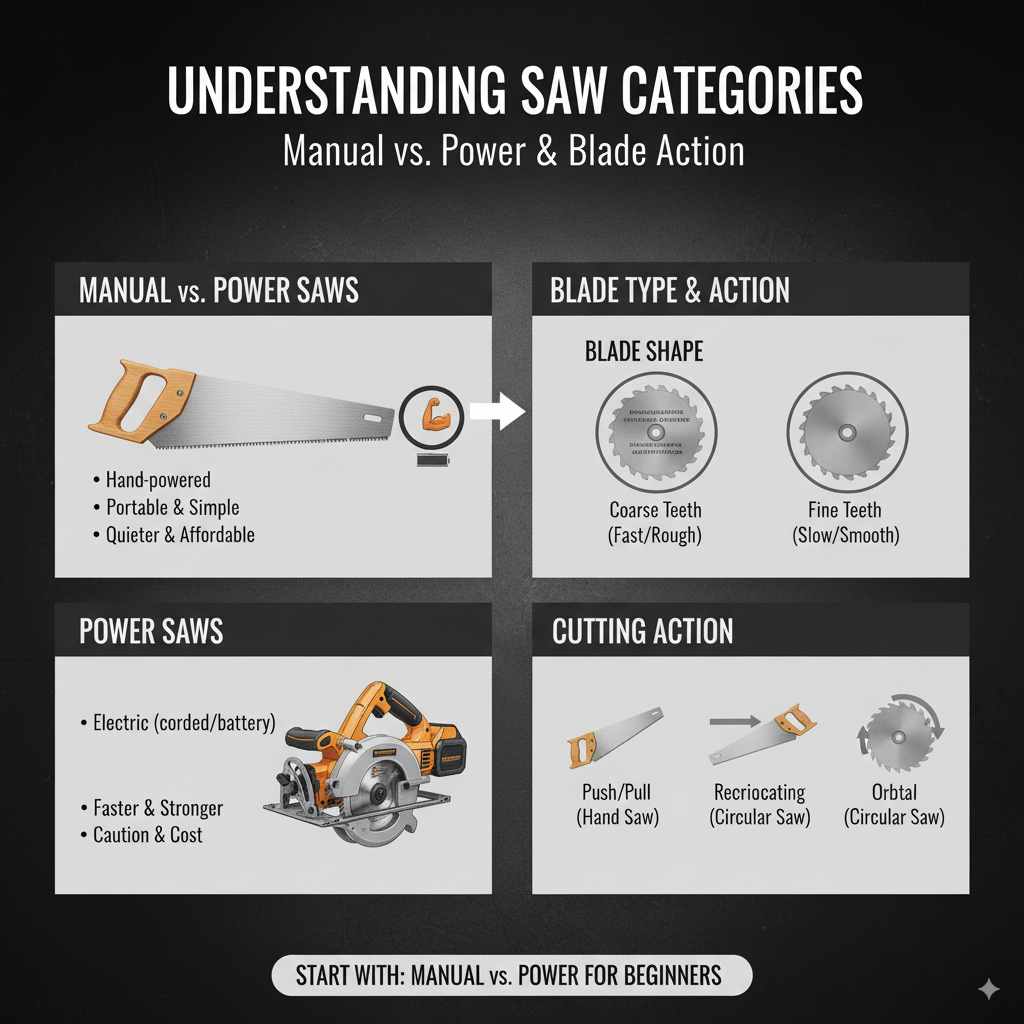
Before we dive into specific saw types, it’s helpful to understand how saws are generally grouped. This makes it easier to navigate the vast world of cutting tools. Think of it like organizing your toolbox – everything has its place!
Manual vs. Power Saws
This is the most basic way to split saws into two large families:
- Manual Saws: These are the trusty, no-electricity-needed saws. You provide all the power with your own two hands! They are usually simpler, more affordable, and great for quiet work or when portability is key. Think of your classic handsaw.
- Power Saws: These saws use electricity (plug-in or battery-powered) to do the cutting work. They are much faster and can handle tougher jobs, but they also require more caution and can be more expensive.
Blade Type and Action
Another way to think about saws is by how their blades are designed and how they cut:
- Blade Shape: Are the teeth fine or coarse? Are they on the edge of a flat blade or part of a continuous loop?
- Cutting Action: Some saws push their blade through the material, like a handsaw. Others use a reciprocating (back-and-forth) or orbital motion.
For a beginner, focusing on the manual vs. power distinction is the most practical starting point.
Essential Manual Saws for Beginners
These are the workhorses you’ll reach for again and again. They’re fundamental for any toolbox and forgiving for newcomers.
Handsaw
If you picture a saw, you’re probably imagining a handsaw. It’s the classic tool for cutting wood by hand. They come with different numbers of teeth per inch (TPI) – more teeth mean finer, smoother cuts, while fewer teeth cut faster through thicker material.
- What it’s good for: Rough cuts, trimming boards, simple DIY tasks, and cutting small pieces of lumber.
- Beginner Tip: Start with a medium-toothed handsaw (around 7-10 TPI) for general-purpose use. Always mark your cut line clearly and start the cut by drawing the saw back to create a small groove for the blade to sit in.
Coping Saw / Fret Saw
These saws look a bit delicate with their thin, narrow blades held under tension by a frame. They are designed for making intricate cuts and curves.
- What it’s good for: Cutting out shapes, making curves, trimming molding, and detailed work where a straight cut isn’t needed. The coping saw is a bit sturdier than a fret saw.
- Beginner Tip: Keep the blade tension correct – too loose, and it’ll buckle; too tight, and it might break. Cut slowly and deliberately, especially on tight curves.
Backsaw (Dovetail Saw, Tenon Saw)
A backsaw is a type of handsaw that has a stiffening rib (the “back”) along the top edge of the blade. This makes the blade extremely rigid, allowing for very precise and straight cuts.
- What it’s good for: Fine woodworking joinery, cutting tenons, dovetails, and making very accurate straight cuts.
- Beginner Tip: For precise joinery, practice on scrap wood. Use a bench hook or vice to hold your work steady and guide the saw accurately.
Japanese Pull Saw
These saws are gaining huge popularity among DIYers for a good reason! Unlike Western saws that push to cut, Japanese saws cut on the pull stroke. This design allows for thinner blades, which means incredibly efficient and precise cuts with less effort.
- What it’s good for: General woodworking, crosscuts, rip cuts (cutting along the grain), and very clean cuts that often require little to no sanding afterward.
- Beginner Tip: Embrace the pull stroke! Let the saw do the work. They can feel different at first, but many find them much easier to control and more satisfying to use than Western handsaws for fine work.
Essential Power Saws for Beginners
Once you’re ready to tackle larger projects or need to cut faster, power saws become invaluable. Safety is paramount with these tools, so always read your user manual and wear safety glasses.
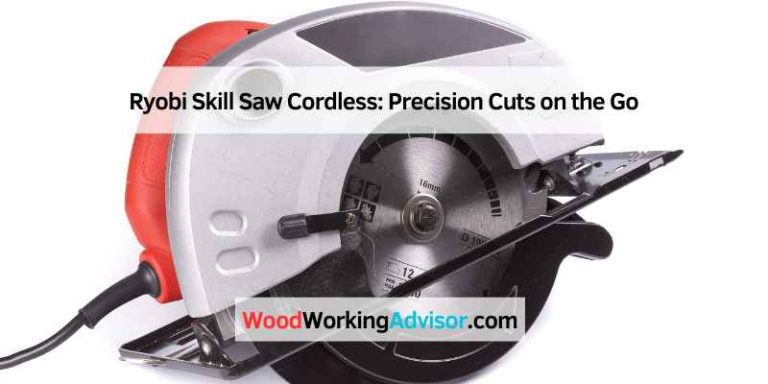
Circular Saw
This is arguably one of the most versatile power saws. It has a round, spinning blade and is excellent for making straight cuts through lumber, plywood, and other sheet materials.
- What it’s good for: Breaking down large sheets of plywood, cutting lumber to length (crosscuts), cutting boards to width (rip cuts), and making angled cuts (bevels) with adjustable shoe.
- Beginner Tip: Always use a straight edge (like a clamped-on level or a speed square) as a guide for long, straight cuts. Ensure the blade guard operates smoothly. Never force the saw; let it cut at its own pace. For more on safe use, check out resources from organizations like OSHA on portable cutting tools.
Jigsaw
The jigsaw has a thin, reciprocating blade that moves up and down. Its main strength is its ability to cut curves and intricate shapes in wood, but it can also make straight cuts with a guide.
- What it’s good for: Cutting curves, making irregular shapes, plunge cuts (starting a cut in the middle of a piece of wood), and detail work.
- Beginner Tip: Use a slower speed for finer control on curves. Keep the shoe plate flat on your workpiece. For straighter cuts, use a clamped miter saw or a piece of scrap wood as a fence.
Miter Saw (Chop Saw)
A miter saw is designed for making accurate crosscuts and angled cuts (miters). It has a blade that swings down onto the workpiece.
- What it’s good for: Cutting trim, framing, cutting multiple pieces of wood to the exact same length, and making precise angled cuts for projects like picture frames or moldings.
- Beginner Tip: These are fantastic for repetitive, accurate cuts. Always ensure the workpiece is firmly against the fence and held down. Understand how to set your angle accurately for perfect joints.
Reciprocating Saw (Sawzall)
This powerful saw has a long blade that moves back and forth rapidly. It’s often used for demolition, but can also be useful for rough cutting in various materials.
- What it’s good for: Demolition, cutting tree limbs, cutting pipes, rough cutting framing lumber, and general construction tasks where precision isn’t the top priority.
- Beginner Tip: This tool has a lot of power and vibration. Hold it with both hands, stand firm, and let its weight do the work. It’s not for delicate tasks, but it’s a strong performer when you need brute force.
Specialty Saws (Good to Know!)
While the saws above cover most needs, there are many other specialized saws. You might not need them initially, but it’s good to recognize them.
Table Saw
A table saw is a powerhouse for woodworking. It has a circular blade that protrudes through a flat table. It’s used for ripping lumber to width and making accurate straight cuts.
- What it’s good for: Ripping boards to precise widths, making dados (grooves) and rabbets (recesses), and making repeatable cuts.
- Beginner Tip: This is often considered an advanced tool due to its power and potential for kickback. If you get one, prioritize safety. Learn about blade alignment, using the fence correctly, and push sticks. Wood Magazine offers excellent table saw safety tips.
Band Saw
A band saw uses a long, continuous metal band with teeth that runs around two wheels. It’s excellent for cutting curves, resawing (cutting thick wood into thinner planks), and making intricate shapes.
- What it’s good for: Cutting curves, making elaborate shapes, resawing lumber, and making freehand cuts.
- Beginner Tip: Great for curved work and has a smoother action for curves than a jigsaw. Blade tension and tracking are key here for accurate cuts.
Chainsaw
Primarily used for felling trees, limbing branches, and cutting large logs. They are powerful and require significant training and safety precautions.
- What it’s good for: Large-scale wood processing, tree removal, and outdoor projects involving significant lumber.
- Beginner Tip: Not for typical home DIY or woodworking shop tasks. This requires specific training and safety gear.
Dremel/Rotary Tool with Cutting Discs
These small, handheld tools can accept various cutting discs for precise cutting of small materials like plastic, thin metal, or even intricate wood carving.
- What it’s good for: Detailed cuts on small projects, carving, making small adjustments.
- Beginner Tip: Excellent for detail work and hobby projects, but not suitable for cutting lumber.
Choosing the Right Saw for Your Needs
So, how many saws do you really need? For most beginners, the answer is: not as many as you might think!
Start with the basics. A good quality handsaw and a versatile power saw like a circular saw or a jigsaw will get you started on a wide range of projects.
Here’s a simple way to decide:
-
- What kind of projects do you want to do?
- Small repairs, building birdhouses, cutting small trim? Start with a handsaw and maybe a small coping saw or Japanese pull saw.
- Building shelves, cutting plywood for organizers, simple deck projects? A circular saw is a must.
- Crafting intricate shapes, cutting curves in decorations or signs? A jigsaw is your friend.
- Building frames, cutting moldings, needing precise angles? A miter saw is ideal.
- What is your budget?
- What kind of projects do you want to do?
Manual saws are affordable. Power saws can range from under $100 for basic models to several hundred dollars for high-end units. Consider starting with one or two versatile tools and expanding as your skills and project needs grow.
-
- What is your workspace like?
Do you have power access? Do you need to work quietly? Manual saws are perfect for small apartments or when you don’t want to disturb neighbors. Power saws are best suited for a garage, shed, or workshop.
Saw Blade Basics
It’s not just the saw itself, but the blade that matters! Different blades are designed for different tasks and materials. For woodworking, you’ll most commonly encounter:
- Crosscut Blades: Teeth are shaped for cutting across the wood grain.
- Rip Blades: Have larger teeth spaced further apart, designed for cutting with the wood grain.
- Combination Blades: A compromise between rip and crosscut, good for general-purpose cutting.
- Specialty Blades: Including those for plywood, laminates, plastics, or even metal.
Using the correct blade for the material and cut direction makes a huge difference in cut quality and the life of your blade (and your saw!).
Safety First!
No matter how many saws there are, or which one you choose, safety is always the number one priority. Here are some universal safety tips:
- Always wear safety glasses. Flying debris is a real hazard.
- Read the owner’s manual for any power tool before using it.
- Keep your work area clean and well-lit.
- Unplug power saws before changing blades or making adjustments.
- Use appropriate clamps to secure your workpiece.
- Respect the power of cutting tools. Never force a tool; let it do the work.
- Keep your tools sharp. Dull blades are more dangerous!
- Understand the risks specific to each saw, like kickback on table saws and circular saws.
For comprehensive safety guidelines, consult resources from organizations like the National Fire Protection Association (NFPA), which offers general home safety advice that can apply to workshop environments.
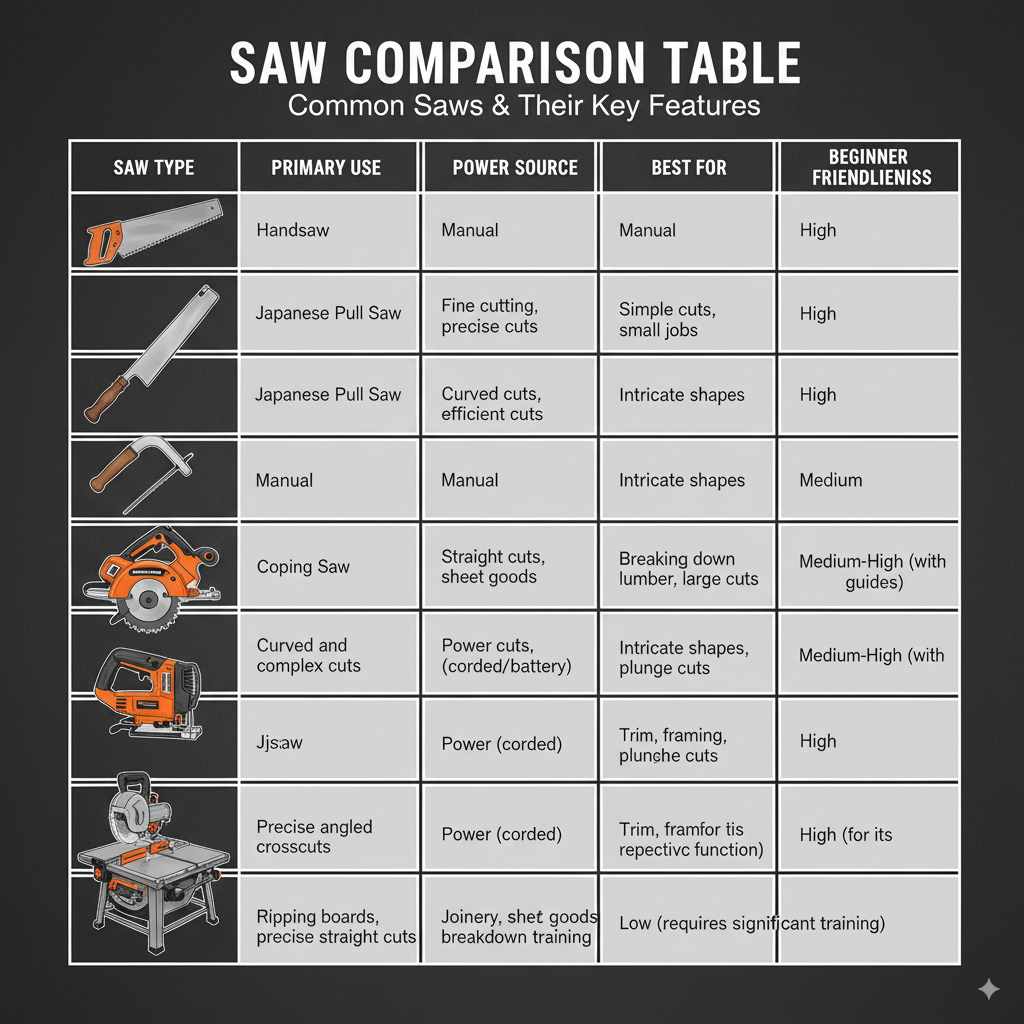
Saw Comparison Table
To help you visualize the differences, here’s a quick comparison of some common saws:
| Saw Type | Primary Use | Power Source | Best For | Beginner Friendliness |
|---|---|---|---|---|
| Handsaw | General cutting | Manual | Simple cuts, small jobs | High |
| Japanese Pull Saw | Fine cutting, precise cuts | Manual | Clean, efficient cuts | High |
| Coping Saw | Curved cuts, detailing | Manual | Intricate shapes | Medium |
| Circular Saw | Straight cuts, sheet goods | Power (corded/battery) | Breaking down lumber, large cuts | Medium-High (with guides) |
| Jigsaw | Curved and complex cuts | Power (corded/battery) | Intricate shapes, plunge cuts | High |
| Miter Saw | Precise angled crosscuts | Power (corded) | Trim, framing, repetitive cuts | High (for its specific function) |
| Table Saw | Ripping boards, precise straight cuts | Power (corded) | Joinery, sheet goods breakdown | Low (requires significant training) |
Frequently Asked Questions (FAQ)
Q1: How many different types of saws are there really?
A1: While there are literally hundreds of specialized saw designs worldwide, for typical home DIY and woodworking, you only need to be familiar with about half a dozen core types. These include handsaws, jigsaws, circular saws, and miter saws, with table saws being a more advanced option. Don’t get bogged down by the sheer number; focus on what’s practical for your needs.
Q2: What is the best saw for a beginner to buy first?
A2: For a true beginner, a good quality handsaw and a corded circular saw are excellent starting points. The handsaw is affordable and great for small tasks or when you need to work quietly. The circular saw is versatile and can handle most common lumber and sheet good cutting jobs. Many beginners also find a jigsaw very intuitive for its cutting capabilities.