How Much Does Cedar Lumber Cost Per Board Foot?
Most cedar lumber costs about $4 to $10 per board foot for common stock, while clear, kiln-dried, or wide boards often run $10 to $18+. If you skip board-foot math, a low sticker price can hide waste, grading loss, and moisture-related shrinkage. This guide shows how grade, moisture content, and board size change cedar pricing, and how to convert board-foot price into your real project cost.
Typical cost range

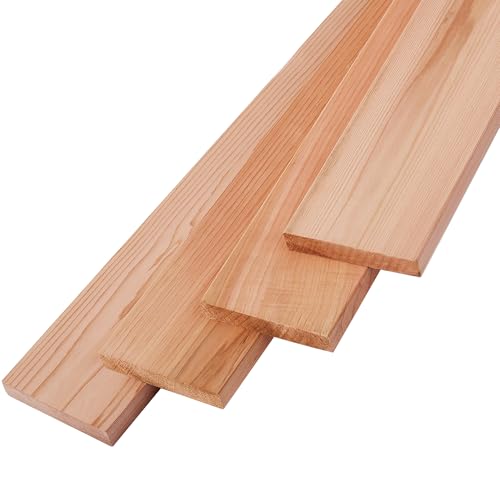
For planning, a fair cedar buying range is about $4 to $10 per board foot for common stock, with premium clear or wider boards often moving into the $10 to $18+ range. Western red cedar decking is often priced by square foot, and that pricing can translate to a higher per-board-foot cost once thickness is included.
The actual number depends on species, grade, moisture content, and local stock. Cedar pricing varies by region and availability, so current local quotes are more useful than any national average.
What changes the price most
Grade usually moves price the fastest. Tight-knot boards cost less than clear vertical grain stock, and boards with fewer defects are priced higher because more of each piece stays useful after cutting. Moisture content matters too: kiln-dried stock is typically more stable and often costs more than green lumber.
Board size matters as well. Wider and longer boards usually carry a higher per-board-foot price because they are harder to sort, dry, and ship without defects. In cedar, that difference shows up quickly when you compare fence pickets, decking, siding, and furniture stock.
What is a board foot?
A board foot is a lumber pricing unit equal to 144 cubic inches. Use this formula: thickness × width × length ÷ 144, with thickness, width, and length measured in inches. Hardwood lumber at specialty suppliers is priced in board feet, which makes cedar easier to compare across different sizes and grades.
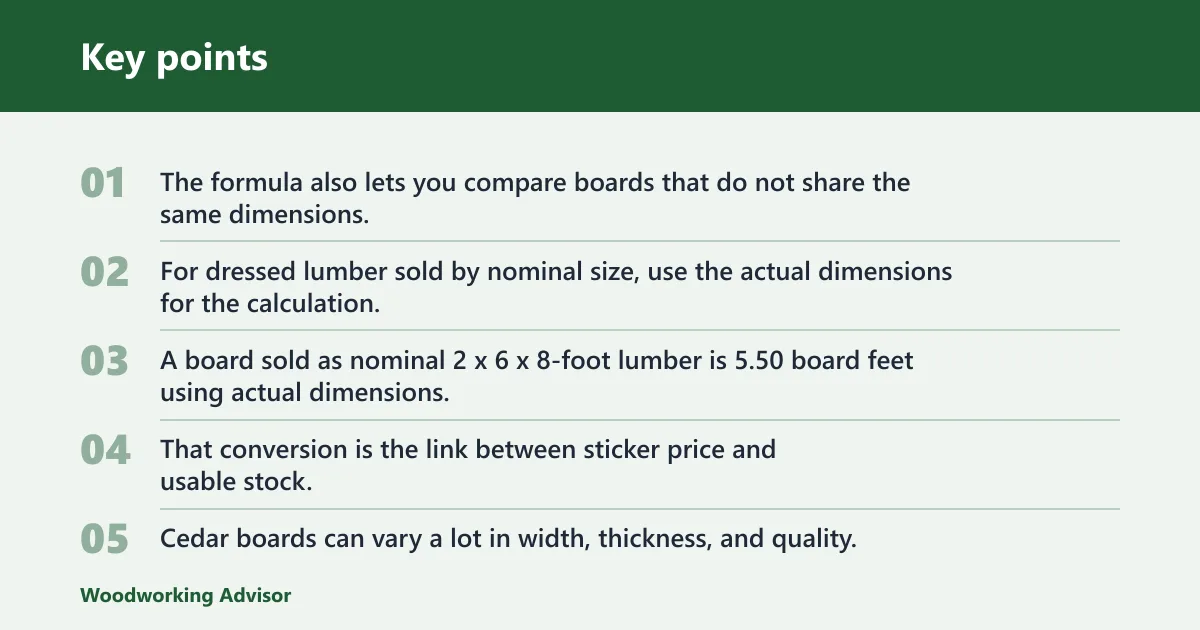
The formula also lets you compare boards that do not share the same dimensions. For dressed lumber sold by nominal size, use the actual dimensions for the calculation. A board sold as nominal 2 x 6 x 8-foot lumber is 5.50 board feet using actual dimensions. That conversion is the link between sticker price and usable stock.
Why cedar is priced this way
Cedar boards can vary a lot in width, thickness, and quality. Board-foot pricing lets you compare a 1 x 6 board against a 2 x 10 board on the same basis instead of guessing from piece price alone. That matters most when you are buying cedar for decking, siding, furniture, or trim, where board size and grade change waste and fit.
Board foot versus linear foot
Cedar is often sold by board foot when you buy specialty lumber, but softwood dimensional lumber is commonly sold by linear foot or by piece. That difference matters because piece pricing can hide the true cost of usable wood, especially when the board is wide, thick, or cut from better stock.
Linear-foot pricing works for some framing and construction materials because the size is standardized. Board-foot pricing is better for cedar stock because thickness and width directly affect how much wood you are actually getting. Comparing them without converting to board feet can lead to a bad buy.
When piece pricing hides the real cost
A board sold as a “cheap” piece may cost more per usable board foot than a pricier-looking board once you account for defects and trim loss. That is especially true with cedar sold for fences or decks, where knots, checks, and end cuts can reduce the amount you can actually use.
Nominal and actual board size
Nominal size is not the actual size. A nominal 2 x 4 is actually 1½ inches by 3½ inches when dry. That difference matters for fit, layout, and price comparisons, especially when you are checking cedar against other softwood lumber.
If you price lumber by piece without checking actual size, you may compare the wrong stock. Two boards with the same nominal label can have very different usable volume and different board-foot cost once actual dimensions are used.
How size affects cedar pricing
Wider boards usually cost more per board foot when supply is tight. They also produce fewer clean cuts per board, which is why premium siding and furniture stock often carry a higher price than narrow fence boards or standard dimensional pieces.
Say your project needs straight 1 x 6 cedar for a small gate and a few trim pieces. A board that looks inexpensive by the piece can cost more overall if the actual width is narrow, the grade is mixed, and you need extra boards to avoid visible knots.
Cedar grade and moisture content
Cedar grade changes price because it changes how much of the board you can use. Tight-knot stock is cheaper than clear vertical grain stock, and clear boards are usually the premium choice for exposed work. Moisture content also matters because kiln-dried stock is generally more stable than green stock and is usually priced higher.
For outdoor work, you still need to match the board to the job. Green stock may look cheaper, but it can move more after installation. That movement can create extra waste, gaps, or rework, which increases the real cost per usable board foot.
Tight-knot versus clear vertical grain
Tight-knot cedar is often a good value for fencing and less visible projects. Clear vertical grain is the better choice where appearance and stability matter, such as siding, trim, or exposed furniture parts. The premium buys cleaner faces and fewer defects, but it also raises the price per board foot.
Kiln-dried versus green stock
Kiln-dried cedar usually costs more because it is dried under controlled conditions and tends to be more predictable for fit and finish. Green stock may be cheaper at checkout, but it can shrink or twist as it dries. For precise work, that shrinkage can erase the apparent savings.
Cedar board price table
This table converts six common cedar board sizes into board feet per board, then shows example retail cost at low, mid, and high per-board-foot pricing. It also shows a usable-cost adjustment that reflects waste and grade, so you can compare what a board really costs after trimming and selection loss.
| Nominal size | Actual size used for calculation | Length | Board feet per board | Example retail cost at $4/BF | Example retail cost at $8/BF | Example retail cost at $12/BF | Usable-cost adjustment for waste and grade |
|---|---|---|---|---|---|---|---|
| 1 x 4 | 0.75 x 3.5 in. | 8 ft. | 2.33 | $9.32 | $18.64 | $27.96 | Add 10–15% for straight cuts; more if clear faces are required |
| 1 x 6 | 0.75 x 5.5 in. | 8 ft. | 3.67 | $14.68 | $29.36 | $44.04 | Add 10–15% waste; premium clear boards reduce usable yield if you reject knots |
| 1 x 8 | 0.75 x 7.25 in. | 8 ft. | 4.83 | $19.32 | $38.64 | $57.96 | Add 10–15% waste; wide stock often costs more to sort by appearance |
| 2 x 4 | 1.5 x 3.5 in. | 8 ft. | 2.33 | $9.32 | $18.64 | $27.96 | Add 10–15% waste; useful for framing-like uses, but cedar grade still affects price |
| 2 x 6 | 1.5 x 5.5 in. | 8 ft. | 5.50 | $22.00 | $44.00 | $66.00 | Add 10–15% waste for straight cuts; 15–20% for angled or diagonal cuts |
| 2 x 8 | 1.5 x 7.25 in. | 8 ft. | 7.67 | $30.68 | $61.36 | $92.04 | Add 15–20% if the project uses angles, miters, or exposed faces |
Use this table as a buying check, not a final invoice. If a board is priced above the range you expected, ask whether it is clear, kiln-dried, wide, or selected stock. Those details can justify the premium, but they also change how much of the board ends up in the project.
How much cedar should you buy?
Add waste before you shop. A common guideline is 10–15% waste for straight cuts and 15–20% for angled or diagonal projects. That extra allowance covers trimming, knots, end defects, and boards that do not meet your appearance standard.
For cedar, waste also includes grade loss. A board with knots or checks may still be fine for a hidden part of a fence, but not for a face-visible siding panel or furniture part. That means the usable cost can be higher than the price tag suggests.
Straight cuts versus angled cuts
Straight-cut projects, such as simple fence rails or square decking layouts, usually need the lower waste range. Angled work, such as diagonal bracing, stair parts, or mitered trim, needs more extra stock because offcuts are less reusable. The more complex the layout, the more your cost per usable board foot rises.
Project type changes the buying choice
Cedar for fencing often benefits from tighter budgets and lower-grade stock. Decking usually needs better appearance and more stable boards. Siding and furniture stock tend to justify clearer, drier, and more expensive material because visible faces and final fit matter more.
Suppose your deck edge needs ten 2 x 6 x 8 boards. The board-foot math says each board is 5.50 board feet, so the base order is 55 board feet. Add 15% waste for cuts and selection, and the order moves to about 63.25 board feet before you even compare grade.
Buying efficiently
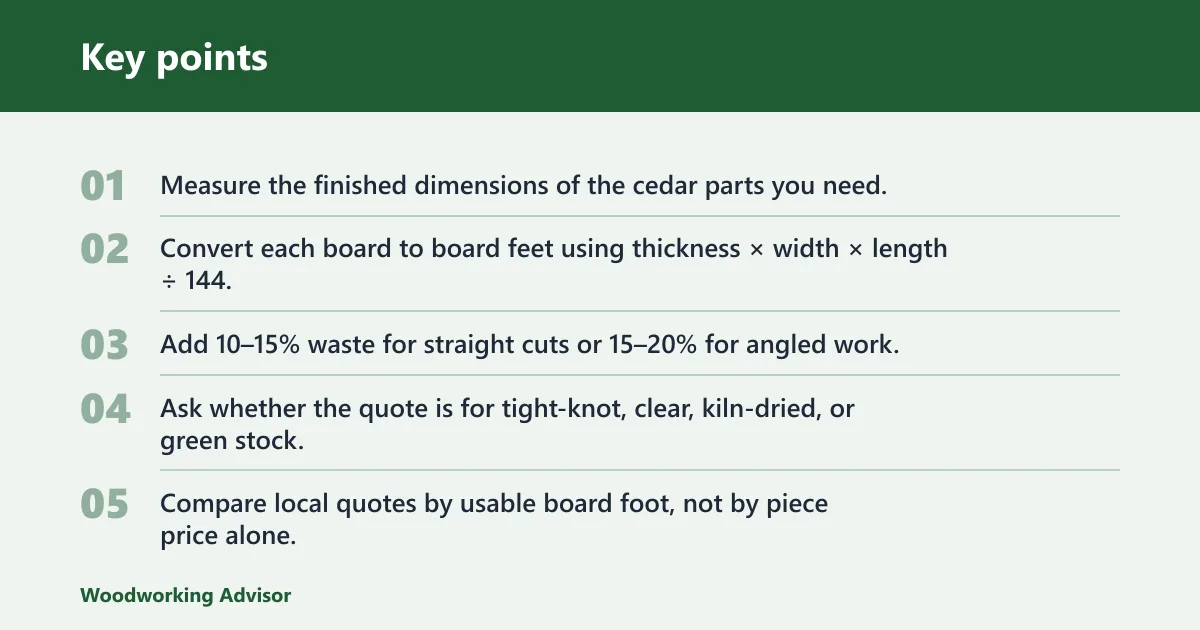
- Measure the finished dimensions of the cedar parts you need.
- Convert each board to board feet using thickness × width × length ÷ 144.
- Add 10–15% waste for straight cuts or 15–20% for angled work.
- Ask whether the quote is for tight-knot, clear, kiln-dried, or green stock.
- Compare local quotes by usable board foot, not by piece price alone.
Retail lumber supplier pricing varies by region and availability, and commodity movement can shift lumber prices by 20–30% in a year. The Western Wood Products Association market reports are a useful trend signal for wholesale softwood conditions, but you still need current local quotes for the retail number you will actually pay.
Where can you buy cedar lumber at a fair price per board foot? Start with local lumberyards, specialty hardwood suppliers, and decking or fencing yards that stock cedar consistently. Ask for the species, grade, moisture condition, and board-foot price in writing. Then compare usable cost, not just shelf price.
Frequently asked questions
How much does cedar wood cost per board foot?
Most common cedar stock runs about $4 to $10 per board foot, while clear, kiln-dried, or wide boards often run $10 to $18+. The exact number depends on species, grade, moisture content, and your local supply. Check current quotes before you buy, because nearby supply can move prices fast.
What is the price of cedar lumber per board foot in 2026?
For 2026 planning, a practical retail range is still about $4 to $10 per board foot for common cedar, with premium stock often reaching $10 to $18+. Western red cedar decking can price higher on a square-foot basis, especially where supply is tight or clear stock is limited.
Why is cedar priced by board foot instead of linear foot?
Cedar is often priced by board foot because thickness and width change how much wood you are really buying. Linear-foot pricing works better for standardized softwood dimensional lumber sold by piece. Board-foot pricing gives you a cleaner way to compare different cedar sizes on equal terms.
How much more expensive is cedar than pressure-treated lumber?
Cedar is usually more expensive than pressure-treated lumber because it offers natural rot resistance and better appearance, especially in visible work. The gap varies by region, grade, and season. For fair comparison, convert both materials to usable cost after waste, not just shelf price.
Does cedar price vary by grade or species?
Yes. Tight-knot cedar is usually cheaper than clear vertical grain stock, and some cedar species cost more than others. Western red cedar is commonly used for decking and siding, but local availability can push pricing up or down. Species, grade, and moisture content all matter.
How do I calculate board feet for cedar boards?
Use thickness × width × length ÷ 144, with length in inches. One board foot equals 144 cubic inches. A board sold as nominal 2 x 6 x 8-foot lumber is 5.50 board feet using actual dimensions. Once you have that number, multiply by the per-board-foot price to estimate cost.
Sponsored / affiliate links. As an Amazon Associate I earn from qualifying purchases. I may earn additional commission from eligible campaigns.