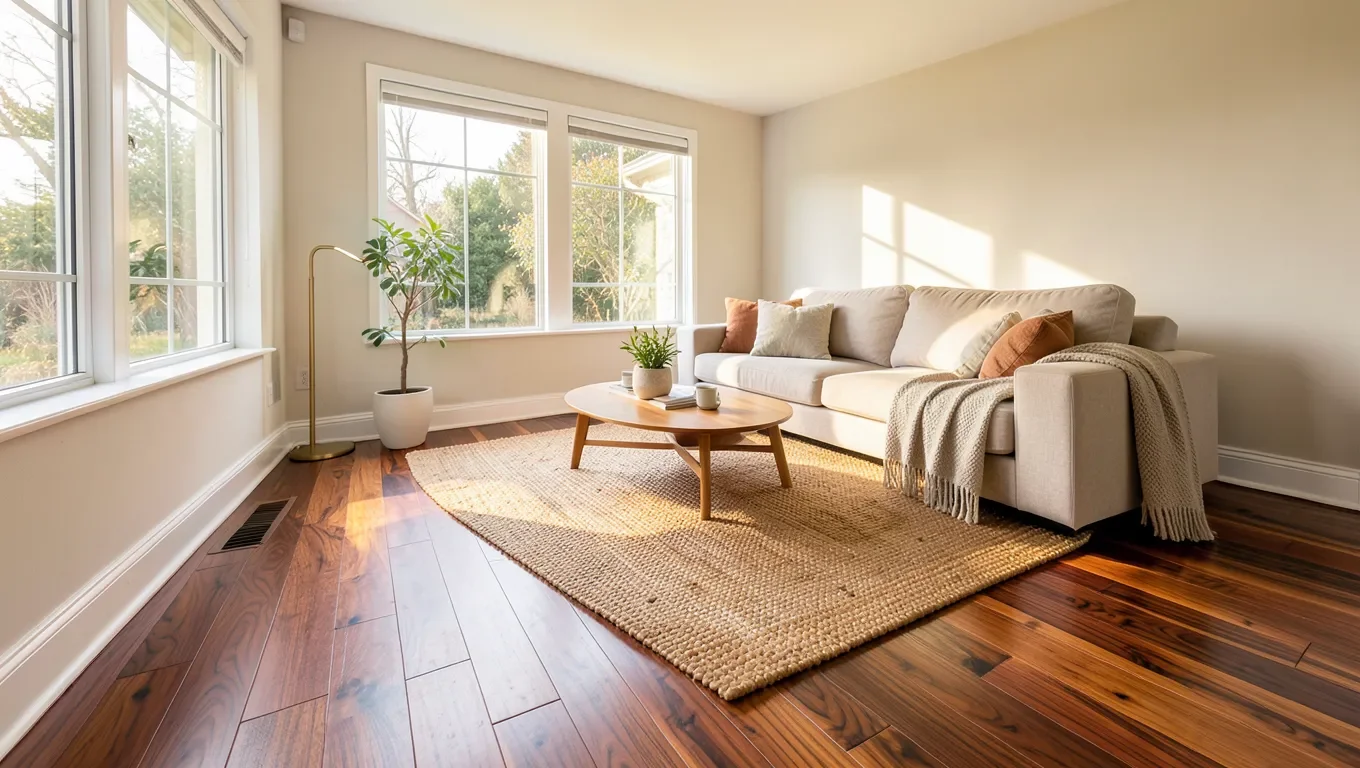
Hardwood Flooring Ideas for Your Living Room: A 2026 Style Guide
Picture five living rooms with the exact same square footage. The floor is what makes one feel airy, one feel classic, and one feel like a mountain cabin. Wood species, plank width, finish sheen, and layout pattern do more visual work than paint color or furniture ever will, and getting them right the first time saves you from tearing out a floor you just spent thousands of dollars installing. This guide walks through the species, finishes, and layout patterns that actually read well in a living room, the real Janka hardness numbers behind each wood (not rounded guesses), and where solid hardwood stops making sense compared to engineered wood or luxury vinyl plank.
Why Hardwood Still Wins in the Living Room
Hardwood remains the default recommendation for living rooms for reasons that go beyond looks. It brings a natural warmth and timeless character that carpet and most wood-look alternatives can’t fully match, and it tends to hold or increase resale value more reliably than other flooring types.
- Timeless appeal: hardwood has been a flooring staple for centuries, and its look doesn’t date the way a trend-driven carpet color can.
- Durability with care: a well-finished hardwood floor can be sanded and refinished multiple times, often lasting decades longer than carpet or laminate.
- Easier to keep clean: spills and everyday dirt wipe up faster on a sealed hardwood floor than they lift out of carpet fibers.
- Better for allergy sufferers: hardwood doesn’t trap dust, pollen, and pet dander the way carpet pile does.
- A real selling point: hardwood floors are consistently one of the features buyers specifically ask about when touring a home.
Best Hardwood Floor Cleaning Kit
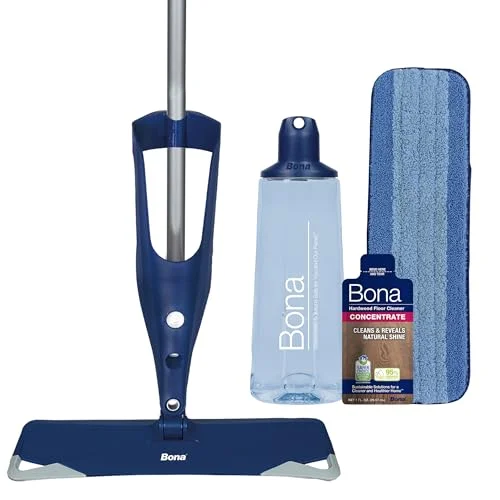 |
Bona Hardwood Floor Premium Spray Mop – $41.97 Whichever species or finish you pick below, a new hardwood floor only keeps its showroom look if it’s cleaned the right way – this kit is formulated specifically for polyurethane-finished wood and won’t dull the sheen or leave streaks.
|
Pick a Wood Species for the Look You Want (and How Hard It Actually Is)
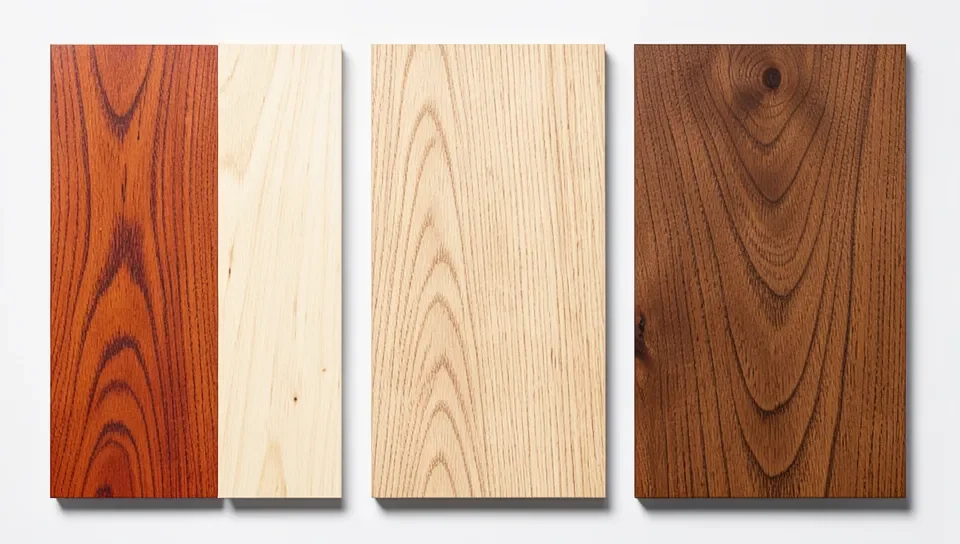
The species you choose sets the color palette and grain character of the whole room, and it also determines how the floor will hold up. Here are the Janka hardness ratings for the species living rooms use most – these are the actual published numbers, not the inconsistent figures that circulate on some flooring blogs.
| Species | Janka Rating (lbf) | Typical Tone | Best For |
|---|---|---|---|
| Cherry | 950 | Warm reddish-brown, darkens with age | Formal, low-traffic living rooms |
| Black Walnut | 1,010 | Deep chocolate brown | Rich, contemporary looks |
| Red Oak | 1,290 | Warm pinkish-brown | Traditional rooms, easy to source and match |
| White Oak | 1,360 | Cooler, more neutral brown | Modern and Scandinavian-style rooms |
| Hard Maple | 1,450 | Pale, subtle grain | Bright, minimalist living rooms |
| Hickory | 1,820 | High color contrast, heavy grain | Rustic and farmhouse looks, high-traffic homes |
One thing most flooring roundups skip: Janka hardness measures resistance to denting from something like a dropped skillet or a chair leg without a felt pad – it has almost nothing to do with resistance to everyday scuffs and scratches from foot traffic or pet nails. That’s handled by the finish coating, not the species. A soft wood like cherry with a tough aluminum-oxide finish can resist daily scratching better than a hard wood like hickory with a thin, worn-down finish. Pick the species for color and character first, then make sure the finish is rated for your household’s actual traffic.
If you’re set on a specific pale oak look, our white oak living room floors guide goes deeper into matching stain tones to different lighting. For a full breakdown of every flooring material (not just solid hardwood), see the wood flooring guide.
Finishes Change the Mood More Than People Expect
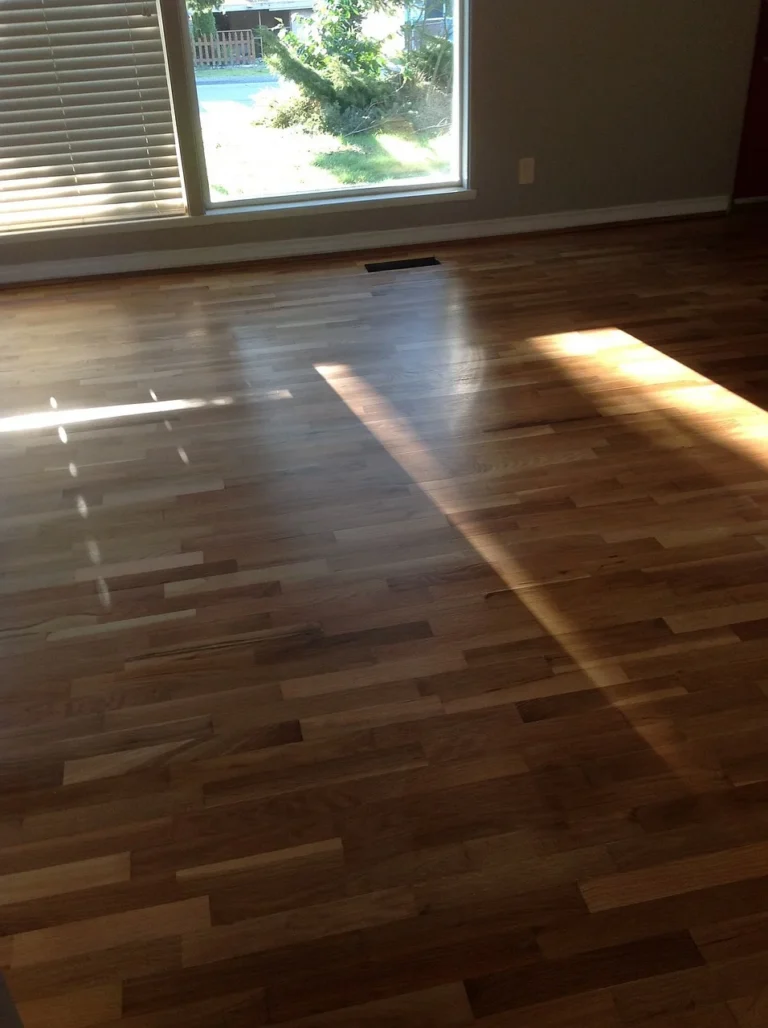
Two identical white oak floors can look completely different depending on the finish. A high-gloss finish reflects more light and reads more formal; a matte or hand-scraped finish absorbs light and feels more casual and lived-in.
- Oil-based polyurethane: the most durable and cheapest option, but it ambers over time, warming up the wood tone.
- Water-based polyurethane: dries clearer and faster, keeps pale woods like maple and white oak looking true to color, but typically needs recoating sooner.
- Hardwax oil: penetrates the wood instead of sitting on top, gives a natural low-sheen look, and is easier to spot-repair, but is less resistant to standing water.
- Sheen level: matte and satin hide scratches and dust better than semi-gloss or high-gloss, which is worth considering in a living room with kids or pets.
If you’re refinishing rather than installing new, our guide on wait times between polyurethane coats covers the timing that actually affects how the finish looks once it cures.
Plank Width, Length & Layout Patterns
Beyond species and finish, how the boards are cut and laid changes the whole feel of the room.
Plank Width
Wide planks (5 inches or more) show off more of the natural grain per board and use fewer seams, which tends to make a living room feel larger and more contemporary. Narrower strip flooring (2 to 3 inches) reads more traditional and can actually suit smaller rooms better, since more seams create a busier, more textured floor that some traditional interiors want.
Plank Length & Pattern
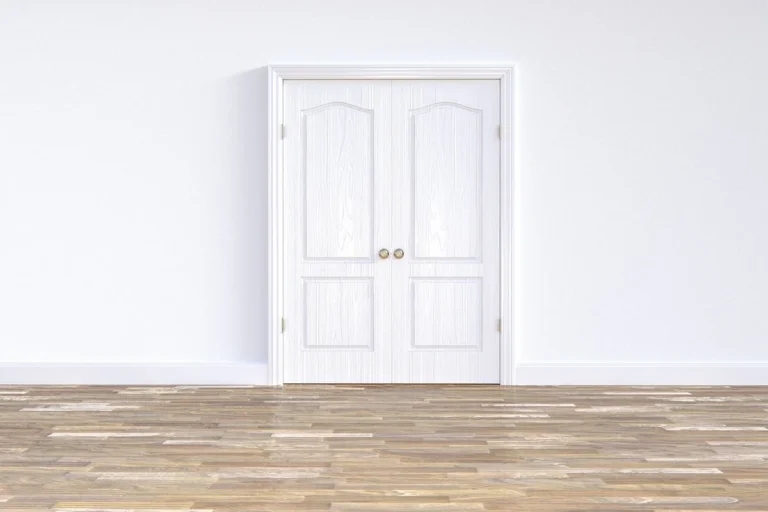
Longer, random-length planks laid in a straight run are the lowest-maintenance choice and the easiest for a first-time DIYer to install evenly. Herringbone and chevron patterns use shorter, uniform boards set at 90° or 45° angles for a much more dramatic, high-end look, but they use more material (more cuts mean more waste) and take noticeably longer to lay, especially for a beginner.
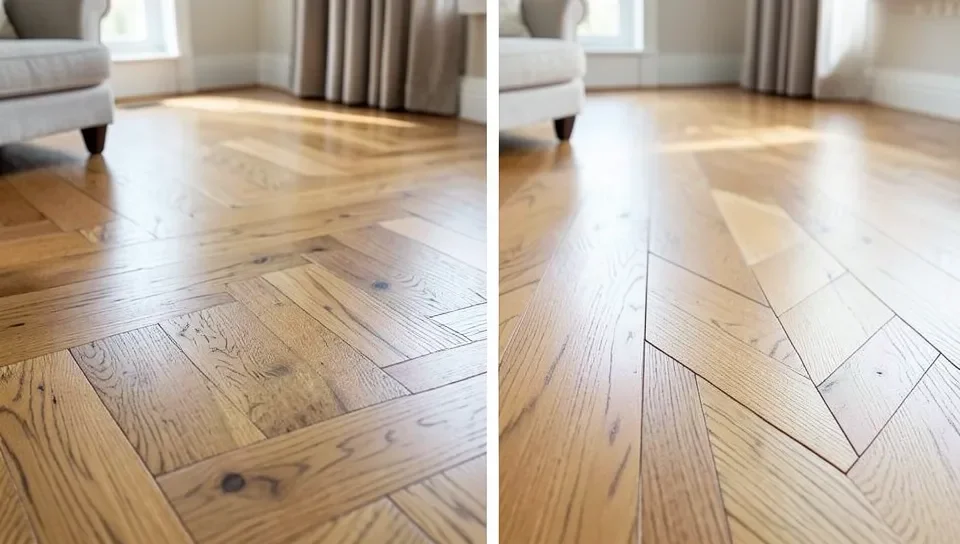
For real installed cost differences between a straight-lay job and a pattern like herringbone, see our hardwood flooring installation cost breakdown.
5 Living Room Style Looks That Actually Work
1. Airy & Bright Modern
Light white oak or maple, wide planks (6 inches or more), matte or low-sheen water-based finish. Pairs well with white trim and light-colored walls to maximize the sense of space.
2. Warm & Classic Traditional
Red oak or walnut in a medium plank width, satin oil-based finish for warmth. This is the safest, most resale-friendly combination if you’re not sure how long you’ll stay in the house.
3. Rustic Charm
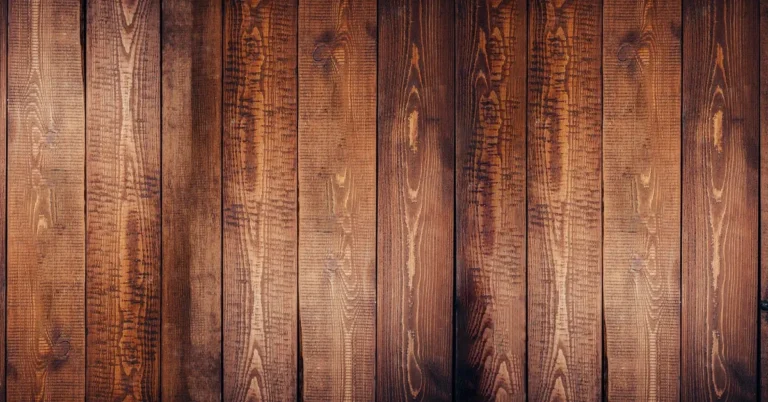
Hickory or wire-brushed white oak with visible knots and mineral streaks, hand-scraped or wire-brushed texture, wide planks. The high Janka rating of hickory is a genuine bonus here since rustic looks are often chosen for busy, high-traffic households.
4. Sleek Contemporary
Dark walnut or an ebonized (black-stained) oak, laid in a herringbone or chevron pattern for a boutique-hotel feel. Best paired with a satin (not high-gloss) finish so the pattern reads as intentional rather than reflective.
5. Trendy Two-Tone or Contrast Border
A light field (white oak or maple) with a darker walnut border or inlay around the room’s perimeter, or under an area rug. This is one of the more advanced looks to execute cleanly – our hardwood floor inlay ideas page has layout templates if you want to try it.
Solid, Engineered, or LVP? Matching the Material to the Room
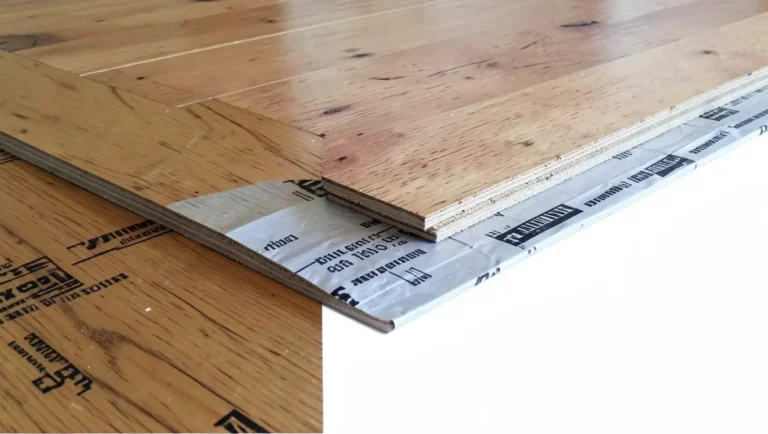
Everything above assumes solid hardwood, but it isn’t always the right call for every living room. If the room sits over a concrete slab, in a basement, or anywhere humidity swings are a concern, engineered hardwood handles moisture and temperature changes better than solid wood because of its plywood core – see is engineered hardwood real wood for exactly what’s under that top veneer layer. If your budget or a pet-heavy household has you considering a wood-look alternative instead of real wood entirely, LVP vs. engineered hardwood lays out the real tradeoffs. And if the living room connects to an entryway or a room with any real water exposure, it’s worth reading is hardwood flooring waterproof before you commit – the honest answer affects which of the looks above are actually a safe choice for that specific room.
DIY Installation Basics for Beginners
If you’re installing it yourself rather than hiring it out, a click-lock floating floor (engineered hardwood snapped together over an underlayment, not glued or nailed down) is by far the most beginner-friendly method – no nail gun or adhesive required, and mistakes are easier to undo. Glue-down and nail-down solid hardwood give a more permanent, quieter feel underfoot but are less forgiving of an uneven subfloor and typically call for rented tools.
Whichever method you choose, subfloor prep is what actually determines how the finished floor looks and how long it lasts: the subfloor needs to be clean, completely dry, and flat within about 3/16 inch over a 10-foot span, or the new floor will telegraph every dip and hump underneath it. For the full step-by-step process matched to your specific subfloor type, see how to install wood floors. If you’re going the nail-down route, our guide on the right nails for 3/4-inch hardwood covers a detail that trips up a lot of first-timers.
Keeping a New Floor Looking Its Best
A freshly installed hardwood floor is easy to keep looking new if you avoid the two things that actually damage it: standing water and unprotected furniture feet. Wipe up spills promptly rather than letting them sit, use a cleaner formulated for your specific finish (see the product box above) instead of an all-purpose cleaner or steam mop, and add felt pads under sofa and chair legs to prevent the dents and scratches that no amount of Janka hardness fully prevents. If the floor connects to an area with real moisture exposure, it’s worth revisiting whether the material choice still makes sense – our guide on using Bona cleaner on laminate is also useful if your living room floor transitions into a laminate hallway or kitchen.
FAQ: Your Living Room Flooring Questions Answered
What’s the best plank width for a small living room?
Wide planks (5 to 7 inches) generally make a small room feel larger because there are fewer seams breaking up the floor visually. Very narrow strip flooring can make a small room feel busier, though it suits some traditional styles.
Can a beginner install hardwood flooring themselves?
Yes, especially with a click-lock engineered hardwood floating floor, which doesn’t require nailing or gluing. Solid hardwood that’s nailed or glued down is a bigger step up in difficulty and usually benefits from at least one experienced helper.
What’s the difference between pre-finished and site-finished hardwood, and which is easier for DIY?
Pre-finished boards arrive with the stain and topcoat already cured at the factory, so you install and you’re done – this is the far easier route for a DIYer. Site-finished floors are sanded and coated after installation, which gives a perfectly seamless look but requires sanding equipment and finish application skills most beginners don’t have yet.
How much should I budget for hardwood flooring in a living room?
Costs vary widely by species, plank width, and installation method, and pattern layouts like herringbone add both material waste and labor time. Rather than a single number, see our full hardwood flooring installation cost breakdown for current per-square-foot ranges by material and method.
Are light wood floors more durable than dark ones?
Color has no effect on durability – that comes down to species (Janka hardness) and finish quality, not tone. Light floors do show dust and pet hair more visibly between cleanings, while dark floors show scratches and footprints more visibly, so the more practical difference is how often each shows wear, not how much wear they actually take.
Sponsored / affiliate links. As an Amazon Associate I earn from qualifying purchases. I may earn additional commission from eligible campaigns.