Water-Based vs Oil-Based Spar Urethane: Label Data Compared
Water-based spar urethane recoats in about 2 hours, but the Minwax and Varathane data sheets call for 3 to 4 coats; oil-based waits 6 to 8 hours between coats and calls for 2 to 3. That coat count, not UV protection, is the real trade-off, because neither brand publishes a UV rating. Below: four data sheets side by side, color and safety facts, and which type fits a door, a chair, or a boat.
Which Spar Urethane Should You Buy? The Short Answer
Best Oil-Based Spar Urethane Pick
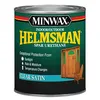 |
Minwax Helmsman Indoor/Outdoor Spar Urethane, Quart, Satin: $24.88 The oil-based can behind the 2-to-3-coat, mineral-spirits-cleanup column in the data sheet table below.
|
As an Amazon Associate we earn from qualifying purchases.
Choose oil-based when you want the fewest coats on a door, window frame, trim or outdoor chair and can live with a slower, smellier job: both oil-based labels need at least 6 to 8 hours between coats, mineral spirits for cleanup, and careful rag disposal. Choose water-based when you want fast recoats, soap-and-water cleanup and a finish the label describes as clear, and you are willing to brush on 3 to 4 coats.
- Exterior door or window frame: oil-based needs 3 coats per Minwax; water-based needs 4. Minwax lists doors and windows for both types, and Varathane lists them for its water-based product.
- Pale wood where color matters: water-based, after a test spot. Minwax still notes slight ambering on light surfaces for both types.
- Decks, siding, floors: neither. Both brands say not to use spar urethane on these surfaces (details further down).
Spar urethane is a different product from the interior polyurethane in the hardware aisle; if you are comparing the two, see spar varnish vs polyurethane and the difference between polyurethane and urethane. For a tabletop specifically, spar urethane vs polyurethane for a table top covers that trade-off.
Data Sheet Comparison: Minwax and Varathane Side by Side
Every number below comes from the manufacturer technical data sheets listed under Sources at the bottom of the page, measured at roughly 70 to 77 F and 50 percent relative humidity. Lower temperatures, higher humidity or thick coats slow every figure down.
| Spec | Minwax Helmsman (oil) | Minwax Water Based Helmsman | Varathane Oil-Based Spar | Varathane Outdoor Water Based Spar |
|---|---|---|---|---|
| Recoat time | At least 6 hours (physical properties table says 4-6) | 2 hours | 8 hours | 2 hours by brush (1 hour aerosol) |
| Dry to touch | Not listed | Not listed | 4-6 hours | 30 minutes |
| Coats | 2 recommended; 3 for exterior or bare wood | 3 recommended; 4 for exterior or bare wood | 2 minimum | 4 minimum |
| Coverage per gallon | About 400-500 sq ft | About 500 sq ft | 285-600 sq ft | 225-350 sq ft (brush) |
| Solids | 55-57% (ASTM D2369) | 28.5-31.5% (ASTM D2369) | 42-44% by volume | 24.6-25.6% by volume |
| Max VOC | 350 g/L | 275 g/L | 450 g/L | Under 275 g/L |
| Flash point | Over 101 F | Over 206 F | 106 F | 167 F (brush); -42 F (aerosol) |
| Cleanup | Mineral spirits | Warm water | Mineral spirits | Soap and water |
| Before normal use | 24 hours | 24 hours (72 on countertops) | 24 hours light use, 3 days full use | 24 hours light use, 3 days normal use |
| Thinning | Do not thin | Do not thin | Do not thin | Not addressed in the sheet |
Two details in these sheets are easy to miss. First, Minwax’s own product page for the oil-based can lists a 4-hour recoat while its technical data sheet says at least 6 hours in the application notes, so read your can rather than a web listing. Second, Varathane revised its oil-based sheet: the earlier revision (Rev. 050516, linked under Sources) lists touch-dry in 2 hours, 55.6-55.8% solids by volume and VOC under 350 g/L, while the newer revision (Rev. 052421) lists touch-dry in 4-6 hours, 42-44% solids and VOC of 450 g/L. Same product name, different formulation on paper, so an old can in your garage may not behave like the one on the shelf today.
Solids percentages use different bases across brands (Minwax by ASTM D2369, Varathane by volume), so compare within a brand, not across them.
Why Water-Based Needs More Coats: The Solids Math
Within each brand, the water-based sheet shows roughly half to 60 percent of the solids of its oil-based counterpart: 28.5-31.5% against 55-57% at Minwax, and 24.6-25.6% against 42-44% at Varathane. If two coats spread over a similar area per gallon, the one with fewer solids leaves less cured film behind. That is our arithmetic from the published figures, not a lab result, but it matches what the labels ask you to do: 3 to 4 water-based coats where oil-based asks for 2 to 3.
Time works out differently than the coat count suggests. A four-coat water-based job at 2-hour recoats can fit inside one long day, with light 220-grit sanding between coats. Three oil-based coats at 6 to 8 hours apiece usually stretch across two to three days once you add overnight cure and sanding. If a weather window is the constraint, water-based finishes sooner even with an extra coat; if film build per visit matters more, oil-based needs fewer passes.
Does Water-Based Spar Urethane Protect Against UV as Well as Oil-Based?
The common claim that oil-based is simply better against sun has no number behind it in these sheets. Minwax says the enhanced ultraviolet absorbers in both Helmsman versions reduce the graying and fading effects of the sun. Varathane describes both its oil-based and outdoor water-based sheets as formulated for UV and weather protection. No sheet publishes UV hours, a lifespan in years or a recoat interval.
What the sheets do document is maintenance: Minwax tells you to lightly sand and add coats as conditions require on exterior work, for both types, and warns that large exterior surfaces where maintenance would be difficult, such as decks and siding, are not a good fit. Treat any quoted number of years between recoats as a rule of thumb for your own site, not a label fact. Because a water-based coat carries fewer solids, expect to track the finish more closely on a south-facing door, and recoat before the surface looks worn rather than after.
Color and Clarity: Does Water-Based Really Stay Clear?
Mostly, but not perfectly. Varathane says its water-based spar urethane looks milky when wet and dries crystal clear, and warns that over white or pastel paints and stains discoloration can occur. Minwax’s water-based sheet adds that slight ambering may occur when it is applied over light-colored stains or wood. The oil-based Minwax sheet gives the same slight-ambering note for light surfaces, and Varathane warns that its oil-based finish over white or light paints could cause discoloration.
Minwax also points out on its product page that the oil-based can may look dark or purple in the can but dries clear. In practice that means: spot-test on a scrap or an inconspicuous area for both types, and expect some warming on pale species such as maple or birch with either type. If you are matching a light stain, topcoating over stained wood and sealing stained wood for outdoor use cover the compatibility side.
Flexibility, Resins and Where Spar Urethane Belongs
Spar urethane earns its name from flexibility: Minwax says special oils let Helmsman expand and contract with the wood as seasons, temperatures and humidity change. That statement appears on both the oil-based and the water-based Minwax sheets, so flexibility is not exclusive to oil-based. The water-based Minwax sheet lists an oil-modified urethane resin, while Varathane lists an acrylic-modified urethane for its water-based brush product and an oil-modified urethane for its oil-based one.
| Use | What the sheets say |
|---|---|
| Doors, windows, trim | Minwax lists doors, windows and trim for both types; Varathane lists doors and windows for water-based and house trim for oil-based |
| Outdoor furniture, railings, fences | Listed by Varathane for both types; Minwax lists outdoor furniture |
| Bathroom cabinets, bar tops, kitchen countertops | Listed by Minwax for both types; water-based countertops need 72 hours before normal use |
| Boats | Varathane water-based and Minwax water-based pages say above the waterline only; the oil-based sheets we read do not mention boats |
| Decks, siding, high-traffic areas, rough-sawn wood | Varathane says not recommended; Minwax says not for large exterior surfaces such as decks and siding |
| Floors | Minwax says Helmsman is not recommended for floors |
Anything below the waterline, or a hull that stays wet, is outside what these four sheets cover; marine varnish is a separate product category we did not research for this page. For a general overview of finishes outdoors, see our wood finishing guide and how to seal outdoor wood furniture.
Application, Recoat and Cleanup, Step by Step
- Sand and clean. The oil-based sheets call for 150-220 grit; Varathane water-based says 120-150 grit. Skip steel wool under water-based finishes: Minwax says not to use it and Varathane warns rust can develop. Wipe dust with a vacuum, tack cloth or damp rag as each sheet directs.
- Check conditions. Varathane lists 55-90 F and under 85 percent relative humidity, and says not to apply its water-based product in direct sunlight.
- Stir, never shake. All four sheets say to stir; shaking creates bubbles. Do not thin: three of the four sheets say so outright. Our guide to thinning oil-based polyurethane applies to ordinary polyurethane, not to these spar labels.
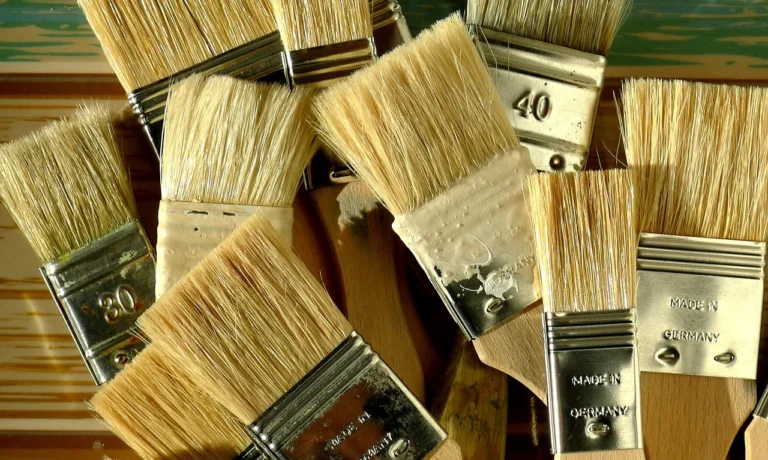
- Brush a thin coat. Use a natural bristle brush for oil-based and a synthetic one for water-based; Varathane says do not over-brush or use a roller. Seal end grain and open joints. See what brush to use for polyurethane for brush choice.
- Wait, sand lightly, recoat. Use the recoat time in the table, then 220-grit between coats. Varathane says to lightly sand if a coat has dried more than 12 hours.
- Clean up. Mineral spirits for oil-based tools; warm water or soap and water for water-based, immediately after use.
Data point: Minwax asks for 24 hours after the last coat before normal use, while Varathane asks for 24 hours before light use and 3 days before full use. Source: Varathane VAR-02 technical data sheet, Rev. 052421.
Safety: Rags, Fumes and Flammability
The oil-based Minwax sheet carries a DANGER notice: rags, steel wool, other waste soaked with the product and sanding residue can spontaneously catch fire if improperly discarded, and it says to place them immediately in a sealed, water-filled metal container and dispose of them under local fire regulations. It also lists the contents as combustible and to be kept away from heat and open flame. Flash points back this up: over 101 F for Minwax oil-based and 106 F for Varathane oil-based.
Water-based is less flammable in the can: over 206 F for Minwax and 167 F for Varathane brush-on. The exception is aerosol: Varathane’s water-based spray lists a -42 F flash point, so treat the spray can as flammable. Water-based does not mean fume-free. The Minwax water-based sheet lists 1-methyl-2-pyrrolidone, warns of possible adverse reproductive effects based on animal data and says to use adequate ventilation, and Varathane says to use adequate ventilation at all times even though it describes the product as odorless. Follow the safety panel on your actual can for either type.
Quick Picks by Project
| Project | Lean toward | Data sheet reason |
|---|---|---|
| Front door, sun-exposed | Oil-based | 3 coats vs 4 at Minwax; fewer passes |
| Patio chair set, one-weekend job | Water-based | 2-hour recoat fits several coats in a day |
| Pale maple or birch trim | Water-based (test first) | Described as clear when dry; both types still carry a slight-ambering note on light surfaces |
| Outdoor railing | Either | Varathane lists railings for both types; Minwax lists railings on its water-based page |
| Kitchen or bar top, indoors | Water-based | Lower VOC, higher flash point, soap-and-water cleanup; allow 72 hours |
| Deck boards or siding | Neither | Both brands advise against it |
Frequently Asked Questions
Is oil-based or water-based spar urethane better for outdoor use?
Neither data sheet ranks them. Both brands list UV absorbers and exterior use. Oil-based needs fewer coats (2 to 3) and slower recoats; water-based needs 3 to 4 coats but recoats in about 2 hours and cleans up with water.
How many coats of spar urethane do I need?
Minwax recommends 2 coats of oil-based (3 for exterior or bare wood) and 3 coats of water-based (4 for exterior or bare wood). Varathane asks for a minimum of 2 oil-based coats and 4 water-based coats.
Can I use oil-based spar urethane indoors?
Yes. Minwax lists Helmsman for interior and exterior use on doors, windows, trim, bathroom cabinets, bar tops and kitchen countertops. It is not recommended for floors, and you need good ventilation while it dries.
Can you roll water-based spar urethane on a large area?
Varathane says not to apply its water-based spar urethane with a roller because that can cause bubbles; use a synthetic brush, foam brush or applicator instead. Minwax also specifies a brush for its water-based version.
How can I tell whether spar urethane is water-based or oil-based?
Check the label. Water-based cans list water or soap-and-water cleanup, while oil-based cans list mineral spirits or paint thinner. Minwax names the product Water Based Helmsman when it is water-based.
Sources (manufacturer data sheets and product pages): Minwax Helmsman Spar Urethane 350 VOC data sheet, Minwax Water Based Helmsman 275 VOC data sheet, Varathane Oil-Based Spar Urethane VAR-02 data sheet, Varathane Outdoor Water Based Spar Urethane VAR-33 data sheet, earlier Varathane VAR-02 revision (050516), Minwax oil-based product page, Minwax water-based product page.
Sponsored / affiliate links. As an Amazon Associate I earn from qualifying purchases. I may earn additional commission from eligible campaigns.