How to Lighten Wood Stain: Which Method Fits Your Stain
To lighten wood stain, first work out what state the stain is in. Stain still in the can can be thinned. Wet oil-based stain can be wiped back with mineral spirits. Stain that has dried needs sanding, a chemical stripper, or a two-part wood bleach on bare wood. Mineral spirits on cured stain mostly wastes time.
Most guides give you one list of methods and leave you to guess which applies. This one is organized the other way around: find your situation in the table below, then jump to the matching method. If your stain went on a day or more ago and is under a clear coat, you are in the hard case, and the sections on sanding, stripping, and bleaching are where to spend your effort. Before you start, check whether the color is really too dark, because stain usually dries lighter than it looks when wet.
Match the Method to Your Stain Situation
Best Bleach Kit for Bare Wood
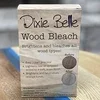 |
Dixie Belle Wood Bleach Kit, 2-part When sanding is not enough and the stain has dried, a two-part bleach is the step that lightens bare wood itself.
|
| Your situation | What works | What to expect |
|---|---|---|
| Stain still in the can, not applied yet | Thin it with the matching solvent, or blend with a lighter stain of the same type | Lighter shade, easy to control. Test on scrap after each addition |
| Oil-based stain just applied, still wet or tacky | Wipe with a rag dampened with mineral spirits, along the grain | Some pigment lifts. Color will not return to bare wood |
| Stain dried, no topcoat on it | Sand it back, or use a chemical stripper, then bleach if still too dark | Real lightening, but takes effort. Open-pored woods keep dark pores |
| Stain dried and sealed under varnish, poly, or lacquer | Remove the finish first (stripper or sanding), then treat as bare wood | No shortcut. Bleach and solvents cannot reach stain under an intact finish |
| Water-based or gel stain, dried | Sanding or stripper. Mineral spirits will not help | Gel stain sits closer to the surface, so sanding tends to work faster than on penetrating stain |
For a deeper look at the dried-stain case specifically, see our guide on lightening stain after it dries, and for dark finished furniture see how to make dark stained wood lighter. This page is the starting point that tells you which of those routes you need.
Check These Before You Strip Anything
A surprising number of “too dark” problems are not stain problems. Run through these first, because each one is cheaper than stripping.
- It is still wet. Wood darkens when it is wet with stain or mineral spirits. Judge the color only once the surface is fully dry.
- The topcoat has not gone on yet. Finish adds depth. Oil-based polyurethane in particular adds an amber tone, so it can darken the final color further. A sample board with the full finish schedule tells you more than bare stained wood does.
- The wood is soaking up stain unevenly. Softwoods like pine often blotch, and the dark patches look like “too dark stain”. A pre-stain conditioner on the next attempt fixes the cause. See how to stain wood without blotching.
- It is only too dark in one spot. Sand or spot-treat that patch instead of treating the whole piece.
Method 1: Thin the Stain, or Wipe It Back While It Is Wet
This is the only method that costs almost nothing, and it only works at two moments: before the stain touches the wood, or in the short window while it is still wet.
In the can
Add the matching solvent a little at a time: mineral spirits for oil-based stain, and water for water-based stain unless the label names a different thinner. Stir well and test on a scrap of the same wood after each addition. Thinning reduces the pigment concentration, so the stain also gets less consistent if you overdo it. Our guide to diluting wood stain covers mixing in more detail.
On the wood, while still wet
- Dampen a clean white cotton rag with mineral spirits (oil-based stain only).
- Wipe along the grain with light pressure. Rewet the rag as it picks up color.
- Change to a fresh rag as soon as the old one is loaded with pigment, or you will just redistribute it.
- Let the wood dry completely before judging the color.
Safety note: rags soaked with oil-based stain and solvent can heat up and ignite on their own as the oil cures. Lay them flat outdoors to dry, away from anything flammable, or soak them in water in a sealed metal container before you throw them out. Work with the windows open.
Method 2: Sand the Stain Off
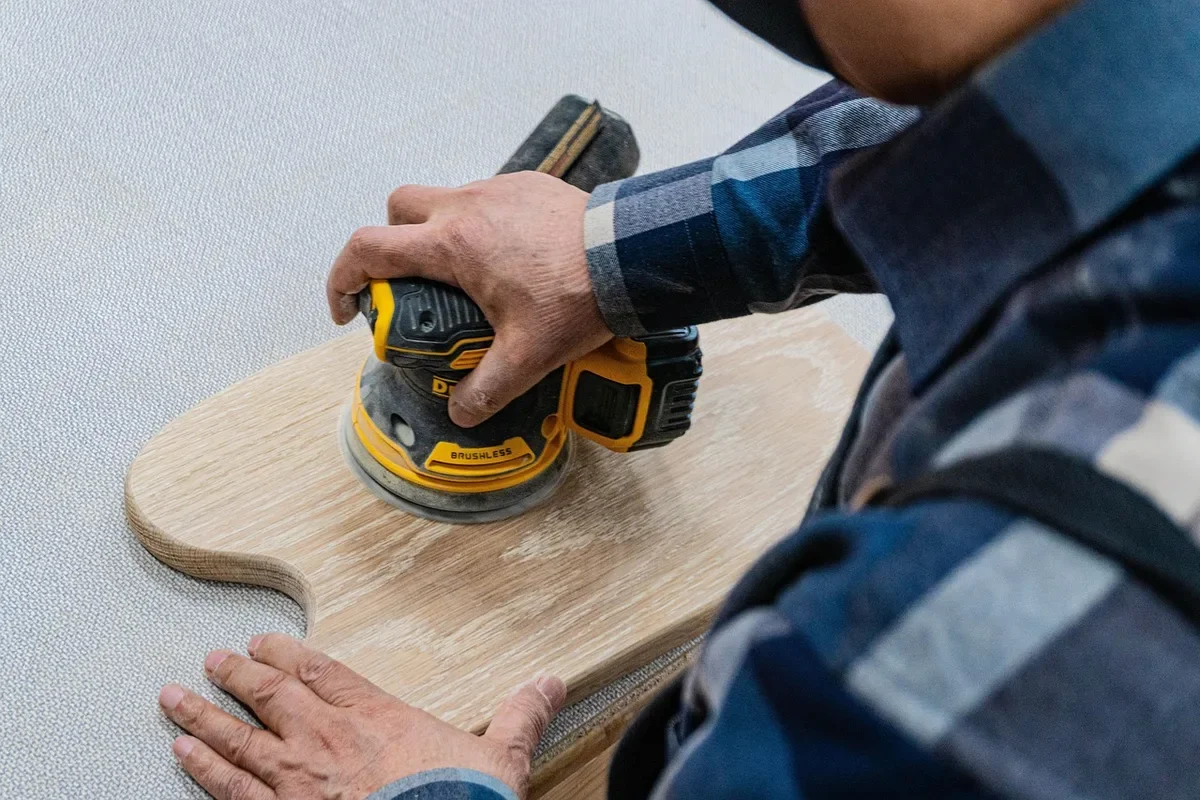
Sanding works on any kind of stain, because it removes the colored wood rather than trying to dissolve the color. It is the best first move on bare stained wood that has no finish on top.
- Start with 80 to 100 grit on a random orbital sander, keeping the pad flat and moving with the grain. Hand sand edges and profiles.
- Check the color in good light after each pass. Stop once the stain is gone, rather than sanding for a set time.
- Step up through 120 and 150 grit to smooth the surface before restaining.
- Vacuum and wipe with a tack cloth or a slightly damp rag so no dust is left in the grain.
Two things limit sanding. On veneered plywood and veneered furniture the real wood layer is very thin, so sand by hand and check often, because it is easy to cut through. On open-pored woods like oak and ash, stain collects in the pores. The face can look lighter while dark specks remain in the grain, and the only fix is chemical (stripper or bleach). Our grain raising guide explains what to do if the surface roughens after any water-based step.
Method 3: Use a Chemical Stripper When There Is a Finish
Stain under varnish, polyurethane, or lacquer cannot be reached by anything else, so the clear coat has to come off first. A gel stripper is the usual choice because it clings to vertical surfaces. Apply a thick coat, leave it for the dwell time on the label, then scrape with the grain and wipe with the cleaner the label calls for. Strippers are strong chemicals: use chemical-resistant gloves, eye protection, and good ventilation, and read the label on your specific product. Our overview of wood stain removers compares the types.
A stripper that removes the finish will often leave some stain in the wood. If the bare wood is still darker than you want, move on to bleach rather than repeating the stripper.
Method 4: Two-Part Wood Bleach for What Is Left
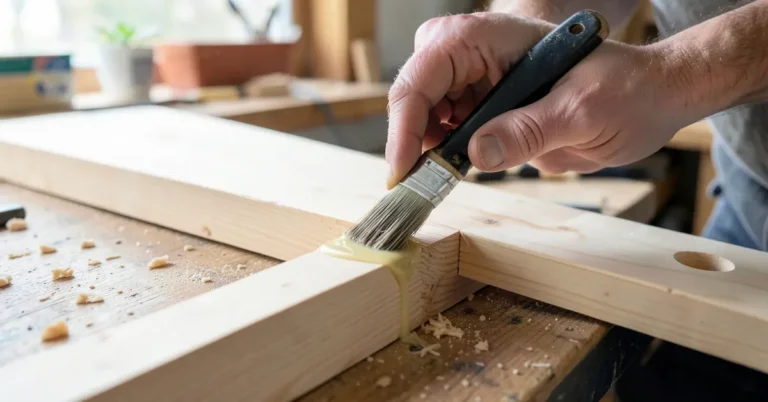
Two-part wood bleach is the strongest option for lightening the wood itself. It works on bare wood only, so strip and sand first. Typical kits use two solutions applied one after the other, commonly a strongly alkaline one followed by a hydrogen peroxide one. Always follow the instructions for your product, including the neutralizing or rinsing step.
- Wear chemical-resistant gloves, splash goggles, and old clothes, and work in a ventilated space.
- Keep the surface wet and even. Uneven application gives uneven lightening.
- Let the wood dry fully before sanding lightly and restaining. Bleach can raise the grain.
- Do not mix products. Chlorine bleach combined with ammonia or with an acid such as oxalic acid releases toxic gas.
Results depend on the species. Expect reddish or orange tones to fade more readily than the overall base color of the wood. If you have a stubborn orange cast, that is where a product that advertises “neutralizes orange tones” is useful. For full steps and which woods respond, see our guide to how to bleach wood.
Where oxalic acid fits
Oxalic acid is often listed alongside wood bleach, but it is a different tool. It is best known for removing black iron stains and water marks, and for brightening grayed wood. It is not the first choice for stripping a dark pigment stain, so do not expect it to do the job of a two-part bleach.
Three Lightening Myths That Waste Weekends
- “Put a lighter stain on top.” Stain is transparent. A lighter stain over a dark one leaves the dark color showing, and can deepen it. The dark layer has to come out first.
- “Re-wet the dried stain and wipe.” Re-wetting works in the can, where you are thinning fresh stain. On wood, cured stain has bonded into the fibers, so a solvent wipe lifts little and can leave blotchy patches.
- “Stir white paint into the stain.” Latex paint and oil-based stain do not blend. If you want a pale, washed look, use a stain made for that, such as a white or pickling stain, and test it on scrap.
Before You Restain: A Quick Test Routine
- Pick a hidden spot, such as the underside of a tabletop, and mark three small areas.
- Treat each area with a different method or strength and let each dry fully.
- Apply the same stain you plan to use, plus the topcoat, to all three.
- Choose the area that matches your target color with the least damage to the wood, then repeat that method on the whole piece.
If you are matching an existing color rather than just going lighter, mixing and matching stain colors covers blending test batches.
Frequently Asked Questions
How do you lighten wood stain that is already on the wood?
It depends on how long the stain has been there and what is on top of it. While oil-based stain is still wet or tacky, a rag dampened with mineral spirits lifts some pigment. Once it has dried, sanding, a chemical stripper, or a two-part wood bleach on bare wood are the options that actually work. Test every method on a hidden spot first.
Can you lighten wood stain with mineral spirits?
Only while oil-based stain is still wet or tacky, and only partly. Mineral spirits will not pull cured stain back out of the wood, and they do nothing useful on dried water-based stain. In the can, mineral spirits will thin oil-based stain to a lighter shade before you apply it.
What can I add to wood stain to make it lighter?
Add the matching solvent to stain that is still in the can: mineral spirits for oil-based stain, water for water-based stain unless the label says otherwise. A little at a time, with a test on scrap wood after each addition, keeps the color under control. You can also blend in a lighter stain of the same type. Latex paint will not mix into oil-based stain.
Will sanding lighten wood stain?
Yes, because it removes the stained surface layer. It works best on dense, tight-grained wood where the pigment sits near the surface. On open-pored woods such as oak or ash, pigment settles in the pores, so the face can look lighter while dark specks remain in the grain.
Can I rehydrate dried stain to make it lighter?
Not once it is on the wood. Adding solvent to stain that has dried and cured on a surface will not even out or lift the color the way thinning fresh stain in the can does. Thinning works before application; after application the realistic options are sanding, stripping, or bleaching.
Can you put a lighter stain over a darker stain?
No. Wood stain is a transparent coloring, so a lighter stain over a dark one leaves the dark color showing through and can make it darker. To go lighter you have to remove the dark stain first, then restain bare wood.
The Short Version
Thin stain in the can, wipe wet oil-based stain with mineral spirits, sand dried stain on bare wood, strip anything with a finish, and bleach what is left. Pick the method that matches the stage your stain is in, test on a hidden spot, and let the wood dry before judging the color.
Sponsored / affiliate links. As an Amazon Associate I earn from qualifying purchases. I may earn additional commission from eligible campaigns.