Satin vs Semi-Gloss Hardwood Floor Finish: Which Hides Scratches?
Satin hardwood floor finish measures 20–35 gloss units and hides scuffs better — semi-gloss measures 35–70 units and reflects more light, but resists surface scratches only slightly better. Choosing the wrong sheen for a high-traffic hallway means redoing the floor sooner than expected. This guide covers gloss-unit numbers, room-by-room picks, resale impact, and upkeep for each finish.
Satin Finish: Pros and Cons
Best Overall Durability Pick
Bona Traffic HD Satin (128 Oz) – $170.99
The waterborne satin finish referenced earlier in this guide for scratch and chemical resistance — a step up from consumer-grade polyurethane for busy households.
- Best for: high-traffic homes wanting satin’s scratch-hiding look with commercial-grade durability
- Why we picked it: matches the satin sheen this guide recommends as the default, with the strongest wear resistance in that sheen class
- Main drawback: priced for a full-room job, not a small touch-up
Compare more satin and semi-gloss finish options
 Satin Option Minwax Fast-Drying Polyurethane Satin (1 Quart) – $14.97
|
 Semi-Gloss Option Minwax Fast-Drying Polyurethane Semi-Gloss (1 Quart) – $14.97
|
 Water-Based Option Varathane Water-Based Ultimate Semi-Gloss (1 Quart) – $24.93
|
As an Amazon Associate we earn from qualifying purchases.
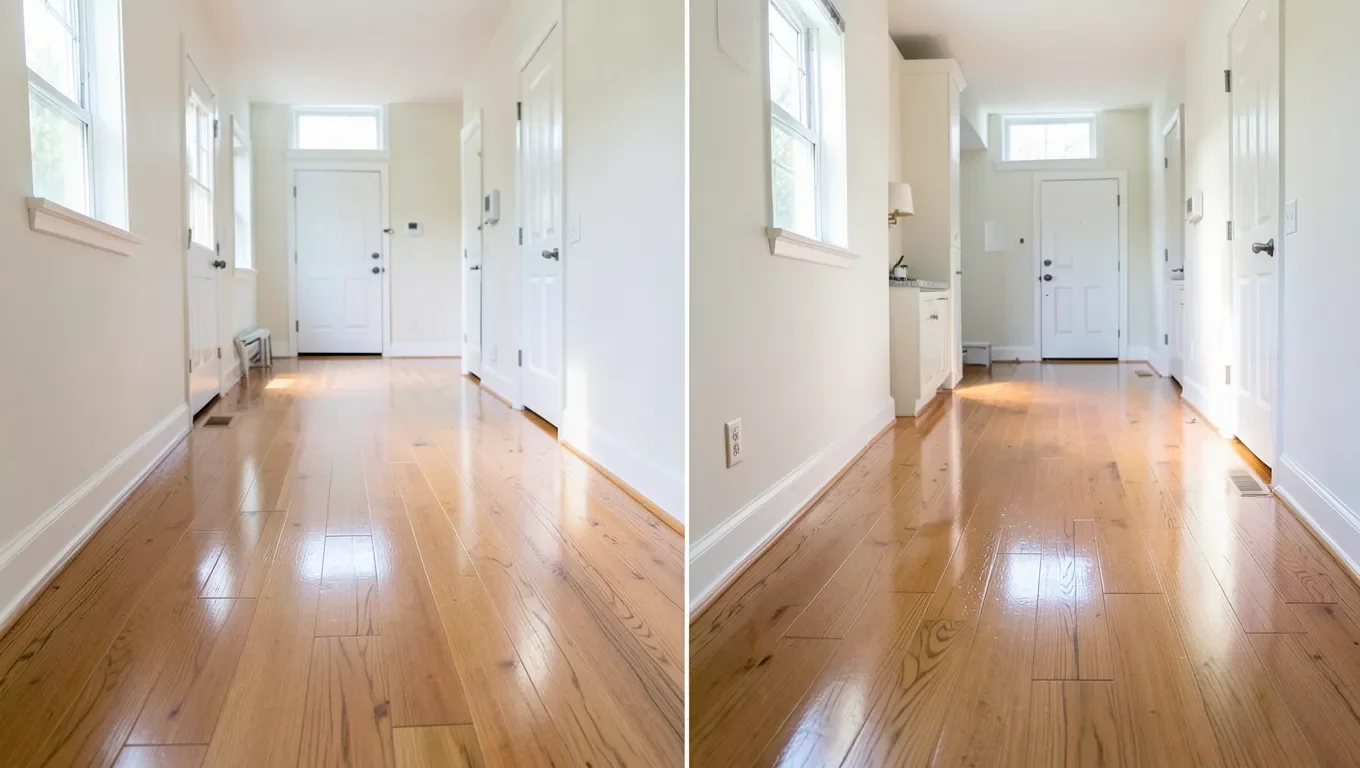
Satin sits at 20–35 gloss units on a 60° gloss meter — a low-to-moderate sheen that diffuses light instead of reflecting it directly. That’s why it’s the most-installed sheen for hardwood floor finish nationally: it hides dust, footprints, and minor scuffs better than any glossier option.
Pros of Satin Finish
- Hides scratches and scuffs: the diffused sheen camouflages fine surface marks far better than semi-gloss, so daily wear is less visible between refinishing cycles.
- Lower-maintenance look: dust, pet hair, and footprints show up less, which means fewer visible smudges between cleanings — not less cleaning itself.
- Natural, warm appearance: the lower reflectance keeps the wood grain looking like wood rather than a mirror, which suits most traditional and modern interiors alike.
- Forgiving of application mistakes: minor roller or brush marks from a DIY application are far less visible at 20–35 gloss units than at 35–70.
Cons of Satin Finish
- Mutes wood grain and color depth slightly: less light bounces back off a satin topcoat, so stain color and grain figure can look a touch flatter than the same floor finished in semi-gloss.
- Fewer coats can look uneven: a rushed one-coat satin application can leave visible lap marks; two full coats with proper dry time between them fixes this.
- Darkens a dim room slightly: because satin reflects less light, a north-facing room with limited windows can read a touch darker than the same room in semi-gloss.
Semi-Gloss Finish: Pros and Cons
Semi-gloss measures 35–70 gloss units — roughly double satin’s light reflectance. That extra shine makes wood grain and color read richer and deeper, and it makes a room feel brighter, but it comes with a maintenance trade-off.
Pros of Semi-Gloss Finish
- No durability tradeoff versus satin: semi-gloss and satin almost always use the same polyurethane resin cured to the same hardness – the flatter sheen comes from a flattening additive, not a thinner or softer topcoat, so choosing the shinier finish costs you nothing in protection.
- Enhances color and grain: the extra light reflection makes stained and natural wood tones look deeper and more saturated.
- Brightens low-light rooms: a semi-gloss floor bounces more ambient and artificial light around a room than satin does.
Cons of Semi-Gloss Finish
- Shows every imperfection: dust, footprints, pet hair, and fine scratches are all far more visible on a 35–70 gloss-unit surface than on satin.
- More upkeep to look its best: keeping that shine even and smudge-free takes more frequent cleaning than satin needs.
- Less forgiving to apply: streaks, lap marks, and uneven buffing show up immediately at this sheen level, so DIY application has a smaller margin for error.
Gloss Units Explained: The Real Difference Between the Two
Gloss level isn’t a marketing term — it’s a measured value. A gloss meter shines light onto the floor at a 60° angle and measures how much bounces back into a sensor at the same angle, expressed in gloss units (GU) on a 0-to-100 scale referenced against polished black glass. Satin finishes measure roughly 20–35 GU; semi-gloss measures 35–70 GU — nearly double satin’s reflectance at the low end of the range. This is the same measurement system paint manufacturers use to classify sheen levels, and it explains why two brands’ “satin” can still look slightly different — both may legally sit anywhere in that 20–35 window. For a deeper breakdown of how sheen and surface texture interact (a wire-brushed satin floor feels different than a smooth satin floor, for instance), see our wood finish texture guide.
That same gloss-unit scale keeps climbing past semi-gloss: plain gloss runs 70–85 GU, and true high-gloss starts above 85 GU. If a busy room has you leaning toward more shine than semi-gloss offers, our semi-gloss vs high-gloss hardwood floors comparison covers whether that extra reflectance is worth the added scratch visibility.
📊 Satin measures 20–35 gloss units and semi-gloss measures 35–70 gloss units on a 60° gloss meter — Source: Rodda Paint, Selecting Gloss Level
Lower-sheen finishes show fewer small scratches and less everyday wear than higher-sheen finishes — sheen selection ultimately comes down to personal preference and household lifestyle.
Satin vs Semi-Gloss Hardwood Floor Finish Compared
| Feature | Satin (20–35 GU) | Semi-Gloss (35–70 GU) |
|---|---|---|
| Light reflection | Lower — diffused | Higher — more direct |
| Hides scratches/scuffs | Best in class | Shows wear readily |
| Scratch resistance (lab) | Good | Slightly better |
| Maintenance frequency | Lower | Higher |
| Best rooms | Living rooms, hallways, bedrooms, homes with kids/pets | Formal dining rooms, low-light spaces, accent areas |
| Resale appeal | Broadest — safest universal choice | Niche — can look dated to some buyers |
Choosing the Best Finish for Your Hardwood Floors
Match the sheen to how the room is actually used, not just how a sample board looks in a showroom. Four factors decide it: foot traffic, natural light, how much you want scratches to show, and how often you’re willing to clean.
- Foot traffic: hallways, entryways, and living rooms with kids or pets do better hiding wear under satin’s lower sheen.
- Natural light: a dim, north-facing room benefits from semi-gloss bouncing more available light around; a bright, sun-filled room can carry satin easily.
- Tolerance for visible wear: if you refinish infrequently and want scuffs to stay invisible longer, satin is the safer bet.
- Cleaning routine: semi-gloss looks best with more frequent damp-mopping; satin tolerates a lighter routine.
For most whole-home installs, newly laid hardwood floors and refinishing jobs alike, satin is the default professional recommendation — reserve semi-gloss for a specific room where you want the extra shine and are prepared for the upkeep.
Does Sheen Affect Resale Value?
Yes, to a modest degree. Satin is the safer resale choice because it reads as familiar and low-maintenance to the widest range of buyers, and it doesn’t telegraph “dated” the way a very high-gloss floor can a decade later. Semi-gloss isn’t a resale liability, but it’s more of a personal-taste finish — if you’re refinishing specifically to sell, satin is the lower-risk pick. If you’re refinishing to live with the floor for years first, choose based on the room factors above instead of resale alone.
Maintaining Your Hardwood Floors
Both finishes get cleaned the same basic way — sweep or vacuum with a hard-floor attachment, then damp-mop with a pH-neutral hardwood cleaner. The difference is frequency and what shows in between cleanings.
Cleaning Satin Finish Floors
Satin’s lower sheen forgives a day or two between cleanings — dust and light footprints don’t show as readily. Avoid soaking the floor with water and skip vinegar or ammonia-based cleaners, both of which can dull or strip the finish over time.
Cleaning Semi-Gloss Finish Floors
Semi-gloss shows dust, footprints, and streaks sooner, so plan on cleaning up spills and debris right away and damp-mopping more often to keep the shine even. The same non-abrasive, pH-neutral cleaner works for both sheens — just apply it more frequently on semi-gloss.


Frequently Asked Questions
Is satin or semi-gloss better for hardwood floors?
Satin is better for most homes because it hides everyday scratches and scuffs and needs less frequent cleaning. Semi-gloss is the better call only when you specifically want extra shine in a low-light room and are willing to clean more often to keep it looking even.
What’s the actual gloss-unit difference between satin and semi-gloss?
Satin measures roughly 20–35 gloss units and semi-gloss measures 35–70 gloss units on a standard 60° gloss meter, per paint-industry gloss-level standards. That means the low end of semi-gloss can be only marginally shinier than the high end of satin, so two different brands’ finishes can look closer together than their sheen names suggest.
Which finish is more scratch-resistant?
Neither – durability is essentially the same. Satin and semi-gloss finishes typically share the same polyurethane resin cured to the same hardness; the lower sheen comes from a flattening additive mixed into the formula, not a tougher or thinner topcoat. The real difference is visibility, not toughness: satin’s diffused finish hides the scratches and dust that do happen far more effectively than semi-gloss’s higher reflectance does, which is why satin floors often “look” newer for longer even though the coating underneath wears at about the same rate.
Does satin or semi-gloss affect resale value?
Satin is the safer choice for resale because it reads as familiar and low-maintenance to the widest range of buyers. Semi-gloss isn’t a liability, but it’s more of a personal-taste finish that won’t universally appeal the way satin does.
Which rooms should use satin vs semi-gloss?
Use satin in living rooms, hallways, bedrooms, and any high-traffic area with kids or pets. Reserve semi-gloss for a formal dining room or a dim, low-light space where the extra shine and light bounce are worth the added upkeep.
Can you mix satin and semi-gloss to get a custom sheen?
Yes, mixing satin and semi-gloss of the same product line (same base and finish type) in different ratios produces an in-between sheen level. Test the mixed ratio on a scrap board first, since results vary by brand and by how thoroughly the two are blended.
Can you apply satin over an existing semi-gloss finish?
Yes — lightly screen or sand the existing semi-gloss coat to give the new finish something to grip, then apply satin as a topcoat. If you want a full change in appearance rather than just a lower sheen, sand down to bare wood and refinish from scratch instead.
Conclusion
Satin (20–35 gloss units) is the safer default for most hardwood floors — it hides scratches, needs less upkeep, and carries the broadest resale appeal. Semi-gloss (35–70 units) earns its place in specific rooms where the added shine and slightly better scratch resistance outweigh the extra cleaning. If you’re still weighing sheen options for a different finish type, see our satin vs semi-gloss polyurethane finish guide or check how long to wait between coats before your next recoat. For more hardwood floor care and refinishing guides, visit our hardwood flooring hub.
Sponsored / affiliate links. As an Amazon Associate I earn from qualifying purchases. I may earn additional commission from eligible campaigns.