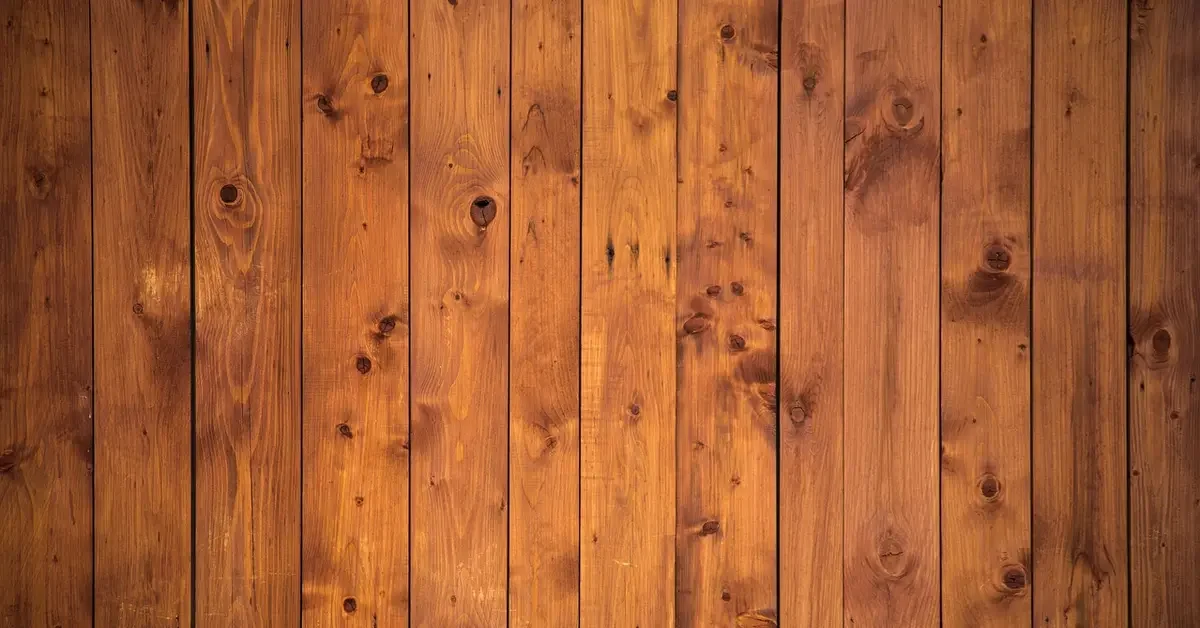
Sherwin-Williams Stain Colors Chart: SW Codes by Line (2026)
Sherwin-Williams organizes its stain colors by product line, and an SW code only means something inside its own line. Redwood is SW 3501 in WoodScapes semi-transparent but SW 3563 in SuperDeck. Interior stains are Minwax Performance Series colors sold through Sherwin-Williams, while WoodScapes and SuperDeck cover exterior wood. This chart lists SW codes checked against Sherwin-Williams pages, sorted by tone, with the line each one belongs to.
Disclosure: This post contains affiliate links. If you purchase through our links, we may earn a small commission at no extra cost to you.
Why the Sherwin Williams Wood Stain Chart Matters
Best Pre-Stain Conditioner Pick |
|
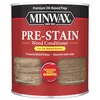 |
Minwax Pre-Stain Oil-Based Wood Conditioner, 1 qt (4-Pack), $69.95 A stain chip shows color on evenly absorbing wood. Pine, birch and maple soak up oil-based stain unevenly, so the shade you picked from the chart can come out blotchy without a conditioner first.
|
As an Amazon Associate we earn from qualifying purchases.
Choosing a stain color gets confusing fast because Sherwin-Williams does not publish one chart. It publishes a separate color list for each line, and the same color name can appear in several of them with different codes. Picking from the wrong list is how people end up buying a deck stain for an interior table.
The chart also covers three opacity levels, transparent, semi-transparent and solid, and opacity changes both how much grain shows and how much protection you get. It works for anything from a deck makeover to a furniture project. If you are weighing stain against paint for floors, see our guide to Sherwin-Williams wood floor paint.
Same Color Name, Different SW Code: Which Line Is Which
Here is the line-by-line breakdown. Color counts and code ranges come from the Sherwin-Williams exterior and interior stain color listings.
| Line | Use | Opacity | Colors | Code format |
|---|---|---|---|---|
| WoodScapes Polyurethane Semi-Transparent | Exterior house | Semi-transparent | 24 | SW 3501 to SW 3542 |
| WoodScapes Acrylic Solid Color | Exterior house | Solid | 48 | SW 3001 to SW 3051 |
| SuperDeck Semi-Transparent | Deck | Semi-transparent | 102 | DB2100 to DB2320, SW 3501 to SW 3574 |
| SuperDeck Waterborne Semi-Solid | Deck | Semi-solid | 36 | SW 3501SS to SW 3574SS |
| SuperDeck Waterborne Solid Color | Deck | Solid | 71 | SW 3001 to SW 3083 |
| SuperDeck Deck & Dock Coating | Deck | Coating | 24 | SW 3101DD to SW 3153DD |
| Minwax Performance Series Tintable | Interior | Semi-transparent | 48 | SW W211 to SW W473, plus 210B, 2716, 2718 |
The same color name often repeats across lines with a different code, so always quote the line along with the code at the counter:
| Color name | Line and code | Other line and code |
|---|---|---|
| Redwood | WoodScapes semi-transparent: SW 3501 | SuperDeck: SW 3563 |
| Cedar | Solid stains: SW 3034 | SuperDeck semi-transparent: SW 3561 |
| Blue Spruce | Solid stains: SW 3008 | SuperDeck semi-transparent: SW 3562 |
| Driftwood | Solid stains: SW 3027 | SuperDeck semi-transparent: DB2107 |
📊 SuperDeck solid color comes in 71 colors, and 20 of them use Cool Feel technology that Sherwin-Williams says lowers surface temperature by up to 20 degrees F. Source: Sherwin-Williams, SuperDeck Waterborne Solid Color Deck Stain
Sherwin-Williams Stain Colors: Browse by Tone
Whether you are finishing a deck, refinishing furniture, or staining cabinets, the fastest route is to browse Sherwin-Williams stain colors by tone. Use the SW code at any Sherwin-Williams store or the SW color tool online to pull up an exact swatch. Interior codes below are the ones Sherwin-Williams lists for Minwax Performance Series stains; Special Walnut also appears on its own color page as MW 224.
Warm Brown & Walnut Tones
The most popular category, and the one most people start with for oak, pine and maple furniture:
| SW Code | Color Name | Line | Use |
|---|---|---|---|
| SW W224 | Special Walnut | Minwax Performance Series | Interior |
| SW W439 | Walnut | Minwax Performance Series | Interior |
| SW W230 | Early American | Minwax Performance Series | Interior |
| SW W211 | Provincial | Minwax Performance Series | Interior |
| SW 3522 | Banyan Brown | WoodScapes semi-transparent | Exterior |
Natural, Golden & Honey Tones
Lighter choices that keep the wood looking fresh, popular for farmhouse and Scandinavian styles:
| SW Code | Color Name | Line | Use |
|---|---|---|---|
| SW 210B | Golden Oak | Minwax Performance Series | Interior |
| SW W453 | Honeymade | Minwax Performance Series | Interior |
| SW W437 | Country Pine | Minwax Performance Series | Interior |
| SW 3021 | Spicewood | WoodScapes and SuperDeck solid | Exterior |
| SW 3524 | Chestnut | WoodScapes semi-transparent | Exterior |
Dark, Espresso & Ebony Tones
Bold choices for contrast, common on modern furniture and dark flooring:
| SW Code | Color Name | Line | Use |
|---|---|---|---|
| SW 2716 | Dark Walnut | Minwax Performance Series | Interior |
| SW W273 | Espresso | Minwax Performance Series | Interior |
| SW 2718 | Ebony | Minwax Performance Series | Interior |
| SW 3007 | Lodge Brown | WoodScapes and SuperDeck solid | Exterior |
| SW 3031 | Cabin Brown | WoodScapes and SuperDeck solid | Exterior |
Gray & Weathered Tones (Exterior)
Gray stains suit modern and coastal exteriors:
| SW Code | Color Name | Line |
|---|---|---|
| SW 3027 | Driftwood | WoodScapes and SuperDeck solid |
| SW 3010 | Woodsmoke Gray | WoodScapes and SuperDeck solid |
| SW 3540 | Mountain Ash | WoodScapes semi-transparent |
| SW 3541 | Harbor Mist | WoodScapes semi-transparent |
Red, Cedar & Mahogany Tones
Warm reds that pair with cedar and redwood:
| SW Code | Color Name | Line |
|---|---|---|
| SW 3501 | Redwood | WoodScapes semi-transparent |
| SW 3511 | Cedar Bark | WoodScapes semi-transparent |
| SW 3034 | Cedar | WoodScapes and SuperDeck solid |
| SW 3045 | Russet Brown | WoodScapes and SuperDeck solid |
Pro tip: Always test your chosen SW stain color on a scrap of the same wood species first. Sherwin-Williams itself says the best way to judge a stain color is to test it on a small, inconspicuous spot, because the same stain can look noticeably darker or lighter depending on wood porosity and grain.
Types of Sherwin Williams Wood Stains
Sherwin-Williams sorts its stains by opacity. Here are the main types you will see on the wood stain chart, and what each is for.
Transparent Stains
Transparent stains add a hint of color while the natural grain stays fully visible. They suit wood you want to show off, such as outdoor furniture or interior paneling, but they offer the least weather protection of the four types.
Semi-Transparent Stains
Semi-transparent stains add more pigment while still letting the grain show through. They are a common pick for decks and fences because they balance color with protection on wood in good condition.
Semi-Solid Stains
Semi-solid stains cover more than semi-transparent ones and leave only a hint of grain. They work on weathered exterior surfaces such as old porch railings where you want color back without losing all the wood texture.
Solid Stains
Solid stains give full coverage and hide most of the grain. Sherwin-Williams recommends them for older, more vulnerable wood with many blemishes, which makes them the usual choice for a worn deck or siding.
| Stain Type | Coverage Level | Best For | Protection Level |
|---|---|---|---|
| Transparent | Light, shows grain | Indoor furniture, low-exposure outdoor | Low |
| Semi-Transparent | Moderate, some grain | Decks, fences, outdoor furniture | Moderate |
| Semi-Solid | High, minimal grain | Porches, railings, exterior wood | High |
| Solid | Full, hides grain | Decks, siding, high-exposure surfaces | Very High |
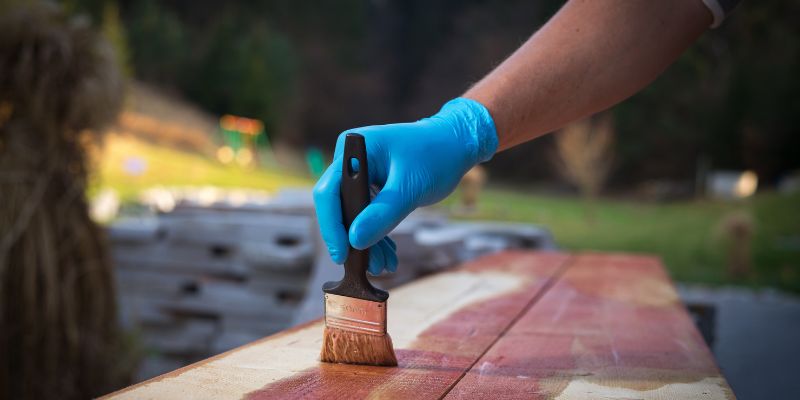
“The less transparent a stain is, the more protection it will provide.”
Sherwin-Williams, How to Choose Stain Colors
Sherwin-Williams Wood Stain Color Chart: Complete Color List
Below is a practical chart organized by exterior type, using the actual SW codes you can bring to a Sherwin-Williams store. For Minwax colors outside the Sherwin-Williams lineup, see our Minwax stain color chart. For the full interactive list, visit the official Sherwin-Williams stain colors page.
Popular Semi-Transparent Exterior Stain Colors
Semi-transparent stains let the wood grain show through while adding color and UV protection. They work best on new or well-maintained wood. Cedar Bark is a natural match for cedar; see our guide to finishing cedar for prep.
| SW Code | Color Name | Line |
|---|---|---|
| SW 3501 | Redwood | WoodScapes semi-transparent |
| SW 3502 | Mission Wall | WoodScapes semi-transparent |
| SW 3507 | Riverwood | WoodScapes semi-transparent |
| SW 3511 | Cedar Bark | WoodScapes semi-transparent |
| SW 3518 | Hawthorne | WoodScapes semi-transparent |
| SW 3522 | Banyan Brown | WoodScapes semi-transparent |
| SW 3524 | Chestnut | WoodScapes semi-transparent |
| SW 3540 | Mountain Ash | WoodScapes semi-transparent |
| SW 3541 | Harbor Mist | WoodScapes semi-transparent |
| SW 3542 | Charwood | WoodScapes semi-transparent |
Popular Solid Exterior Stain Colors (WoodScapes)
Solid stains give full coverage, which suits older decks and siding with wear or discoloration. These solid colors appear in both WoodScapes and SuperDeck:
| SW Code | Color Name | Line |
|---|---|---|
| SW 3001 | Shagbark | WoodScapes and SuperDeck solid |
| SW 3007 | Lodge Brown | WoodScapes and SuperDeck solid |
| SW 3010 | Woodsmoke Gray | WoodScapes and SuperDeck solid |
| SW 3021 | Spicewood | WoodScapes and SuperDeck solid |
| SW 3027 | Driftwood | WoodScapes and SuperDeck solid |
| SW 3031 | Cabin Brown | WoodScapes and SuperDeck solid |
| SW 3034 | Cedar | WoodScapes and SuperDeck solid |
| SW 3045 | Russet Brown | WoodScapes and SuperDeck solid |
WoodScapes Stain Colors: Sherwin-Williams Exterior Line
WoodScapes is the Sherwin-Williams exterior house stain line, made for siding, fences and trim. The deck-specific line is SuperDeck. WoodScapes comes as a polyurethane semi-transparent stain (24 colors) and an acrylic solid color stain (48 colors), plus Rain Refresh, which adds self-cleaning technology, and a Premium Translucent Finish.
Most searched WoodScapes colors
Mountain Ash (SW 3540) is one of the colors people look up by code most often, based on search data for this page. Here are the WoodScapes colors that come up most:
| SW Code | Color Name | Type |
|---|---|---|
| SW 3540 | Mountain Ash | Semi-transparent |
| SW 3502 | Mission Wall | Semi-transparent |
| SW 3507 | Riverwood | Semi-transparent |
| SW 3001 | Shagbark | Solid |
| SW 3021 | Spicewood | Solid |
Note: Sherwin-Williams describes WoodScapes as tintable for color matching. If you want the siding or fence to coordinate with your house paint, ask the store whether they can match a paint chip.
Interior vs. Exterior Stains
Not all stains are created equal, and Sherwin-Williams separates its stain colors into interior and exterior lists. An interior stain is not built for UV and moisture, so using one outside invites fast fading and water damage.
Interior Stains
Interior stains are made for furniture, cabinets and paneling, where weather is not a factor. Sherwin-Williams lists the Minwax Performance Series Tintable Wood Stain, 48 colors, as its interior stain.
Popular Sherwin-Williams interior wood stain colors
| SW Code | Color Name | Line |
|---|---|---|
| SW W224 | Special Walnut | Minwax Performance Series |
| SW 210B | Golden Oak | Minwax Performance Series |
| SW W230 | Early American | Minwax Performance Series |
| SW 2716 | Dark Walnut | Minwax Performance Series |
| SW W273 | Espresso | Minwax Performance Series |
| SW W271 | Classic Gray | Minwax Performance Series |
| SW W401 | Grey Elm | Minwax Performance Series |
| SW W423 | Whitewash | Minwax Performance Series |
Exterior Stains
Exterior stains such as SuperDeck and WoodScapes are formulated for weather exposure. Sherwin-Williams lists WoodScapes as mildew resistant, and SuperDeck solid stain as able to go on damp wood, so most jobs can be finished in a single day.
How to Use the Sherwin Williams Wood Stain Chart
Start by choosing the right list. Decide whether the project is interior or exterior, then pick the line: Minwax Performance Series for interior wood, WoodScapes for siding and fences, SuperDeck for decks.
Next, decide how much grain you want to keep. Transparent and semi-transparent stains show grain; solid stains hide it. Bring a scrap of your project wood to compare against the in-store chart, since stain color can look noticeably different on your wood than on the printed chip. Sherwin-Williams also offers an online color tool for a rough preview before you commit.
Application Tips for Perfect Results
Always prep the wood first: sand it smooth and clean off dust and old finishes. Not sure about sanding stained wood? Read our guide on can you sand stained wood. Skipping the test-patch step is a common cause of streaky, uneven results. For the wider picture on stains and topcoats, see our complete wood finishing guide.
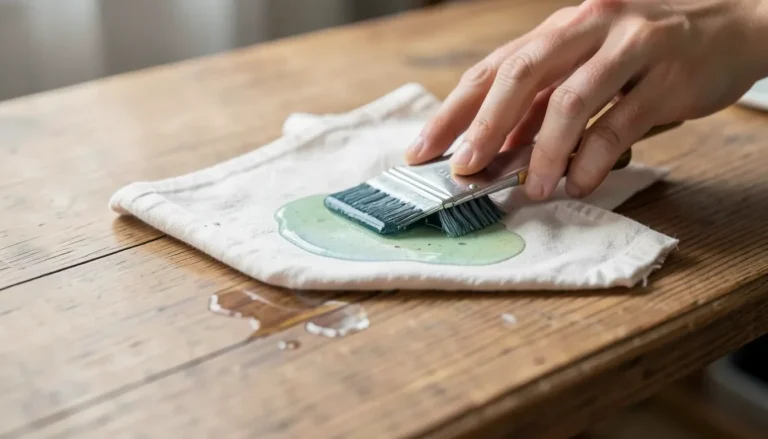
Use a brush or cloth for even coverage. A foam brush works for small projects, while a natural bristle brush covers decks faster. Work in small sections to avoid lap marks and follow the grain.
For exterior projects, check the forecast. Staining right before rain is one of the most common mistakes because the stain will not cure properly before moisture hits it. Apply thin coats rather than one thick one for a smoother finish, and seal the wood after staining only where the product data sheet calls for it.
Water-Based vs. Oil-Based Stains
Sherwin-Williams sells both water-based and oil-based stains, and each has its place.
Water-Based Stains
Water-based stains are generally lower in VOCs and clean up with soap and water. They tend to dry faster, which suits furniture projects, though drying time depends on temperature and humidity, so check the can.
Oil-Based Stains
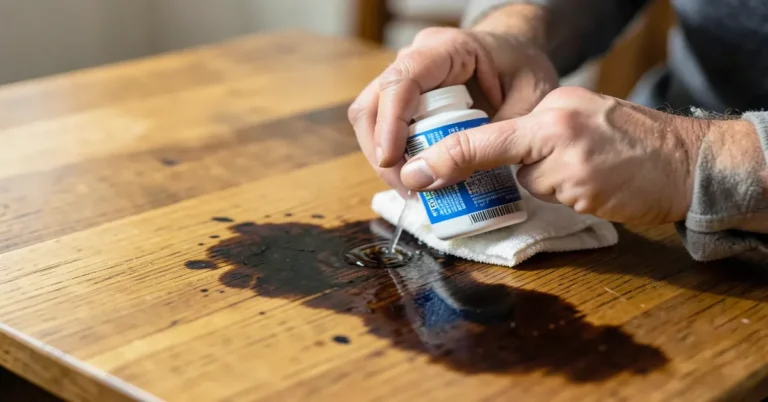
Oil-based stains penetrate deeply and are known for durable color. The downsides are longer drying times and mineral spirits cleanup. One safety point matters here: rags soaked with oil-based stain can heat up and ignite on their own, so spread them flat outdoors to dry or store them in a sealed metal container with water. Check the label to confirm whether a stain is water-based or oil-based before you buy.
Environmental Considerations
Sherwin-Williams lists 250 VOC compliant versions of some of its stains, including the Minwax Performance Series, which matters if you live where VOC limits apply. Water-based formulas are usually lower in VOCs. Check the product data sheet for the exact VOC figure before you buy.
Matching Stain to Wood Type
Different woods take stain differently. Oak soaks up stain fairly evenly and gives a consistent color. Pine, birch and maple can look blotchy, and the Minwax conditioner listing recommends a pre-stain conditioner on soft or porous woods like these. That conditioner is made to even out absorption of oil-based stains. Cedar and redwood contain natural oils that can resist stain, so a light sanding helps.
Maintenance and Longevity
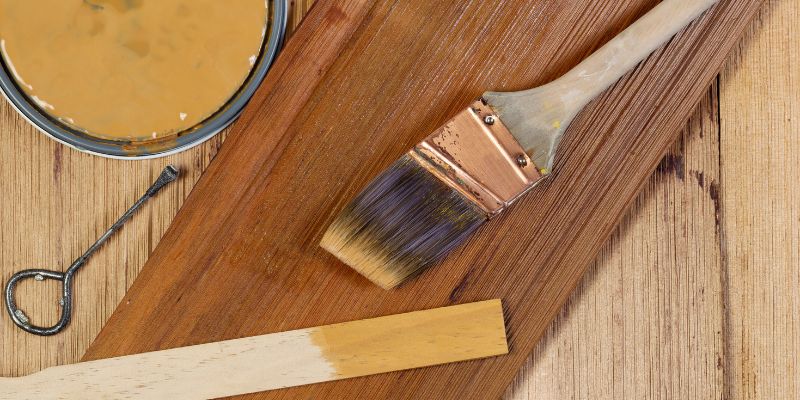
Stains are not one-and-done, especially outdoors. How often you need to recoat depends on the product, the opacity and how much sun and rain the wood gets, so follow the data sheet for your stain. A light sanding and cleaning before restaining keeps the finish smooth. Interior stains last far longer than exterior ones, since they never face weather.
Where to Find the Sherwin Williams Wood Stain Chart
Visit your local Sherwin-Williams store and ask for a physical stain color card. You can also browse all stain colors on the official Sherwin-Williams website and use the color tool to preview colors before buying.
Pairing Stains with Topcoats
For interior projects, a clear polyurethane topcoat seals the stain and adds shine. For exterior projects, check the product data sheet before adding a clear coat over the stain. Apply any topcoat only after the stain has dried fully.
Common Mistakes to Avoid
Do not skip sanding, since it is crucial for a smooth finish. Avoid applying too much stain at once because it can turn sticky and uneven. Work in small sections to avoid visible lap marks. Test the color on a scrap first, since the chart is a guide and your wood may react differently. Respect drying times before topcoating or putting furniture back.
Conclusion: Transform Your Woodworking with Sherwin Williams
The Sherwin-Williams stain chart is most useful once you know it is really several charts. Pick the line first, then the color, then test it on a scrap of your own wood for the perfect finish.
Frequently Asked Questions
What is the Sherwin Williams wood stain chart?
It is Sherwin-Williams color listings for its stain lines: Minwax Performance Series for interior wood (48 colors), plus WoodScapes (24 semi-transparent, 48 solid) and SuperDeck (102 semi-transparent, 71 solid) for exterior wood. You can see them in-store as color cards or on sherwin-williams.com.
How do I choose between transparent and solid stains?
Transparent stains show the wood grain but offer less protection. Solid stains cover the grain and give the most protection, which Sherwin-Williams recommends for older wood with many blemishes. Semi-transparent and semi-solid sit between the two. Before staining, learn the best way to clean a wood deck for proper prep.
Can I use interior stains outside?
No. Interior stains are not built for weather exposure and will fade and fail quickly outdoors. Use an exterior line such as WoodScapes for siding and fences or SuperDeck for decks.
How often should I restain my deck?
There is no single interval. It depends on the stain, its opacity and how much sun and rain the deck gets, so follow the product data sheet. Clean the deck and lightly sand before reapplying. If you are at that stage, our guide on how to restain a deck covers the full process.
Are Sherwin Williams stains eco-friendly?
Some are lower in VOCs, especially water-based formulas, and Sherwin-Williams lists 250 VOC compliant versions of some products. Check the data sheet for the exact VOC level before purchasing.
Where can I get the Sherwin Williams wood stain chart?
Ask for a physical color card at any Sherwin-Williams store or browse the colors on sherwin-williams.com. Seeing swatches in person is the most reliable way to judge a color before buying. For a comparison, you can also explore the Behr wood stain color chart.
Why does the same stain color have different SW codes?
Each product line has its own code set. Redwood is SW 3501 in WoodScapes semi-transparent and SW 3563 in SuperDeck, so give the store both the line and the code.
Sponsored / affiliate links. As an Amazon Associate I earn from qualifying purchases. I may earn additional commission from eligible campaigns.